• About
  • Proud

Hospi-Tales

~ Acquired Brain Injury (ABI): from the acute hospital to early rehabilitation – more on: www.CaringforPadraig.org and www.ansaol.ie

Hospi-Tales

Author Archives: ReinhardSchaler

Ach so

27 Sunday Sep 2020

Posted by ReinhardSchaler in Uncategorized

≈ 4 Comments

When I hear gallop, I think horse – was what Angela Merkel could have answered.

But: “I see”, is what she said, in a much better, short and dry and poignant way, when a reporter asked her what she thought about the assertion of the former US ambassador to Germany, Grenell, that President Trump had charmed (verzaubert) her.

Yesterday, Pádraig was discharged from Burgau. He left in his wheelchair as he did two years ago when he was here last. Words are not enough to describe our gratitude to the people running the Therapy Centre and the people working there. They had admitted Pádraig with open arms and allowed us to look after him while he was there – all under quite difficult and unique circumstances.

Before Pádraig had the operation in Munich, they had taken the time, at very short notice, to discuss with us the different options for treatment and advised us what they thought was the best choice. Based on decades of experience. When they reached the same conclusions as they had in Pforzheim we knew what way to go to help Pádraig.

The time Pádraig spent in Burgau after his operation was exactly what he needed to support his recovery. The way Pádraig (and us) were treated in Burgau was exemplary.  The outcome was the best outcome we could have hoped for.

In Burgau, as in Pforzheim (where they also had recommended to see the neuro-orthopaedic surgeon Dr. Poschmann in Munich), Pádraig was treated like you and I. He urgently needed help and they (as in Pforzheim) did their very best to assess him, to consider the available options and then helped to organise what was, in their and our and Pádraig’s opinion, the best available option. With all the dignity and respect, with all the patient-centred care you and I had deserved as a human being – and Pádraig deserved, in their eyes, equally, without any doubt or hesitation. The type of medical care that so many talk and write about but too few practice.

Today, we’re back from where we started, in Pforzheim, where yesterday we enjoyed a great welcome breakfast in great company. Having recovered and put back on the road in Burgau by some of Germany’s best doctors and therapists in the field, Pádraig will be back on his feet for a week here in Pforzheim, before heading to the Rotterdam ferry next Saturday.

https://twitter.com/_danielheim/status/1299289807479242753

Ach so. Pure brilliance. And so super cool. Not an attribute you’d usually associate with the German chancellor. (The tweet incorrectly quotes Grenell saying “entzaubert” instead of “verzaubert” which is what the journalist asked in the press conference.)

Last Thursday, with huge credit to be given to the HSE team trying very hard to promote the 2015 Decision Making (Capacity) Act, an explainer video featuring many ‘ordinary’ people who are going to be affected by the act, including Pádraig, was launched following many months of hard work. It was a great occasion joined online by more than 700 people. It turned out, a bit to my surprise, that it was aimed at healthcare professionals and not at the general public. And then, there was a bit of politics and an appeal to press politicians to finally, finally commence the act which will, finally, finally bring Ireland more in line with the UN’s Convention on the Rights of People with Disabilities, CRPD.

Ach so. I see.

The 2015 Assisted Decision Making (Capacity) act, we heard during the HSE online launch of the video promoting the act, will be commenced, if all goes according to plan (!), in 2022 – seven years after it was passed by the Dáil, the Irish Parliament. Seven years. Mein Gott.


(Pádraig’s, Pat’s and my contribution is right at the end of Thursday’s launch video recording. When I checked, it looked like there was a problem with the video recording – we could be heard but not seen – but maybe that was just my connectivity.)

For me, the most important part of our contribution, was the assertion that “Not only horses gallop. And not only those with a clear voice and their eyes wide open can hear, understand, read, reason, and decide.”

Ach so?


Here is an outline of what we said.

When I hear gallop I think horse, a doctor once told us.

When someone sees Padraig, with his eyes half closed, with little movement, and no voice, they often think he can’t hear, listen, read, understand, reason, or decide.

Assumptions help us to understand the world around us. But they can also limit, and sometimes dangerously limit, our capacity to look a bit closer, to see the Zebra galloping down the savannah in Dublin Zoo or to allow Padraig an opportunity to live his life, to offer him inclusion, equality, participation, and self-determination.

Here are two examples Pádraig encountered of such limitations.

One of the first questions we were asked by staff in the neuro ward of Beaumont Hospital following his accident was: “Which nursing home is he going to go to?” Nobody even considered asking Padraig about his preference, or indeed whether he wanted to spend his life in a nursing home. As it happens, he didn’t.

Another example of such limitations Pádraig came across was at the last elections, when a neighbour kindly offered to stay in the house with him while we, Pat and Reinhard, went out to vote, assuming that he didn’t vote. Another neighbour the three of us met at the entrance to the polling station offered to stay outside with him while we went in to vote. Padraig’s interest in politics has not diminished since his accident seven years ago and he stays well on top of current affairs. He is always very informed when it comes to elections or referenda. And he always votes.

One of the key words in the new act is assisted decision making. We have learned that this ‘assistance’ must come from somebody who knows the person well and understands them, especially for those in a similar situation to Padraig’s. Otherwise, big misunderstandings will happen. Here is one example.

When a therapist asked him before the last elections if he liked Donald Trump, using his manual communication device he answered with one bleep, meaning ‘yes’, surprising the therapist. The family knew Pádraig liked listening to Trump as he found him entertaining. So we asked him whether that was true, and he answered ‘yes’. When we then asked him if he liked Trump’s politics, he emphatically answered “no”, bleeping twice.

But assistance must come not only from someone who understands the person and is close to them, it must come above all from a person who has their best interests at heart. Health professionals, courts or court appointed officials might not always be the most suitable for this role.

Over time, we have learnt that Padraig can read, understand and solve complex problems. He can read questions and, using a switch, the ‘bleeper’, pick the correct answer. His sense of humour and language preferences have not changed. If you asked him to spell his name and you expect ‘P’ followed by an ‘a’ you will learn that he prefers an ‘á’. He still likes his mother to speak to him in English, his father in German and his friends as Gaeilge.

We have learnt that the only barrier for him to express himself and fully participate in conversations is our incapacity to provide him with the adequate means. That is why we are constantly on the lookout for new technologies, like the ‘handshoemouse’ that we found during the summer, or leading-edge research ‘translating’ cortical activity into text, in other words: translating your thoughts into speech.

******

Central to the most fundamental human rights is the right to self-determination and the right to be included in society’s decision making processes. It is encouraging to see that these rights are gradually becoming the norm in Irish society and that they are being supported by the new act.

It will be up to each and everybody among us to question and change existing perceptions, preconceived expectations, mindsets and embedded attitudes in relation to a person’s capacity. Even the genuinely well-meaning will need to make a big effort in order to see beyond the obvious, as we have seen in the examples above.

For us as family members, the act marks a radical step in the right direction. We look forward to Padraig’s participation and inclusion in his affairs, soon to be legally recognised in Ireland. We look forward to not having to fear that outside bodies or persons may take decisions against Padraig’s wishes, decisions which may not be in his best interest. It is a source of joy and relief to us that his decisions will finally be respected legally as well.

Not only horses gallop. And not only those with a clear voice and their eyes wide open can hear, understand, read, reason, and decide.

No decision about Pádraig without Pádraig.

“No decision about me without me” (Pádraig using his computer-generated voice.)
Afghanistan

20 Sunday Sep 2020

Posted by ReinhardSchaler in Uncategorized

≈ Leave a comment

“If you can go surfing in Afghanistan you can do anything”, Afridun Amu said this week on a German Radio Station. Considering that the country doesn’t even have a shoreline and is better known for the decidedly anti-sport Taliban, I couldn’t but agree with Afri. The story he told is backed by a Kickstarter Campaign and you can see a short documentary about it on Youtube.

Afri says, “Most people know Afghanistan only from the news. It’s mostly about terror, war, negative stories, and that’s definitively part of the reality in Afghanistan. (…) But there is also the Afghanistan of very beautiful landscapes, interesting personalities, an incredible spirituality.” He says that when he and his friends arrived in the Pandschir valley, the people there had never ever heard of anybody standing on a board on top of water. Never mind seen it. And they were amazed.

In my mind, it couldn’t come much crazier than this.

“Dreams are meant to be lived”, says Afri.

Even the most incredible and mad ones.

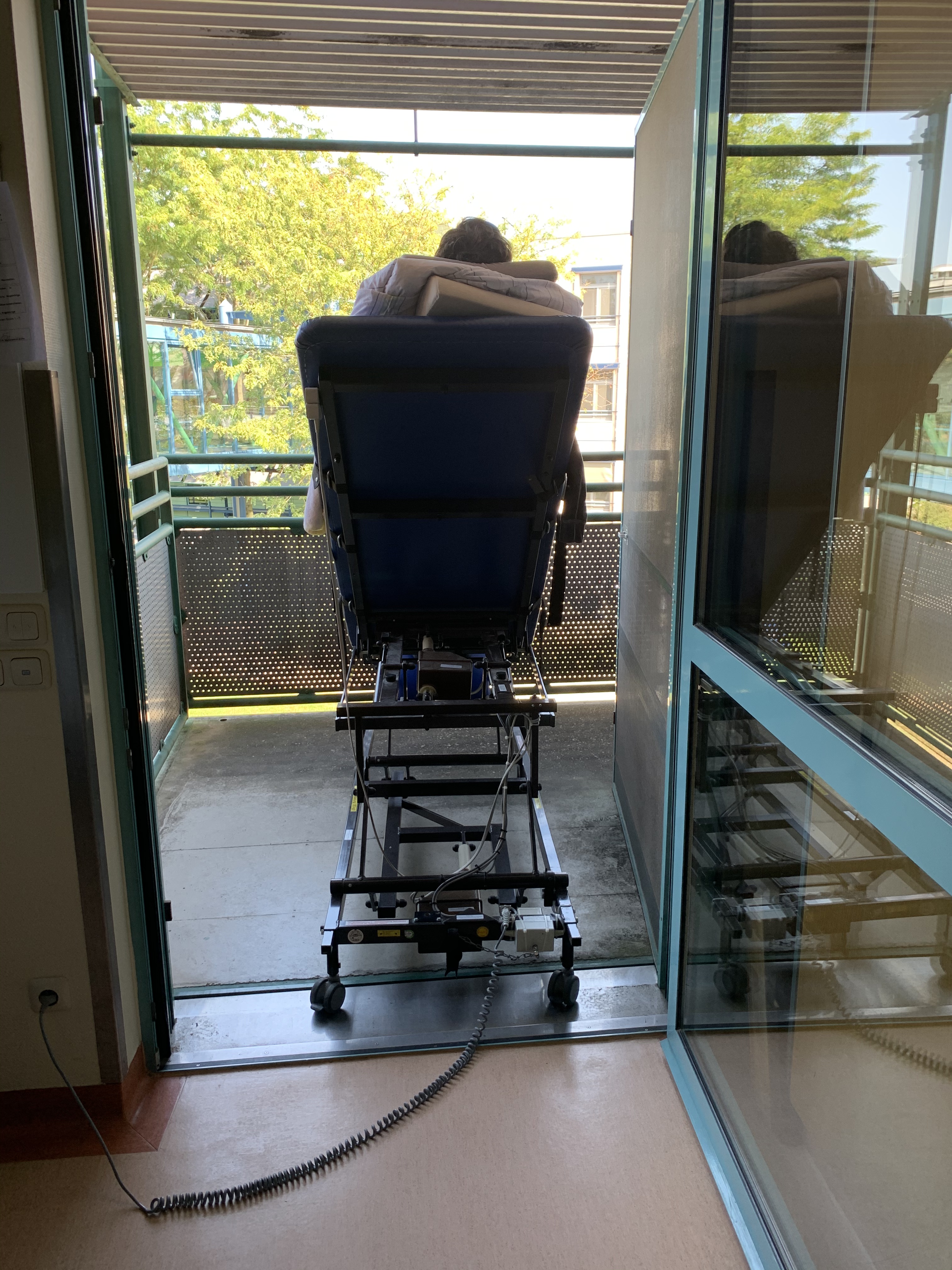
Before Pádraig went out for a walk on Saturday afternoon, he went out to his balcony. Standing. I am not sure what it looked like from below, but I know that Pádraig felt on top of the world.

One of his therapists this week was a senior Bobath instructor who did her magic on Pádraig’s body. I tried to pick up some ideas we could take home with us. But most of the time it was like watching Rembrandt working on one of his masterpieces and me trying to pick up some of his techniques. Pádraig really liked the sessions and his hips visibly benefitted.

When the master was not around, we mostly stuck with our routine exercises. Standing for each transfer, now again with both feet on the ground. Peddling the MotoMed, at times now without the headband. Resting in bed, with the right leg again being of the same length as the left.

IMG_1283
IMG_1307
IMG_1360
IMG_1402

Our stay in Burgau will be coming to an end soon. If there was only one thing I’ll be taking away from here, and there are many, it would be an increased conviction and enthusiasm to provide lifelong therapy to Pádraig and those who, like him, need it to survive. Secondary, life-limiting injuries can often be avoided and be dealt with given the right support. Not providing this support would be negligent, cruel, and inhumane. Equality, participation, inclusion, and self-determination are universal values for all, including for middle-of-the-road people, straight, GBLT, poor, rich, old, young, white, black, yellow, brown, crazy (but highly motivated and fun) Afghans and those with a severe brain injury.

If Afri can surf in Afghanistan, we can make life and living with a severe Acquired Brain Injury a reality. Watch us.


Pádraig will be looking for a new personal assistant / carer from early October. Please spread the word and get in touch if you know of anyone who might be suitable and interested. – Thank you in advance!


The HSE will be launching the Assisted Decision Making Act 2015 with an “Explainer Video” featuring Pádraig who will also be at the online launch of the video this coming Thursday. You can register to join the event and watch the video later on. Here is the official announcement of the online event.

Online Launch of the Assisted Decision Making (Capacity) Act 2015. Thursday 24 September 2020 10.30am – 12.15pm. Please click here to pre-register for the event

The Office is launching an Explainer Video on the Assisted Decision-Making (Capacity) Act 2015. The Explainer video includes simple core messages on the Act from the voices of staff and people who use our services. It is intended for use across all services to provide information to staff on what the Act means for their practice.

Chaired by: Dr Philip Crowley, National Director, HSE National Quality Improvement Team

Keynote Speaker: Mr Paul Reid, Chief Executive Office,

HSE Contributors will include Ms Aine Flynn, Director of the Decision Support Service, Professor Mary Donnelly, School of Law, UCC, Ms Caoimhe Gleeson, Programme Manager, National Office for Human Rights and Equality Policy, Margaret and Padraig Sweeney, Mary and Damien O’Donovan, Reinhard and Padraig Schaler.

Sound quality for the launch may be better through a phone so you may use the Irish dial-in number by telephone as follows as an alternative: Telephone: 01 526 0058. When prompted, enter the following  access code: 137 842 8368

The explainer video will be uploaded to www.assisteddecisionmaking.ie following the launch.

This is event is organised by the HSE National Office for Human Rights and Equality Policy and the HSE National Quality Improvement Team.


Peking

13 Sunday Sep 2020

Posted by ReinhardSchaler in Uncategorized

≈ Leave a comment

Because of a temporary tightening of visiting regulations I got a taste this week of how the China virus, the kong flu, can cut people off most contacts, isolate them, nearly put them in solitary confinement. During the week, the rehab hospital introduced, just for a few days, pretty strict control measures. I was still allowed to go in but we could not leave the room and there was no visiting.

What must it feel if you are, with a severe Acquired Brain Injury, practically locked up in your room, for months, with no visitors, and you don’t even (fully) understand what is going on? Are Young people with a severe Acquired Brain Injury in Nursing Homes updated on the developments and the ever-changing impact of COVID-19? Even if they are, do they understand what is going on?  I can not imagine what it must be like. Totally dependent and practically locked up over months, which no end in sight.

Pádraig is back on the MotoMed, peddling every evening for at least half an hour, most times he makes just over 5km.

That’s just a little less than it would take you from Burgau to get to Grundremmingen, where Bavaria produces ‘clean’ energy. It’s the place you will always find, especially on a good day, when the sky is blue – except over Grundremmingen, according to someone who lives there. There’s always a white cloud hanging over the place. I don’t think I’ve ever staid that long in the neighbourhood of a nuclear power plant. Strange how beautiful it looks.

While Pádraig is peddling away, I play music for him and try to entertain him a bit, so that it doesn’t get too boring. There are days, when I share some of my favourites instead of trying to play his. The other evening, I played the soundtrack of Easy Rider. For the first time, I later looked up the lyrics of Jimi Hendrix’ contribution, If 6 was 9.

If the sun refuse to shine
I don’t mind, I don’t mind
If the mountains fell in the sea
Let it be, it ain’t me
Alright, ‘cos I got my own world to look through
And I ain’t gonna copy you

I thought there was a lot in this song. Hope, motivation, strength. The music might not be everybody’s cup of tea – though I would agree with the comment that “Mitch Mitchell is the most underrated drummer of all time” as this song proofs. Mainstream is not always best. If you like it a bit more melodic, you can Go your own way. “Suddenly, your Mom’s music doesn’t seem so bad”, says one comment.

Anyway, Pádraig continued with his rehab. Standing up with his back against the wall (there must be a song in this), standing up on the tilt table, when he is getting out of bed.

IMG_1261
IMG_1183
IMG_1201
IMG_1205
IMG_1203
IMG_1220


His head control and posture is getting better, not dramatically, but noticeably. The aim is to make less use of his head band.

He has no problem stretching out his right leg and the right hip seems to be fine. What still amazes me is how the problem with his leg and hip had affected the rest of his body. Or, the other way round: how the successful intervention in relation to the leg and hip now also helps his overall posture, his head position, his spine. Everything is connected to everything else.

One of the very beautiful moments this week in Germany was when we watched the return of the “Peking” to Hamburg.

The ship was launched in Hamburg in 1911, left for South America, and never really came back. She spent the past four decades in a Maritim Museum in New York and was sold to the ‘Maritim Foundation’ for US$100. They spent a million dollars to ship it across the Atlantic, and a further three years and 38 million dollars on refurbishment. She will now be the heart of the German Port Museum in Hamburg. There are a few interesting shots in the video, apart from the ‘Peking’ herself. In the week of 9/11, watch the huge jet flying towards Hamburg’s skyscrapers at the beginning of the video. And in the background of the ‘cover’ picture is Hamburg’s new, futuristic opera house – part of what has been called the German Bermuda triangle of Hamburg opera, Stuttgart train station, and Berlin airport – all several times more expensive than originally planned, and years behind schedule.

And then, of course, the name of the ship itself.

No surprise that Trump wanted it out of New York.

BMW

06 Sunday Sep 2020

Posted by ReinhardSchaler in Uncategorized

≈ Leave a comment

The picture of the week.

Ist das nicht der absolute Hammer?
This rocks! – ¡Dios mio!

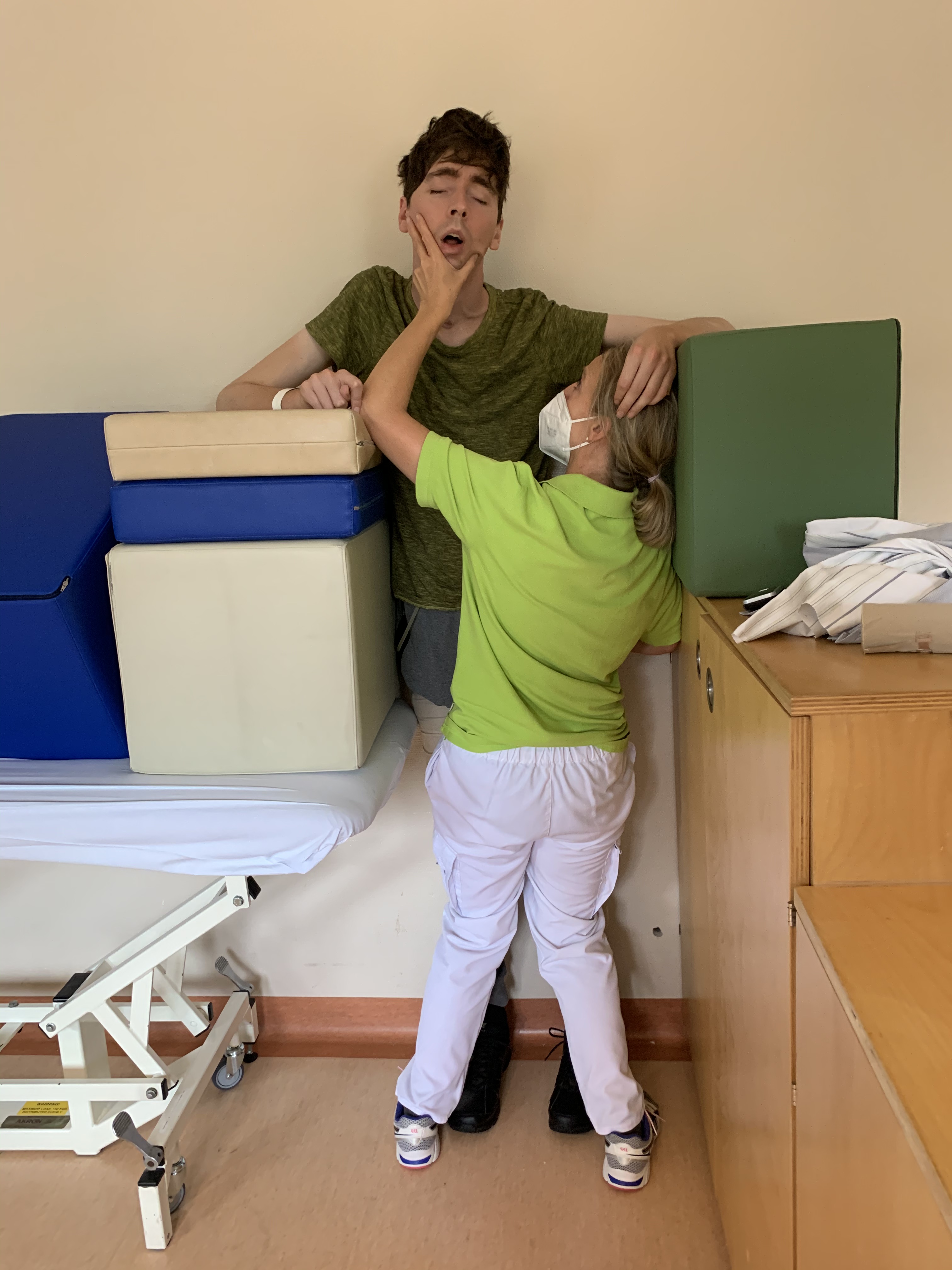
If there ever was proof needed that a picture tells more than a thousand words, this is it. When I took the picture, I thought it was special.

Now, looking at it, I see that it is spectacular. You can write a book around this picture. There are dozens of messages here.

And not just that Pádraig is very tall.

People in wheelchairs often miss dealing with the world and the people surrounding them at eye level. This is one experience Pádraig doesn’t miss. Even in his wheelchair, most people are still at his eye level. It’s when he stands up that he looses that eye-to-eye contact.

Oh lord won’t you buy me a Mercedes Benz. My friends all drive porsches, I must make amends. Janis probably never made it to Bavaria and never drove a car manufactured by the Bavarian Motor Works (BMW) or a ‘beamer’ as they are affectionately known by young urbans in Ireland. Maybe it’s just that ‘BMW’ doesn’t rhyme with ‘amends’.

An old friend of mine had one in his living room for a few months, while he was trying to fix it. And before you ask. No, he did not live in a mansion, it was just that the “beamer” was rather small. Three wheels, a true ‘front’ door, and a bench just slightly wider than a ‘normal’-sized driver would require. I couldn’t believe my eyes, when I saw a pristine “Isetta” parked around the corner here. After many decades, this was the first time.

Another ‘car’ I saw last week is also worth a mention. When I was a kid, big trucks collected the bins with a couple of men jumping off the back, running to collect the bins, getting them emptied by a mechanical lifter into the truck, and finally leaving them back where they had picked them up. – A distant memory in the country that invented “Vorsprung durch Technik”. The truck is still there, but it doesn’t need people anymore to pick up the bins, it does it by itself.

After all this excitement, I went to a street Café where I ordered an espresso. What I got was a perfect, dark and strong and short coffee on a special saucer, with a ‘glass’ of water and the, for such a delicate, elegant setting, required biscuit.  The waiter was not particularly happy about my order, I noticed. When I paid, I knew why he wasn’t happy. All around me, people had ordered expensive, hand-made ice creams with tons of rare fruit, chocolate and fresh cream on top. My espresso turned out to cost 1.60 euro. I checked the receipt. It wasn’t a mistake.

IMG_1095
IMG_1113
IMG_1116

Pádraig’s therapies this week were like a lesson in neuro-rehab. There are endless possibilities to position, sit and stand Pádraig. To support his posture, to develop his core, to adjust his hips. Not all was new to us. We knew about the tilt table for standing. Pádraig sits at his own table at home, especially for meals.

IMG_1159
IMG_1169
IMG_1108

But he had never sat on a regular chair, a ‘turned around’ chair – which worked out incredibly well. He also had never tried to stand up with his back against a wall, providing him with very firm support and giving him a sense of security he wouldn’t have just standing against another person. Other ways of standing we tried out were a bit labour-intensive and required a few therapists to support him from the back and the front.

IMG_1099
IMG_1107
IMG_1108
IMG_1143
IMG_1159

The week went well and we even had time to chill a bit in between. We are still watching CNN to get the latest from our brothers from across the big water. Surprisingly, so far we are managing to listen to even the most incredible horror stories without falling into utter depression. We are also listening to some podcasts and a mix of Irish, German and Spanish radio stations. The biggest challenge I find is not to loose my sense of time and space. Days run into each other, the surroundings don’t change. Weekends are a bit different. There is less structured rehab and more casual or social activities. Less therapists and more family for everybody here. It’s a reminder that this is what life is, or should be all about at its core: Having a good time with your friends and family.

Having adventures, I should add. Having plans. Being enthusiastic, committed, full of smiles and love and rock ‘n roll.

Whether it’s in a Mercedes Benz with Janis, in a Porsche with her friends, a tiny BMW or a bus on the road to Alaska.


Turkey

30 Sunday Aug 2020

Posted by ReinhardSchaler in Uncategorized

≈ 2 Comments

It’s the way you look at things or, in this case, how you parse them. First, I saw Türkei-leset (Turkey let’s read). It didn’t make any sense, especially when I looked at the packet. It turned out to be a “door wedge set”, or a Türkeile-set. Germans have a lot of fun making up those really long words.

And the way you look at things is often determined by your expectations. A doctor once said to me: “You hear gallop and expect horses”. That might be mostly correct, but it might prevent you from seeing the zebras galloping around the corner. You won’t even look because you “know” already what’s coming.

Last week, I began to notice more about what was going on around us. One of Pádraig’s sisters once remarked that she thought the Germans were lacking a sense of fashion. I think she might be right – though some TV presenters are trying very hard. The “Free State” of Bavaria’s flag is blue and white – like the sky here, the Bavarians like to add. One morning last week, they were proven right. Much of the “white” was caused by planes  – a sight so unusual these days! And I had to smile when I read a “Leaflet on dealing with the Corona Virus” which included the recommendation: “Vermeiden Sie Busseln” – “busseln” being a real nice affectionate bavarian word for “kissing” which I hadn’t heard in decades (and young people will never discover if the Corona Virus continues its way).

IMG_1019
IMG_0987
IMG_0985

Pádraig is doing well. The wounds from the operation are healing. Therapies are becoming a bit more challenging. He was up on his feet every day and spent some time in the robotic-assisted gait training device “Geo” – similar to the Hocoma Lokomat. Some of his therapies focussed on his posture, head control and his jaw. We are trying to explain that Pádraig’s neck was never straight as he adapted his to the height of the people around him. Apparently, sitting up straight,  developing his core strength, will help him with a dozen different things, like eating, drinking, breathing, voice production and more.

IMG_0992
IMG_0977
IMG_0974
IMG_0966
IMG_0965
IMG_0961

Nothing is perfect. But this is the first time in months that there is a glimmer of calm and predictability and normality. I have always liked adventures. I know Pádraig has too. But from time to time I like that warm, cosy feeling when I know where I’m going and why. I know it feels similar for Pádraig.

As a long footnote: yesterday, Moises Velasquez-Manoff wrote a fascinating opinion piece in The New York Times entitled: “The Brain Implants That Could Change Humanity – Brains are talking to computers, and computers to brains. Are your daydreams safe?”

Some aspects of what Velasquez-Manoff described I found particularly interesting:

“Imagine the possibilities when better brain-reading technology became available? Imagine the people suffering from locked-in syndrome, Lou Gehrig’s disease, the people incapacitated by strokes, who could benefit from a machine that could help them interact with the world?

“About two dozen people around the world who have lost the use of limbs from accidents or neurological disease have had sensors implanted on their brains. Many, Mr. Kochevar included, participated in a United States government-funded program called BrainGate. The sensor arrays used in this research, smaller than a button, allow patients to move robotic arms or cursors on a screen just by thinking.

People can already fly drones with their brain signals, so maybe crude consumer versions will appear in coming years. But it’s hard to overstate how life-changing such tech could be for people with spinal cord injuries or neurological diseases.

“Edward Chang, a neurosurgeon at the University of California, San Francisco, who works on brain-based speech recognition, said that maintaining the ability to communicate can mean the difference between life or death. “For some people, if they have a means to continue to communicate, that may be the reason they decide to stay alive,” he told me. “That motivates us a lot in our work.”

“In a recent study, Dr. Chang and his colleagues predicted with up to 97 percent accuracy — the best rate yet achieved, they say — what words a volunteer had said (from about 250 words used in a predetermined set of 50 sentences) by using implanted sensors that monitored activity in the part of the brain that moves the muscles involved in speaking.”

So much to learn. But, as one participant in these studies, Bill Kochevar, paralyed from the neck down in a biking accident, said: “somebody has to do the research.”

That article by Chang is about how computer-brain interaction can benefit from Machine Translation technology – a field I studied and taught for many, many years. Only this time it would be about “MT of cortical activity to text with an encoder-decoder framework”. Am I going full circle? Back to MT and parsing. And Turkey:)


Rehab

23 Sunday Aug 2020

Posted by ReinhardSchaler in Uncategorized

≈ 5 Comments

We didn’t have to try make him go to rehab. Pádraig didn’t say “no, no, no”. In fact, he couldn’t wait to go and was delighted that we were able to go a day early when a room became available.

The last few weeks felt like a trip down the stream on that dreamboat. I doubted. Would this work? There was an endless number of obstacles.

Pádraig, again, taught me that everything was possible. Nothing in my mind was crystal, but it was in Pádraig’s. There were never any doubts in his mind that this was the way to go.

We have gone a long way and, so far, he has been right. Of course, he would probably add. As always.

Last Tuesday, the ambulance driver turned up ‘on time’ at 8:30am while I was getting Pádraig ready. I had forgotten that ‘on time’ in Germany means 10 minutes early:) Eventually, we left ‘on time’ Irish time, 15 minutes late:), bringing Pádraig, comfortably on a stretcher, and myself from Munich to Burgau, just over an hours’ drive. It was great that he did not have to travel, sitting, in a car packed to the roof with ‘stuff’. That car followed separately, competently driven on the ‘wrong’ side of the road.

The five days in the Munich hospital with Pádraig were, once the operation was over, some of the best days I’ve had in a long time. We listened to podcasts, watched a couple of movies, rested a lot, had very few interruptions.

We didn’t have to worry about  food, cooking or cleaning up or anything like that. We just had time together. Even the soaring temperatures in the mid thirties weren’t too troublesome.

There were a few hours of physio, a welcome interruption. And an opportunity for Pádraig to show off his height.


Checking in here at the Therapy Centre in Burgau was like meeting old friends. Circumstances had changed since Pádraig was here last. COVID had made its impact here too. There were tons of tests for infections. Face masks and other PPE. Once the first tests came back, the COVID test after less than 24 hours, things eased a tiny bit, but not a lot.

With caution, therapy started straight away. Over the first two days he was seen by an OT, physios, SLT, neuropsychologist, music therapist and a few doctors. He is staying on his own in the rehab centre during the night and while we are nervous, so far it seems to have been ok for him.

What Pádraig has been doing is astonishing. He put his weight again on both of his legs. Not only can he stretch out is right leg again, his whole body is much less tense.

IMG_0861
IMG_0862
IMG_0912

For the first time since his accident, he chilled out on a sofa. What a feeling that must have been!

IMG_0910

IMG_0910


And he played the monochord. Another first!

I had never heard of a monochord. It’s an amazing ancient instrument. If you hold it to your body when you are playing it, feeling the vibrations is amazing. It’s also used for meditation. Although the music therapist told us that it originated in Greece, it sounds a bit Indian to me alright.

The first few days here demonstrated what really experienced and dedicated therapists can do. They see and feel the body of their patient in a way that allows them to spot alignments and tensions others wouldn’t notice. And to re-align. They manage to assess the condition of their patient while working with them. While Pádraig had a bath/shower and was guided to wash himself with his hand in a facecloth they were able to assess the range of his movements.

It has been a privilege being able to watch and help and learn. All in a calm, reassuring and highly professional, quietly ambitious setting.

Standing again on both feet or chilling out on a sofa.

Nothing is impossible.

Hospi-tale

16 Sunday Aug 2020

Posted by ReinhardSchaler in Uncategorized

≈ 10 Comments

I kept the name of the blog because I think it’s catchy although, thankfully, it wasn’t about hospitals anymore but rehabilitation. Well, Pádraig is back. Another true hospi-tale we had hoped to have left behind. Thankfully, I have a bed at his side and can stay with him.

This is low tech, compared to when Pádraig first hit the hospital scene. Because he is so much better. He has no machines attached to him and he himself had decided to have this procedure done in an attempt to fix his hip and allow him to stand on both of his feet. He picked his (somewhat limited) menu for his stay, aiming for the meat dishes, rather than the vegetarian or cheese options. The aim is to get him standing and walking again, with help – but standing and walking.

The big day arrived and delivered, for now, what Pádraig had been looking for: he can stretch his right leg again and stand on both of his feet. The real difficult part now will be to get his physio absolutely right so that all this pain will be worth going through! So that he can get back walking. With help, but walking.

With temperatures of 30o-35o Celsius, we started the week on another two-day, nearly 1000 km road trip to Munich from the North of Germany before being admitted to hospital on Wednesday.

Day 1, Wednesday

We arrive at around 10:30, through the COVID security check, straight up to the ward where we get a double room for Pádraig and myself. The programme for the day: talk to the junior doctor on the ward who explains the operation to us, sign a form saying that she did, a new x-ray of the hip, anaesthetics department, blood tests, ultrasound department. We get to know the hospital. By the time we finish, it’s dinner time, at 5pm (!). We have missed the surgeon who was to see us on the ward.

Day 2, Thursday

Pádraig is first up at 8am. At half seven, the surgeon briefly checks in with us and wishes Pádraig all the best re-assuring him that this will all work out fine – which is very kind and nice of him.

In Germany, 8am means 10 minutes before 8am. I walk with Pádraig, in his bed, to the pre-surgery where he is transferred to a different ‘bed’. They check his name, date of birth and the two ‘x’s, one on each leg, marking where they will work on him.

After that I go back to our room and get, a nice touch, two coffees with my breakfast. And then the waiting time begins. Not just here in Munich but in many places around the world. It takes far too long for our taste but eventually I am called in to the recovery room where they think Pádraig might still be ‘asleep’ until he tells them with his bleeper that he is awake and has no pain.

Back to the ward. The rest is an auld long, boring day. The hospital is secured like a fort and when we try to plead with security saying that our son has had an operation they ask us for his age. Even before I open my mouth to say that he is 30 I know what the effect is going to be. I am right. We have to wait until visiting time at 5pm.

Padraig’s legs are all bandaged and he is getting what looks like tons of pain killers. Despite all that, he eats and drinks well – and really enjoys the ice cream. It’s still roasting in Munich.

We get word that we should be able to move to Burgau next week for rehabilitation. I’ve lost count on the amount of times we packed the car with millions of bags and moved them to another place in the past few weeks. Luckily, this time it’ll only be about an hours drive.

Day 3, Friday

Taking bandages off, standing on both feet, resting, short physio session. A bit of a routine settles in. It’s still hot and even if it cools down outside during the night, that doesn’t make much of a difference here inside the room.

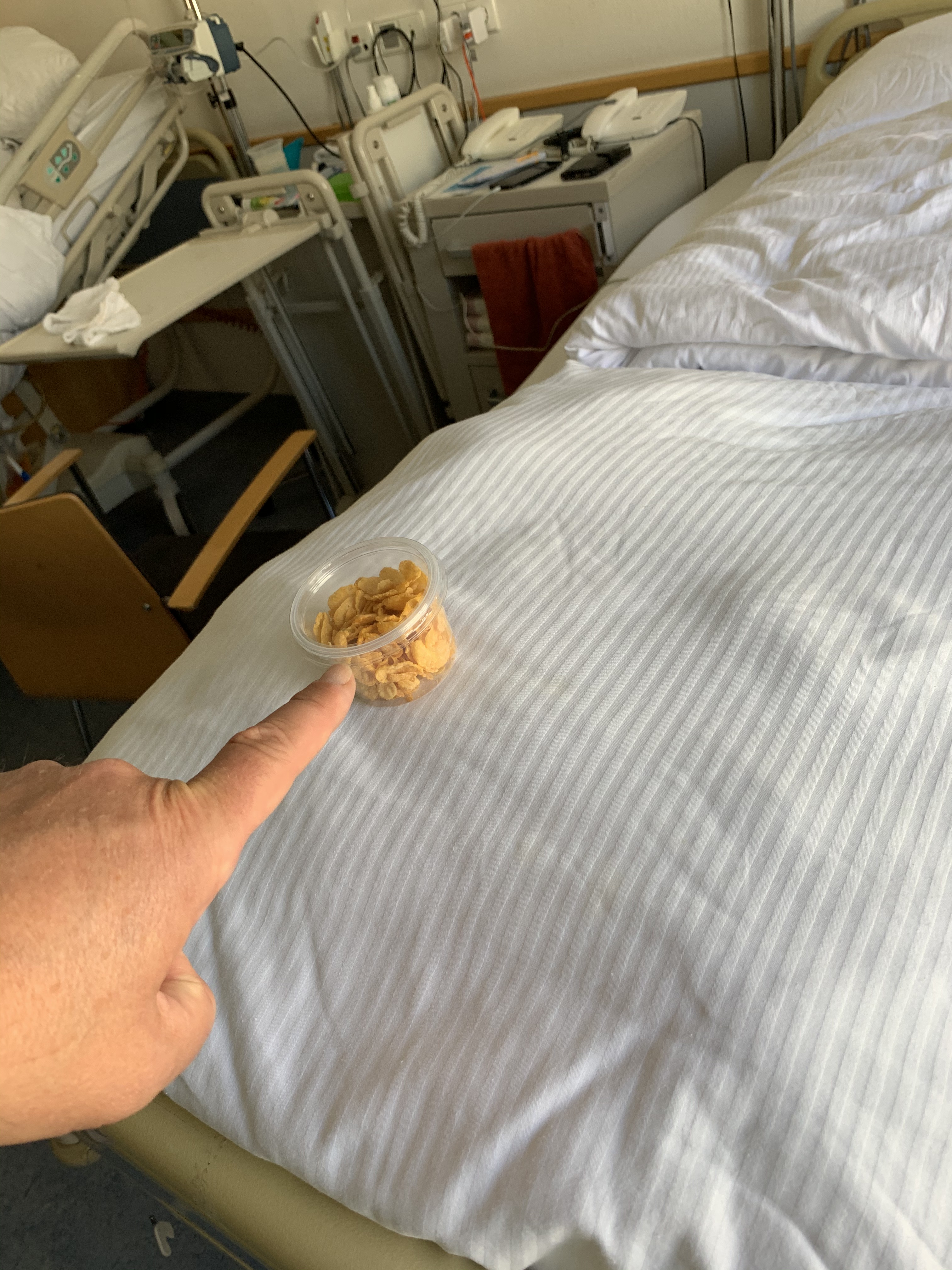
I am remembering that Germans don’t do cereals – and if they do, they don’t know what to do with them. Asking for a portion of porridge or cornflakes of Wheetabix here in the Fatherland is like asking for steak tartare in Ireland. You wouldn’t know what they’d make out of it.

Can you spot the breakfast portion of cereal they sent up for Pádraig in this picture? I mean, lads come on: this if a tub for marmalade, not for cereal!

Day 4, Saturday

Weekends are quiet. Especially on Ascension Day in Bavaria. It’s a public holiday and all shops are closed. But visiting hours are four instead of just two hours. We decide to do a bit of a physio session ourselves, stand Pádraig up.

We get him dressed and go out for a walk in the park trying to find an ice-cream shop.

IMG_0774
IMG_0770
IMG_0773

In the evening, we watch movies – the end of ‘Arrival’, a movie I liked before but now watch in a completely different way. “If you knew the future, would you do it anyway?” – is the central question of the movie for me know. And a resounding “yes” is the answer. We start watching “In Bruges”, one  Pádraig’s favourites. I think he knows the dialogue by heart.

7C8F6B25-54D0-4304-8375-95D59AECD6B7
0560953E-4FCF-419D-86CE-DF94C5F24AA2

We’ll most likely be here for another few days. We’ll go for another walk tomorrow. We’ll watch the end of that movie. Buy another ice-cream. We will even continue with some gentle physio. Life is not that bad (it has the occasional setbacks) and always has happy, even funny, moments.

I want to say a big, big THANK YOU to all of you who are always asking, and especially over the past week, how he was doing, who were thinking of him, sent good wishes, crossed fingers, lighted candles, prayed, sent good vibes, encouraging messages. Without that shared energy and the fundraising so many people organised, summer coffee mornings, wintersongs, school cake sales, dusk to dawn tennis, Mongolian rallies, a (barefoot for some) climb up to Croagh Patrick that had to be cancelled at the last minute because of COVID, a mindful solitary walk over many weeks during COVID, personal and family support, and much more – we could never have done what we could do to get Pádraig the treatment that he needs so desperately for his hip and legs. He is a trailblazer and so are you. Showing the world that live and living with a severe acquired brain injury is possible. That obstacles and setbacks can be overcome. Together.

Amygdala

09 Sunday Aug 2020

Posted by ReinhardSchaler in Uncategorized

≈ 1 Comment

Soon the wait will be over. On Monday, we’ll make our way back down South. One overnight on the way, one overnight in Munich, check-in at the hospital on Wednesday, intervention on Thursday, check out on Sunday or Monday, rehab in Burgau. That’s the plan. I can hear God laughing.

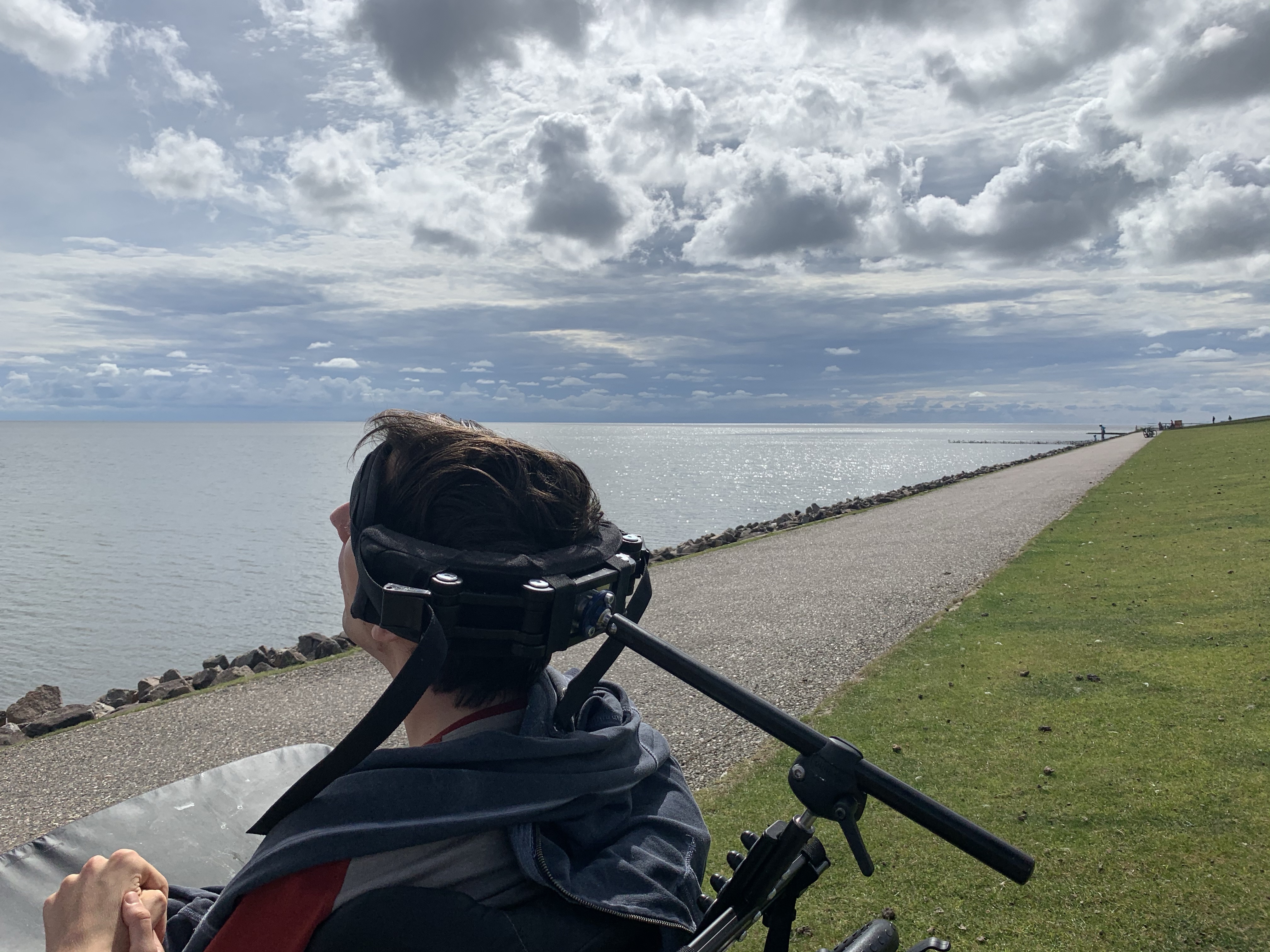
We are going for the occasional walk along the coast. The quietness and serenity in some parts are stunning. The wide, empty spaces make the mind go wander. It could go anywhere. Wandering and wondering.

As tourists from the North can’t get down to Southern Europe to enjoy the sun, a few days ago the sun decided to move up North. Blue skies, soaring temperatures, no wind. Fabulous if you enjoy the heat. A few degrees less would do me just fine.

I have been wondering about the effect of ongoing, sometimes endless-feeling uncertainty. As if I didn’t know it myself, I googled it. Here is the answer of an expert.

Apparently, we have a “hunger for certainty”. Our brain “craves certainty and avoids uncertainty like it’s pain”. We dedicate massive neuronal resources to predicting what will happen. Consciously, we base our predictions on what will happen on around 40 environmental cues that we scan constantly. Subconsciously, this number is over two-million (who counted?!). We dedicate huge resources to constantly process this incredible amount of data subconsciously because it is part of our survival instinct. We need to be careful, we need to try to predict the future, we need to recognise patterns. If that doesn’t work for some reason, we feel that our life is under serious threat. Whether we are hunters and gatherers avoiding natural enemies, or sophisticated city folks trying to cross the road without being hit by a car.

That’s why our brain is addicted to certainty. When that craving is met, we feel good. When that craving is not met, a threat response is instinctively triggered and our brain automatically switches to alert. Just a little ambiguity and the amygdala, the primary structure of the brain responsible for our conditioned fight or flight response, kicks in and lights up.

Just thinking: a lot of what is happening during this pandemic probably has its roots here. And some of the reactions can be explained this way. Shutting everything down brings certainty. Though probably only short-term. Even hunters and gatherers had to leave the comfort of their home, the security of their known surroundings, to get food in order to survive. It’s probably all about a healthy and workable balance. Leaving your comfort zone, pushing the limits, is good for many reasons and, ultimately, necessary for survival.

My problem is that some patterns I recognise feel like threats. Instead of giving me certainty and making me feel good, they put me on high alert. That amygdala of mine is lit up like a flood light too often and for too long.

I guess all this amygdala business is not good for you if it goes on for too long. Hopefully, next week will make our lives a bit more predictable and bring a bit more certainty (in a good way). Less uncertainty. Less threat. More feel good. Rest for the amygdala. At least for a while.

Good Trouble

02 Sunday Aug 2020

Posted by ReinhardSchaler in Uncategorized

≈ 4 Comments

The message is: life is for living. It might turn out different from what I had imagined. It might have aspects that are difficult, challenging, unjust, even cruel. But it also offers me incredible beauty, enduring friendship, deep humanity, and love.

The best way to live it is to persevere, to ‘keep the eye on the ball’, to keep a sense of wonder and amazement, to love. To get into ‘good trouble’.

Life is not for checking out.

Some things on the telly used to bring tears to my father’s eyes. A sentimental movie, a report on history, or the Pope giving a sermon. While I saw the point (sometimes), I thought he was a bit overreacting. Looking back, and only now I start to understand, his life must have been packed with trauma. He was 19 when WWII started. The lead up to that war, the war itself, and its aftermath shaped what should have been the best years of his life.

This past week, we watched some of John Lewis’ funeral. I don’t know that much about John Lewis. But what I heard about him moved me to tears. He was 20 years old when he first got into ‘good trouble’. Just before he died he apparently talked to some young people and told them that he was very hopeful for the future because of their perseverance, their good fight, their love.

Maybe this was just a demonstration of how well the US do funerals. But for me, this was a demonstration, a recall of values, that I always admired them for. You do what you believe in, and you don’t harm others while doing it.

We went to a doctor to get Pádraig tested ahead of his hospital admission. A poster on her wall hinted at how she sees hospital discharges into the community. It made me think of Pádraig’s discharge. There was no plan for his rehab. I still had to smile.

You’ll be discharged today. Your GP will look after the rest.

We are doing well and we are doing the right thing. Pádraig is enjoying the good days. While we are very busy, while I am tired and feel exhausted, we are spending all this time together. Tomorrow week, we’ll be going on another nearly 1,000 km road trip down South to Munich. Following a relatively small procedure and a few days in hospital, Pádraig will be able again to put weight on his right leg, all going well.

We have a plan and it’s the best plan we could come up with. Now we’ll have to keep the eye on the ball.

Ithaca

26 Sunday Jul 2020

Posted by ReinhardSchaler in Uncategorized

≈ 2 Comments

Ithaca can wait.

We have a plan. The least invasive soft tissue, muscular intervention possible. It will take just over half an hour. Recovery will be a few days in hospital. Rehab will be a few weeks. The expectation is that, with a bit of luck, Pádraig’s femur will slide back into his hip socket, his knee and hip will not hurt him. His balance and right leg movements will feel different and really good rehab and exercise will be crucial. Nearly sounds too good to be true but it is worth giving this intervention a try.

Last Monday, Pádraig had an appointment with a consultant in Munich, Tuesday we were in the Therapy Centre in Burgau, the last few days back here in Pforzheim. Having listened to the people we trust and some new experts, Pádraig was happy with this decision and we decided to go for it.

The hospital is booked for 12 August. Rehab will follow.

Given the circumstances, we’re going back North. Two days on the road. We’ll go South to Munich in a bit more than two weeks’ time. Another two days drive.

We’re getting really good at packing and unpacking. (Good practice for the trip to Alaska.) Living a few weeks or sometimes even days here, another there. Having had the opportunity to talk to what are probably two of the four experts in the field of neuro-orthopedics in Germany, to some of the best therapists and neurologists, really helped us to understand Pádraig’s hip problem and to agree to the plan we’ve got now.

How do I feel about it? – It’s good to have a plan and to know where we’re heading. That’s a big improvement from where we were a month ago. I feel lucky that so many people were there, when it mattered, to help us. From the advice we got, the time people took to think with us about the options, to writing the referrals, to just staying with us.

How do I feel about how we got where we are now? – It has been complicated and involved and exhausting. It didn’t have to be like that. And if you ask me, it should not be like that.

There are so many questions in my head and most of them have the same answer: those with a severe Acquired Brain Injury, like Pádraig, are not on the radar of the vast majority of health care professionals. They aren’t because they don’t matter anymore. We are lucky because we have found people, friends, who don’t share that view. They make all the difference.

We now know that the hip problem Pádraig developed is a well known and pretty common secondary complication of his initial injury. It always needed expert attention and could not be dealt with by doing a few stretches.

We are on an Odyssee when we should be in Ithaca. But then – isn’t that what life is all about, the journey? Ithaca is the final destination. We’ve plenty of time to get there.

← Older posts
Newer posts →

Enter your email address to follow this blog and receive notifications of new posts by email.

Join 412 other subscribers
blog awards ireland

Blog at WordPress.com.

  • Subscribe Subscribed
    • Hospi-Tales
    • Join 238 other subscribers
    • Already have a WordPress.com account? Log in now.
    • Hospi-Tales
    • Subscribe Subscribed
    • Sign up
    • Log in
    • Report this content
    • View site in Reader
    • Manage subscriptions
    • Collapse this bar
 

Loading Comments...