
We are on the Dreamboat and Dreamboaters do not give up.
Today was the big day of the Women’s Mini Marathon in Dublin. When I arrived at around mid-day in Dublin (not for the mini-marathon;) I thought I might have got off at the wrong stop. It felt and looked like Reykjavík on Christmas Eve: dark, wet, cold and windy. But, there were two brave women, old friends, i.e. friends from way back, of Pádraig who braved the elements and ran the mini-marathon for Paddy, as they know him.
Look at the pictures: they look (just a little) exhausted, but absolutely happy.


And here is what they said when they finished their challenge:
We would certainly not give up. Paddy is an inspiration to both of us…. We were completely humbled by your care for Paddy and your conviction that he will get well. We are on the dreamboat and deamboaters do not give up. We hope to make another trip to Hamburg. No date set as yet but will check will you before we book. Patricia/Mary(dreamboaters)
Pádraig was tired today, probably still recovering from this Wahnsinns-Pilgrimage to Lourdes. But he is in good form. That we will be going again doesn’t seem to be a question anymore.
A friend sent a book by Simon Fitzmaurice, It’s not yet dark, in which he shares what it is like when someone tells you that you will have just another three to four years to live. When motor neurone disease (mnd) slowly shuts your body down.
I read the book today when traveling from Hamburg to Dublin and could not put it aside. There is one section where he quotes two eminent and well-know consultants he had approached for help and advice when he eventually could breathe only with the help of a ventilator. One, he names him in the book, told him that he had to switch off the ventilator. The other, he names her in the book too, said that they do not advocate ventilation in this country for mnd patients. That it was time for Simon to make the hard choice. (One of them is the same senior consultant who told us and the nation on RTÉ’s Late Debate that people with severe brain injury offer a bad ‘return on investment’.)
I had to read this passage a few times to make sure I had understood it correctly. To my horror, I had: Both consultants advised Simon that he should not use a ventilator but get ready to die. In Ireland, mnd patients are not routinely ventilated – it’s too expensive. Instead, they are sedated, counselled, eased into death. They are not given a choice, Simon writes. Why would you want to live with mnd? In the same way: why would you waste money to help people with severe acquired brain injuries, to slightly rephrase what a senior consultant said about treating Pádraig and other persons like him? Why would you give them proper care, preventing dropped feet, preventing their shoulders being dislocated, preventing bed sores, preventing muscle spasticity, ….?
In the same way that the broadcaster standing in for Joe Duffy the day after my interview with Joe, asked Brendan Flynn whether he thought that his son Robert, who suffered very severe brain injury some years ago, had a life worth living because he had been reduced to a person that was completely dependent on others. Whether he was happy that Robert had survived, whether he was happy to have Robert around. I had to re-wind, listen again to that part of the programme, to make sure I had not misunderstood.
Simon’s answer in his book to all these questions is the same as the one given by ‘mostly dead’ Wesley in The Princess Bride, when replying to Miracle Max’s question: ‘ What’s so important? What you got here that’s worth living?’ – ‘Truuue love’ is his response.
Simon outlived the predicted three to four years, he lived with his ventilator to father two twins, he saw them being born, becoming toddlers.
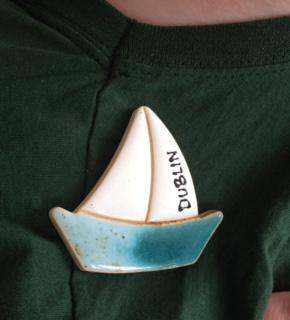 My response to this ‘return on investment’ in medicine talk, to this inability to grasp even a hint of the meaning of life, to the cold accountant’s mentality in medicine – would be a loud “Ahoi” to wake up the broadcaster, to wake up the politicians, to wake up the consultants, to wake up the people so that they’d see the insanity and so that they joined in singing the ‘Dreamboat’.
Dreamboaters, ahoi!
 Hospi-Tales
hi Reinhard
Read this with interest. concise as ever you are. well done.
I think it is worth you contacting the journalist and talking to him – he is a fine fine journalist and perhaps he would like to do a news item on Simon or Pádraig an he can ‘confront’ the consultant and her ilk. she probably means well but her philosophy should not be allowed to flourish.
I worked with a guy (through Mick Donegan – I’m not sure if you ever contacted him?) who had been stabbed at 19 (maybe) and he became locked-in. The doctors in their wisdom held no hope for him and so he stayed in St Mary’s in Phoenix Park. His mum and her partner were very supportive and his mther was certain that he was ‘alive’ inside. One meeting with him was enough to see his intelligence and humour in his eyes.
He was set up on an eye control system and he communicated with his mum – with difficulty of course but the most important thing was that he was communicating and thus allowed (and his decision accepted by doctors etc) to decide to go to a football match in england – the doctors thought that he was brain dead and not able to make any decisions for himself and so they had long refused to allow him to go because they thought he would get an infection and die.
He went to the match and also to the euro championships. He has since passed away.
I think it’s important that the consultant and her ilk need to be shown tat the banking attitude to life and medicine is flawed beyond comprehensionand needs to be challanged all the time with stories like Simon’s and Pádraig’s.
I’m not sure if you know simon directed a feature film last year.
Maybe this is a way of making the story relevant. The Diving Bell and the butterfly is another example (I have always wondered how the author would have done with the eye control system).
Anyway sorry for the rant but perhaps it’s important. Not for you necessarily but for someone else to take on.
Le ard-mheas
Colm
Hi Colm, so good to hear from you! Just to be clear: I fully agree with you that journalists and doctors all have good intentions and want to do a good job. Otherwise, they would not have chosen their profession. What is happening, I think, is that the environment you are (working) in shapes your thoughts and vision, at times to a point where you loose the ability to step out of your ‘role’ and see life from different perspectives. We contacted the consultant after that ‘Late Debate’ programme and, so to speak, cleared the air (to an extend). I should do that with the journalist too, you are right. – Sometimes you do things that hurt or are insensitive although that is the last thing you want to do; I have done it more than once. And each time I appreciated when I was told, because I could learn from it. – Reinhard