Do just once what others say you can’t do, and you will never pay attention to their limitations again.
James Cook
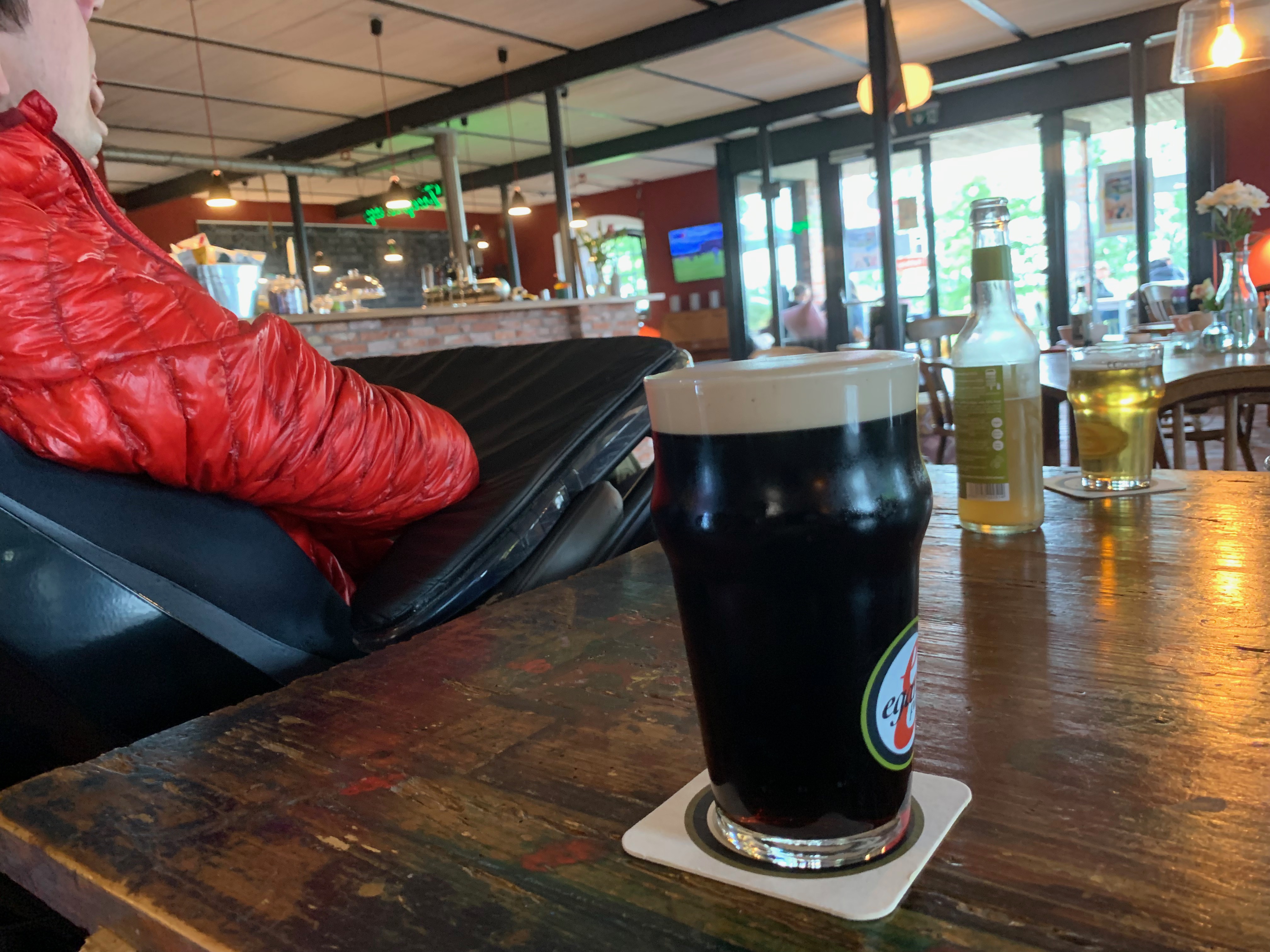
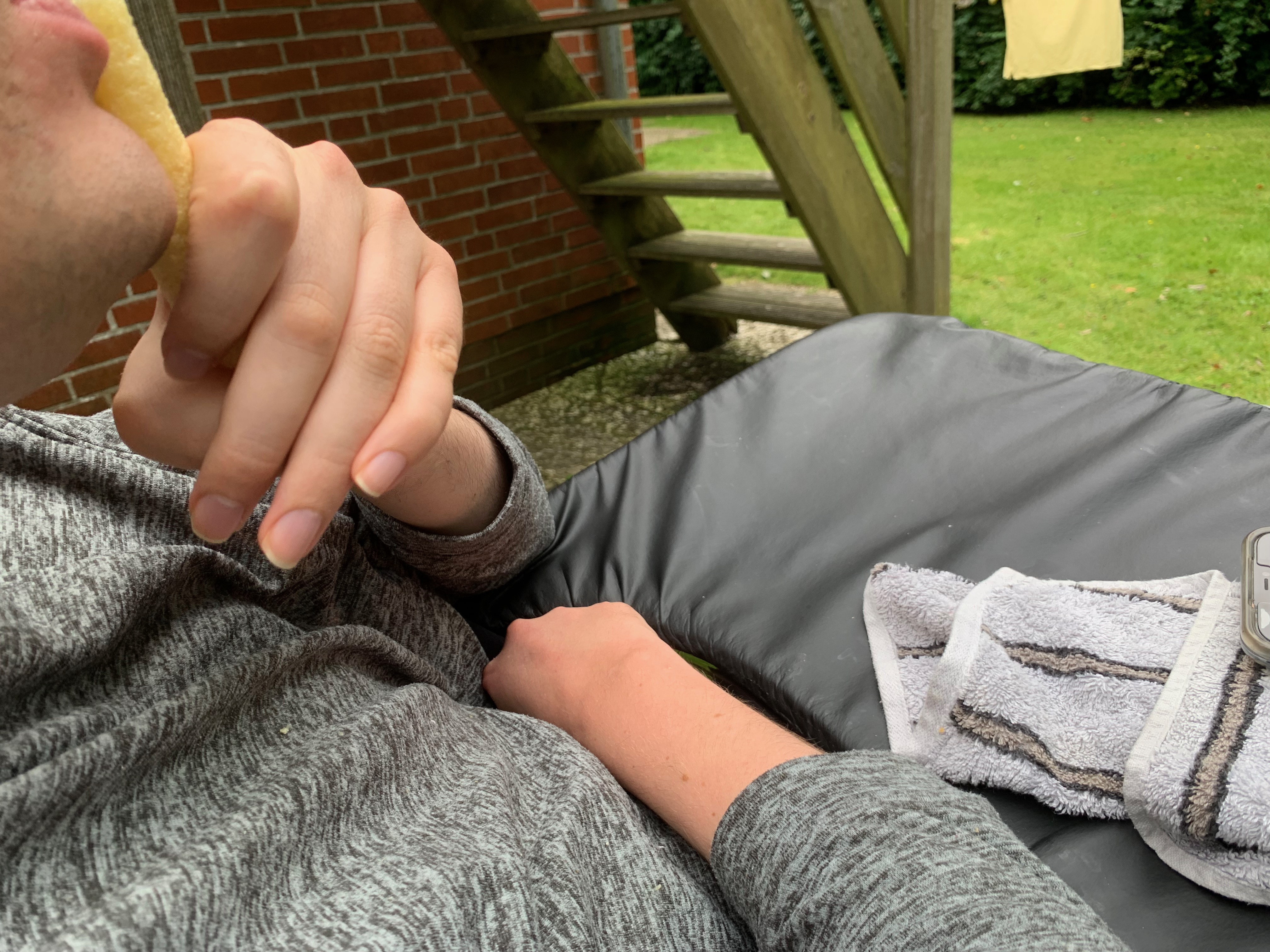
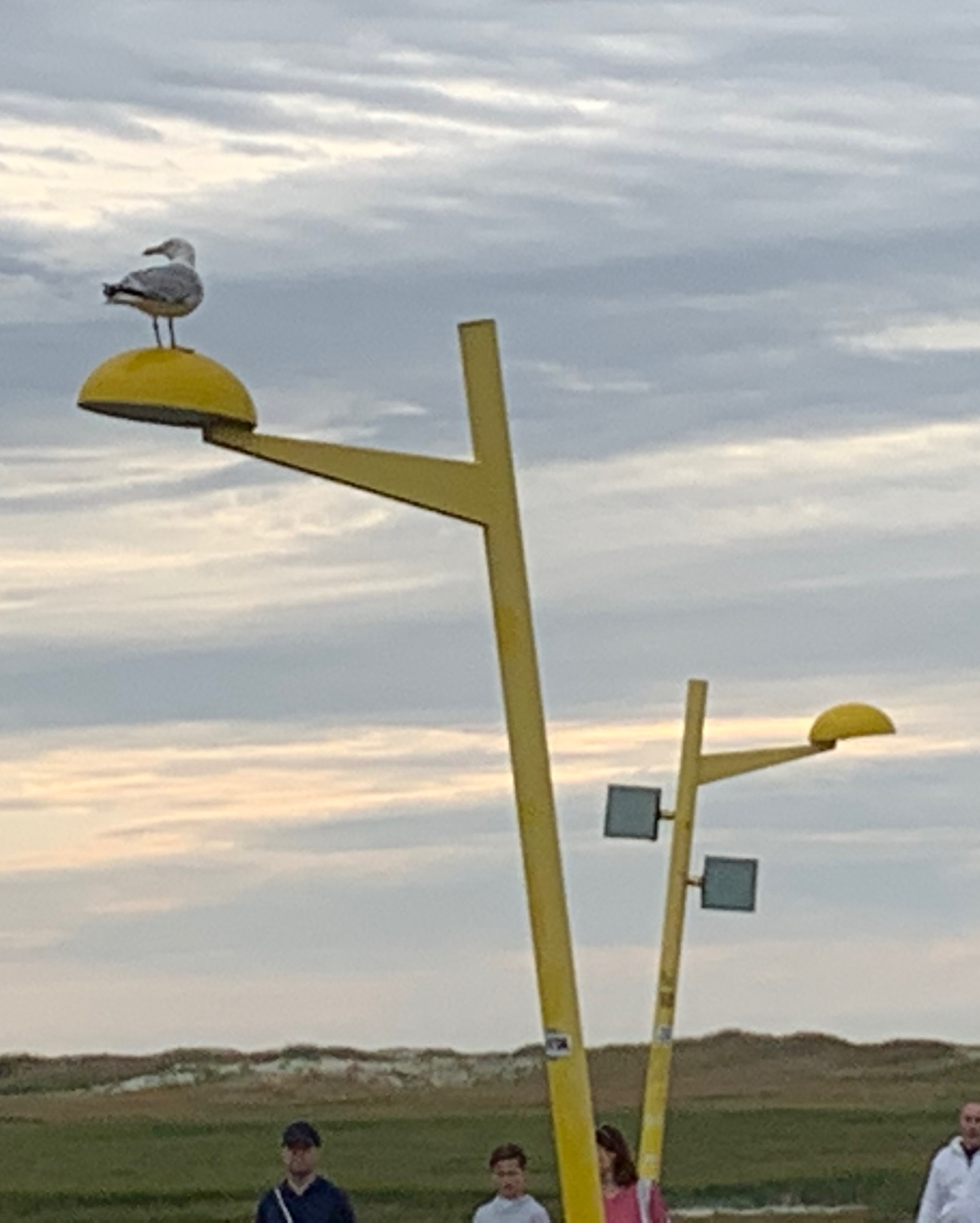
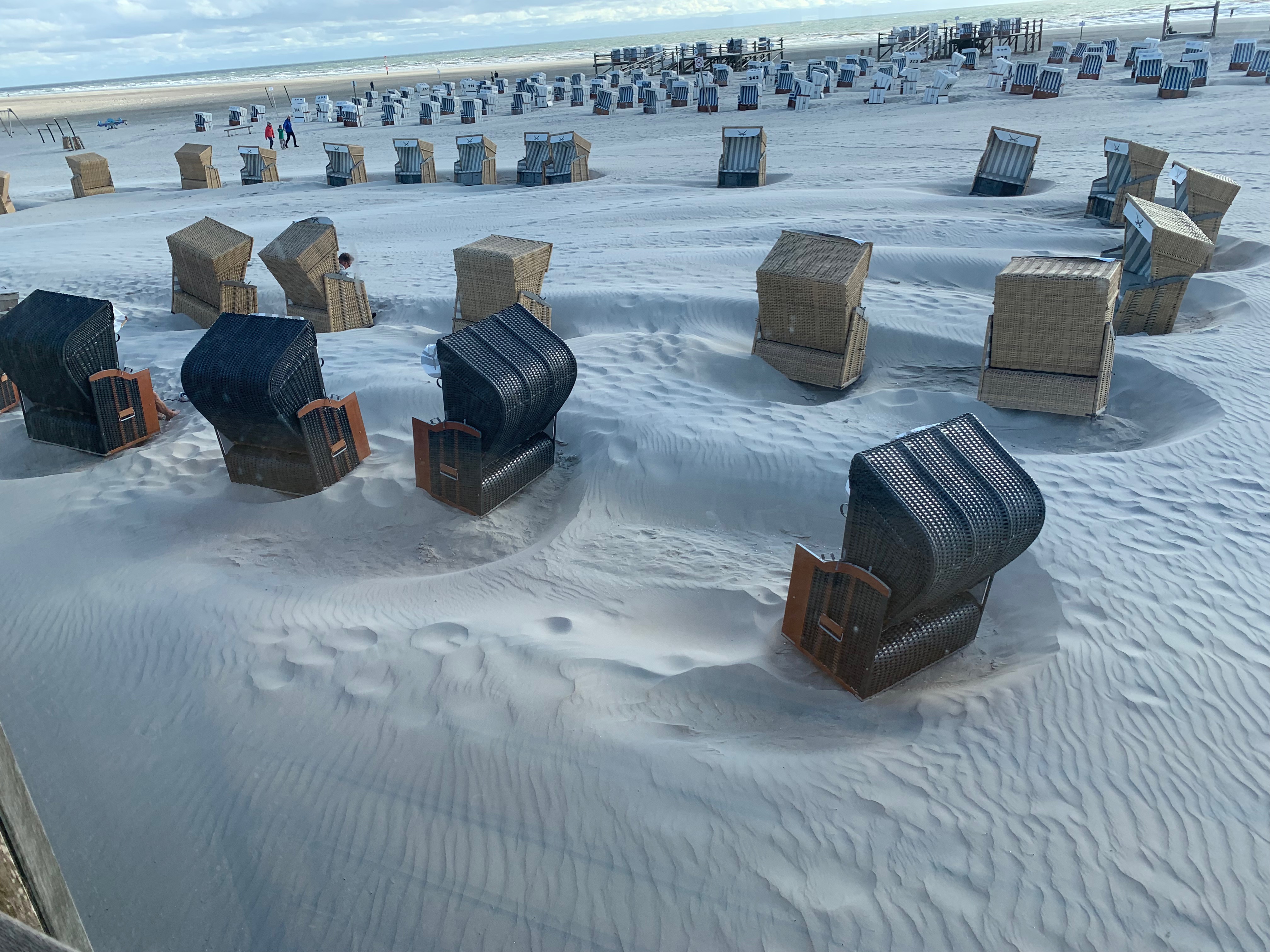
Another, very normal, week off: breakfast in the garden, a stout in Egan’s Irish Pub, and dinner at the sea front with the seagulls watching.
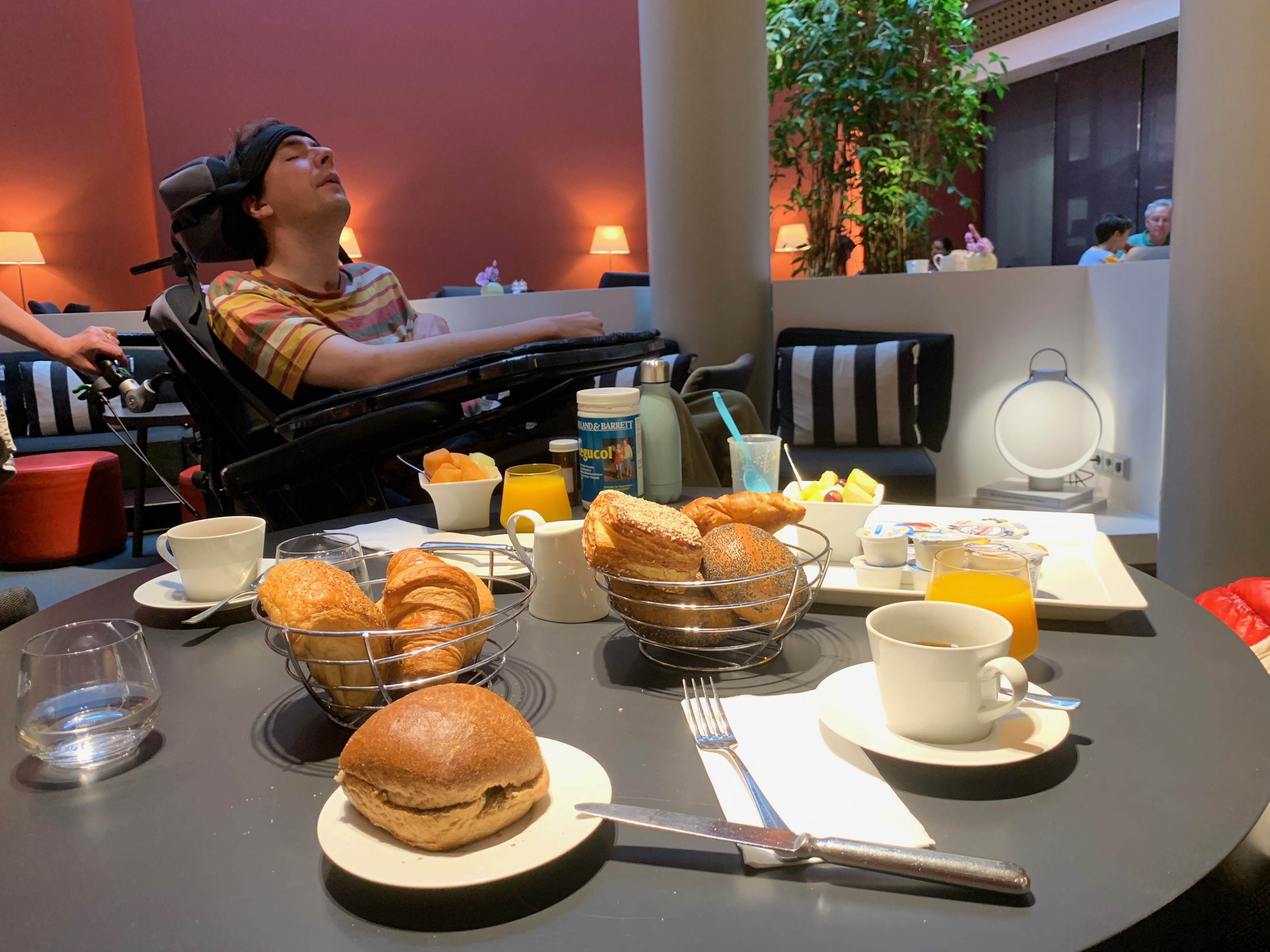
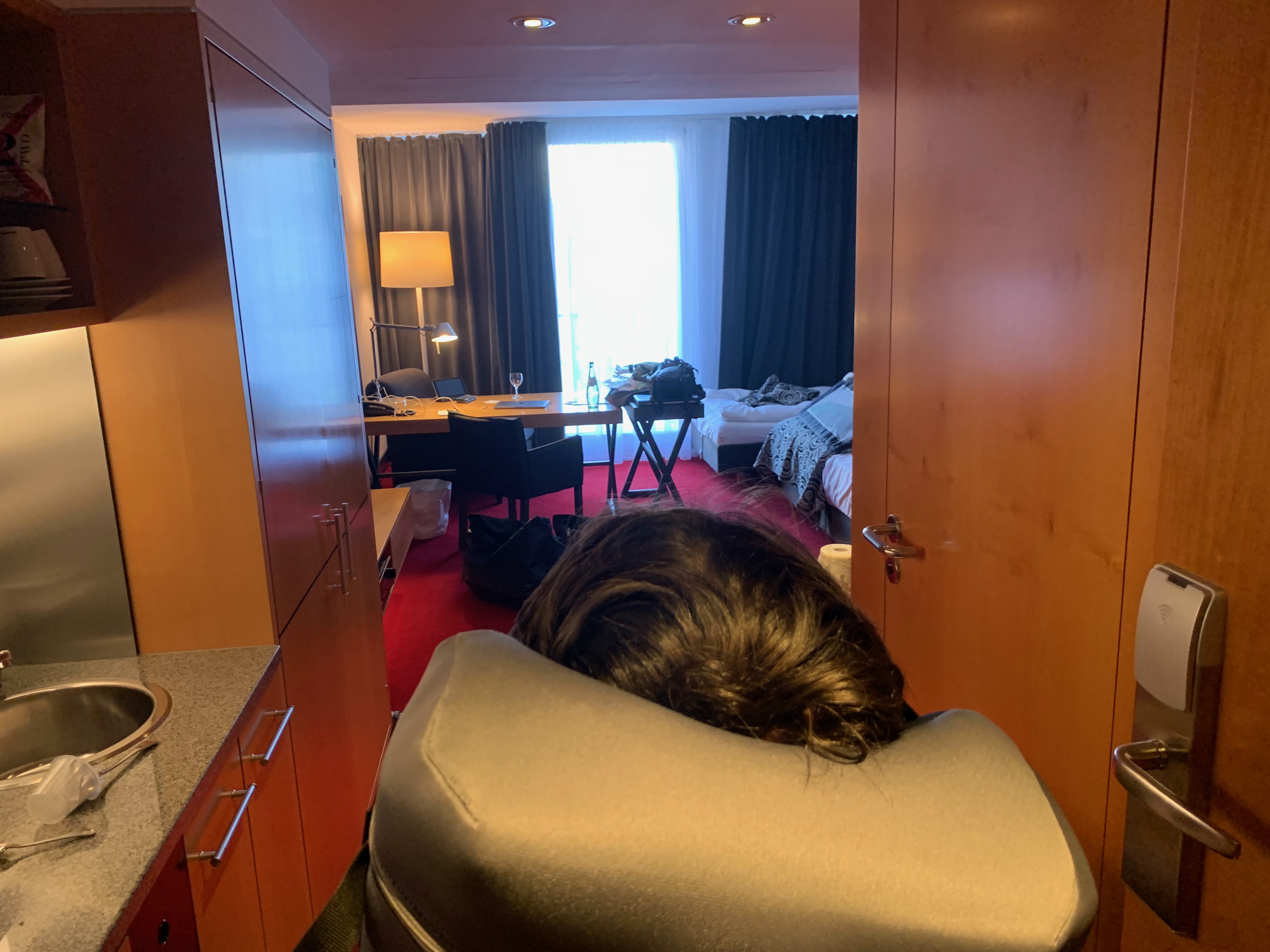
An overnight in Hamburg where late afternoon was considerably warmer than Tating, even Madrid, or Scottsdale, Arizona, in the morning. The place where we stayed was, thankfully, super cool in many different ways. Except breakfast, which was very German and predictable, and set us up for a great day in a city full of memories.
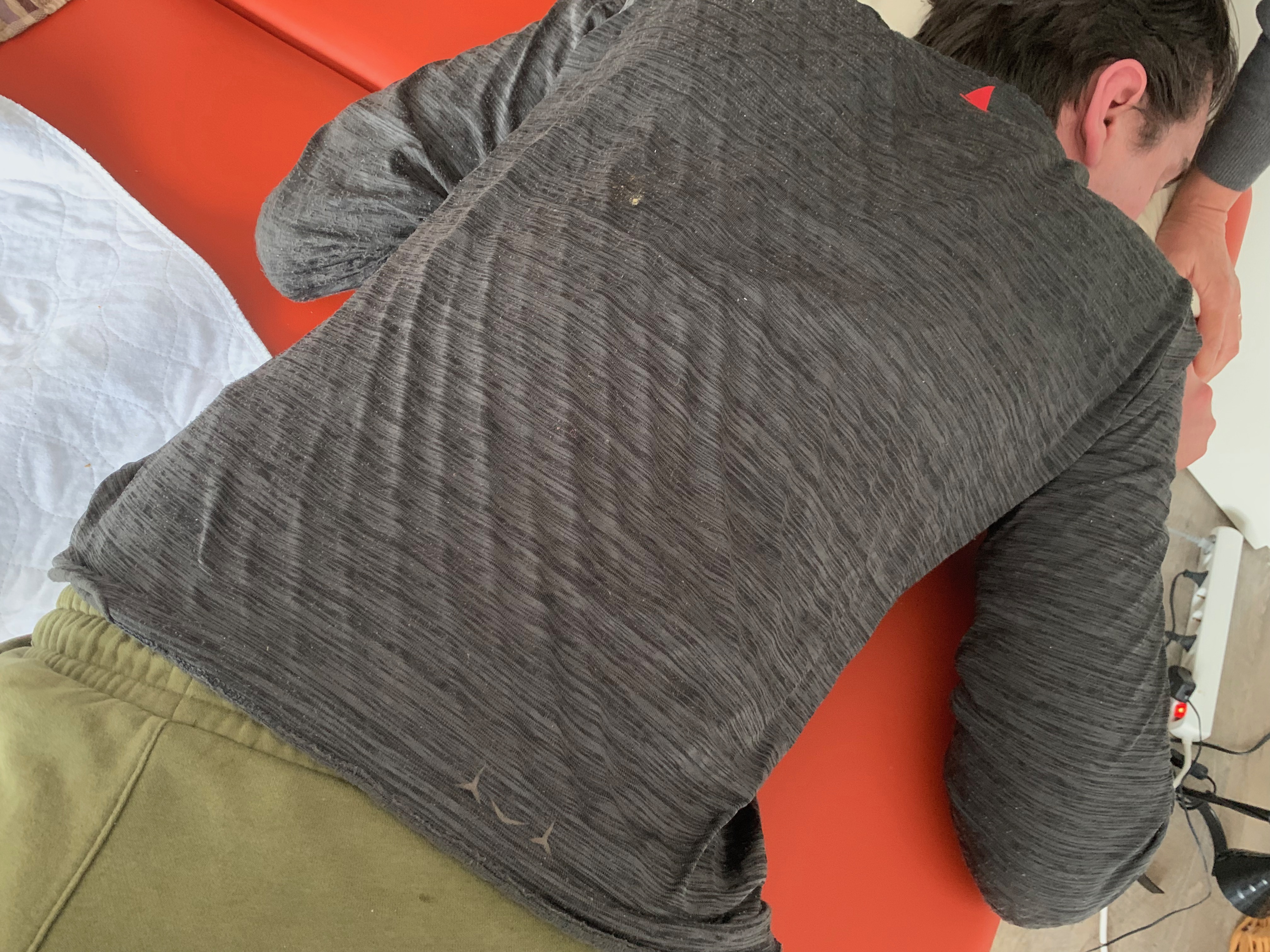
OT sessions. With the OT in their practice using a ‘blow-up’ splint we saw for the first time. It gently stretched out Pádraig’s left arm as he was moving it, guided by the OT, from left to right and back, then up towards his head, holding it there for ten, and bringing it back down. Also movement we had not seen before with his arm stretched out.
Exercises at home. Lying on his front for a while, stretching his legs, lifting up his knees from the splint. Standing, stretching, and cycling the MOTOmed.
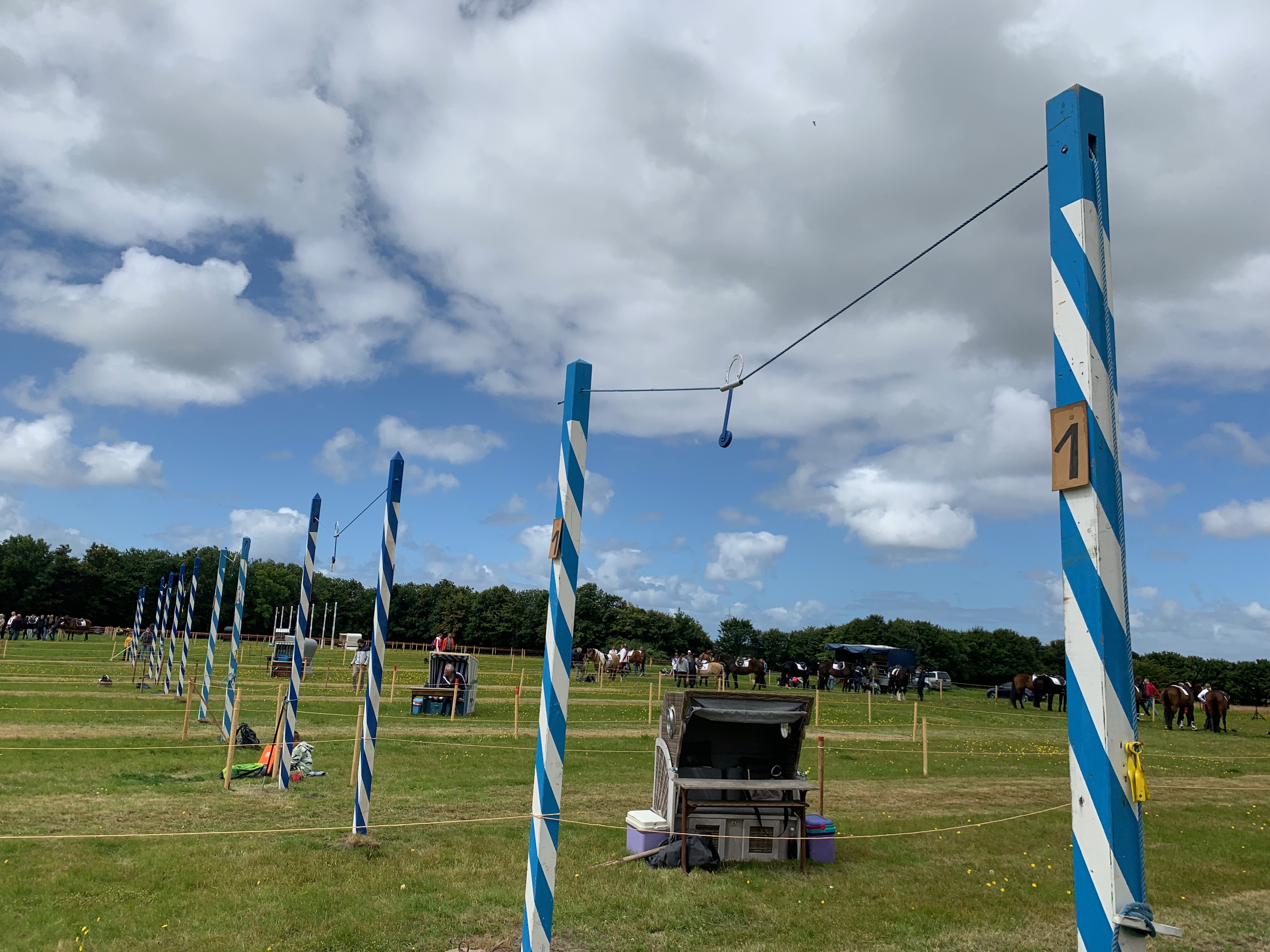
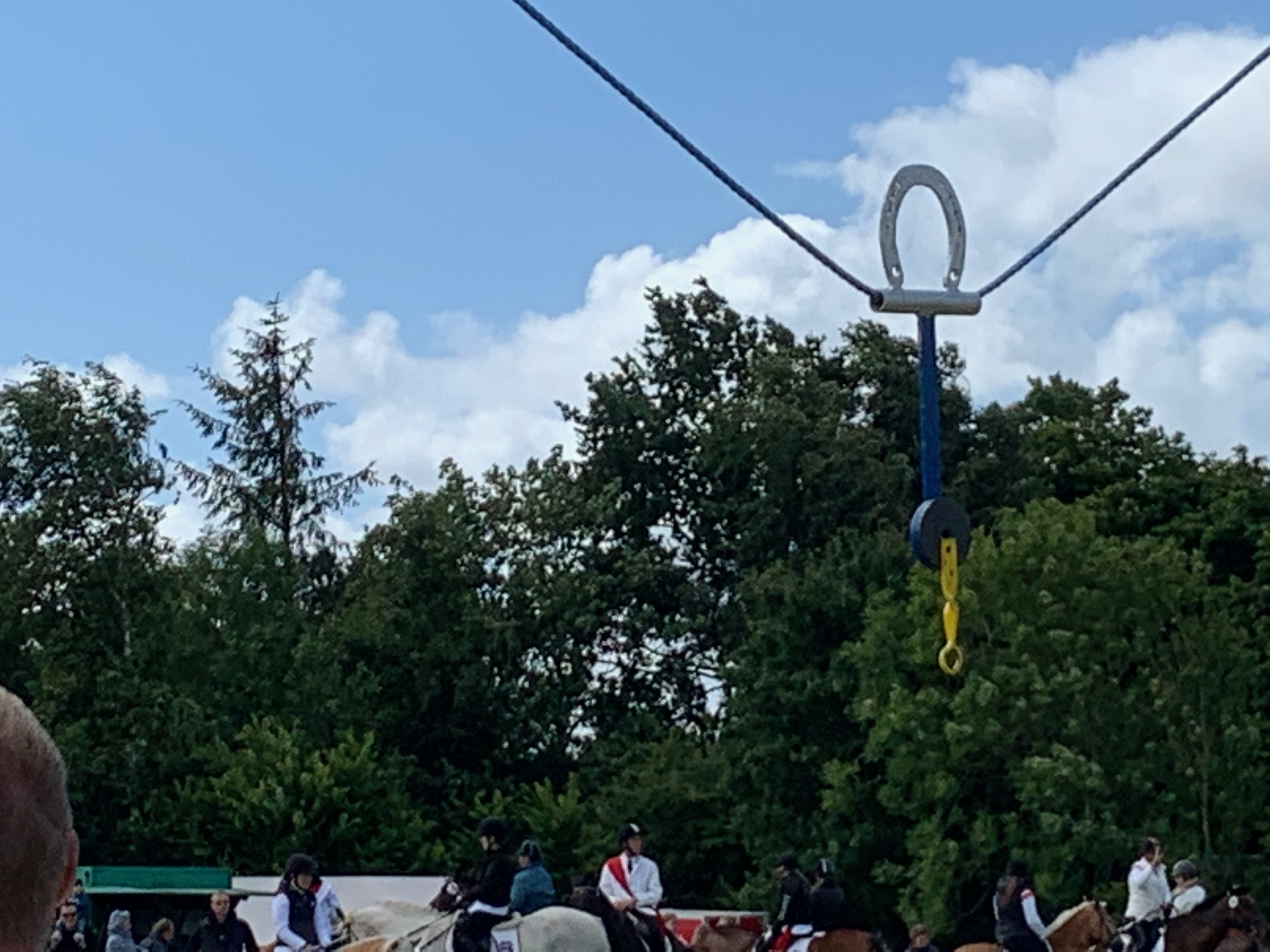
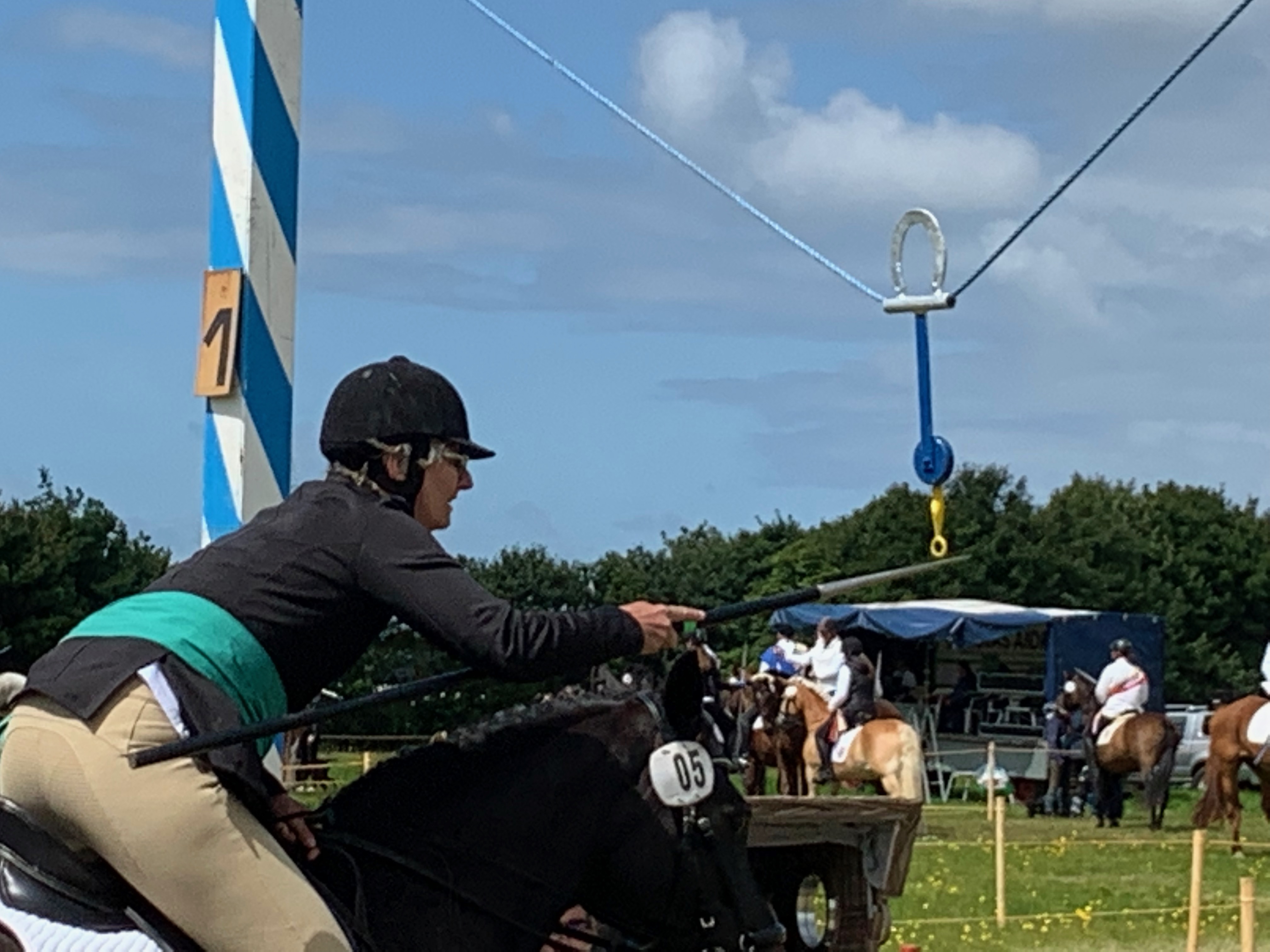
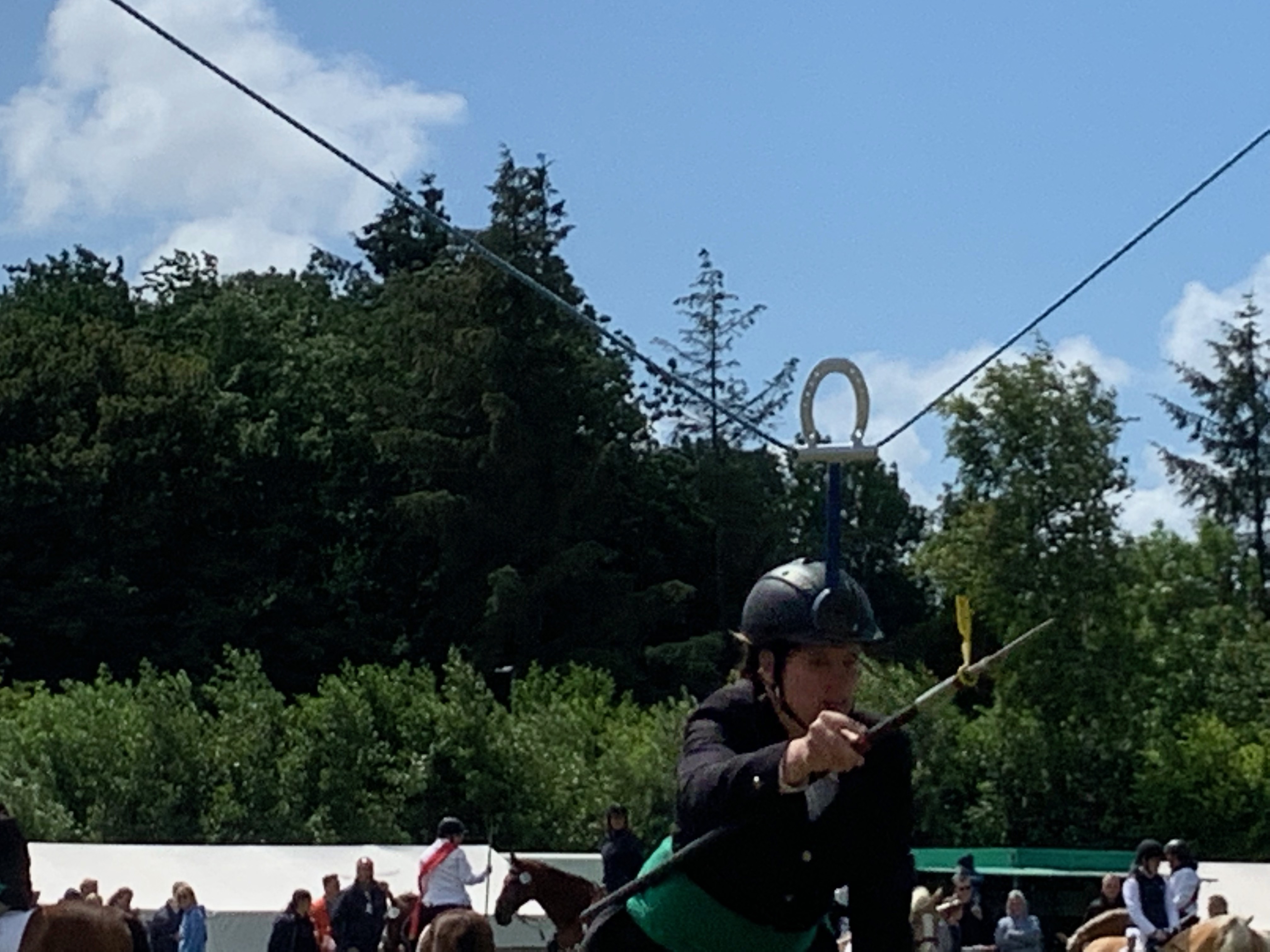
An afternoon with Eiderstedt’s Ringreiter. Some see this as the modern day variation of a medieval competition. Riders, at speed, have to stick the tip of their lance through a small metal ring that is fixed on a line across the parcourt.
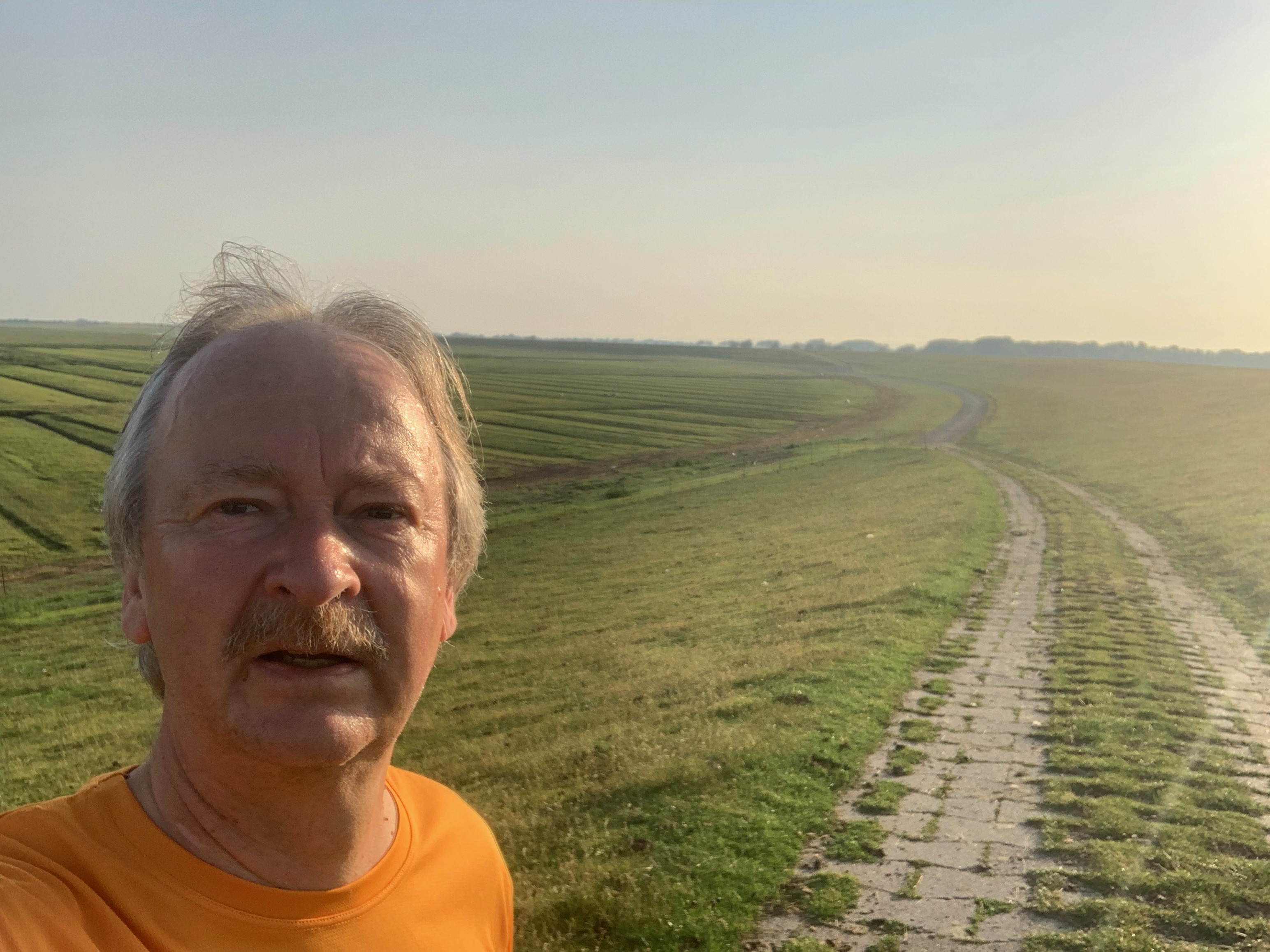
And then, there are my early morning ‘runs’ along the dike. Complete emptiness, apart from wild geese, sleepy sheep, and the wind.
We are having a busy, tiring, fantastically intense time together, with very little routine and only the occasional reminder of our other life. Freedom to do what we wish.
Normal holidays.
There are many things others don’t expect those with a severe Acquired Brain Injury to do. But when you, even once, have done what others say you cannot do, you will never pay attention to their limitations again.
You only have two eyes and you should see with a hundred
(Zwei Augen hat man nur und mit hundert soll man sehen.)
TheodorStorm, Der Schimmelreiter
We’re on a break. From our daily routine. In a different world. Exploring tastes, temperatures, touches, visuals, times, people, movement. It is taking time to ‘arrive’, from the ‘normal’ to the ‘different’. ‘Ankommen’.
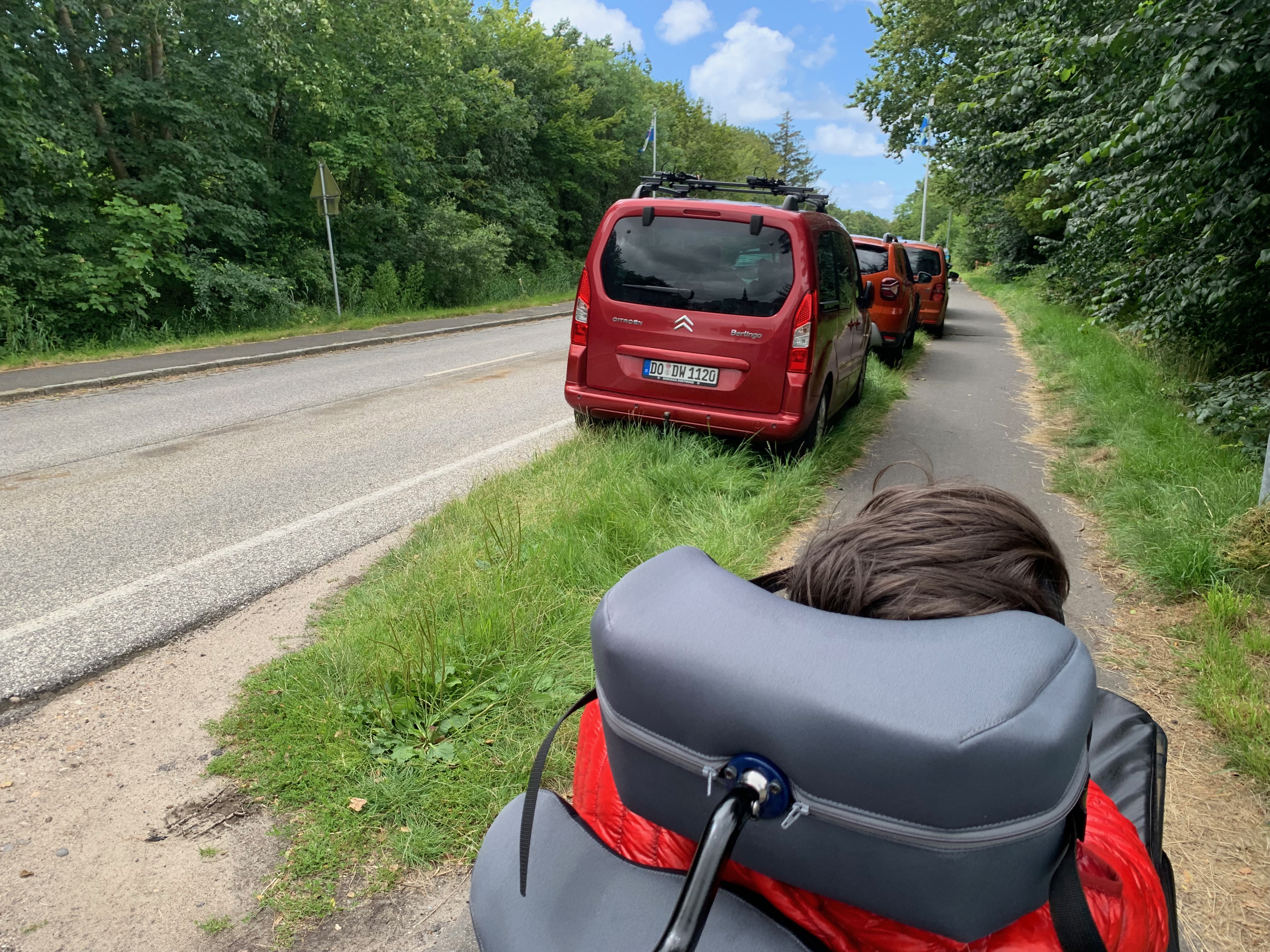
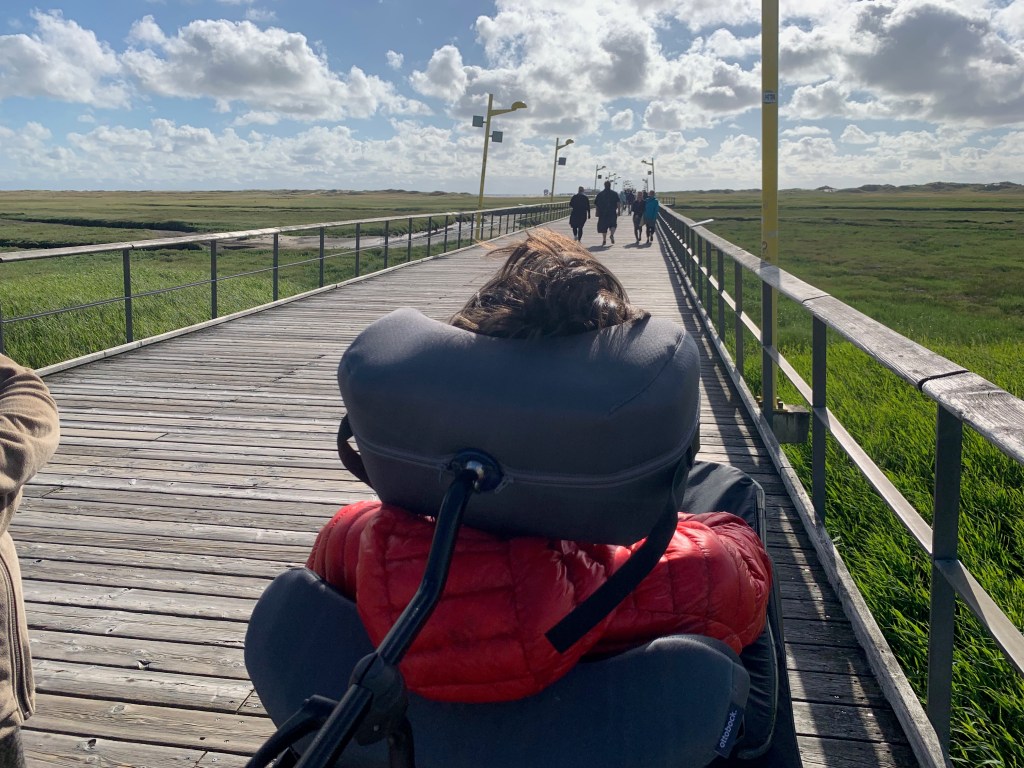
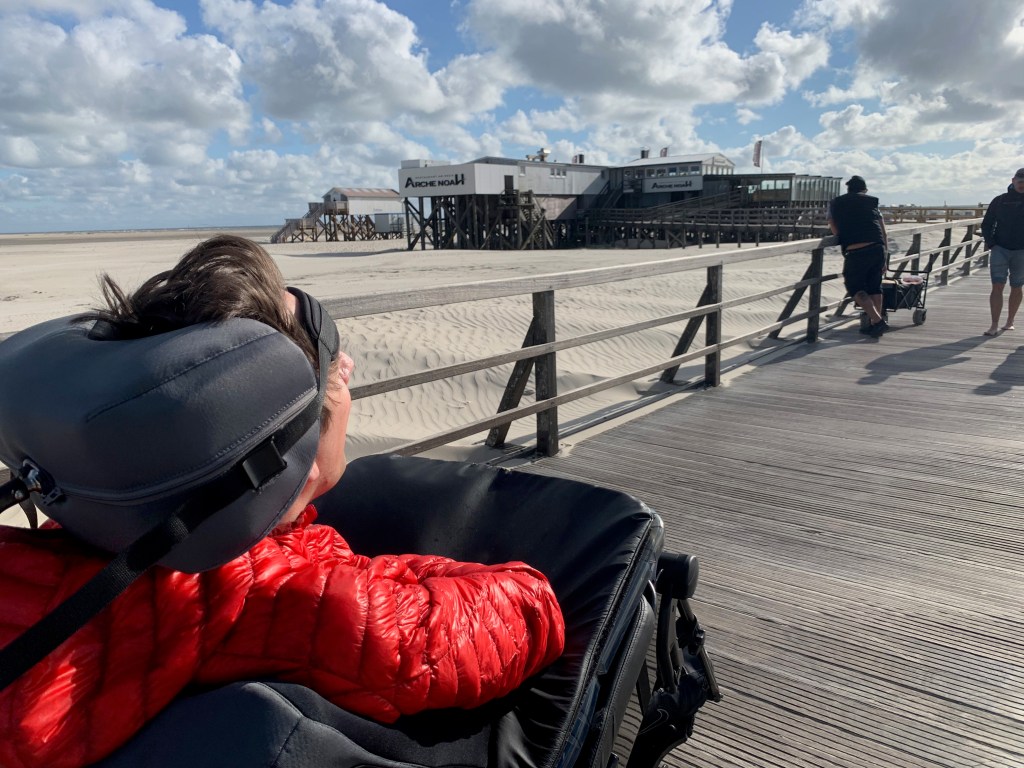
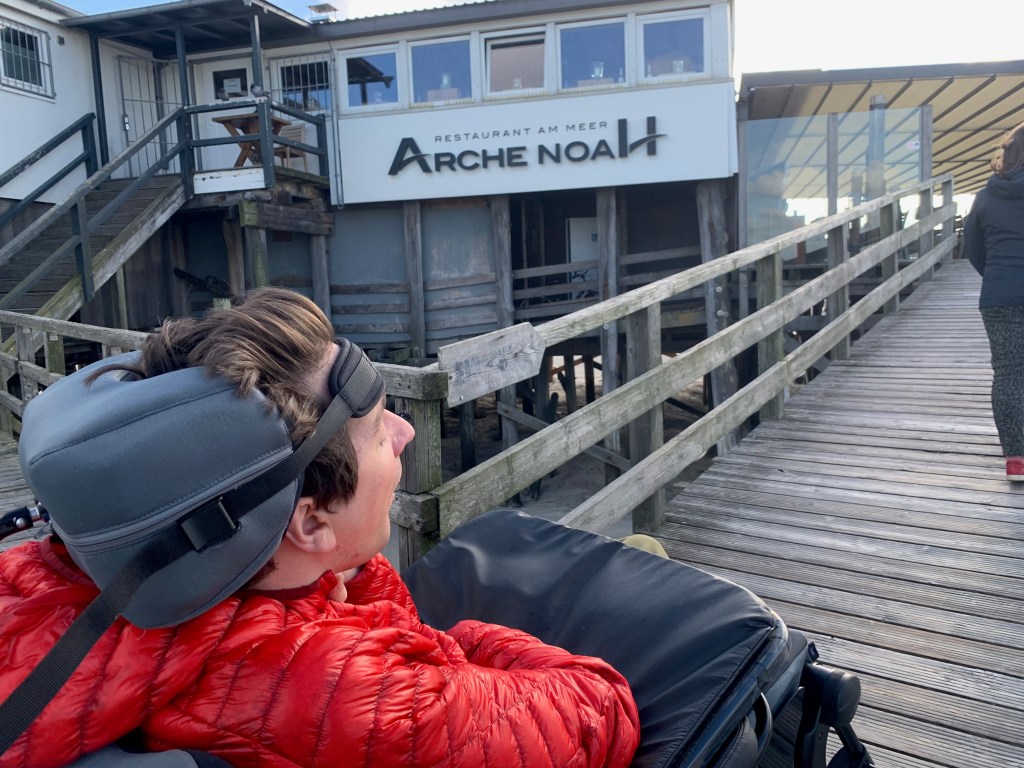
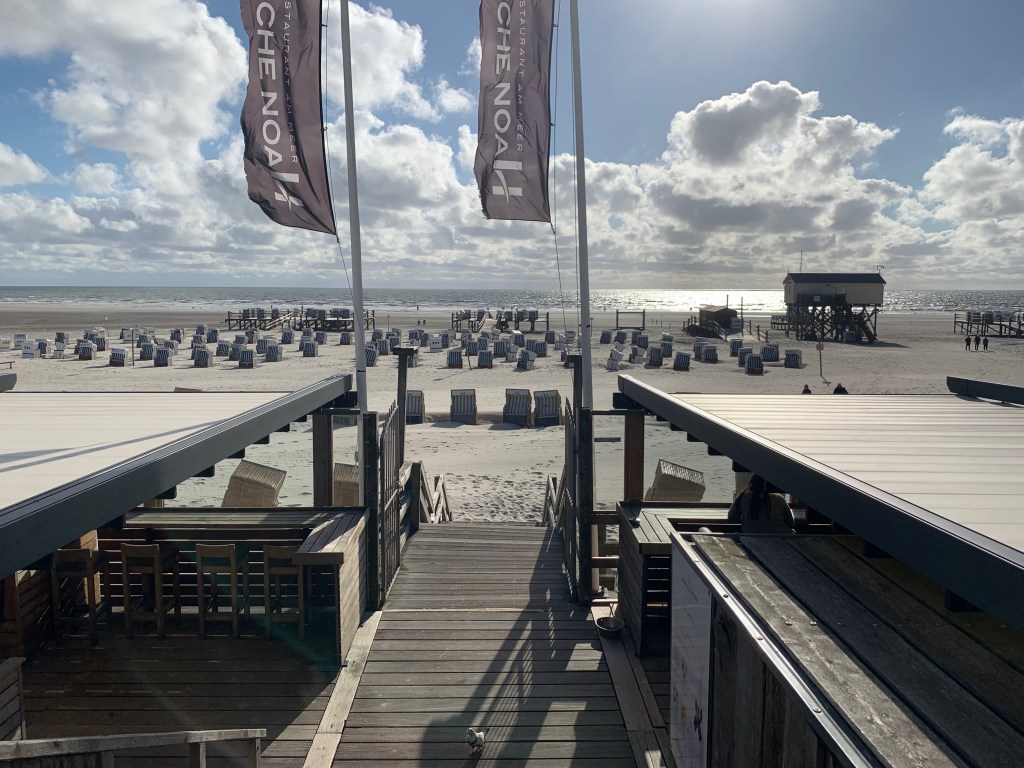
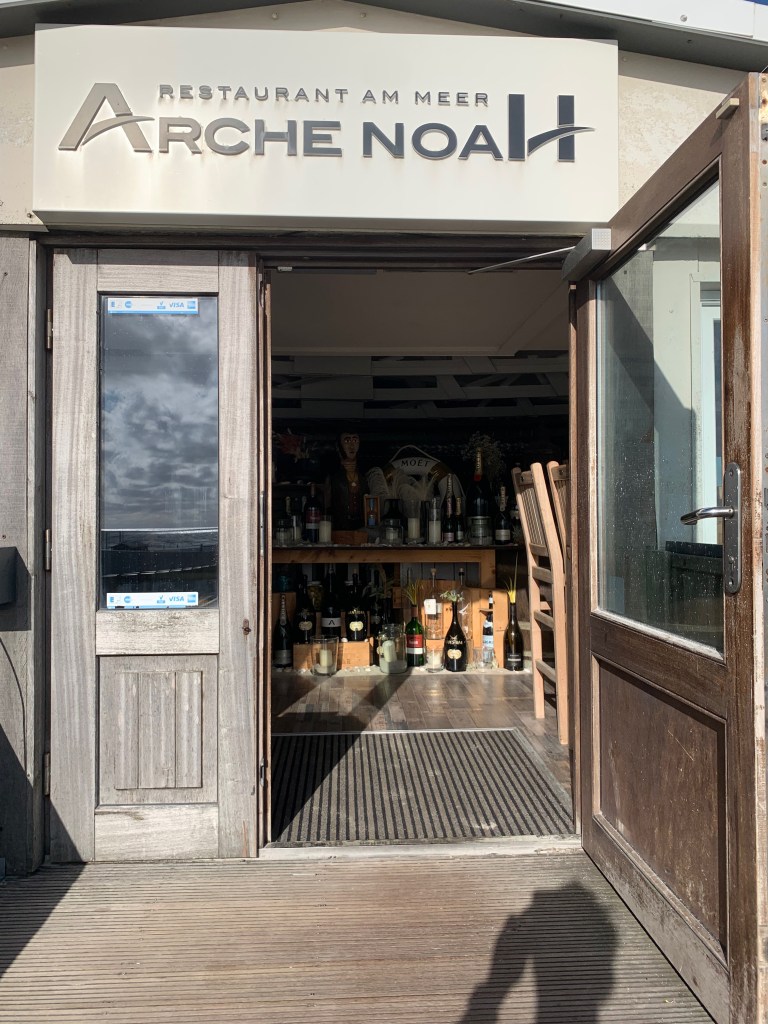
Our first long walk was out to the ‘Arche Noah’, about a mile off the coast across a wooden bridge onto a giant sand bank. Sand a far as you can see. I know this place since I was 15 or 16, spent most of my summers working here with others, and with my sister and her husband who lived here.
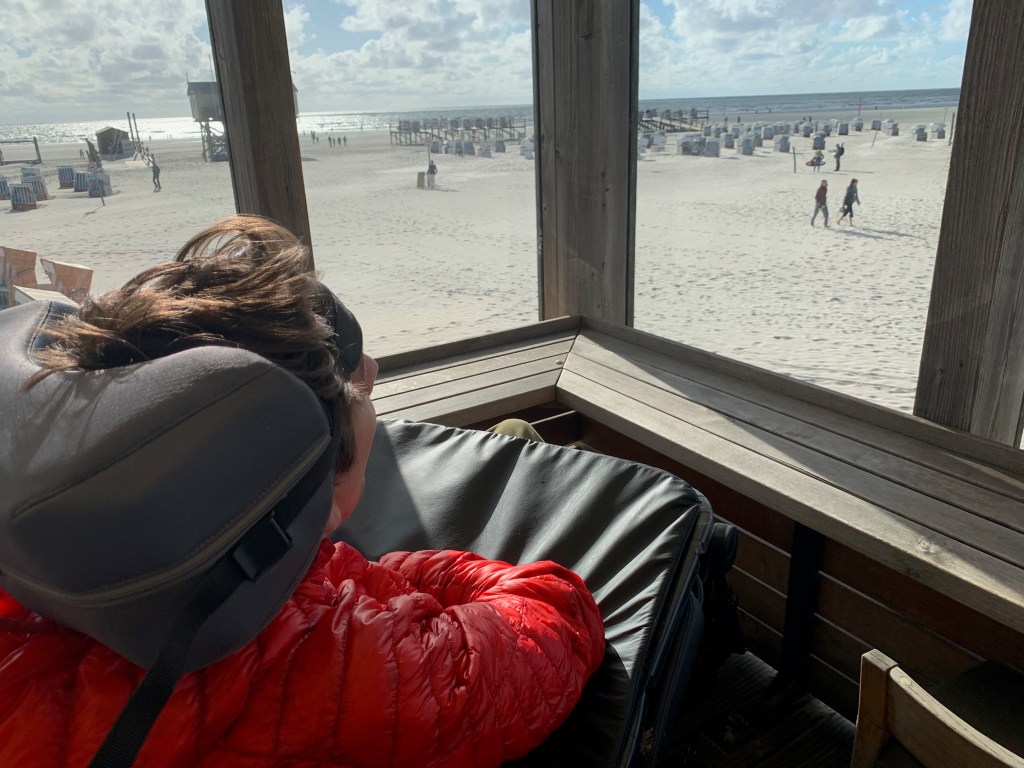
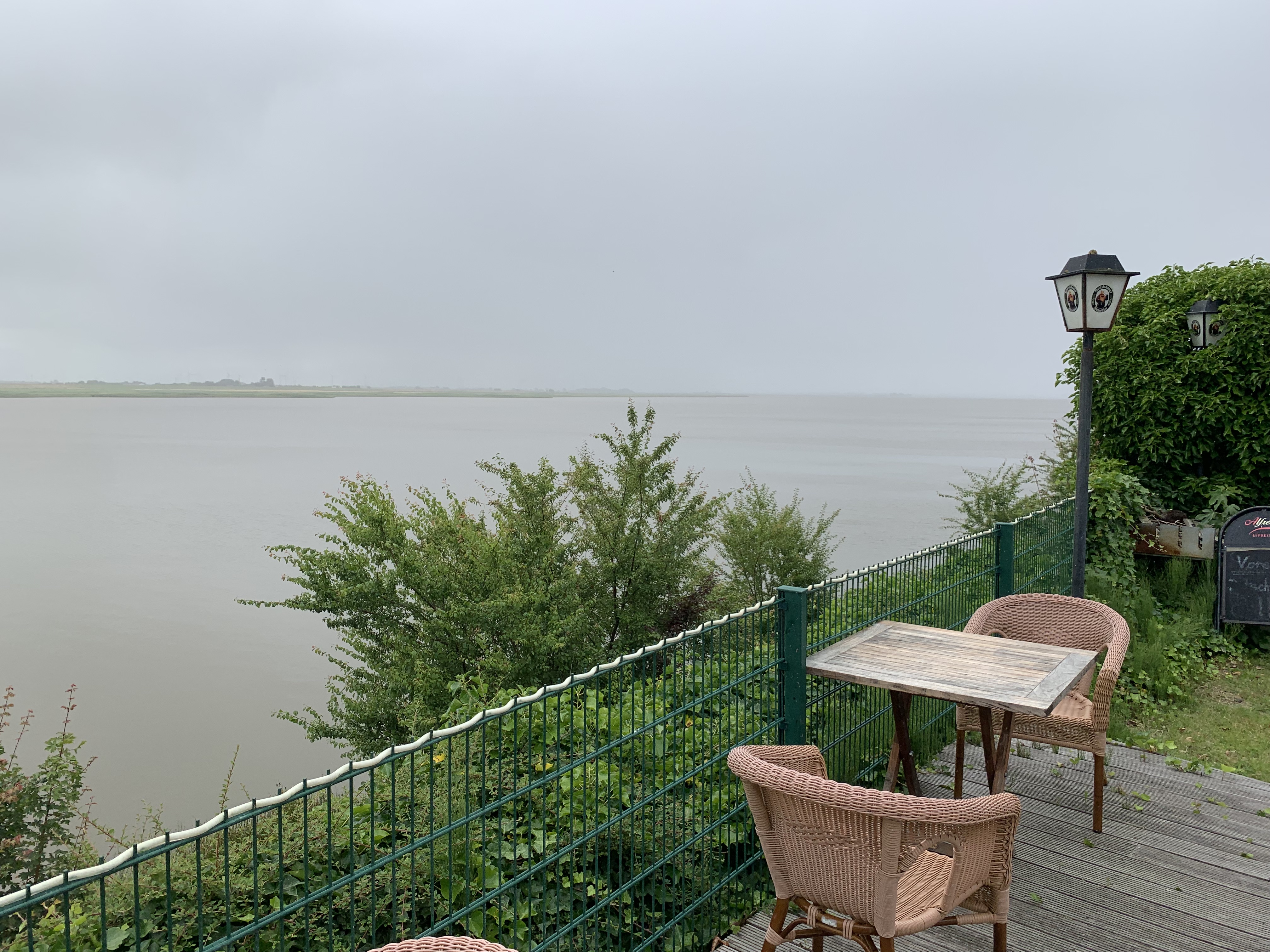
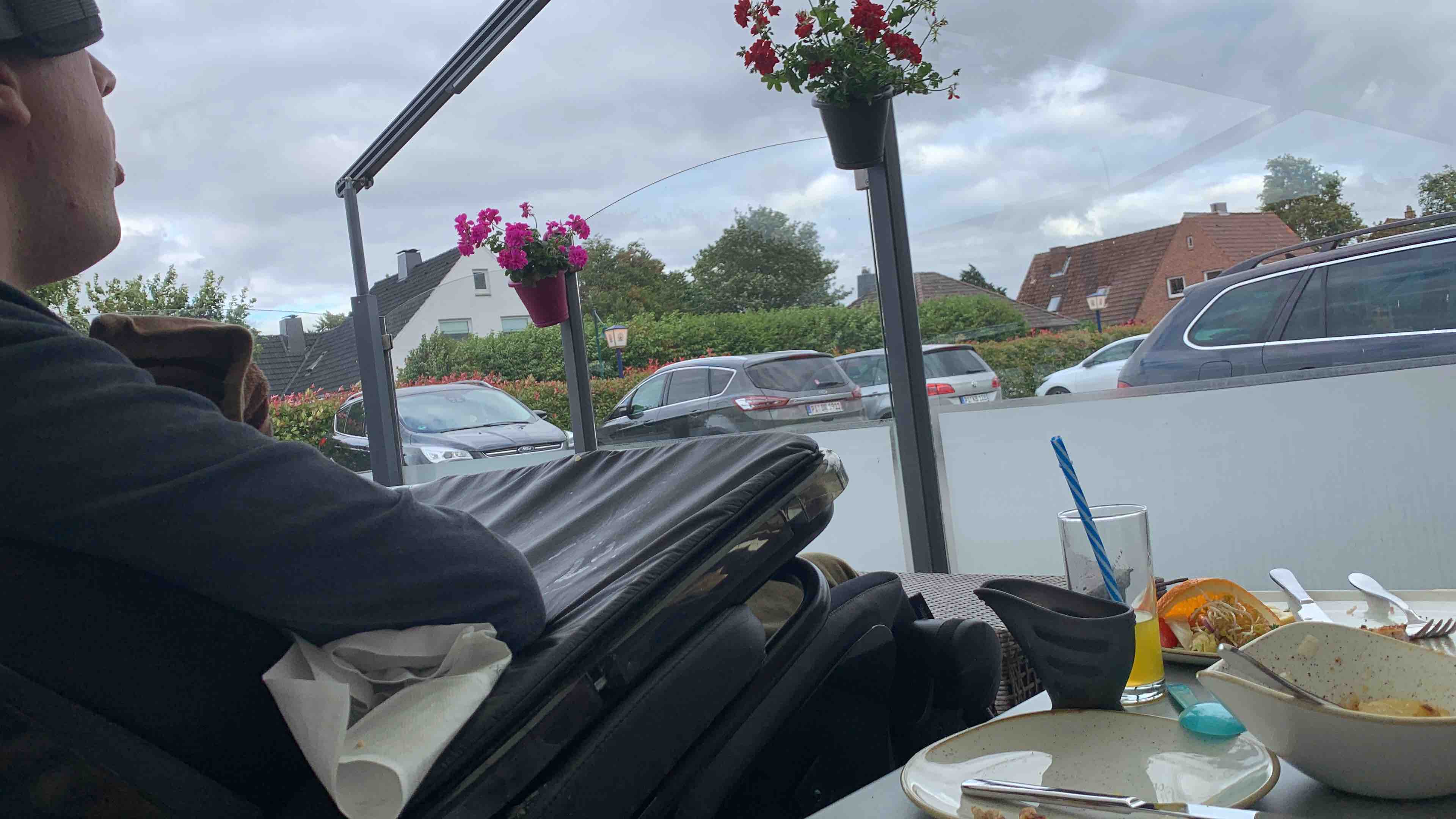
Since then, we’ve been eating in the garden and we’ve been eating in different small restaurants, most of them overlooking the sea. Mostly in pretty misty weather so far.
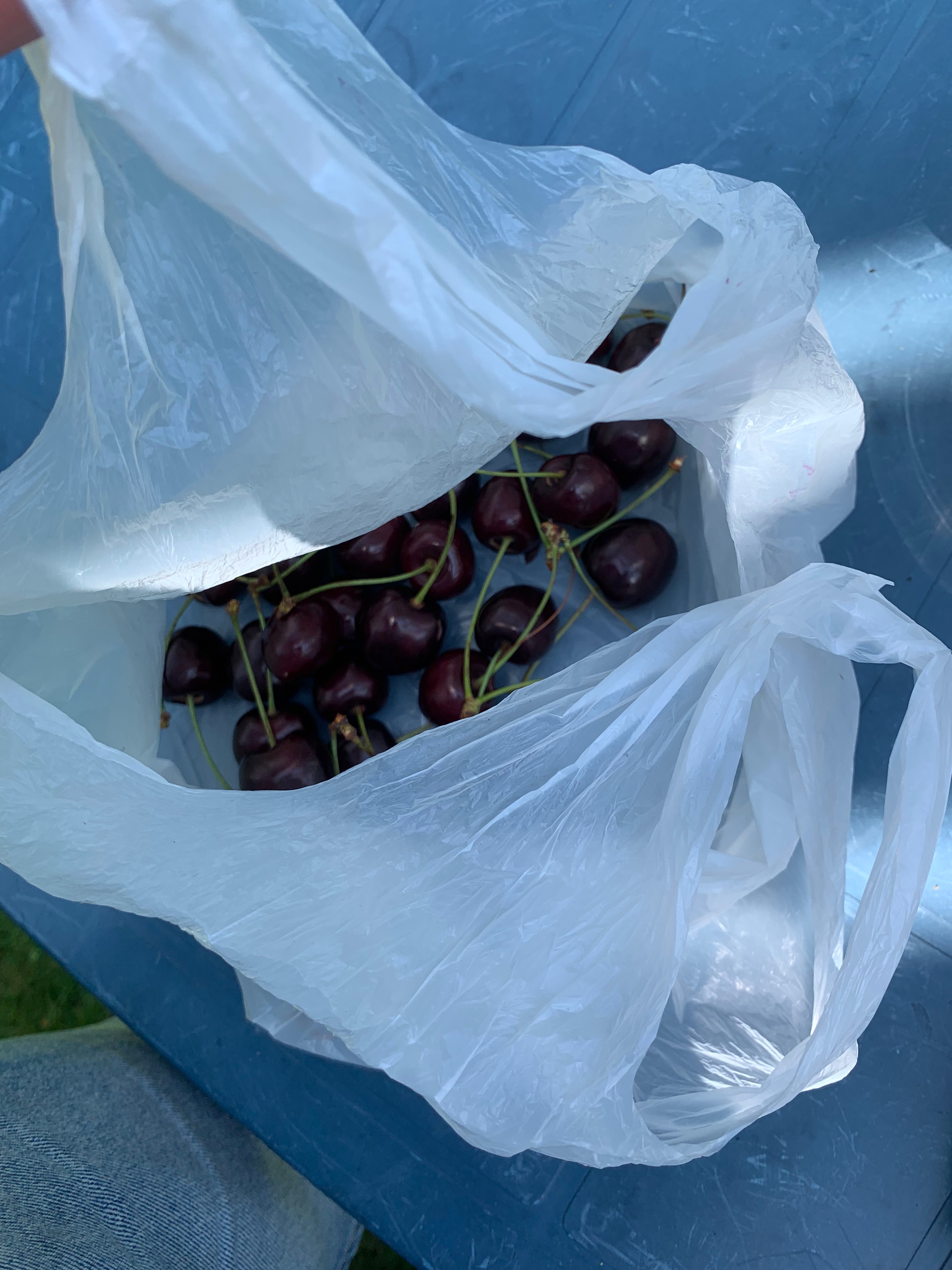
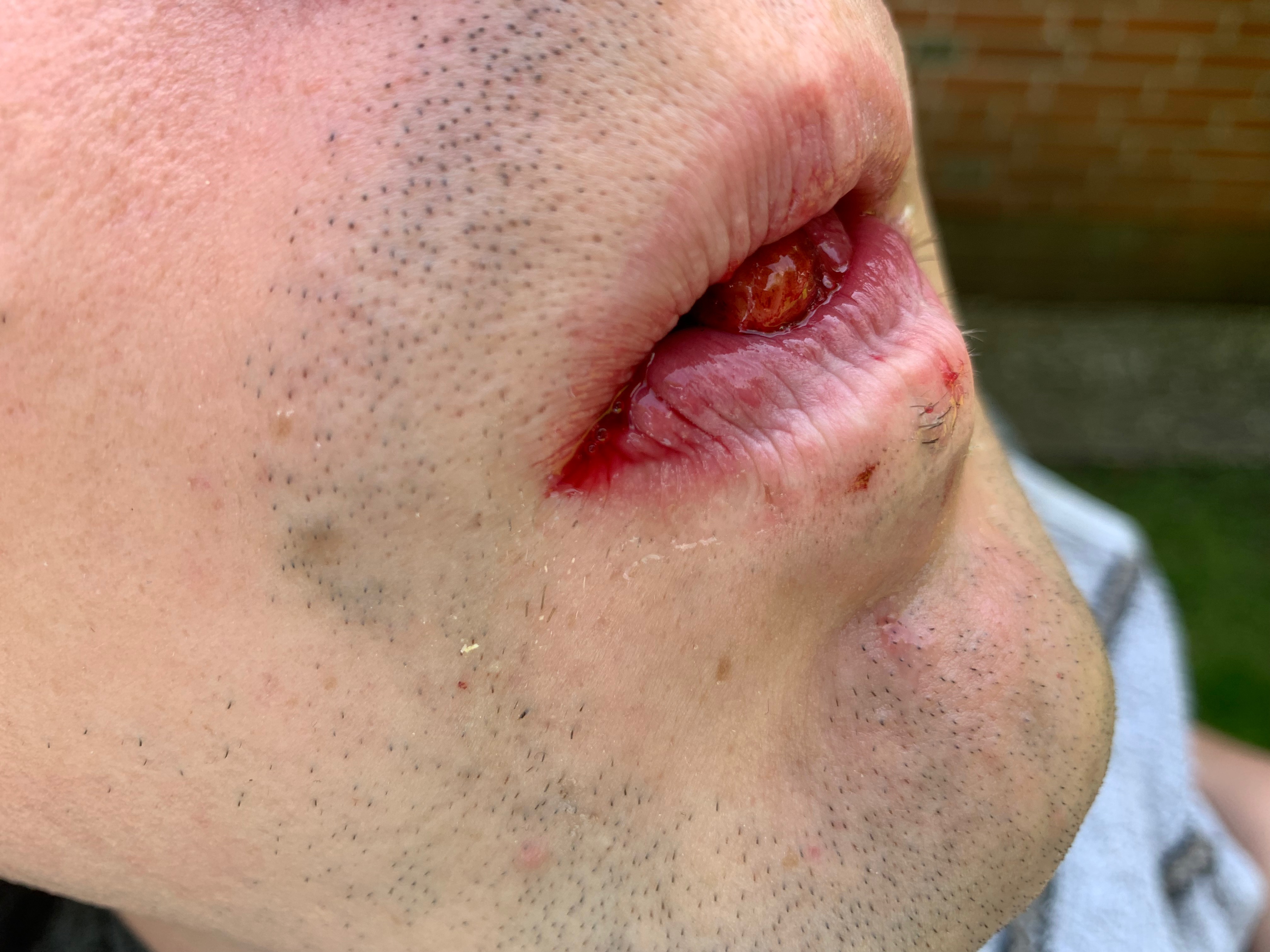
Pádraig discovered that he can eat cherries. How? He does what we all do. Sticks a cherry into his mouth and spits out the pit. – That is the same man who was once told not to worry about peg ‘food’ because it was essentially the same a the food he wanted to eat. – Really?
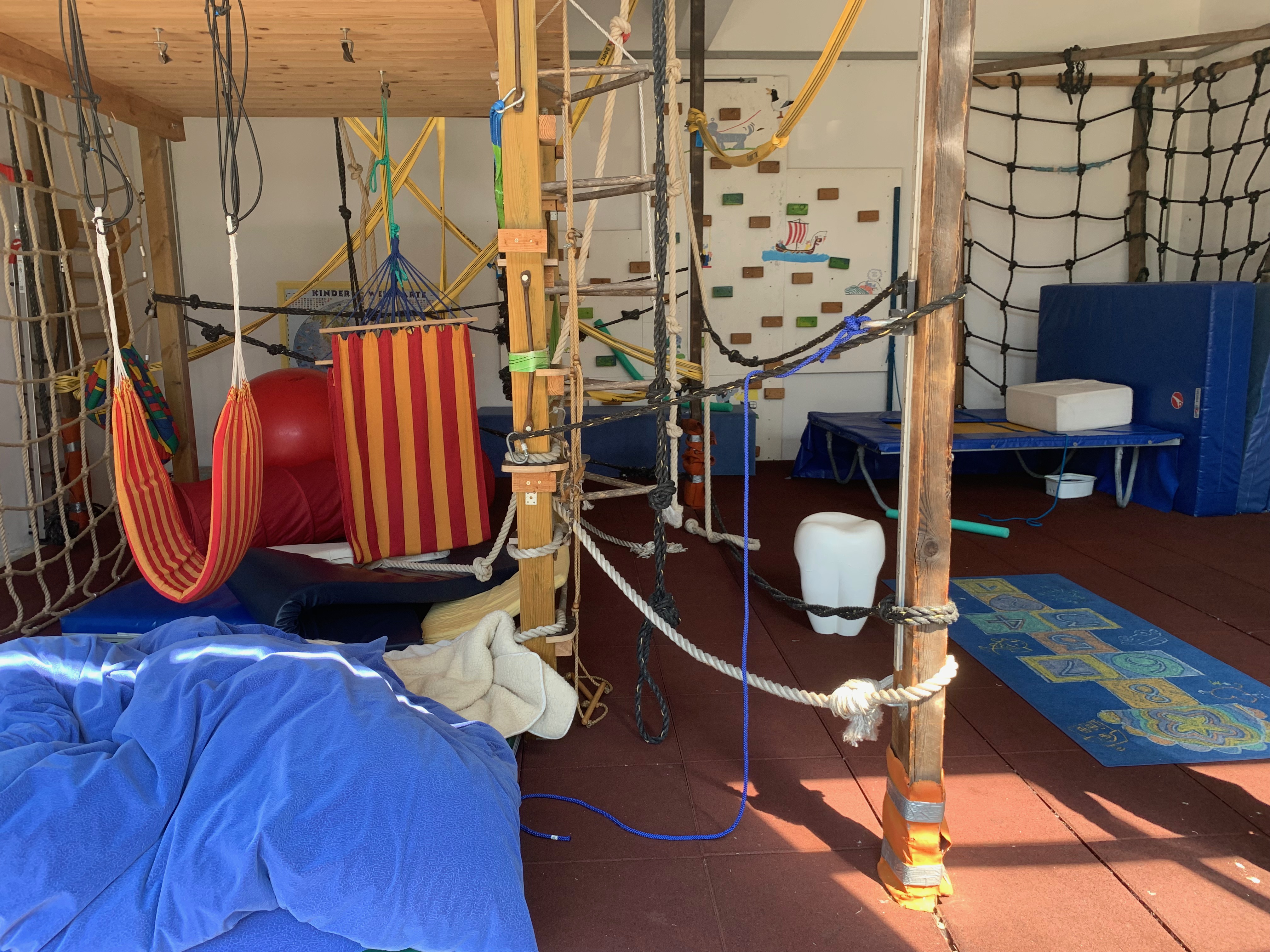
With a little help from our friend, he found a great OT who has seen him a few times last week. She has a a practice that must have taken decades to develop. The initial ‘assessment’ consisted in a trial and error session which we assisted. On the way out one day, she showed us her huge garage which she had converted into a giant activity space.
For the first time in three years, Tuesday night was, again, Garding night: Musikantentreff. Not really ‘Musikanten’ but ancient rocker. As interesting and entertaining the music, Pádraig must have found the audience, some of whom screened WACKENNNNN! WOA – Wacken Open Air.
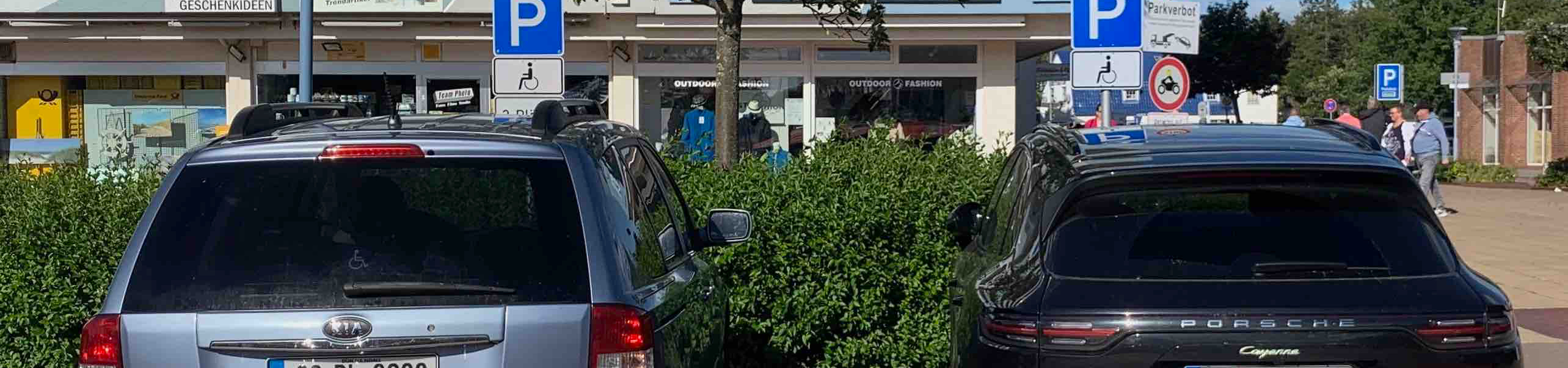
In sharp contrast, we spotted auld Ferdinand’s car parked in the disabled space beside ours – still driving a hot tire. In a Porsche Cayenne. Only in Germany.
If we only have two eyes, how can we see with two hundred?
There is so much to see that even two hundred eyes would not be sufficient did we not open them up completely.
Let’s start moving around with our two eyes wide opened. Looking around us. Seeing and experiencing the world we live in. All of it and not just the parts we want to see or someone else wants us to see.
A beak from the daily routine provides fresh perspectives.
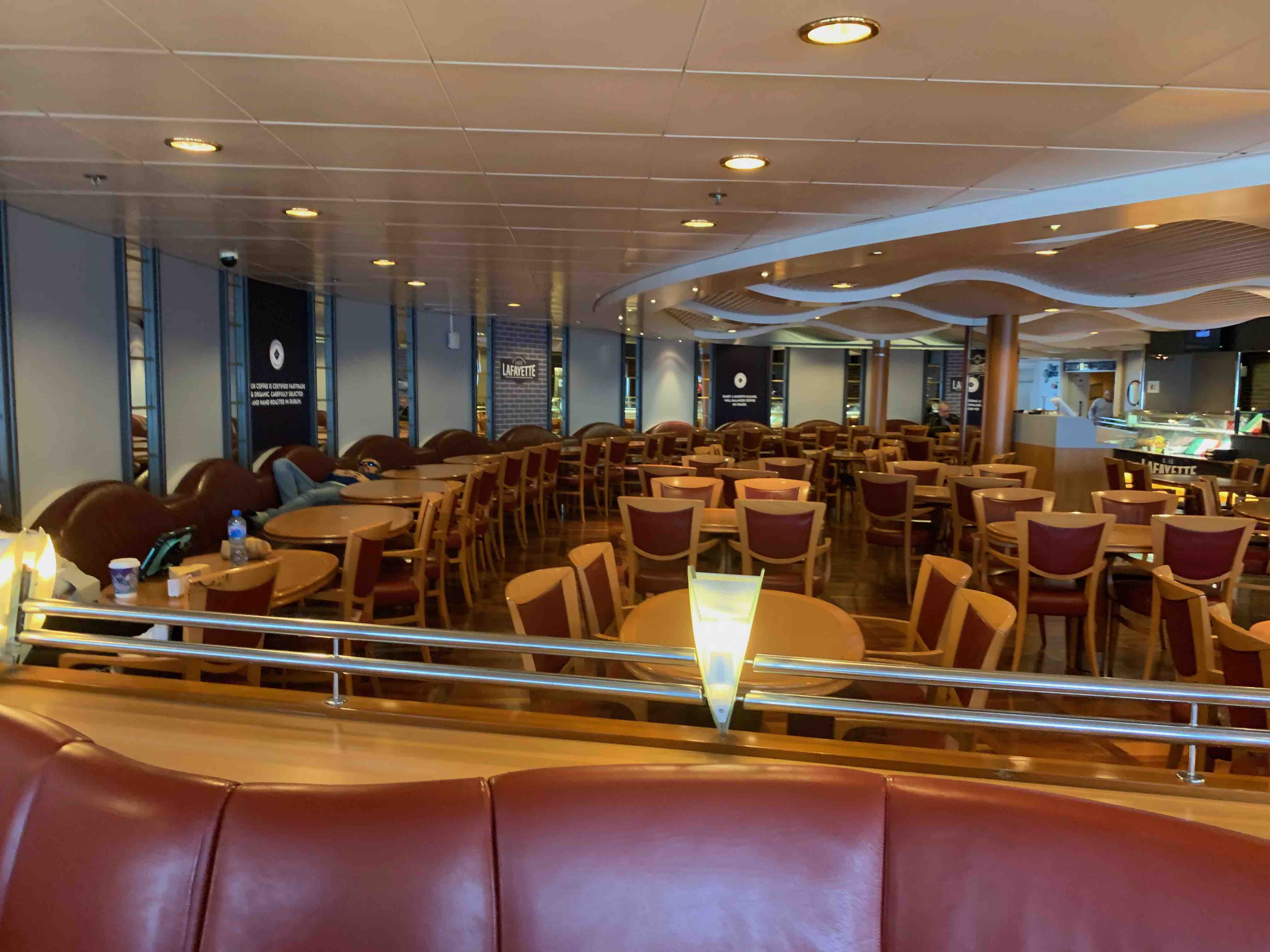
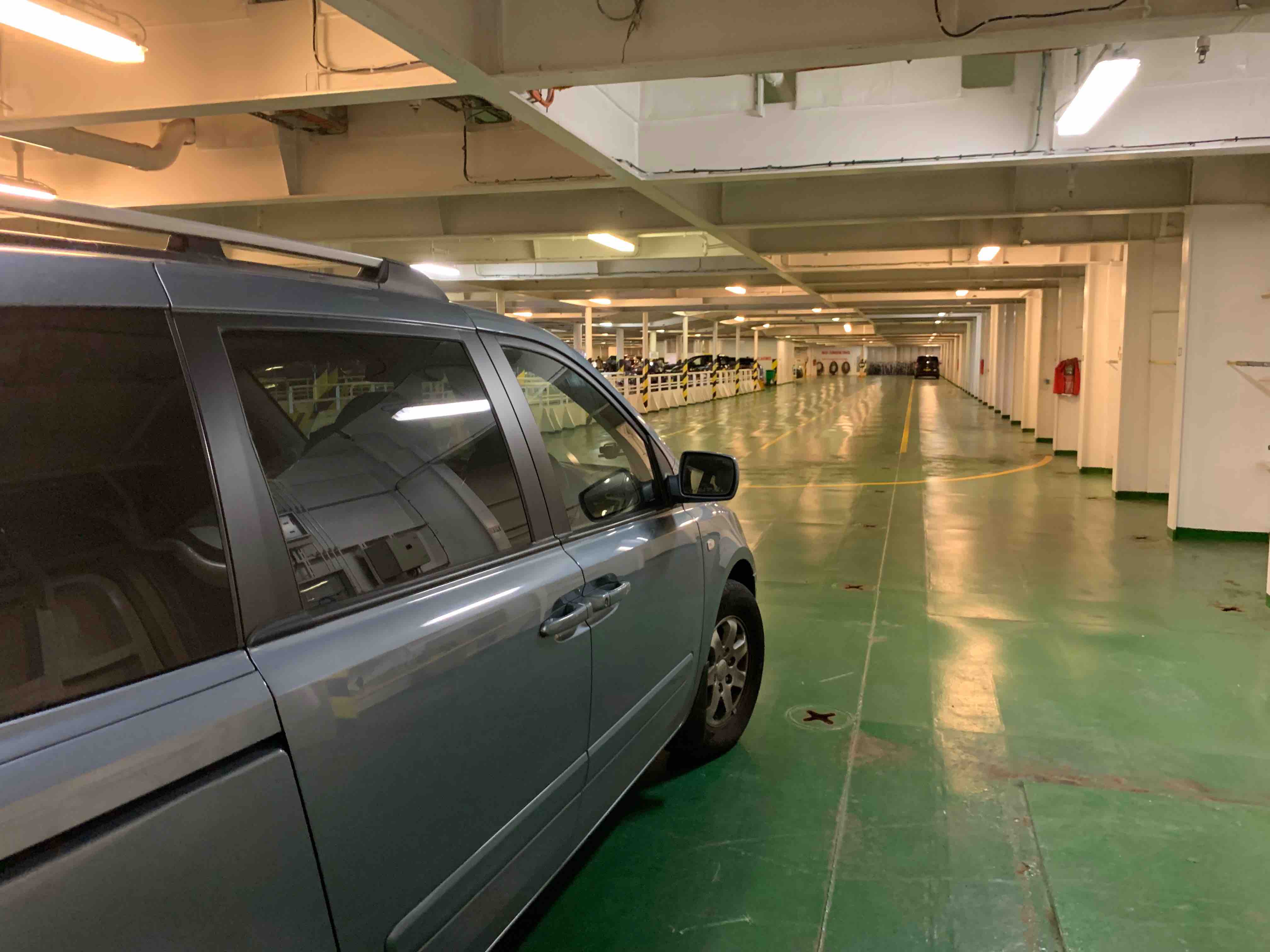
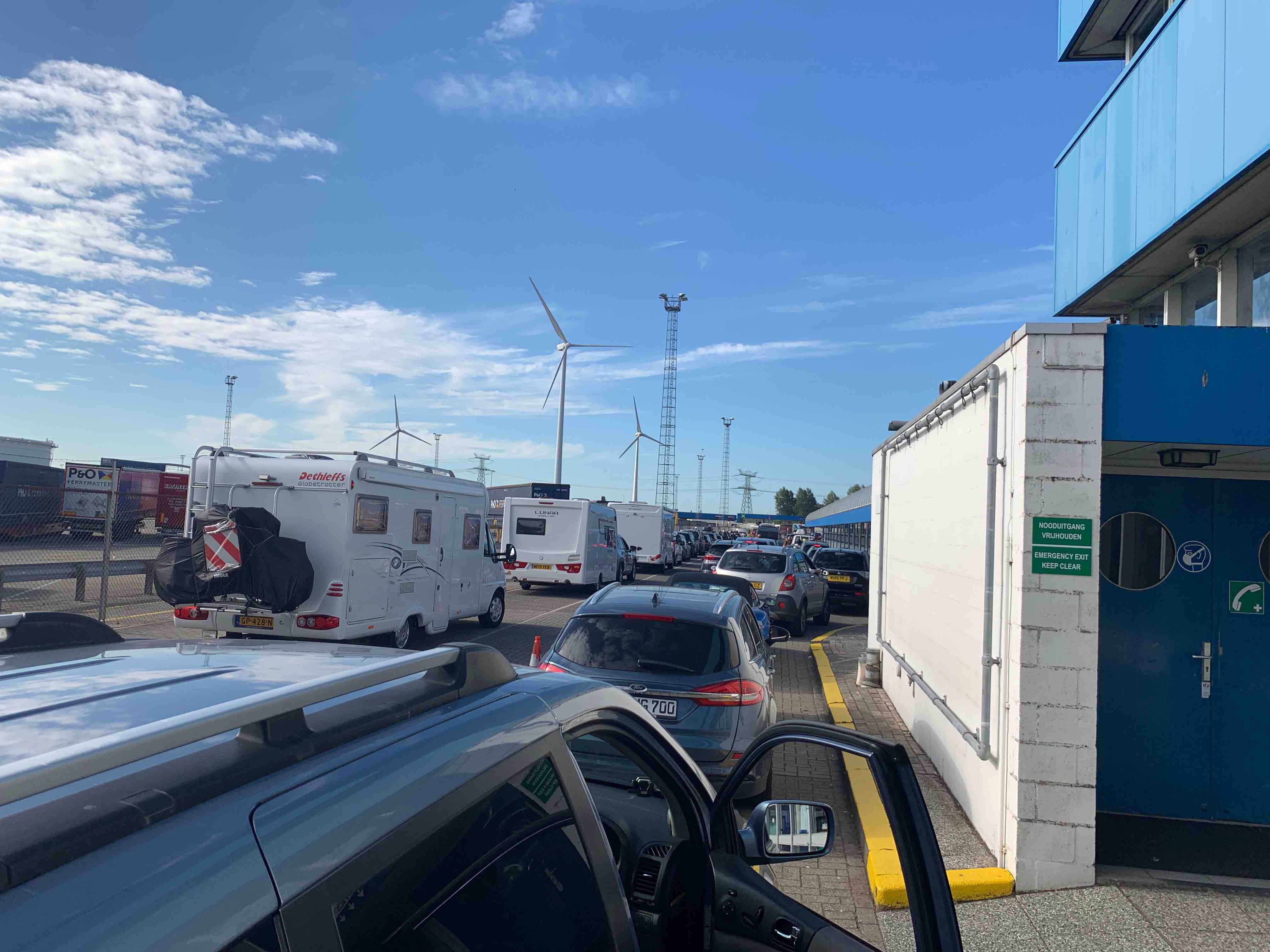
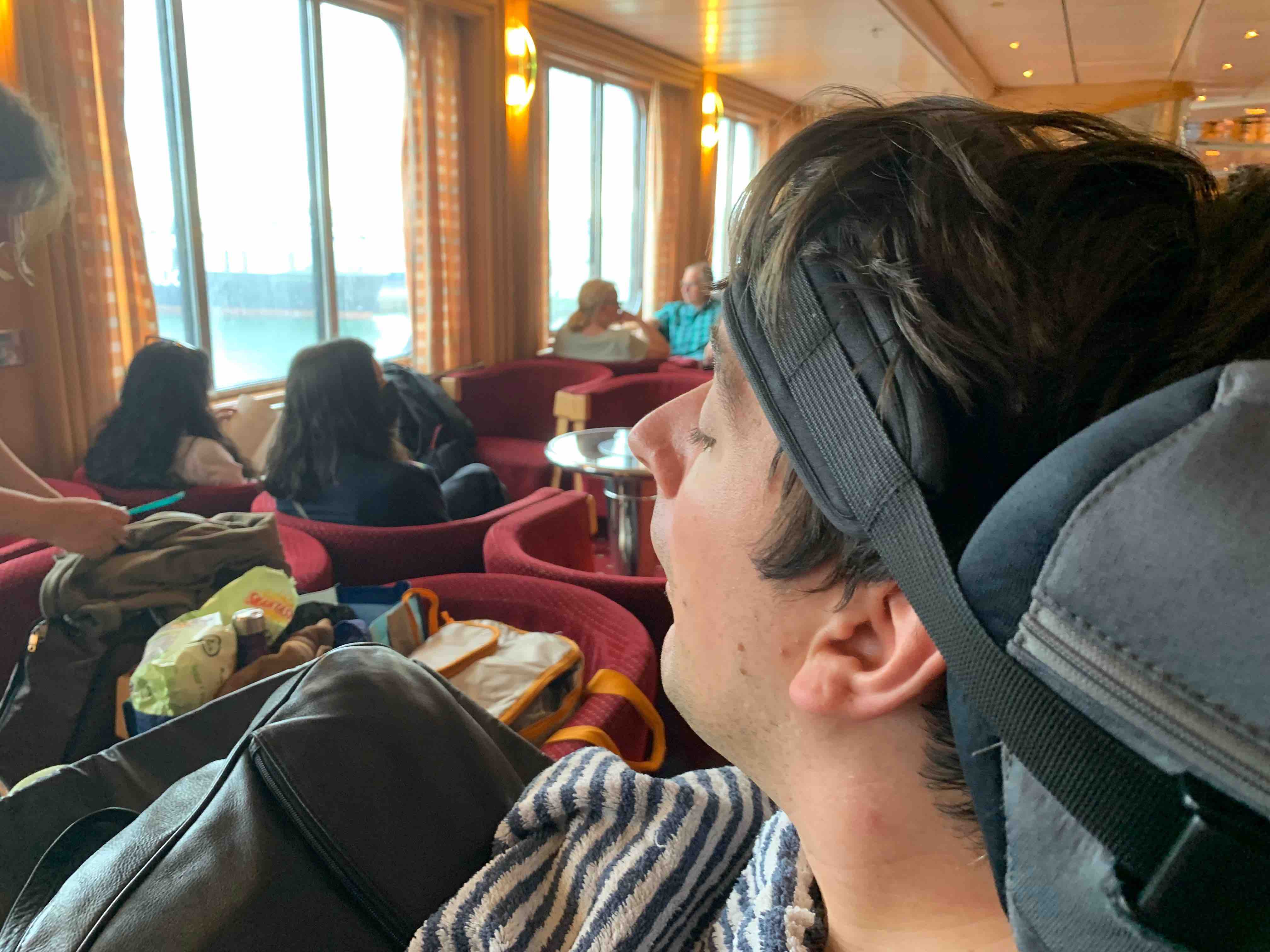
It was nearly three days of leisurely travel before we got to Tating late yesterday evening. Two ferries, Dublin – Holyhead and Hull – Rotterdam; two overnights, on the ferry to Rotterdam and in a hotel near the autobahn close to Osnabrück; a 1,000 km drive; moments of tiredness, great awe, and fun.
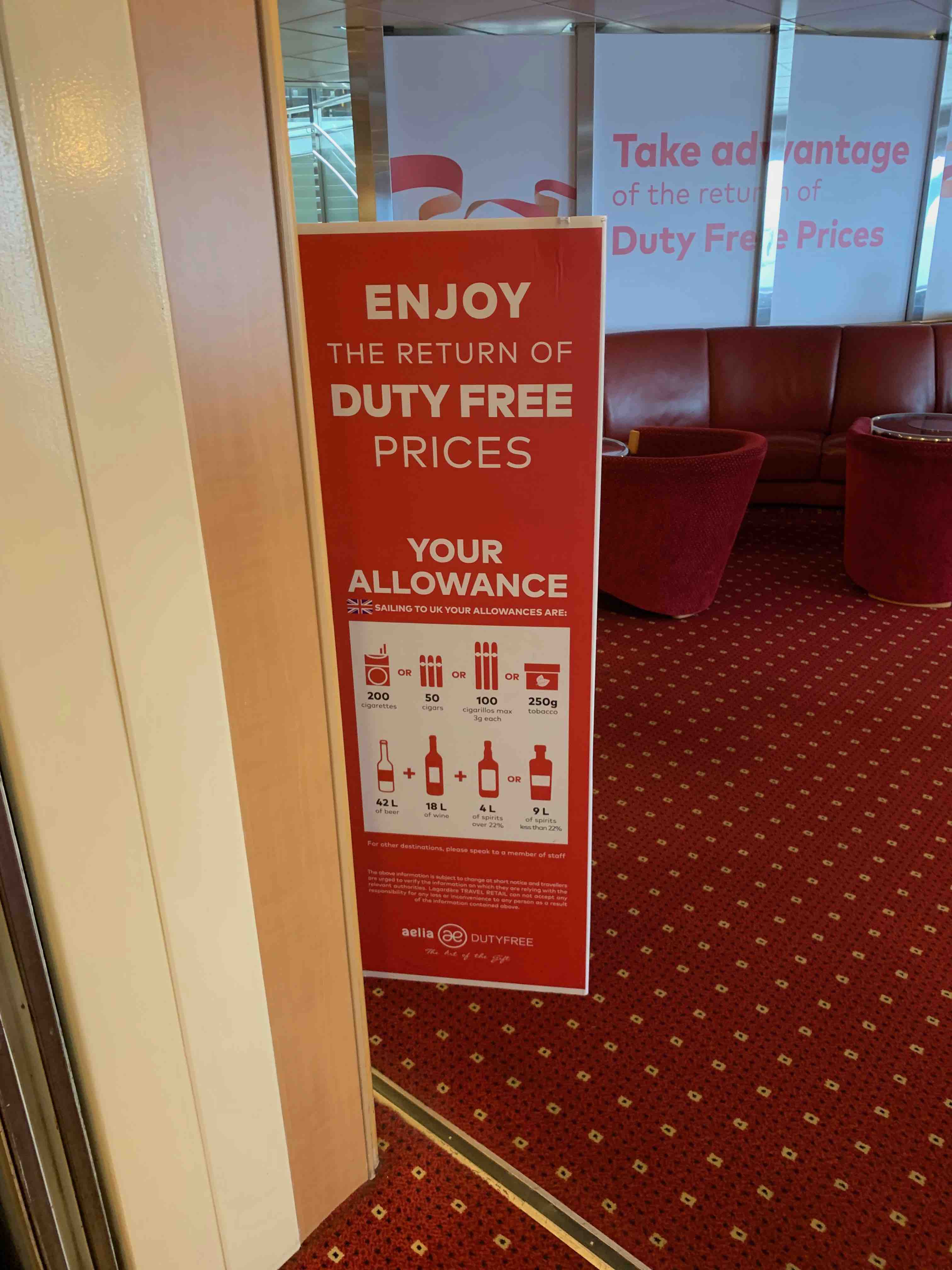
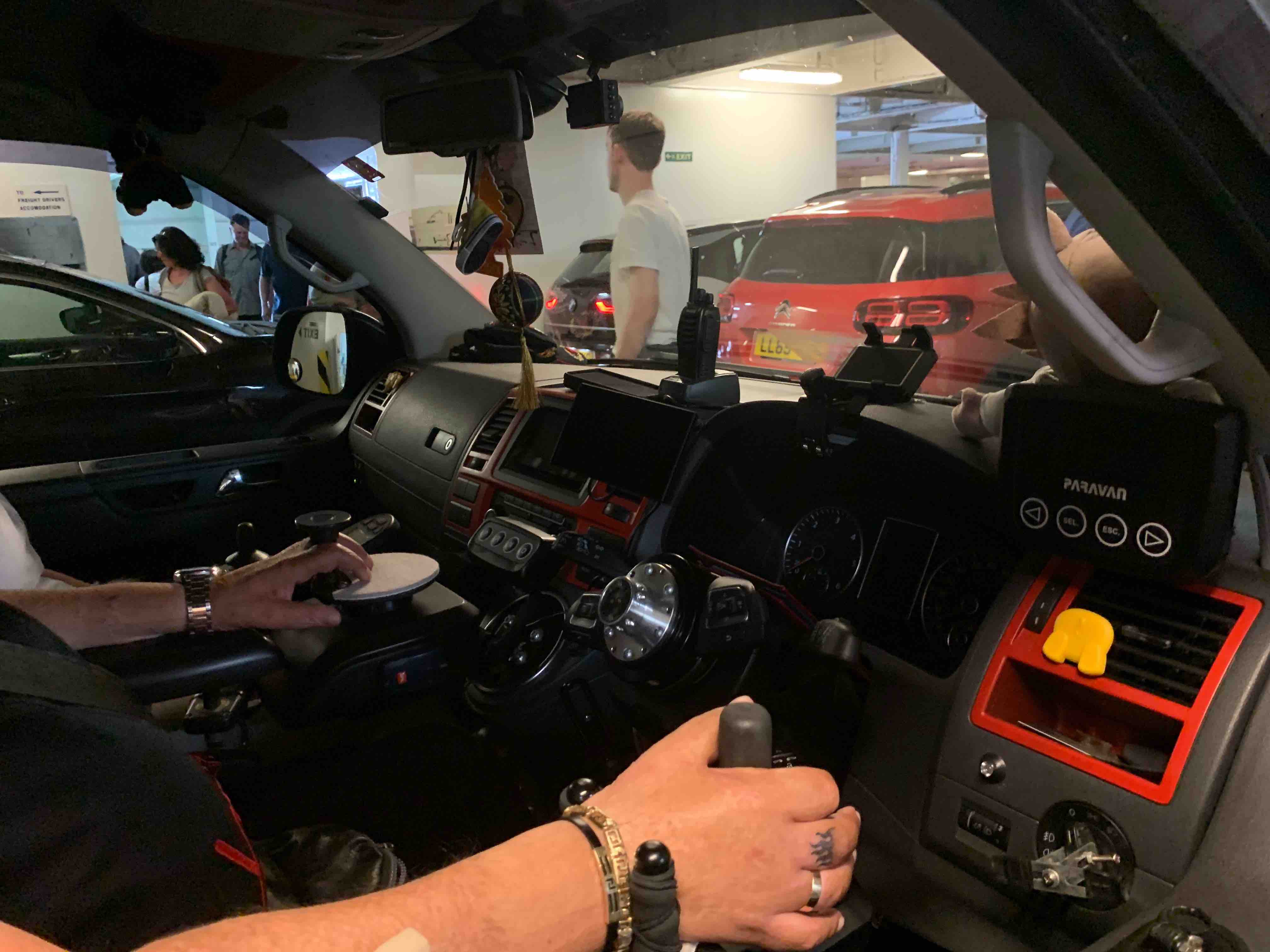
We saw amazing things and met amazing people along the way. A duty free shop (!) on the way to post-Brexit UK; a Volkswagen van without a steering wheel driven by a disabled man with his family in the back in a cockpit that looked liked that of a fighter jet; half-empty ferries when there was chaos in the airports; brilliant food; comfortable cabins; very helpful crew; hour-long traffic jams when entering Europe from the U.K.; and, of course, endless hours of Boris semi-resigning on the BBC.
The journey was one long adventure. Strange, at times, annoying, weird and wonderful at other times. Always exciting.
We stopped at a petrol station on the way where the owners regretted that they could not accept 500 euro notes for security reasons – have you ever seen a 500 euro note, never mind owned one? Pádraig managed to get out on the deck on one of the ferries but not up the only access to the fun sun deck, a flight of stairs – would that count as discrimination? The stewards on the same ferry asked a man to leave the accessible cabin Pádraig had booked, which the man had asked for, not because he was disabled but because these cabins have more space – for which the purser then profoundly apologised and offered free dinner and breakfast to the three of us, for the inconvenience.
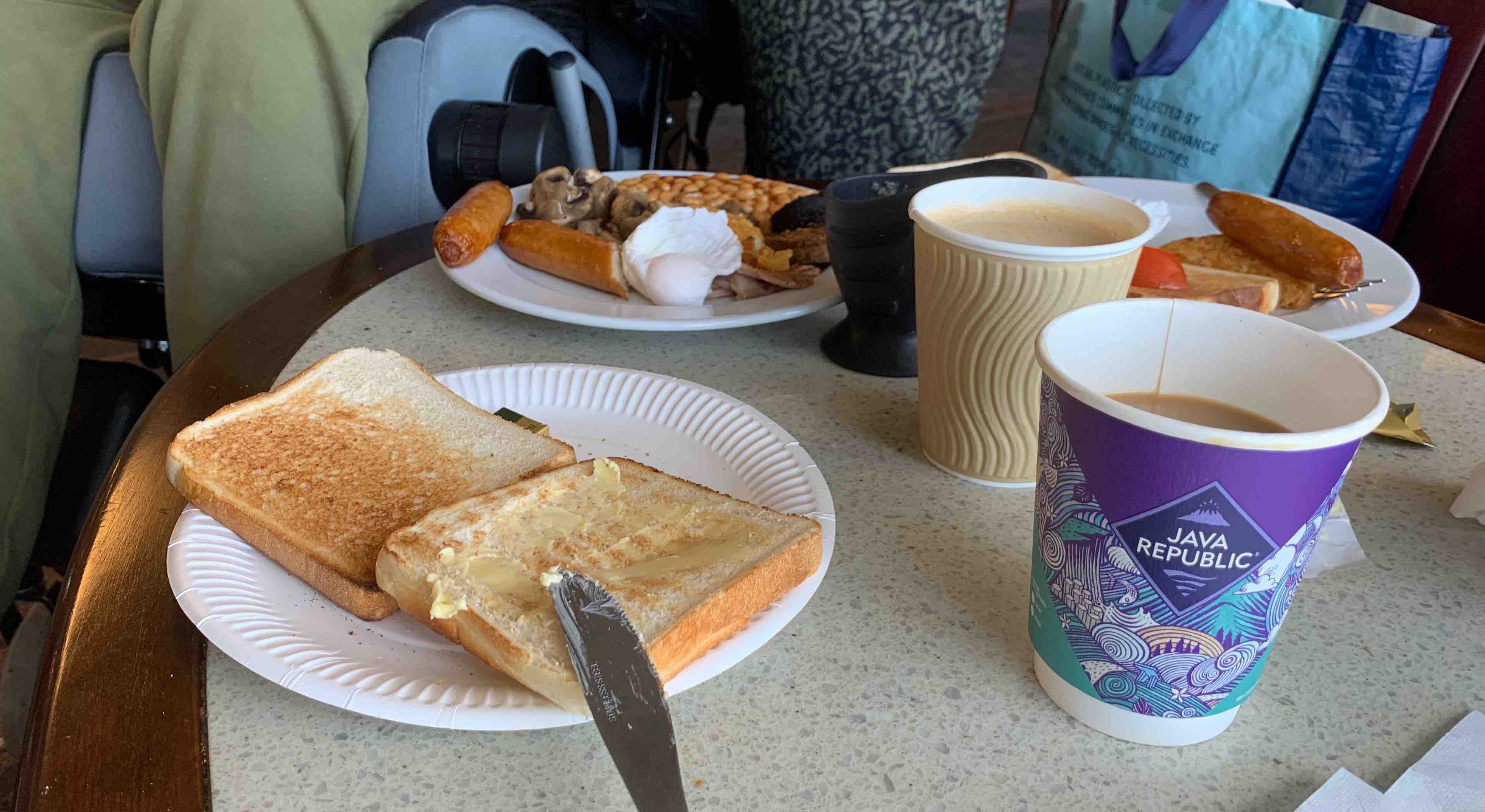
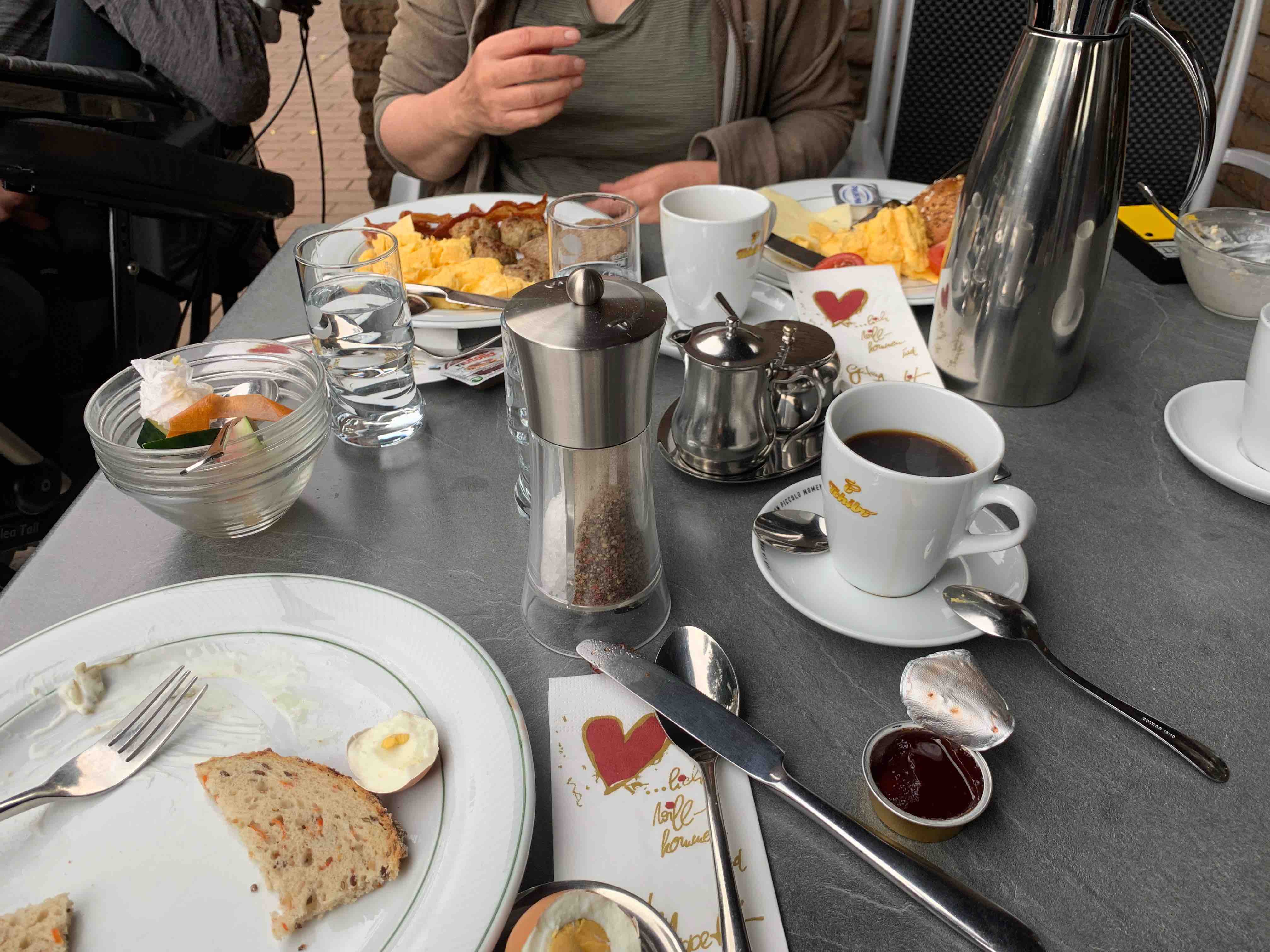
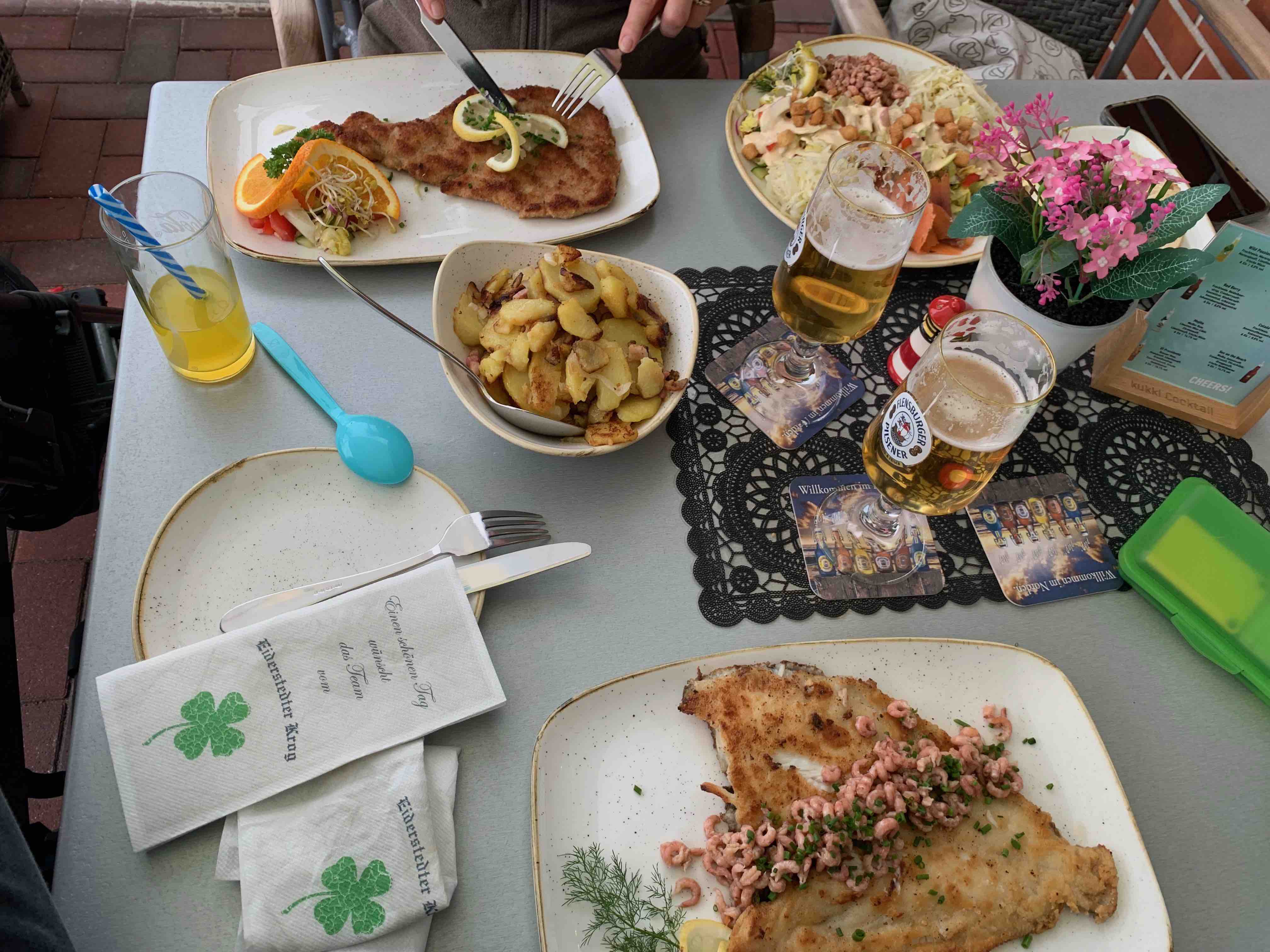
I took too many pictures of the food we enjoyed along the way. Not so much because of the food itself but because of the fact that Pádraig really enjoyed the different tastes and textures, from a full Irish breakfast on the morning ferry, prawns and beef on the evening ferry, a good German breakfast on the way, and a Schnitzel when we arrived in Tating.
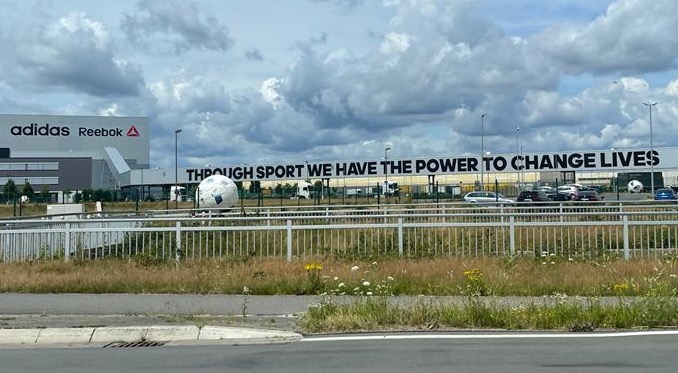
On the way, we passed an Adidas Reebok factory, displaying a slogan that society should take to heart: Through Sport We Have the Power to Change Lives. Yes, we do. And especially the lives of people who need our help to exercise.
I was thinking: should we ask Adidas to help us doing this? Really changing the lives of people?
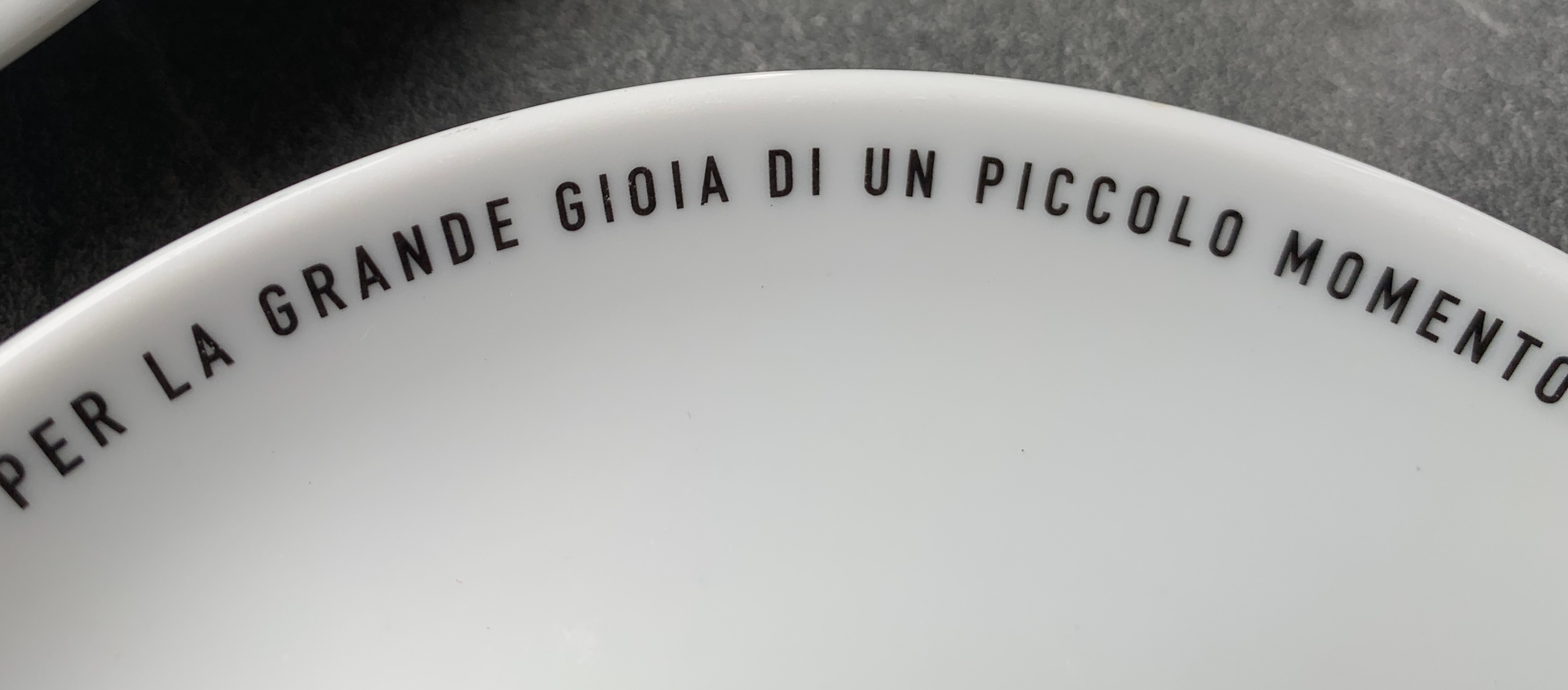
Life is not a rehearsal. Life is just one short moment. Un piccolo momento. And we should enjoy it as much as possible. Per la grande gioia.
Travel, eat, drink, exercise, be in awe, explore, have fun and adventures.
On my way to Cape Cod, nine years ago, I tried to memorise Forever Young.
May you build a ladder to the stars And climb on every rung
I needed to keep my mind busy. And I thought this might be the way that I was going to remember Pádraig. Forever Young.
May your heart always be joyful And may your song always be sung
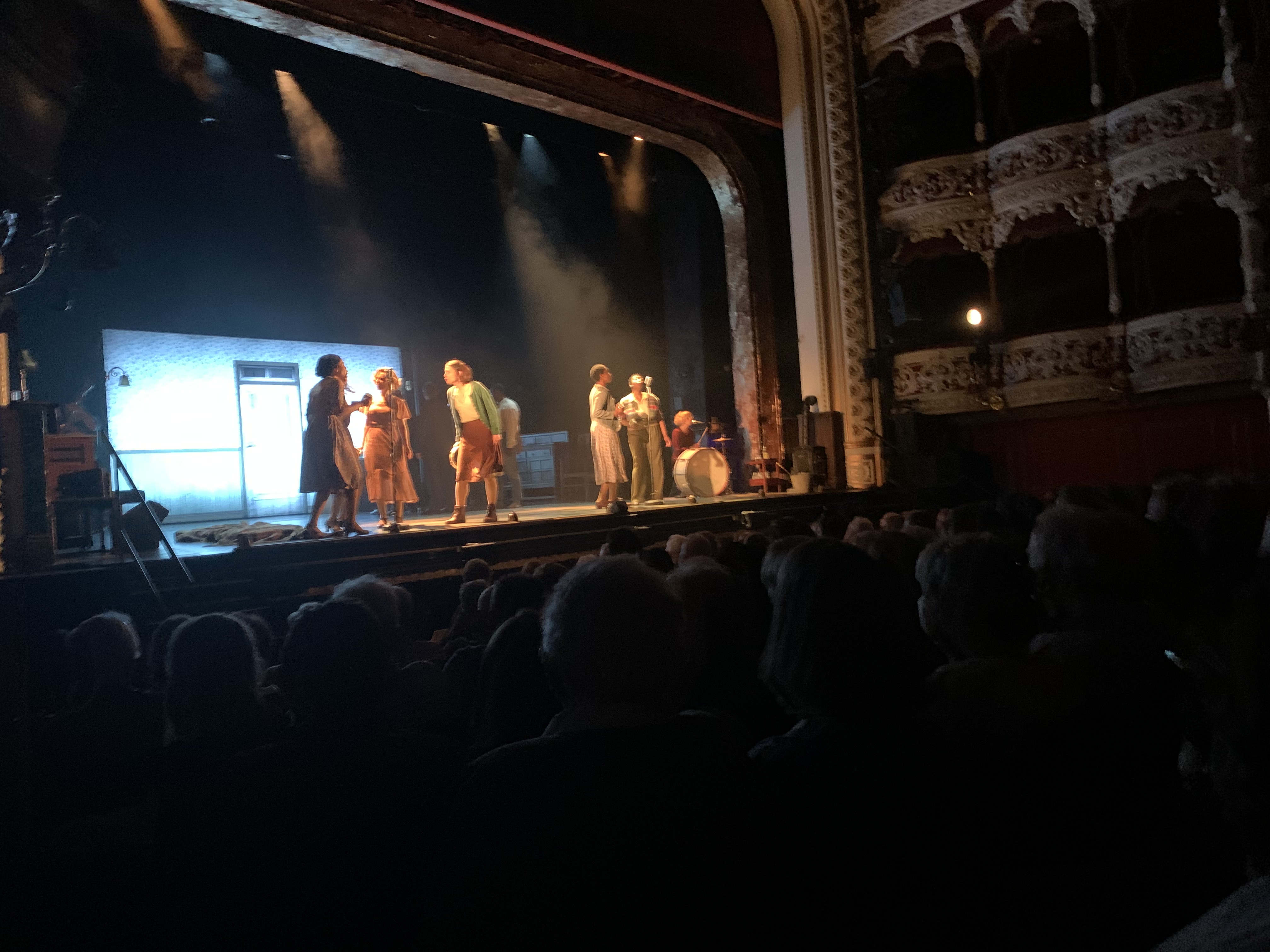
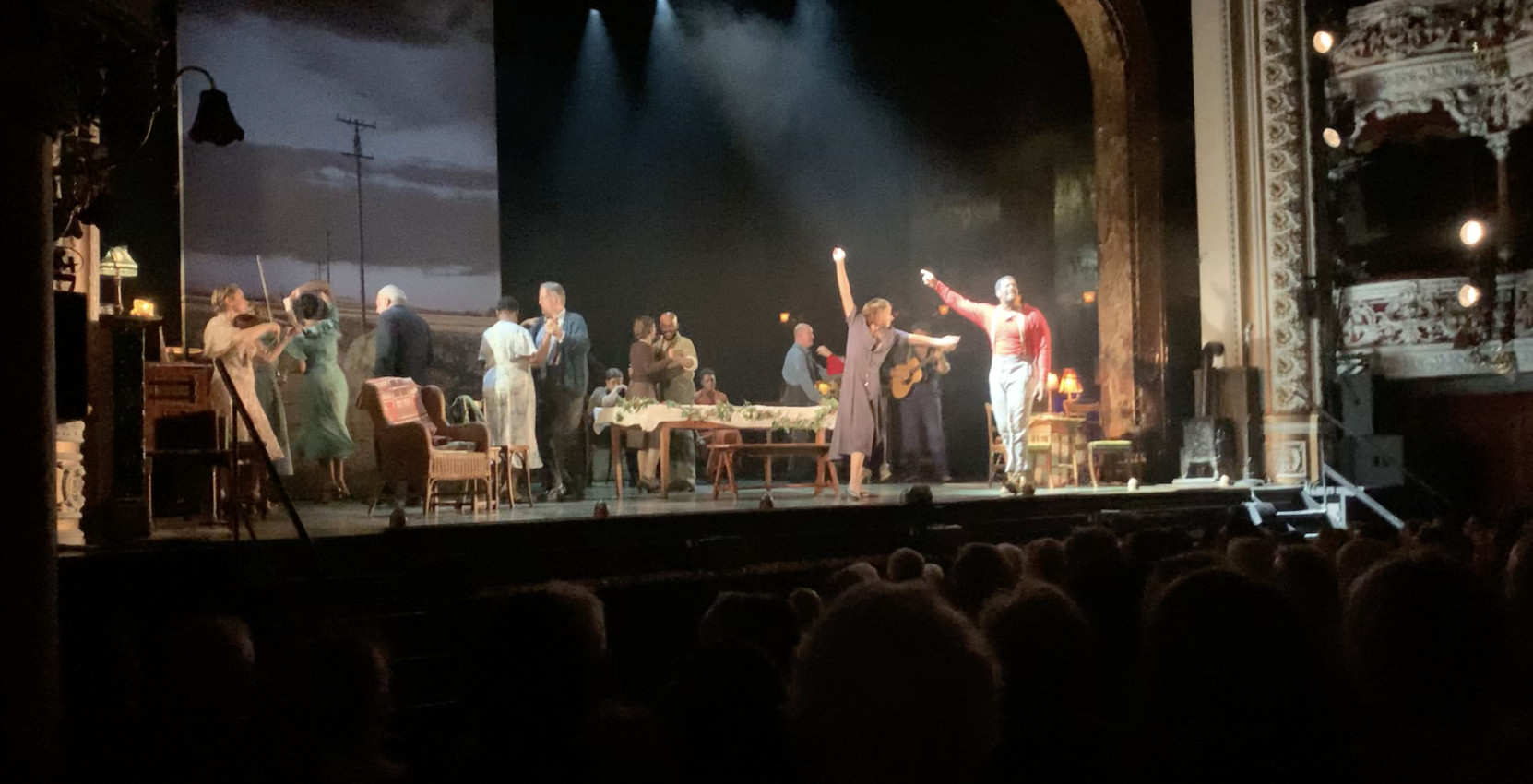
Last week, Pádraig and I went to see Girl from the North Country, a musical written by an Irish writer featuring the music of Bob Dylan, performed in a calm, very melodic, artistic way.
May you always be courageous Stand upright and be strong
Pádraig, luckily, did not stay Forever Young. He is getting older. As we all are.
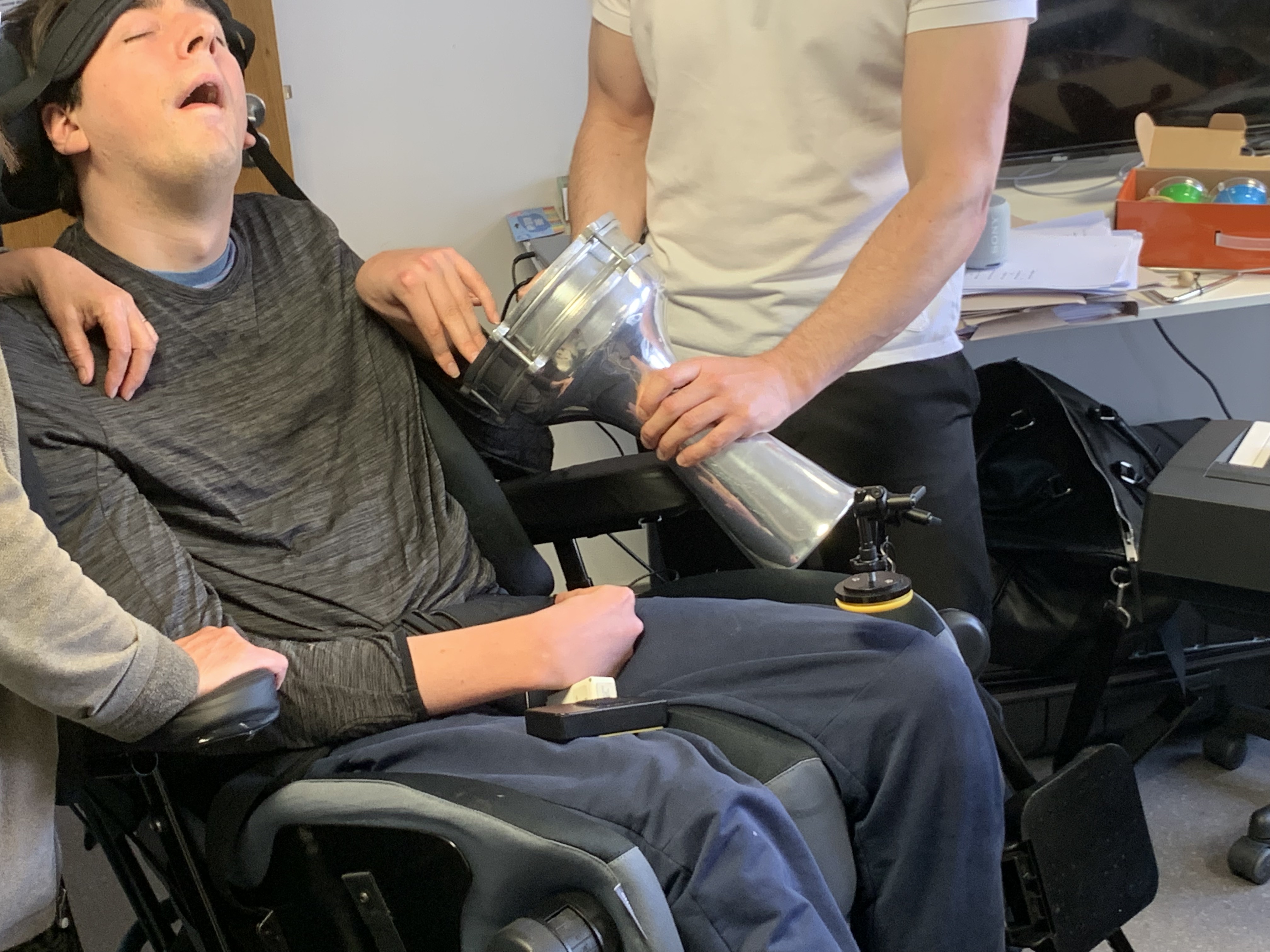
This last week, he started to play music again supported by two pretty good music therapists and some helpers.
Yesterday, we had our dinner al fresco. After all, it’s summer.
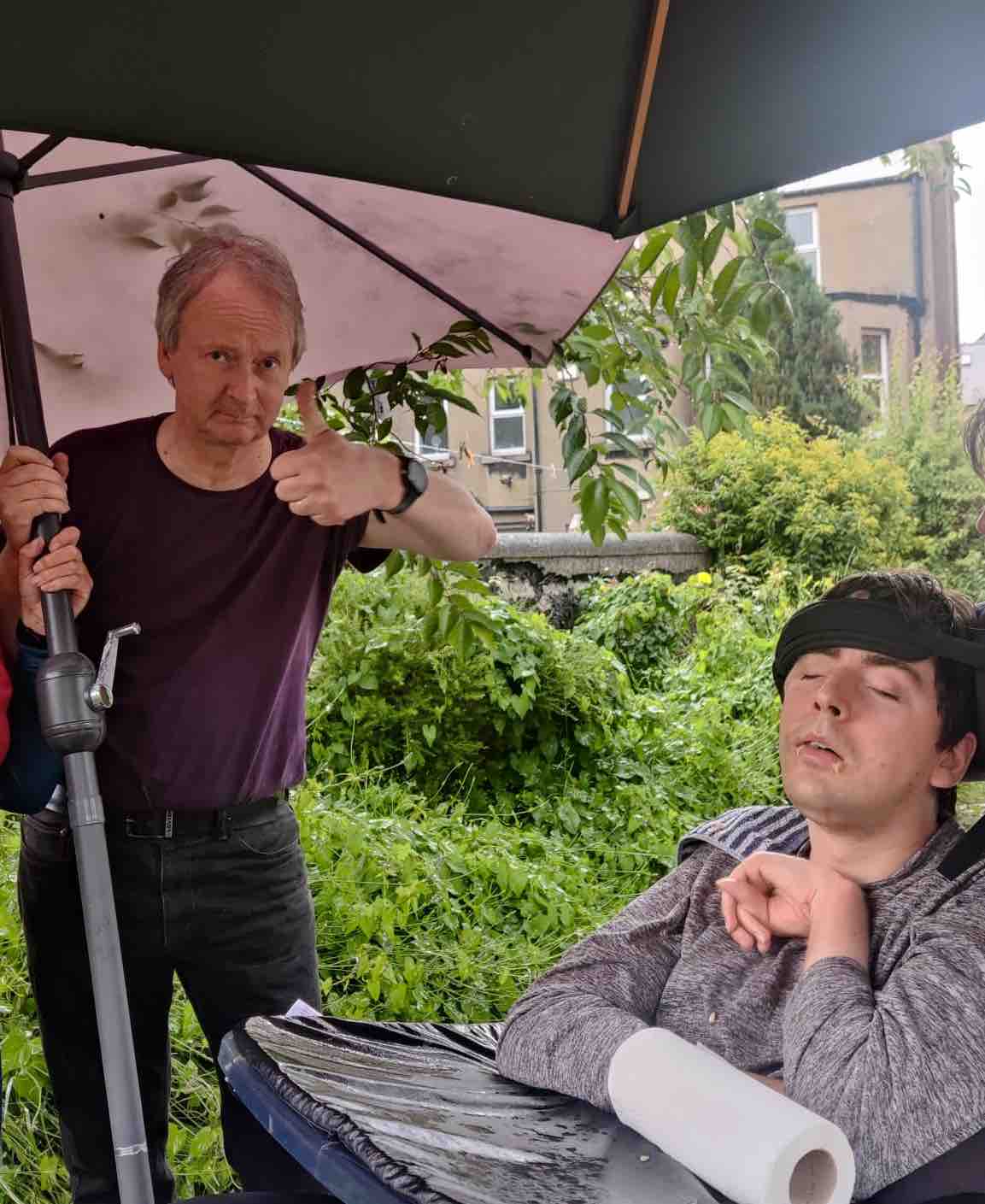
The sun umbrellas came in handy to keep the rain out. More or less.
I have moments when I don’t understand the world. I have moments, when I feel like I should try to wake everybody up and shout at their face: “are you for real”?
But I should look forward, enjoy the time we have and make the best of it. Whoever is around and wants to make life difficult – they’ll give up eventually. And if they don’t, we’ll just let them keep doing what they do, without paying any attention to them.
What happened to Pádraig and us has to be told one day, just so that people can see how crazy the world can be. And how a person can leave all that craziness behind and be, Let it be.
It’ll be more for entertainment than for defence, or attack, or revenge.
Someone last week asked me about the values of An Saol. Our values.
They are: community, autonomy, and healthy living. – No room for competition, no room for telling us what is in our ‘best interest’, no room for lying in bed and getting worse every day. We know that we have to help each other, that we have to take responsibility for what is happening to us instead of blaming others for it, and we know that we need to stay active unless we want to get sick and die.
Some warning signs are ill placed. We gotta do what we gotta to do. And not be scared to do it.
This is an extraordinary achievement, nearly nine years in the making.
Barack Obama
Resuscitation, organ donation strongly suggested, an intolerable life promised, driver never prosecuted, all possible life-threatening complications, lock-up in hospital because “we don’t want dead people in our yard”, the question by a qualified rehab nurse beside his bed asking “would it have been better had he died?”.
Traveling back to Route 6A, Main Street Brewster, MA; inspiring the An Saol Foundation, giving it its name, logo, and purpose; employing his own care staff; going to concerts, cracking jokes, enjoying food, drink, and good company; voting for the Dáil and opening bank accounts; caring about others with great empathy.
Using his switch, the “bleeper”, Pádraig today told us that he remembered the day, month, and year of his accident; he told us that he enjoys going to An Saol; and that he is very much looking forward to his upcoming holidays. Is he happy? Yes, four out of five.
Having that conversation with him in the garden and remembering what happened this coming Monday, nine years ago at 3pm in Brewster, was nearly unbearable for me. Time does not heal.
Going back there after 10 years. Fulfilling the dream of going to Alaska. Making people happy. Something to look forward to.
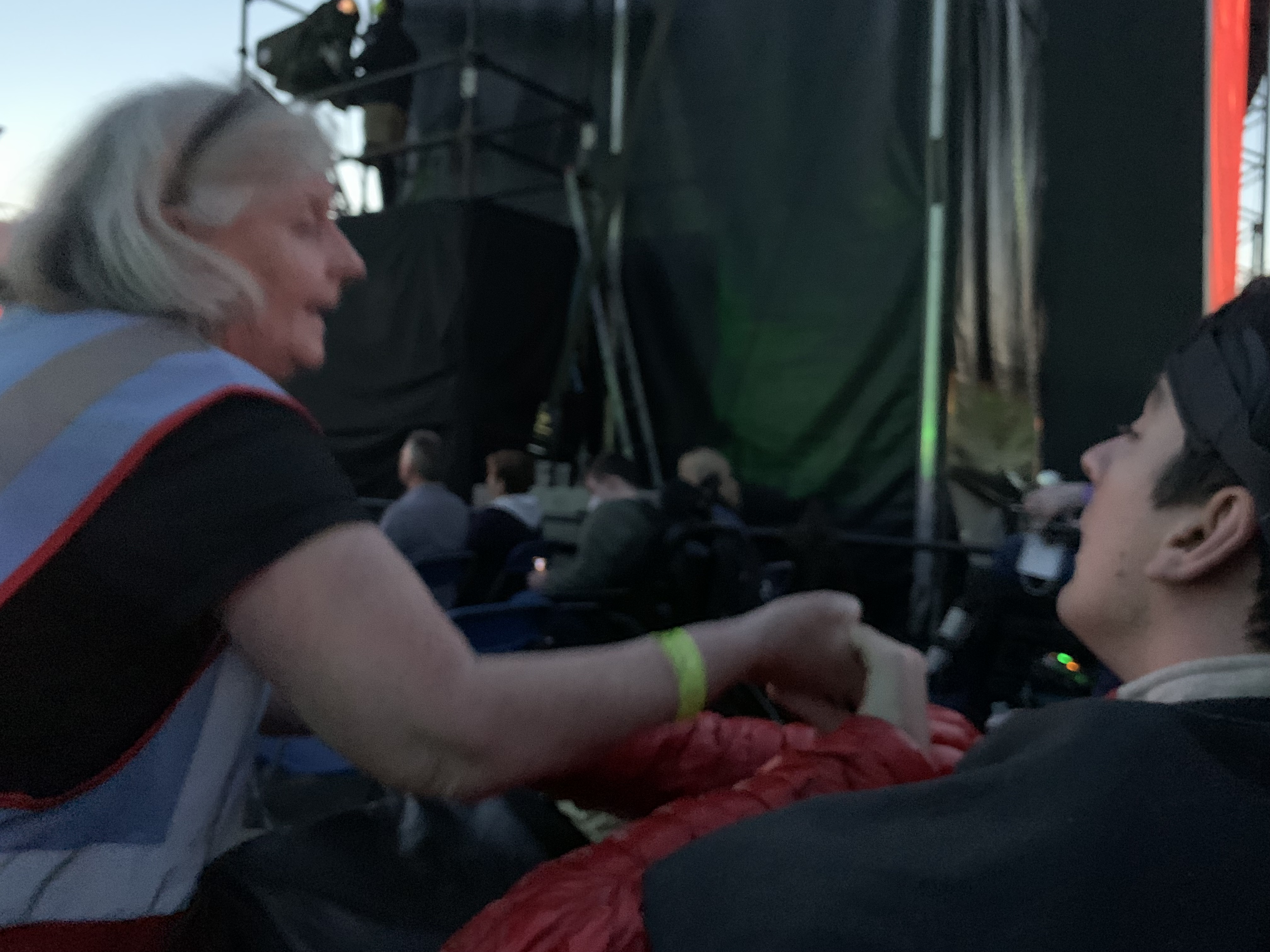
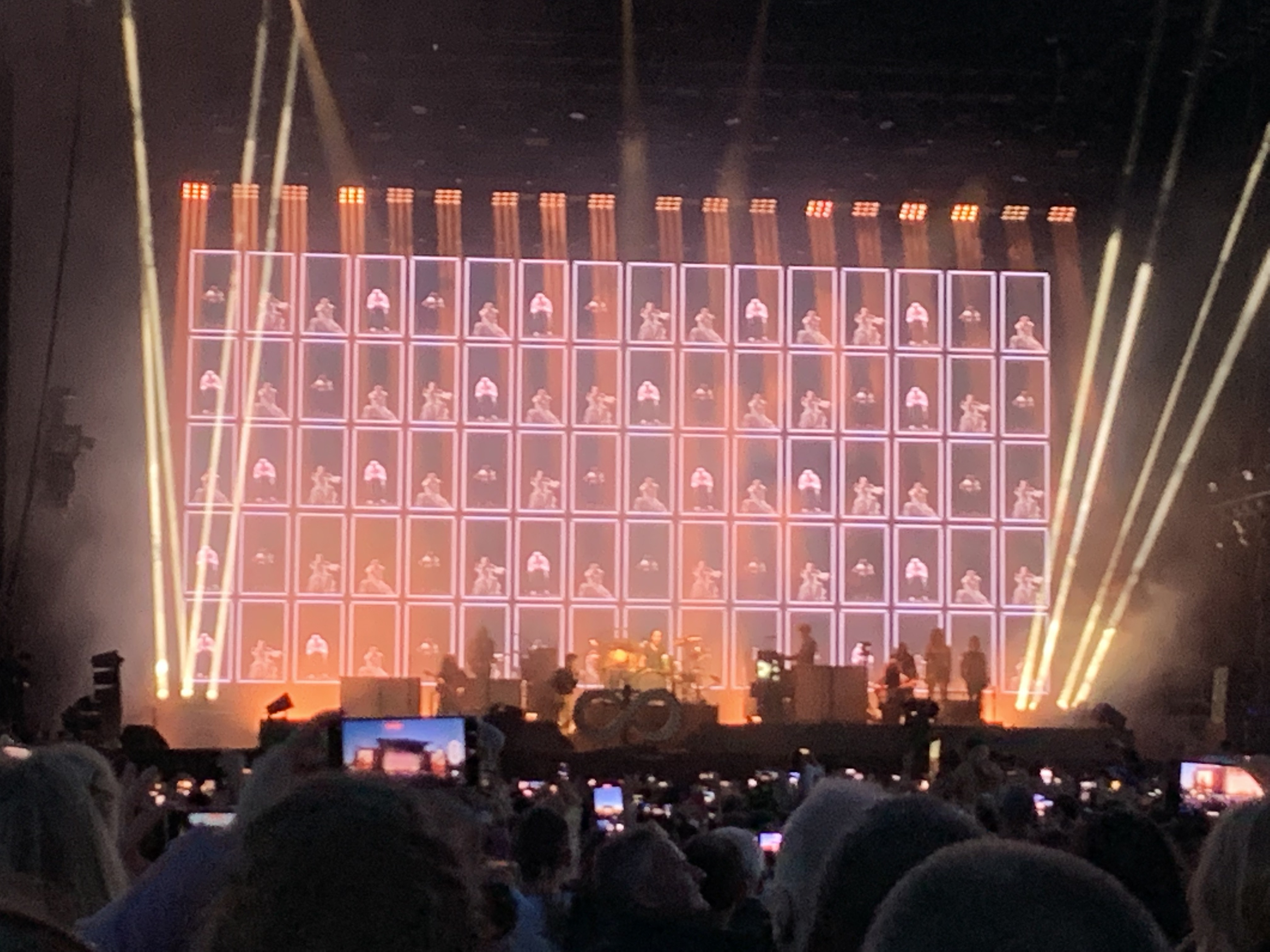
We got the wristbands, we were dancing, we were singing. Under the warm, blue skies of Dublin on a night that was magic and could not have been much better.
Nearly two hours of pure, contagious energy straight from Las Vegas Nevada to Malahide Castle Dublin.
During the week, Pádraig did not just continue with his fitness programme, cycling on the MOTOmed and walking on the Lokomat, he also went back to active standing, supported by friendly helpers but otherwise on his own two feet and legs and without any standing frame. – A close second best to The Killers.
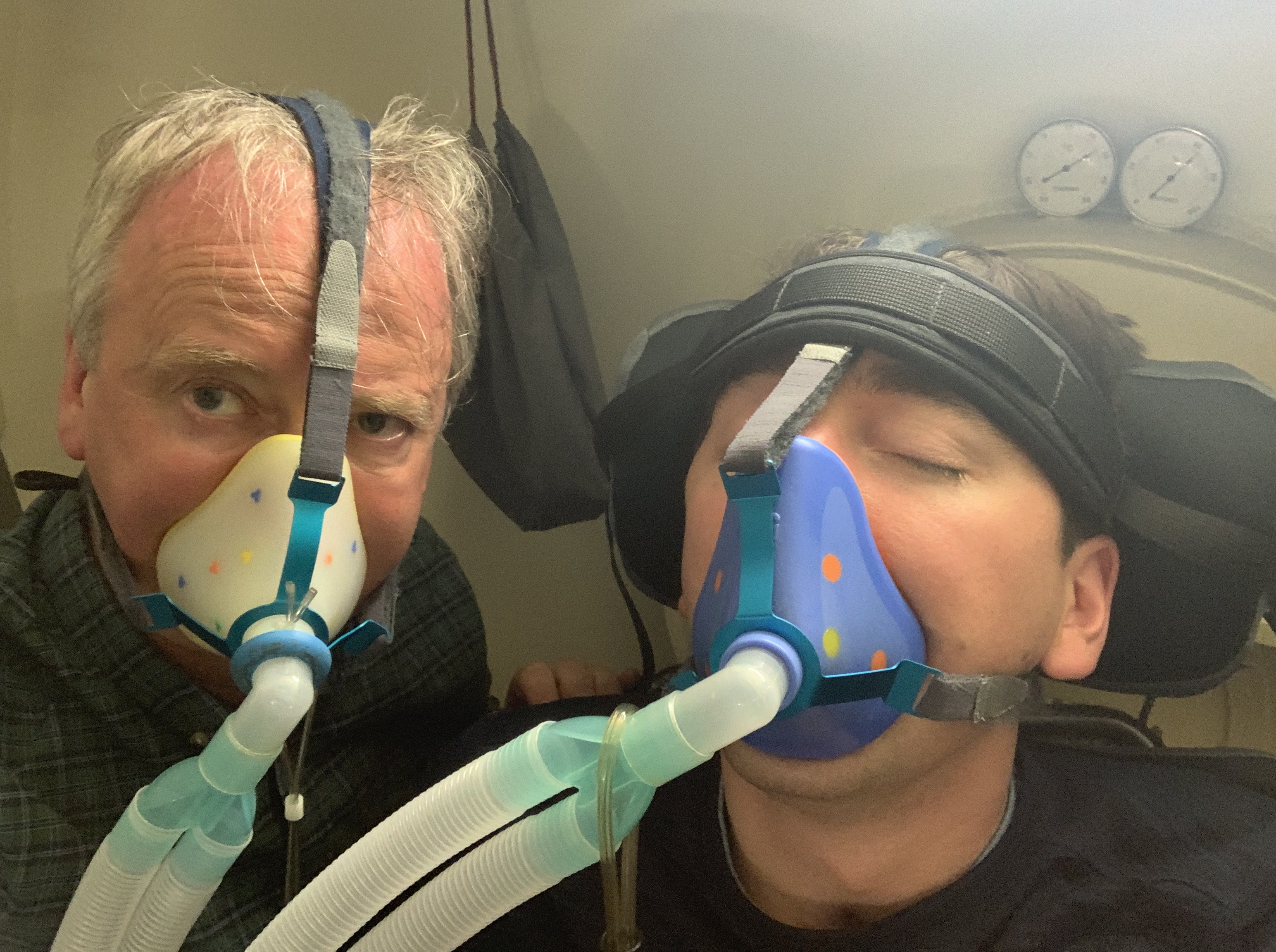
We continue going to the National Hyperbaric Centre, breathing pure oxygen for an hour under pressure equal to being 10m under water. Pádraig says it helps his lungs and his alertness. – It’s a bit like the casinos in Vegas where they pump oxygen into the halls to keep players going and where The Killers most likely get all their energy. Makes us think of Tom Cruise in Top Gun – our next movie.
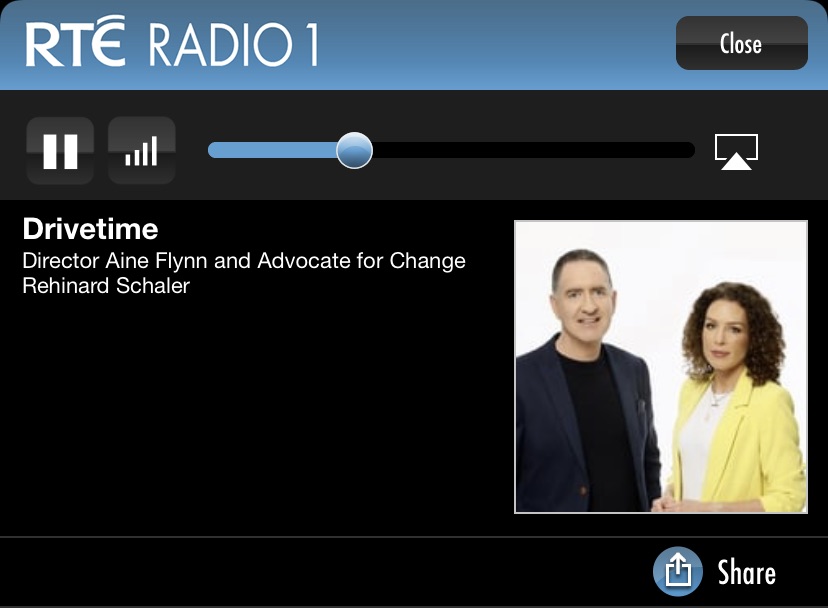
Pádraig got a really nice mention in Drivetime by Cormac Ó hEadhra, RTÉ’s best current affairs radio presenter, and I got my two minutes of fame giving the long overdue Assisted Decision Making (Capacity) Act 2015 a plug, together with the brilliant Áine Flynn, Director of the Decision Support Service, DSS. The act was to be commenced last week – which didn’t happen because parliament, the houses of the Oireachtas, did not manage to pass the necessary amendment to this 2015 act in time. Seven years apparently weren’t enough. It’s not a sprint, it’s a marathon. And politicians are human (not dancers). We need patience and perseverance. And probably a good dose of resilience before the scandalous treatment of families in the Courts applying Victorian laws in the 21 century will stop.
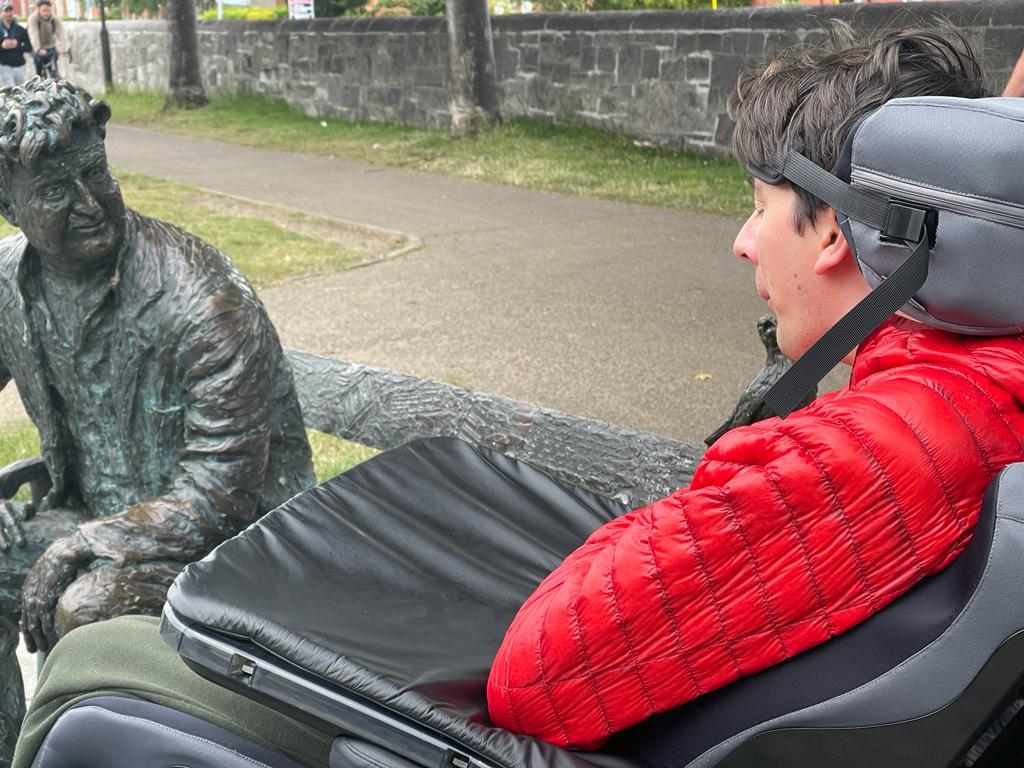
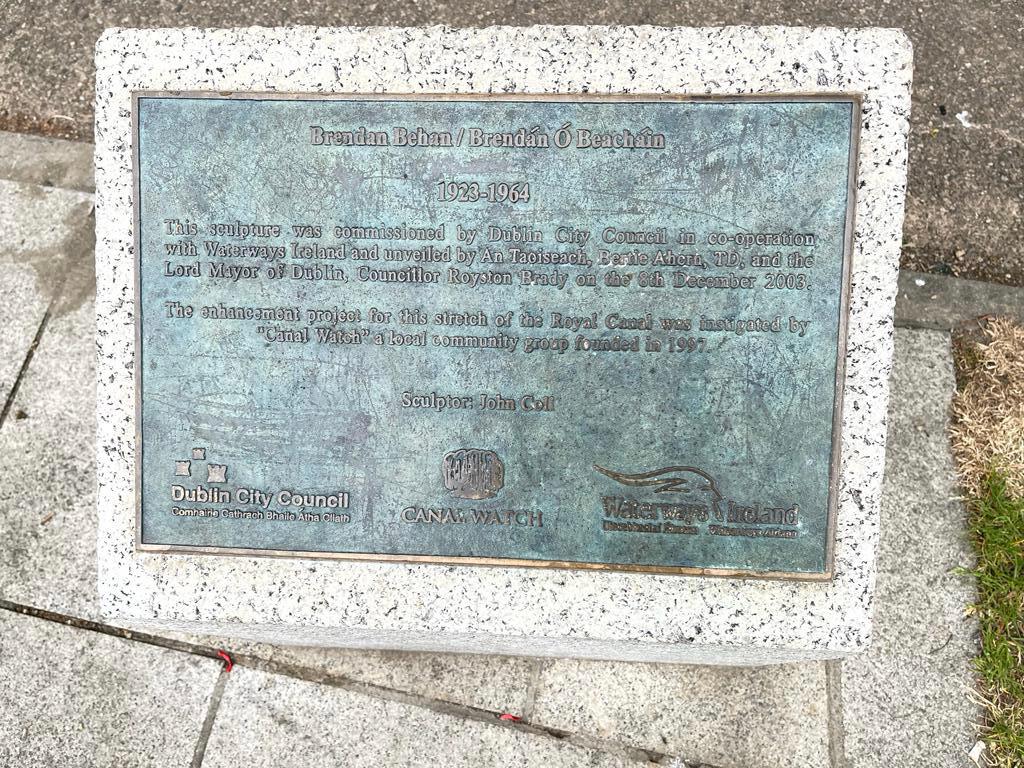
The weather continues to be nice and warm (for Ireland) though a far cry from the heat wave in the rest of Europe. Pádraig went for a walk along the canal and met up with Brendan Behan, not too far away from where Brendan did some time on the Royal Canal.
I’ve got this feeling that we’re no longer on our knees looking for the answers. Pádraig’s signs are very vital and he is, most definitely, is a dancer.
Gonna change my way of thinking. Make myself a different set of rules. Going to put my good foot forward. Stop being influenced by fools.
“Gonna Change My Way of Thinking”, Bob Dylan.
A Slow Train’s Coming is musically, according to Jann S. Wenner’s 1979 article in Rolling Stone, Dylan’s best album to date. In essence, “Slow Train” is a new kind of “Blowin’ in the Wind”, he writes, in time, it is possible that it might even be considered his greatest, a rare coming together of inspiration, desire and talent that completely fuse strength, vision and art.
It was never one of my favourite Dylan albums. Coming across Wenner’s article last week was one of those browse-through-the-library-shelves experiences you can at times have even on the internet: ‘collateral’ findings when looking for something else.
Serendipity.
The article made me listen to that album again, Mark Knopfler’s superb guitar playing, Dylan actual singing, the brilliant rhythm and drum solos.
Wenner writes that Slow Train is a bit like a state of the union. And it’s universal and timeless.
Sometimes I feel so low-down and disgusted Can’t help but wonder what’s happenin’ to my companions Are they lost or are they found? Have they counted the cost it’ll take to bring down All their earthly principles they’re gonna have to abandon? There’s a slow, slow train comin’ up around the bend
No doubt, there’s a slow train coming around the bend and we’ll have to change our way of thinking.
Last week, the Muckamore abuse inquiry opened in Belfast after a long campaign for answers in what is most likely going to become the biggest case of institutional abuse in the history of the British and Northern Ireland Health Service. 72 staff members are being accused of abuse in Muckamore Abbey Hospital in Co Antrim, the “jewel in the crown” of mental health facilities supposed to serve highly dependent and vulnerable residents.
The scandal came to light because of the persistence of one father, Glynn Brown, who says he stopped counting after his son Araron was assaulted for the 150th time at this care facility, reports Seanín Graham in the Irish Times last Monday, 06 June. Glynn was also interviewed by Miriam O’Callaghan on Primetime last week. When Glynn found out that his son ‘Aaron’s been kicked on the groin, punched on the shoulder, trailed across the ground with his genitals exposed…’ he called the police.
Sometimes I feel so low-down and disgusted
Last week, I met with a desperate mother of a severely brain injured young man who told me about the many occasions that she had found her son on unannounced visits with injuries and being left unattended in a closed, dark, and hot room lying in his excrements. She told me that she did not hear how or even whether her complaints were investigated, never mind what the outcome of these investigations had been; with one exception when one member of staff had been suspended. Her son is kept a large distance away from his family home and when she asked for a letter to support her application for travel assistance this letter was denied. She comes from a minority community.
Instead, it was strongly suggested to her to discontinue her unannounced visits, she was portrayed as a troublemaker by the care facility, and her son was made a ward of court just over a week before the High Court stopped accepting new wardship applications. Wardship is based on a 1871 Lunacy Act, which is about to be repealed by the 2015 Assisted Decision Making (Capacity) Act, to be commenced later this month.
The mother is now legally written out of her son’s life, with the High Court and the ‘Committee’ taking on the role of the parents, so to speak. The mother was not appointed by the Court to the Committee as she was not seen to be neutral enough to look after her son’s ‘best interest’. Instead the Court appointed the Solicitor General’s Office to the ‘Committee’.
It seems as if the 1871 Lunacy Act might have been used here to make it even more difficult for the mother to follow up on her abuse and negligence allegations against her son’s care unit. If that was really the case, it could mean that the wardship decision was taken to protect the system, not the rights, health, and safety of the young man placed in what the mother considers an unsafe care unit, a far distance away from his family. And not the mental and physical health of the family who have suffered untold loss and tragedy.
Can’t help but wonder what’s happenin’ to my companions
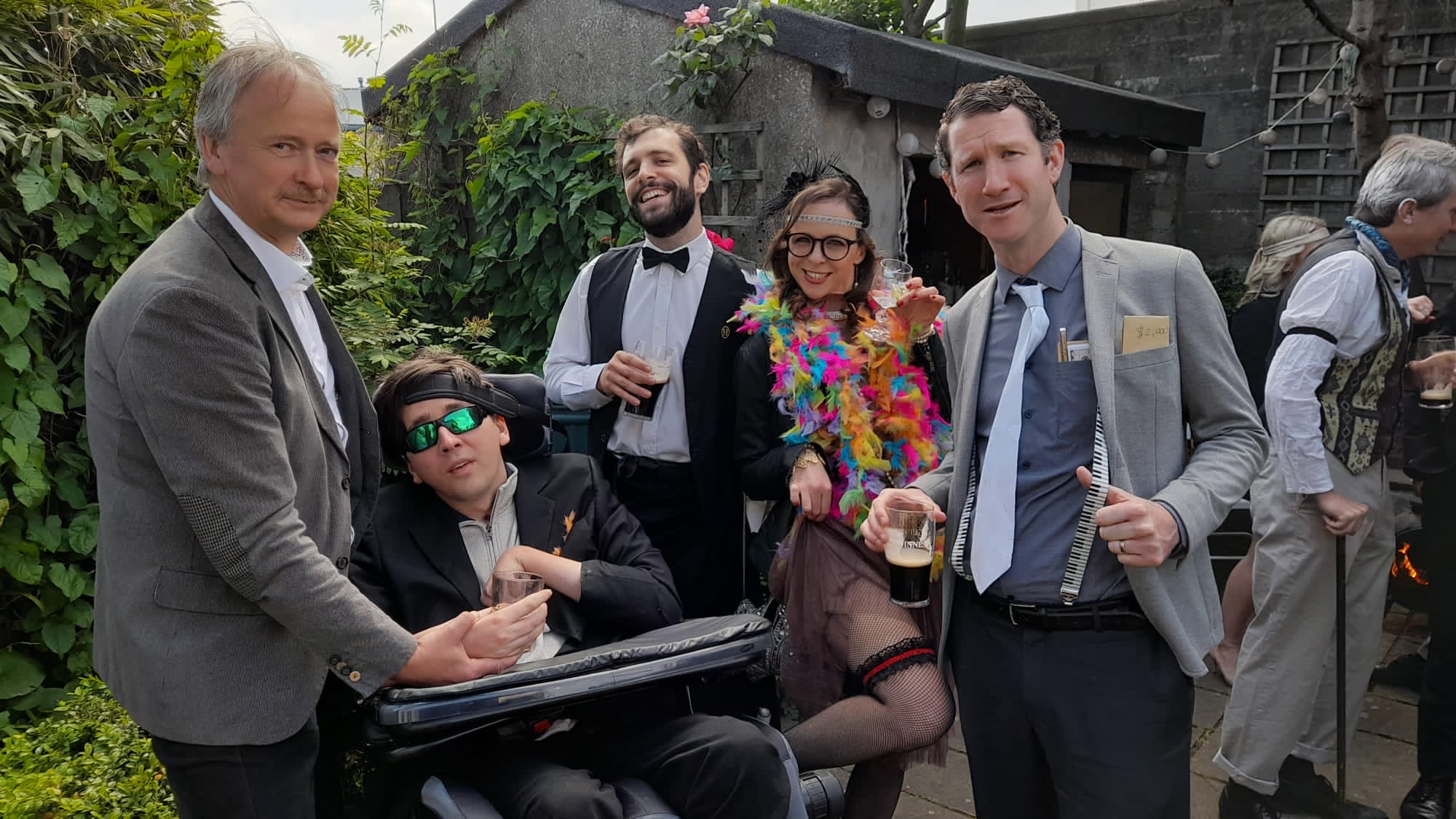
I mentioned last week that Pádraig went to a Roaring 20s party. Here is a taste of how wonderful it was.
How wonderful it is to be with friends, having fun, having a laugh, even being a bit silly perhaps. Life is all about being together and sharing happiness. And there is no reason for anybody to be excluded from that life, being separated, away from the people they love and whose company they enjoy.
Are they lost or are they found?
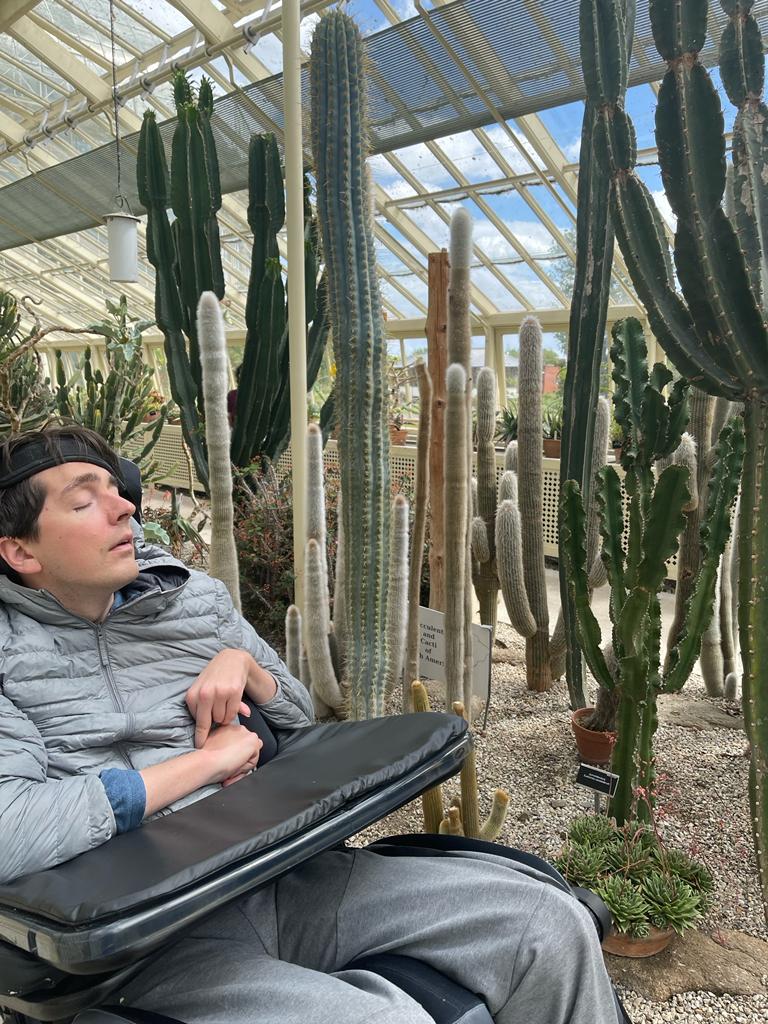
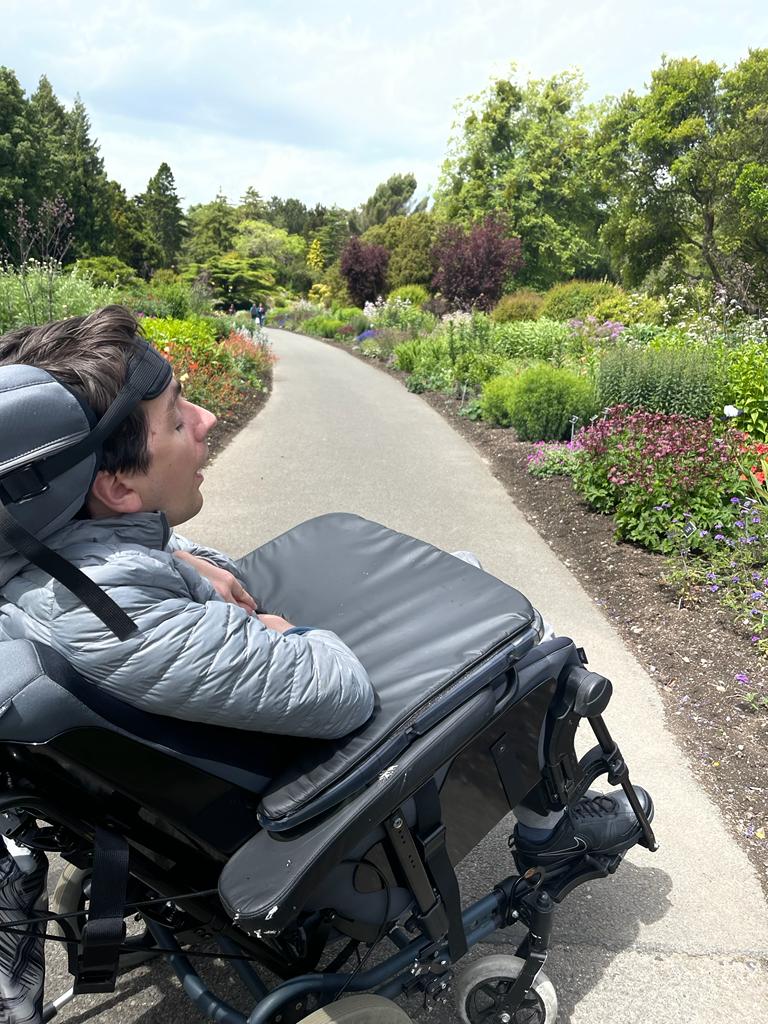
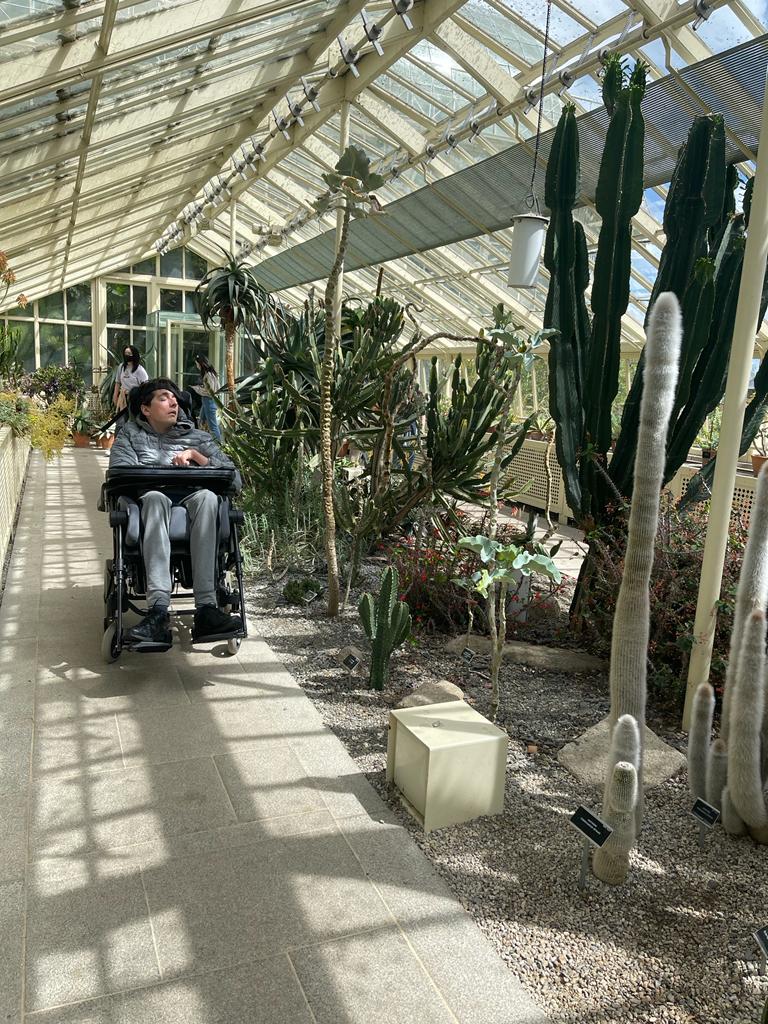
At this weekend, there was a bit of sunshine, and loads of wind, and Pádraig went out for a long walk in the Botanic Gardens.
Looking at these pictures, wouldn’t you want to be there? It’s fantastic. Full of colour and scent, light and shadows, breezes and dead calm, prickly and super smooth. Just like people. Just like life.
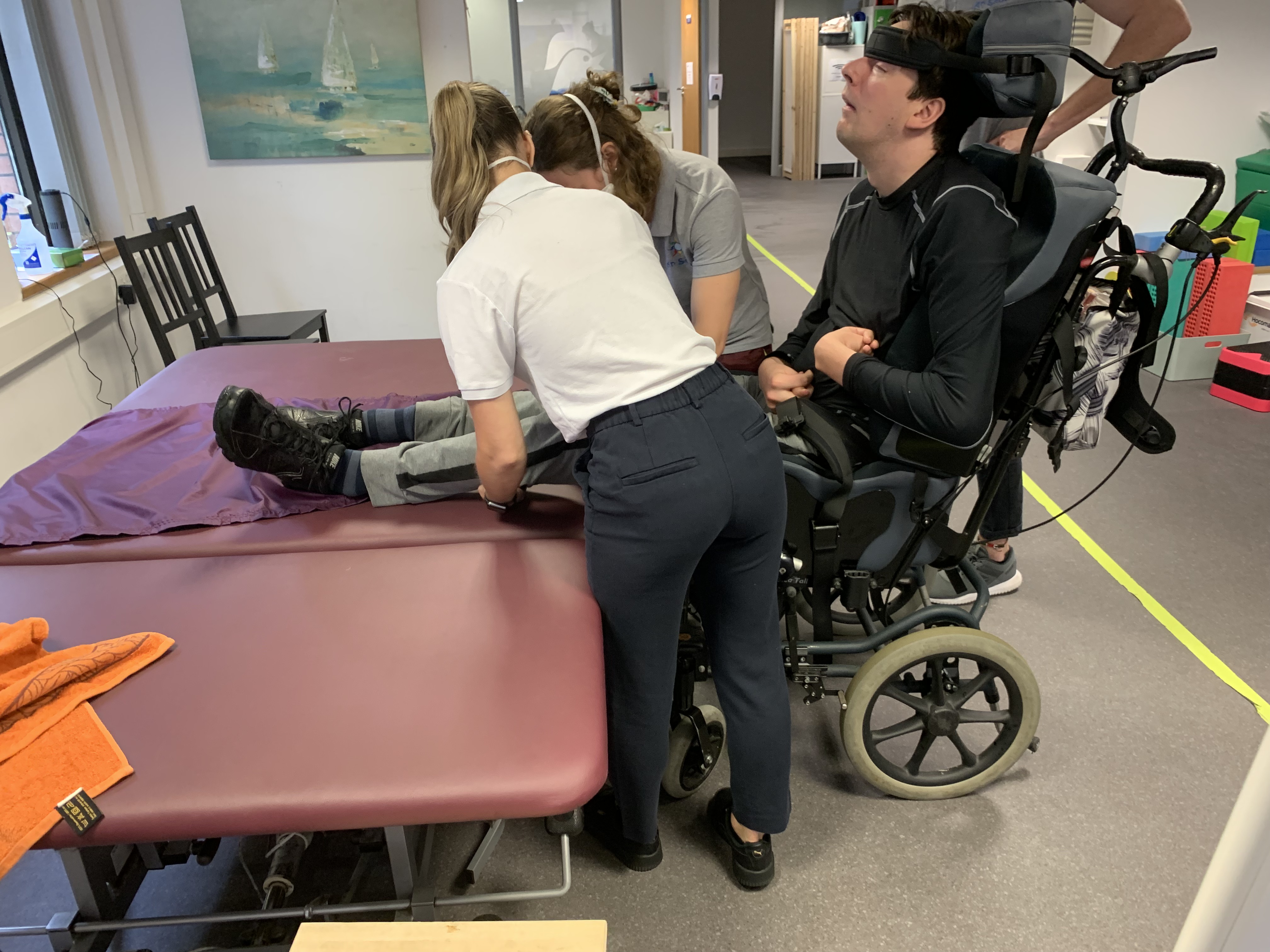
Last week, I really admired what no doubt was proof of more than just a bit of creativity. I had not seen this transfer before, had never even thought about that it could be done this way. It worked like magic.
What cannot be done with imagination and teamwork to make life good, to remove stress, and to make all feel alive!
A ‘manual’ transfer without any lifting but lots of sensory boundaries, action, participation, and satisfaction. Why not move away from the practice of passive lifter transfers when people are literally moved helplessly through the air, wherever that is possible?
Have they counted the cost it’ll take to bring down All their earthly principles they’re gonna have to abandon?
Let’s do this together. Let’s agree that there is a ‘right’ and that there is a ‘wrong’ – even if that might change or bring down an existing practice or system.
“It is time for change. It is time for a revolution in rehabilitation”, said the person appointed by the Government of Ireland and the HSE as the National Director of Clinical Strategy and Programmes, Dr Áine Carroll. (Irish Examiner, 03.02.2011).
I have not seen a revolution in how those directly and indirectly affected by severe and devastating brain injuries are being treated by society, the judiciary and the health system.
But definitely,
There’s a slow, slow train comin’ up around the bend.
And, like for the Masters of War, the Times They Are a-Changing, there is hope because When He Returns, maybe on the Slow Train?, there will be an answer to the question…
How long can I listen to the lies of prejudice How long can I stay drunk on fear out in the wilderness
Ok, I agree, if you put it as bluntly as this, and without the music, it might sound a little “born again” – but, I have no doubt that wrong will be replaced with right. There will be no more unnecessary dying, no more unnecessary suffering. After all, we are living in what could be, again, the Roaring 20s.
Don’t you cry and don’t you die and don’t you burn Like a thief in the night, he’ll replace wrong with right When he returns
Is love male or female or both or neither?
In any case, it is the greatest, a rare coming together of inspiration, desire and talent that completely fuse strength, vision and art.
He’ll regret it till his dying day if ever he lives that long.
“Red Will” Danaher
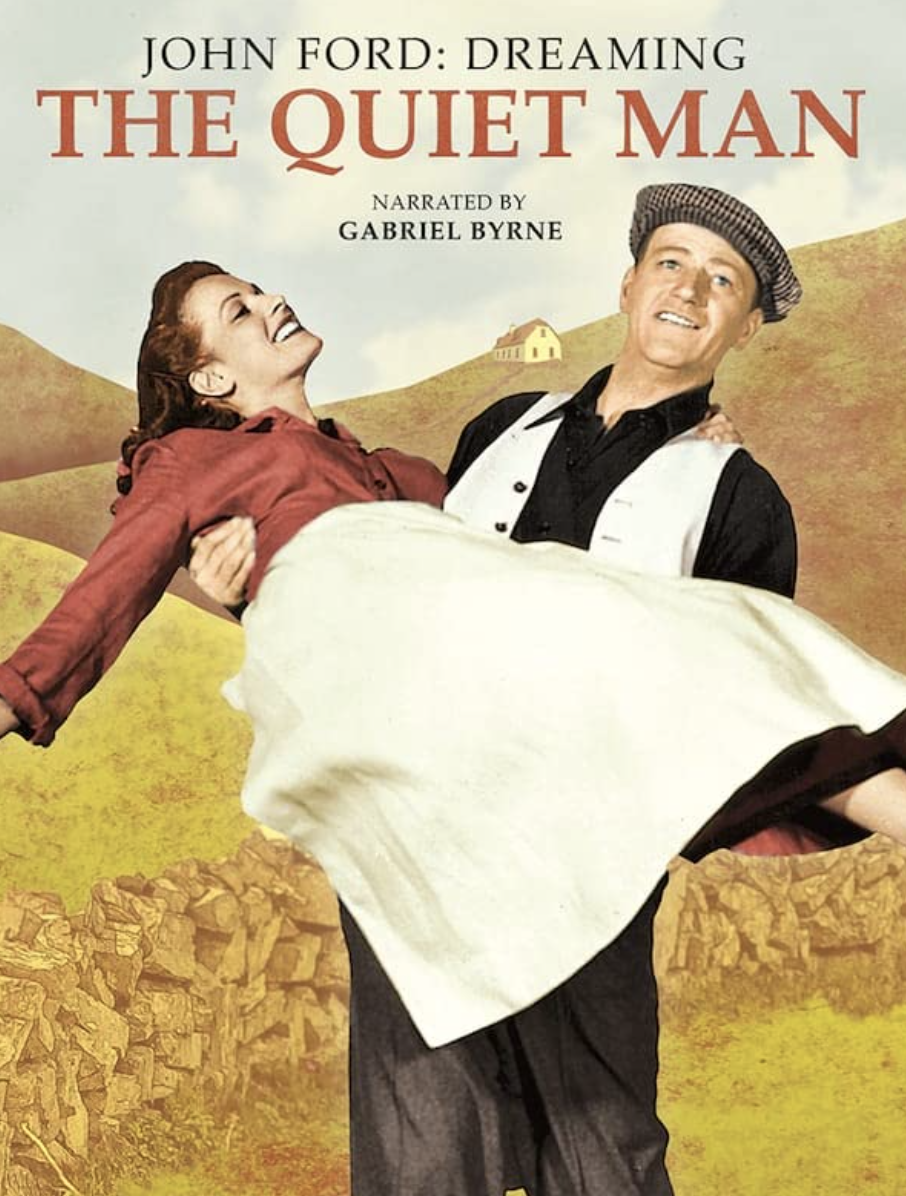
70 years after the release of The Quiet Man, one of the most famous movies ever shot in Ireland, the European Central Bank officially licensed a souvenir note showing the iconic image of John Wayne as Sean Thornton scooping up Maureen O’Hara as MaryKate Danaher. Only 5,000 copies of this souvenir note were printed by Oberthur, the French operation that prints the Euro, with the look and feel of a Euro, complete with watermark, holographic protection, and UV-responsive tactile marks, as reported by the Irish Central.
It has zero value and costs €4.99. – Did I get that right???
70 years after the release of The Quiet Man, The Quiet Girl, An Cailín Ciúin, was released – probably the most successful Irish Language Film of all times.
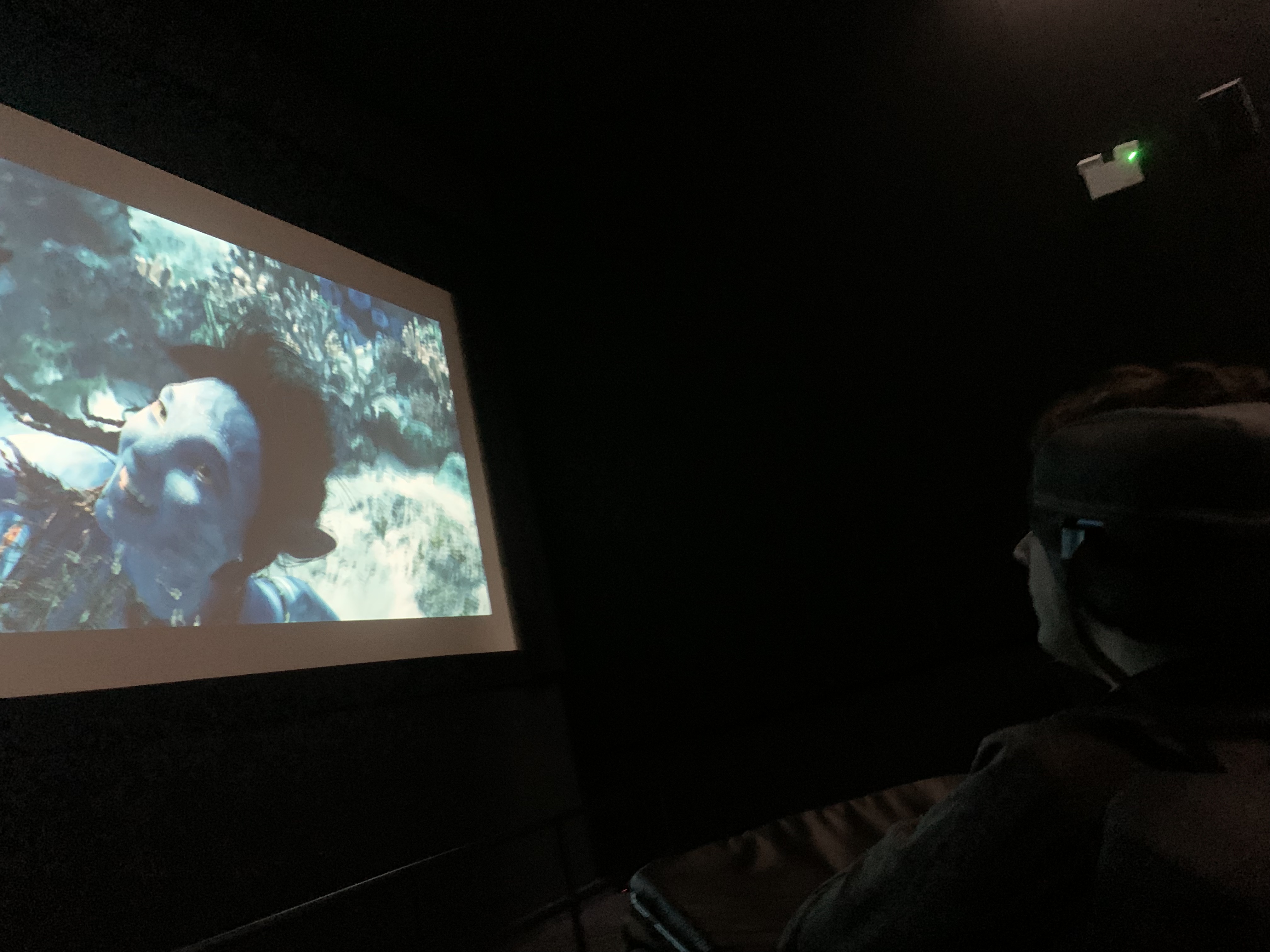
Last week, Pádraig went to the cinema to watch An Cailín Ciúin. It was his and our first cinema visit in a long time. Because it was a type of auditorium seating, we had no option but to stay in the first row, right in front of the screen and the speakers… an inconvenience we soon had forgotten about.
There were tons of adverts and millions of trailers. The moment the movie started though, it became clear that this was going to be a very special cinema experience. Think the opposite of Top Gun. Not just the girl, the whole movie was quiet. There was no story line to talk of. There was no big drama, no exploding, fast moving events, no breath-taking chases. People wrote letters and met at their neighbours’ houses instead of an Instagram post or a WhatsApp. The cars were emission-unfriendly, ancient, slow and creaky. No smooth-moving eCars. The shops were not for browsing for bargains, but the ones where you ask shop assistants whether they had the item you needed, in your seize. The tragedies were hidden away, quiet, but persistent, part of who people were. No mention of mental illness or child lines to call.
The movie recreates Irish (and universal) countryside living of the past and it will leave a deep sadness in your heart. And I’d say that if you have a heart it will stay there for a long time. Not least because some aspects of that past life are still around and they are universal in the Western World.
What a difference between the Quiet Man and the Quiet Girl.
Pádraig celebrated his birthday last Sunday and the Nachfeiern continued into the week.
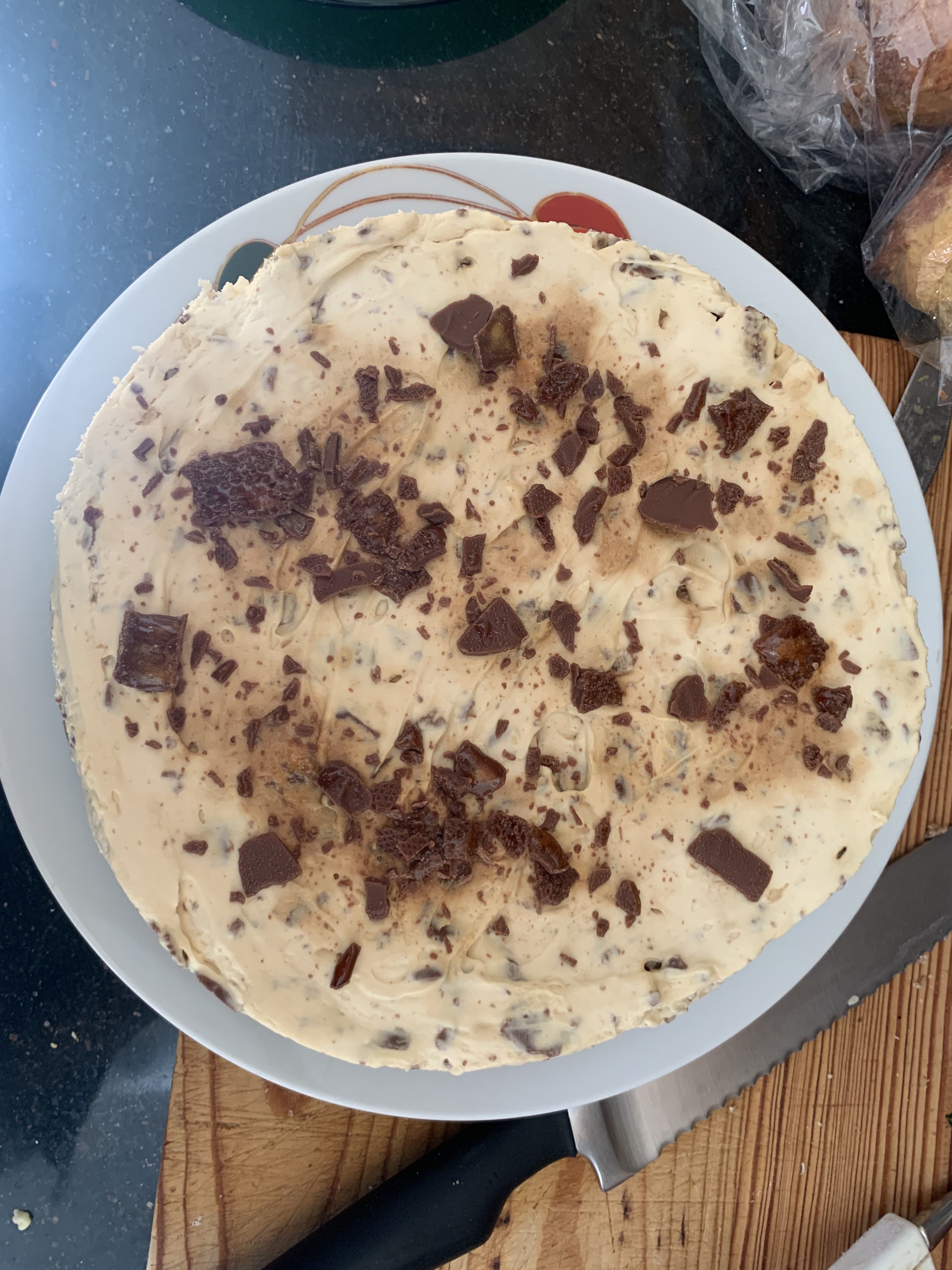
There were fantastic home-made cakes, drinks and happy company all around, at home and in An Saol. After the restrictions of the last years, it was great to see some level of normality again.
This is a long weekend in Ireland, with Monday being a bank holiday.
Pádraig joined friends at their Sten Party on Saturday (I had to look up ‘Sten’:), with a Roaring 20s theme, remembering the times when people lived and celebrated as if there was no tomorrow. As it turned out, they were right to celebrate when they could. Because for some decades to come, things turned out to be very bleak.
Let’s hope we’re not living in the kind of roaring 20s of a hundred years ago.
And that we won’t ever regret, but remember with fondness, the good times till our dying days – if we ever live that long.
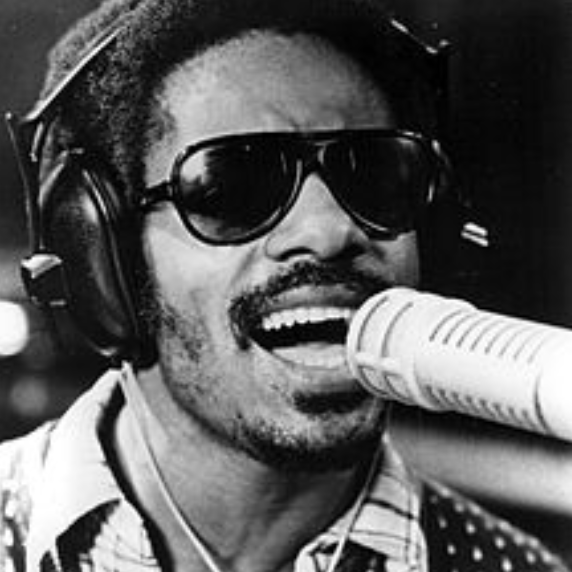
Life has meaning only in the struggle. Triumph or defeat is in the hands of the Gods. So let us celebrate the struggle!
Stevie Wonder
Actually, let us celebrate whenever we get the opportunity.
Celebrate as if it was for the last time.
Because we don’t know about tomorrow.
I wouldn’t say that Germans are opportunist but they have this great concept of pre-celebrate (vorfeiern) and, indeed, post-celebrate (nachfeiern).
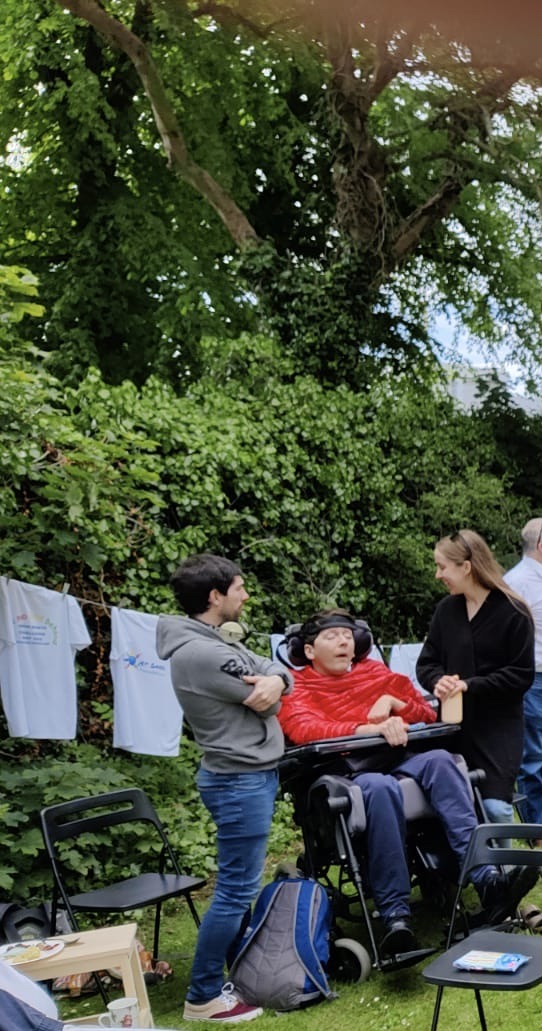
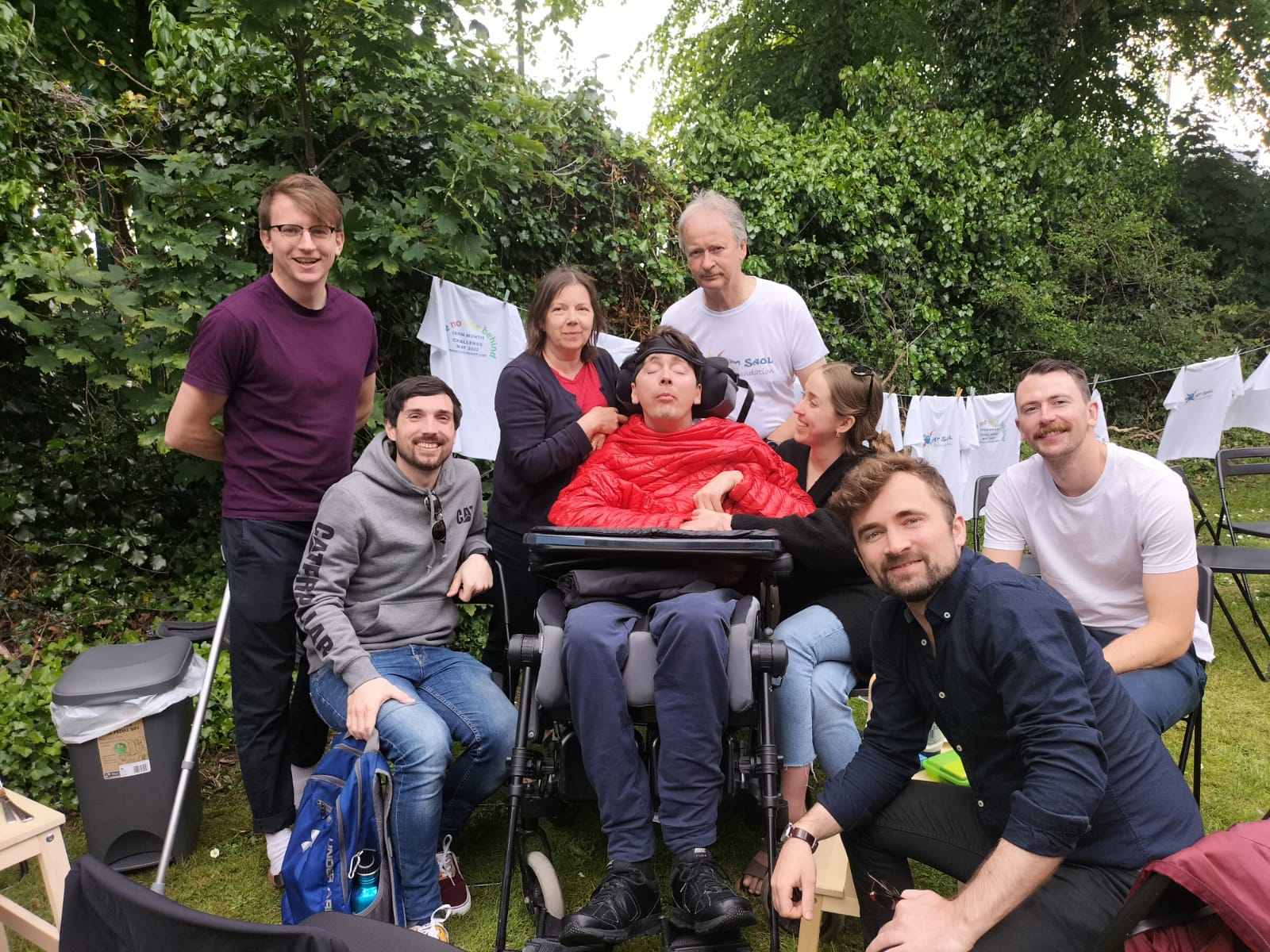
On Saturday, Pádraig had a great opportunity to Vorfeiern his birthday at the end-of-the-IronMonth BBQ at the An Saol Foundation.
Nearly 50 clients, families, staff, and friends of the An Saol Foundation came together in glorious sunshine. There were sausages (German!), burgers, chops, and even a variety of vegetarian grill options, together with homemade salads and a table full of cakes and buns, all contributed by the guests.
One of Pádraig’s friends, also on the Board of An Saol, put it very well when he said that this event, just like An Saol, was all about creating a community where people get together to have a good time but where they also support one another.
For many it was the first time to be together again after COVID. For some, it was a rare opportunity to get away from their four walls and enjoy the company of friends, laugh, hear the sound of children playing, or just have a friendly chat.
The An Saol staff’s efforts to make this a really special day paid off several times. Their attention to detail, helpfulness, good humour and fun-creating attitude was out of this world.
The BBQ demonstrated that Life and Living with a severe Acquired Brain Injury is not only possible, but is possible in a supportive community, out in the sunshine, with a bit of banter, music, and good food.
Today, Sunday, is Pádraig’s 32nd birthday which he will celebrate in style.
It was today, nine years ago, that we all were together for the last time prior to Pádraig’s accident. The next time we all were together was in the ICU of Cape Cod Hospital.
Monday will be all about Nachfeiern in An Saol!
Life is about celebrating success in our struggles – the celebrations even help us at times to forget the worst of those struggles.
A humanist wedding is a non-religious celebration that is welcoming, inclusive, and personally tailored to you, focusing on your love story and things that are important to you as a couple.
There were a few ‘firsts’, and a few ‘seconds’ last week.
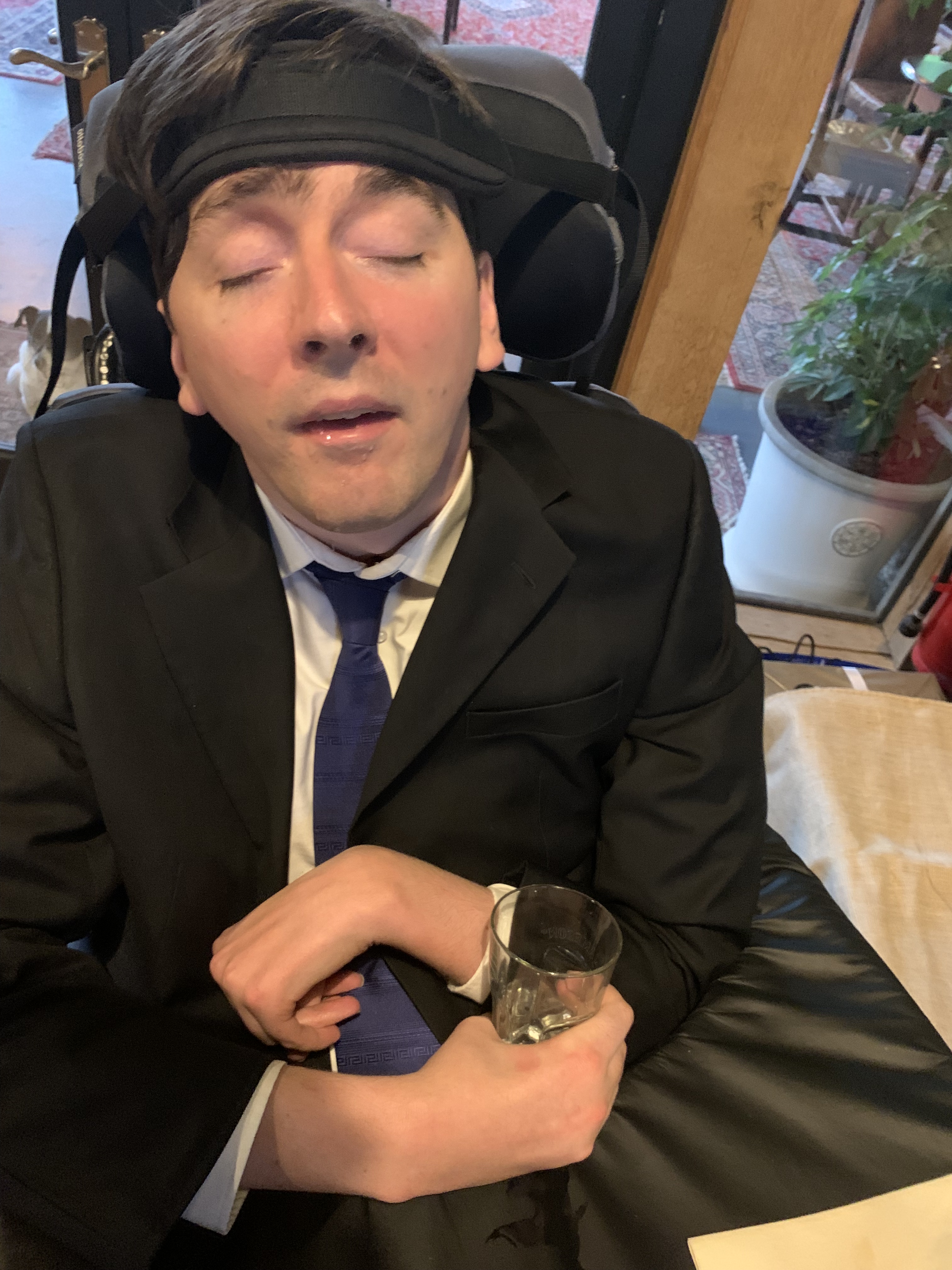
For the first time in our lives, we had been invited to a humanist wedding ceremony. And for the first time since his accident, Pádraig got into a ‘proper’ jacket and shirt, tie and all. It was brilliant and another step towards another level of normality, another level of what is possible.
To be honest, I had no idea of what to expect. It was an absolutely weird and wonderful experience with a loving couple at its centre, their parents, families, and friends celebrating with them what must have been the biggest and happiest event in their lives so far.
But not only was it what I would have considered an alternative ceremony (but isn’t any longer, it seems), it also took place in an alternative venue.
We had booked into a yurt, to allow Pádraig some time between ceremony, drinks reception, and dinner.
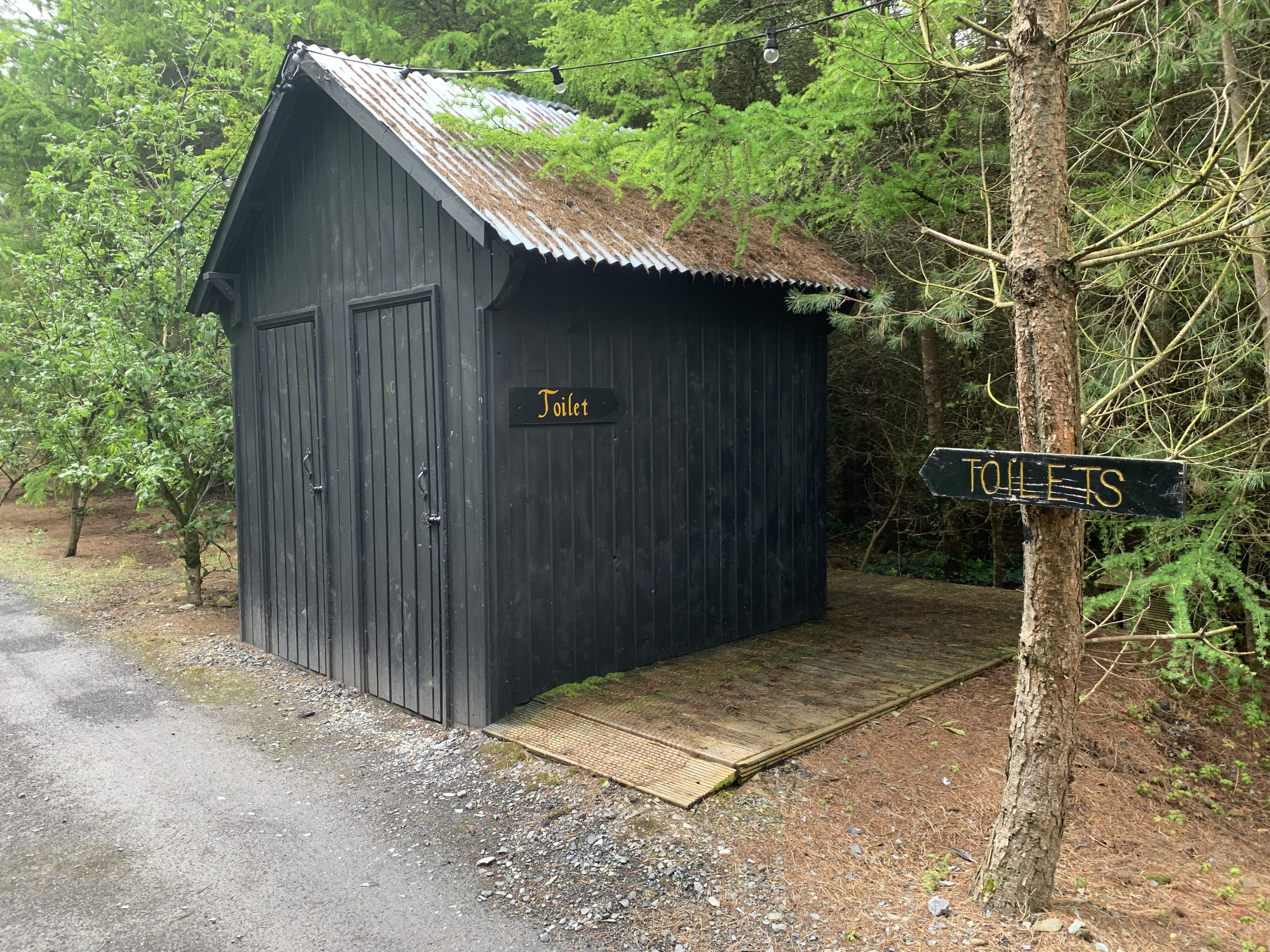
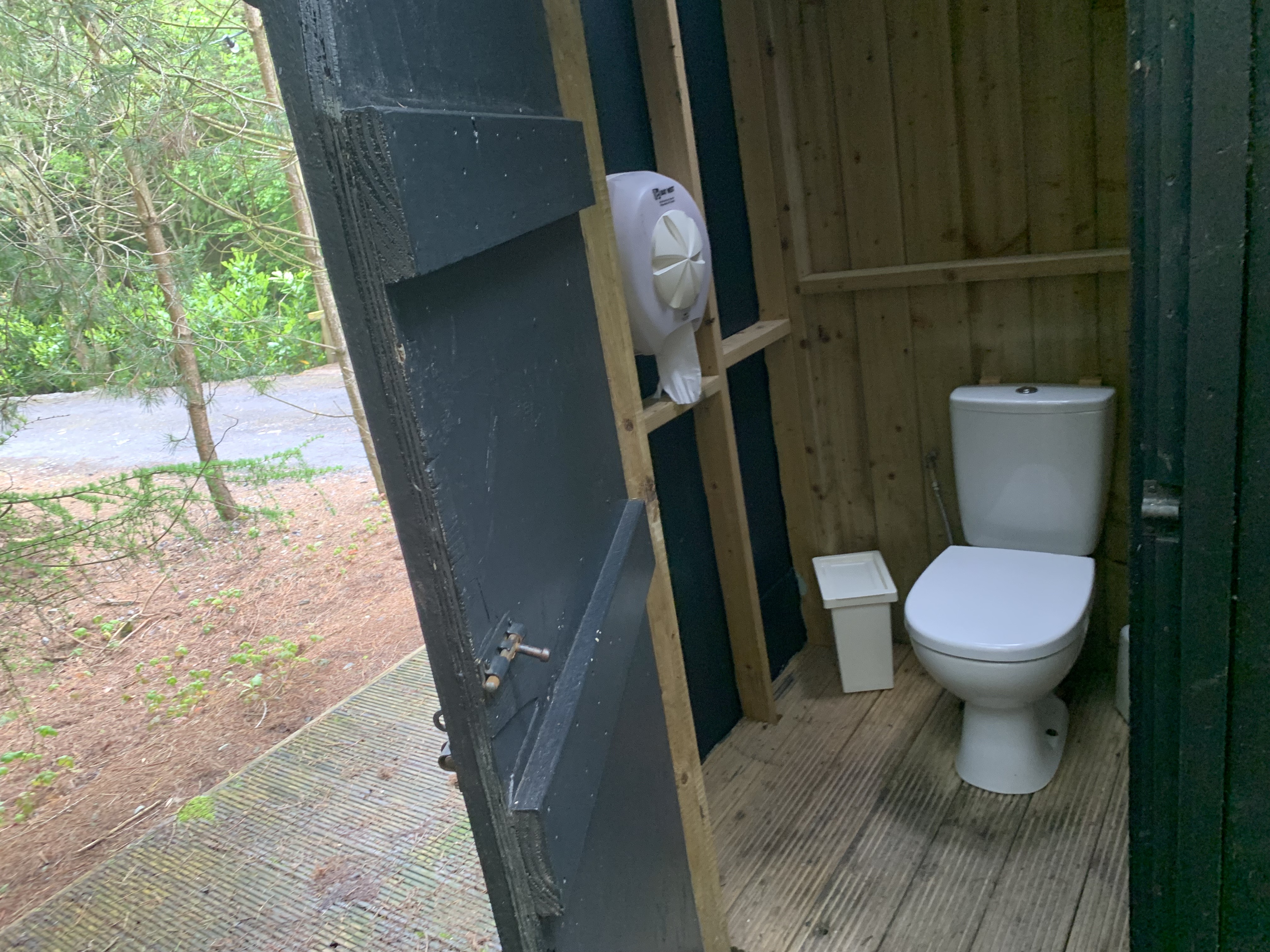
I called the yurt ‘romantic’. Light came through a little clear plastic section in the roof, there were a few beds and a stove, and we were immediately joined by two (love?) birds who had sought shelter in the stove. A few metres up the garden path was the toilet, shower, and hand wash basin hut. Luckily, the rain held off.
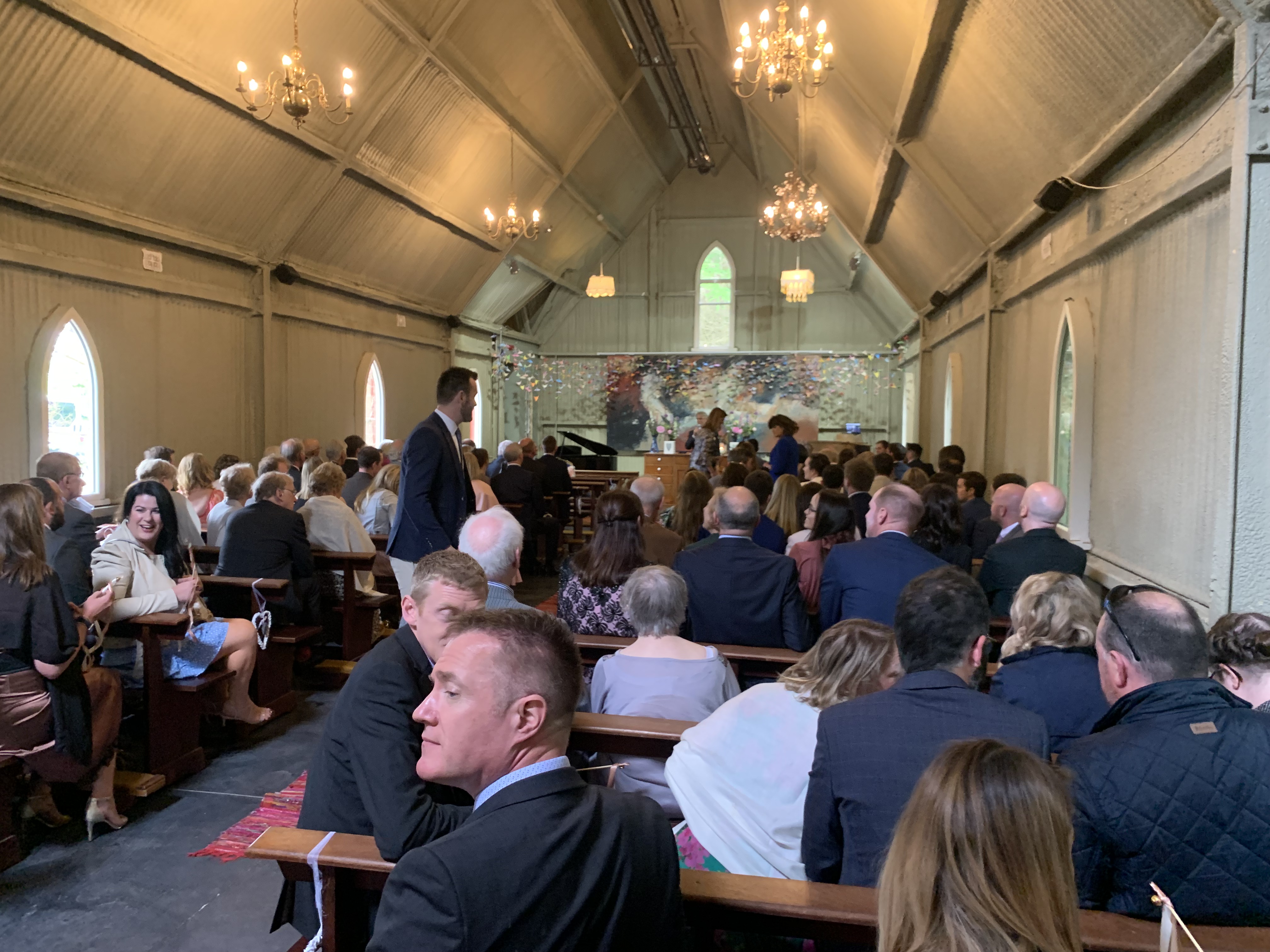
Following a rest, we joined the happy couple, their guests (about 165 of them), and the celebrant in the Tin Chapel for the wedding ceremony. This turned out to be a ‘second’. The couple had lost their patience during COVID lock-downs and had got married – but they had decided to go through the whole ceremony again, now with all their loved ones and friends present. I agreed: it must have been so much more fun in the company of all of us.
Next came the reception. We had thought we might not know anybody at the event, except the couple and some of their family. But it turned out that quite a number of Pádraig’s old school mates attended. They all came over to say ‘hello’ and to share the latest news and gossip with him, which was extremely nice. Even the bride and groom spent a lot of their precious time on this most important day with Pádraig, which made the day very special for him too.
Finally, for us at least, dinner in what looked but did not feel like a converted barn. The place was buzzing. We were so happy to be there and so grateful to the bride and groom that they had included us in their very special celebrations.
We left at around 9pm, following the dinner and some outstanding speeches.
The schedule shared with us prior to the event showed that this was the time when the real fun was about to start: band, followed by DJ, followed by a free stage for everybody who felt like it to join in. There was no end.
We had to leave, unfortunately.
But we left with the feeling that there are no limits to what is possible.
And if anybody tells you that there are, tell them that they are wrong.
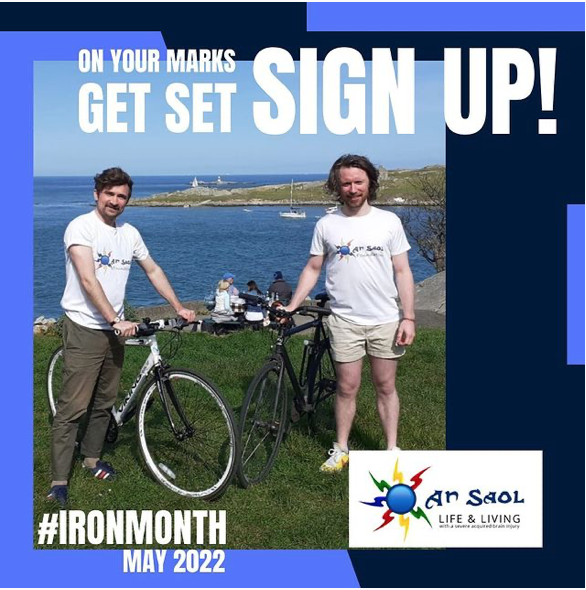
Tomorrow morning, I’ll be embarking on my last leg of this year’s #IronMonth Challenge.
This coming Saturday, we will all meet in An Saol in Santry for an Open Day with BBQ and some music to finish off this year’s #IronMonth Challenge which we started a few weeks ago with the craziest und best ever TRYathlon, with huge enthusiasm and in pouring rain.
The #IronMonth is not only the best all inclusive community event, it is also the An Saol Foundation’s annual fundraising even. It’s not too late to join the fundraising team and help out with a donation.
Please come and join us this coming Saturday, 10:00 – 12:00 in An Saol if you are around. All that is required is to register here. All welcome.