Unity

Tags

, , ,

Today is a public holiday in Germany and, like many other things in Germany, public holidays are different from those in Ireland.

Germans are slow but organised. Irish are movers but anarchic.

Remember when Corpus Christi was moved to a Sunday in Ireland? And Ascension Thursday has long been moved to a Sunday too. Public holidays are, no matter what, on a Monday – and they’re still called ‘bank’ holidays!

Germans know that labour day is on the 01 May, Ascension Thursday is on a Thursday, so is Corpus Christi, and the third of October is the Day of German Unity. There are no ‘bank’ holidays and public holidays are taken when they ought to, not just when they fall on (or a moved to) a Sunday or a Monday.

Even Google is celebrating the Day of German Unity today!

Even Google is celebrating the Day of German Unity today!

What the Germans celebrate today is the realisation of their dream to be one nation. They picked today, the third of October, because on this day in 1990 the unification of Germany was formally completed.

Of course, we all know that the wall had come down the previous year, on 09 November. That day was, in a way, more significant. Curiously, 09 November is important in German history for other reasons too: it’s the day of the declaration of the first German Republic in 1918, and the defeat of Hitler’s first coup in 1923.

I remember one story from the days following the (re-) unification in my mother’s village in Bavaria, very close to the border. Many East Germans came into her village and collected 50 German marks as Welcome Money, given to each East German when they came to see the West for the first time. Some smart capitalist parked his truck in the centre of the village and sold ‘runners’ (sport shoes) off the back of his truck for 49.99 – and made a killing. It was, in a way, a taste of things to come…

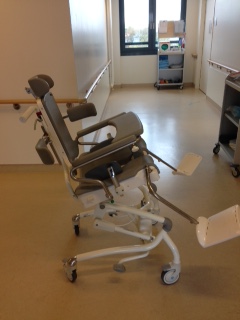
photo1Anyways – I have some news from Schönland tonight: the OTs today brought in ‘new’ MOTOMed Viva (remember the MOTOMed? – the big one broke about four months ago). It’s much smaller, neater than the one Pádraig had used before and it’s not pushed over his bed. Instead, he uses it when he sits in his wheelchair – much more natural, I think, almost like in a real bicycle. It’s great to have this going again, it makes such a difference to his exercise regime, to his circulation, and his well-being. He really needs all the movement he can get.

The other bit of news is that a really nice and helpful nurse today helped us to wash his hair – the second time in a week. Mightn’t sound much to you, but it’s almost unheard of in our circumstances. The plan is to wash it about 3 times a week. The amazing thing is that it didn’t take more than 10 minutes to wash it. We brought him into the bath room, set up the basin and used the bathroom shower head for washing. Brilliant. It must make such a huge huge difference to him.

This is the last night before the blog awards tomorrow in Ireland. It’s thanks to you that this blog got three nominations in three different categories and managed to became a finalist in all of these three categories.

Whatever will happen tomorrow night, it won’t be about winning. It’ll be about being there, where Pádraig was some year ago, so enthusiastic, so nervous, so full of hope that he might win with his regular blog and podcast ‘An Saol’.

Whatever will happen tomorrow night, An Saol will be his legacy and will change the way that care for persons with Acquired Brain Injury in Ireland is organised. An Saol will demonstrate that looking after those who most need our help is not a matter of return on investment.

Whatever will happen tomorrow night, it’ll be For Pádraig.

Median

Tags

, ,

Before I forget it, here are some interesting statistics I came across recently: the first is about the median age in the countries of the world, the second is about life expectancy at birth.

The median age is the age that “divides a population into two numerically equal groups; that is, half the people are younger than this age and half are older. It is a single index that summarizes the age distribution of a population.” According to a reliable source, none other than the CIA, the median age ranges from “a low of about 15 in Uganda and Gaza Strip to 40 or more in several European countries and Japan”. Ireland’s median age is 35.7

Life expectancy at birth (2012)

Life expectancy at birth (2012)

Another interesting figure which I took from Index Mundi (also quoting the CIA), is that of life expectancy at birth. In other words, how many years can a baby born today expect to live? Here again: an incredible range. From 49 years in South Africa, 60 in Senegal, 70 in Iran, to 80 in Ireland, and 90 in Monaco. There are a few interesting differences I didn’t expect: you can expect to live longer in Syria (75) than in The Bahamas (71), and longer in Tonga (75) than in than in Russia (66).

Both of these figures proof, if proof was needed, that, in general, people live longer in richer parts of the world than in poorer parts of the world; and the population of a poor country is generally younger than that of a rich country. Health systems cost money. If you are poor, you die younger.

imagesPádraig today ‘lost’ his tracheostomy tube. We were with him this evening when he had a big cough, he moved his head and neck to the side, and all of a sudden, the tube was not stuck in his neck but beside it. I went out to call his nurse who came in with two of her colleagues, one of whom stuck his finger into Pádraig’s neck to keep the hole open. Within a few minutes they had fitted a new tube.

It sounds all a bit more dramatic than it was, but demonstrated what can happen – although, coughing out your tube doesn’t happen that frequently. Because Pádraig has had this tube for more than a year now, there was no danger of the hole closing up immediately. There was also no danger of him suffocating because he can breath ok, even when the tube gets closed completely so that he has to breath in and out through his mouth and nose (unless his head is bent back into his neck). Nonetheless, there was a bit of drama this evening – before we left the doctor on call came in and checked him out. When we left, all seemed to be back to ‘normal’, and Pádraig seemed to be ok again.

Earlier on, his senior doctor came in to see us and to explain in a bit more detail what had happened last Friday. Pádraig’s cramps had gone on for an hour and a half, and only after they had given him the third drug trying to control what was going on, did he respond. Had he not responded they would have put him ‘to sleep’ and on a respirator. – On Sunday, they will try out a different drug, kind of a ‘cousin’ of the one that apparently caused the cramps, not as ‘potent’, hoping he will respond better.

We’ll wait and see. – Not in a kinda relaxed way, though. There are things in life I never knew about. Imagine. After so many years. And there are things in life, I’ll never get used to. No matter how long I’ll live.


Need

Tags

, , , ,

images2Someone asked the question – what are the figures for Acquired Brain Injury (ABI) and  Traumatic Brain Injury (TBI) in Ireland?

Whatever about the answer – it’s the right question to ask.

In 2011, the government published the National Policy and Strategy for the Provision of Neuro-Rehabilitation Services in Ireland 2011-2015. Surprisingly, it did not include what business people would call a market study, and what medical people call an epidemiological study. In other words, the Government did not establish the need for neuro-rehabilitation in the country which seems to be surprising.

A CEO of one of the major interest groups and service providers said to me that this study does not exist, because the Government is afraid for the public to have access to those figures. Would he be right?

Again, looking at Germany and transferring the figures to Ireland – which is not, strictly speaking, valid but should give us an idea. Remember, this is just for TBIs, not for ABI, and not for rehab in general – in this case the figure would be much higher.

Description Germany Ireland
Pop in m 80 5
Acute TBI p.a. 267,000 15,353
ICU admissions 30,000 1,725
Beds in early NeuroRehab required 1,600 92
Admissions in Rehab Clinics 10,000 575
Costs per year in € 2,500,000,000 143,750,000
Source: Schädel-Hirn-Trauma. Epidemiologie, Versorgungsverläufe und Patientenbewertung. Paul Wenzlaff. Zentrum für Qualität und Management im Gesundheitswesen. Supported by ZNS Hannelore Kohl Stiftung. 2005.


Without going into too much detail: Ireland’s only National Rehabilitation Hospital has 3 beds for early neuro rehab for severe TBIs, and 110 beds in total for any kind of rehabilitation (source: Quick Facts about NRH) – when there is a likely demand for 92 beds in early neuro rehab and 575 beds for rehab just for TBI patients.

Pádraig is ok these days, not terribly awake or aware, but he continues to communicate with his tongue (although slowly), he eats (although little and very slowly), and all his vital parameters are ok. We asked for a meeting with his doctor to find out about his current medication and plans for further treatment. Today, there was a special nurse examining the skin on his shoulders which needs some attention – maybe it’s just regular cleaning, but there are a few small wounds, though nothing serious. A very nice nurse helped me today to transfer Pádraig into his wheelchair and back into bed, and all in very good humour:) We went out onto the roof terrace, the temperatures are still quite high here and we’re taken advantage of the good weather, as long as it lasts.

Check out Donal’s fundraising page for the Marathon, just in case you haven’t done so already.

UntitledWe have to organise ourselves – I know there will be a few people running this year, in addition to Donal. There was Ciara, there’s Cian, Fergal, and myself (though I’m still recovering from the half marathon which is not a good sign). Anybody else?

Keep watching out for the Dreamboat – it’s getting closer and closer to our shores!

62/98

Check out this video on youtube: https://www.youtube.com/watch?v=jkbxaukavHs

Check out this video on youtube: https://www.youtube.com/watch?v=jkbxaukavHs

Traumatic brain injury (TBI), according to the World Health Organization, will surpass many diseases as the major cause of death and disability by the year 2020. With an estimated 10 million people affected annually by TBI, the burden of mortality and morbidity that this condition imposes on society, makes TBI a pressing public health and medical problem.  (NeuroRehabilitation. 2007;22(5):341-53. The impact of traumatic brain injuries: a global perspective. Hyder AA1, Wunderlich CA, Puvanachandra P, Gururaj G, Kobusingye OC. Department of International Health and Center for Injury Research & Policy, Johns Hopkins Bloomberg School of Public Health, Baltimore, MD 21205, USA. ahyder@jhsph.edu; http://www.ncbi.nlm.nih.gov/pubmed/18162698)

According to research published by the World Health Organisation (WHO), approximately 54 to 60 million people are victims of traumatic brain injury world wide. 2.2 to 3.6 million of these are moderate to severe. In Germany, more than 280,000 people are injured, 73,000 of these children (see also: http://www.pharmazeutische-zeitung.de/index.php?id=1522 and http://www.nachsorgekongress.de/download/nachsorgekongress_presse/2010_Einleitung/nachsorgekongress_presse_2010/2010_ergebnisse_studie/).

To clarify, and I had to look that up myself: traumatic brain injury (TBI) is an injury to the brain caused by an external force after birth. Common causes of a traumatic brain injury include gunshot wounds, motor vehicle crashes, assaults, or falling and striking your head. An acquired brain injury (ABI) includes all types of traumatic brain injuries and also brain injuries caused after birth by cerebral vascular accidents (commonly known as stroke), and loss of oxygen to the brain (hypoxic brain injury) (http://www.biausa.org/FAQRetrieve.aspx?ID=43913). This means that there are many more people who suffer an ABI than a TBI annually.

Now – what are the figures for Ireland you might ask. I asked, and did a bit of research, asked some of the voluntary organisations involved, checked Government strategy papers, and, guess what? Nobody knows.

I don’t know whether this is ‘scientific’, but if you assume that Ireland has 1/20th of the population of Germany, then 1/20th of 280,000 of TBI victims in Germany could mean 1,400 TBI victims in Ireland annually.

1,400.

For the first time in almost a week, Pádraig went out to the roof terrace to get a bit of fresh air. He also went back to have a bit of chocolate pudding (which, surprisingly, didn’t go down that well) and stewed apples (which he seemed to like much more). We only staid out for three quarters of an hour or so and went back to his room early.

Of course, this is not Pádraig but it's the same gadget I used today to wash his hair.

Of course, this is not Pádraig but it’s the same gadget I used today to wash his hair.

Since we had a bit of time on our hands, I decided to cut his hair. That worked out much better than the last time. I got a bit over-enthusiastic and decided to wash his hair. It’s something most of us do a few times a week, I have heard of people doing it even every day! Hospitals are different.

For a change, Pádraig was lucky. His nurse had a bit of time and gave me a hand. Only when I did it, did I realise that I would most likely have set not just Pádraig and his bed, but his complete under water had I been on my own. The result: a real clean head of beautiful hair, and Pádraig apparently being the most relaxed person on the ward (much more than myself), with a record heart beat of 62 (I was waiting for the alarms to go off, ‘smelling’ hear failure) and an oxygen level of 98.

images1Finally, this morning I spent some time checking out a device used, amongst others, by gamers to control the characters and actions in the computer games they are playing. It’s a gadget that works like an EEG, only that it costs just a few hundred dollars. Watch the video: https://www.youtube.com/watch?v=jkbxaukavHs on EMOTIV.

I’m getting one and will try out to which extend it will help Pádraig to interact with the environment surrounding him.

Conformance

Tags

, , , ,

imagesSystems work best if they are standardised, processes are predictable and can be planned, if there is nothing out of the ordinary. Henry Ford said that his customers could have their car in the colour of their choice, as long as that was black. Take it or leave it. Most systems don’t tolerate divergence very well – whatever doesn’t fit in is rejected and disposed of. This is true for industrial systems like conveyor belts, it’s also true for many social systems.

Today, the Financial Times reports that Apple will be accused of prospering from illegal tax deals with the Irish government for more than two decades when Brussels this week unveils details of a probe that could leave the iPhone maker with a record fine of as much as several billions of euros.

Preliminary findings from the European Commission’s investigation into Apple’s tax affairs in Ireland, where it has had a rate of less than 2 per cent, claim the Silicon Valley company benefited from illicit state aid after striking backroom deals with Ireland’s authorities, according to people involved in the case.

I wonder – will there be a fine imposed on the Irish Government too who allowed the world’s richest company to pay less than 2 per cent tax, when, at the same time, the health services budget was cut by hundreds of millions of euro to a point where some essential services could not be delivered anymore? When health officials justify non-delivery of essential services, like neuro-rehabiliation, by saying it offered a bad “return-on-investment”?

photoToday, a prime example of non-conformance arrived in the post. It came with a recommendation. Pádraig would love it. Stuff about his city. Dublin. Real, true Dublin. It also came with a health warning. There would be the occasional non-printable word. The CD, the letter, both nicely wrapped in a padded envelope wasn’t the first package that arrived from this friend of Pádraig’s who is making sure that he won’t get bored but will be able to listen to first-class music, and now stories from his town, his country.

Back on the ward. It’s strange to feel almost ‘at home’ in a hospital room. Though – the ‘almost’ is important here and it makes a big difference. I learnt a lot about what the concept of being institutionalised means in practice and I know that it’s not something to aspire too. It’s probably easy to agree to this but one thing is to think about it or to imagine it, the other is to experience it. Institutions have this tendency to suck up anything that has got to do with the individual, digest it, and spit out conformant and standardised people, attitudes, and practices. ‘Take it or leave it’ is another aspect of institutions, because, although you hope at times, you will never be able to change them (easily).

Pádraig is still receiving high doses of medication to prevent a re-occurrence of what the doctors called seizures from last Friday. He also seems to have the symptoms of a light cold. So today, we didn’t go out onto the roof terrace, though it was a lovely day. Tomorrow, I hope to hear from his doctor what his strategy in relation to the medication is. Pádraig never took any medication, apart from Lemsip Max. The stuff he’s getting now is ok to deal with what happened, but, I imagine, wouldn’t be anything one would like to consider over a prolonged period of time.

At the fair on Saturday, I made a lot of contacts with companies who said they’d be delighted to send a rep along to check whether their stuff fits Pádraig. Some of them were almost as interested as we are to find out whether a 2.04m person can use their things. Hopefully, they’ll start making contact later in the week, and we’ll be able to arrange something for the coming week. Even if we won’t be able to buy some of the aids straight away, to have it all tried here is a great opportunity.

Today’s German Music Tip
Desiree Klaeukens, Kompliziert.
Der Mond glüht
als würde er gleich explodieren…
Ich sag dir was falsch ist
sag mir
ob es stimmt.

What’s hot
Yourself
What’s cold
Conformance
The German word/phrase/verse of the day
Schlawiner

Crossroads

Looks like today was Pádraig’s last day in the ICU. Unless anything unforeseen happens, he’ll move up to his ‘old’ room, where he (and us) will be in much more familiar surroundings – though, as I’m writing this, I can’t believe my own words.

Maidens dancing at the crossroads - not that recently, but they did.

Maiden dancing at the crossroads

There were two visitors there today who stopped by on their way from Berlin to Dublin to see Pádraig. Berlin – Hamburg – Dublin. The only way to go. What I couldn’t believe was Pádraig’s face when he realised who was coming in through the door. And it got better, when they told him that they didn’t want to make him jealous but that they were on a paid trip: free flights and the funkiest five star hotel in Berlin, because they had won this competition, there was the broadest smile on his face. He hasn’t lost his sense of humour. And he really tried to talk and say ‘take it easy, see you soon’, I’m sure, when they left.

images

People dancing at the crossroads in the Schanzenviertel. Not a long tradition, but they did today.

We gave them a lift to the Schanzenviertel – we hadn’t been there before ourselves in the evening before. We got out of the car and had a drink with the visitors and discovered that the Germans aren’t really that different from the Irish: both celebrate at the crossroads. So there was a mixing table, two big speakers, a stand selling food and drink, and a couple of hundred people having fun. At the crossroads. Literally. And up the road was the ‘Rote Flora’, an occupied theatre, with the homeless sleeping on its steps.

Tomorrow, Pádraig will be able to sit out again in the wheelchair, the therapists will have much better access to him, we’ll be able to give him real food again, and, if the weather stays as nice and warm as it was today, we’ll sit back out on the roof terrace.

Today’s German Music Tip
Tangerine Dream, Zeit (1972). This is (was?) one of Germany’s internationally best known music groups. If you think that this album is 42 years old, it’s really amazing. Certainly not everybody’s taste, some will not even think that this is music, but it’s really brilliant – whether you like it or not:)
What’s hot
Sternschanze
What’s cold
Wandelhalle
The German word/phrase/verse of the day
Screen Shot 2014-09-28 at 20.43.35

Fair

Yesterday at lunch time, I thought I wouldn’t go. Last night I still had my doubts. But then, late at night, we decided that I would get up at 4:45 and get that train to Düsseldorf to visit REHAB-CARE, according to the organisers the world’s largest fair on rehabilitation. So I went, a bit reluctantly.

German trains being what they are, fast and reliable (mostly), I got there so early that the fair was still closed. You could see what was going on even at the central station, and certainly on the tram going out to the congress center where the fair was taking place. I had not see as many wheelchairs in one place in my life.

There were long queues at the entrance and when the gates opened hundreds of people poured into the six huge exhibition halls. It was incredible. Everything from electronic eye trackers to bathroom equipment, from architects and specialised builders, to car conversion engineers, from accounting software to rehab furniture, from facilities to interest groups, stand-up beds, stand-up wheelchairs, racing wheelchairs, holiday homes and boats for people who need special furniture and access – you name it.

Here is a short video of just one corner of one hall to give you an idea of what I am talking about.

In between, I was talking to Pat who had staid back with Pádraig. He has been doing ok and has almost recovered from whatever happened to him yesterday. He is still in the hospital’s main ICU, most likely because they don’t move people around the hospital over the weekend, unless they really have to. He’s ok in the ICU but it’s deja vu all over again. Staff don’t know him (so they suction him for no reason, just because they do), they don’t know us so some are quite officious, play it all by the book, don’t account for the fact that we have been there for the best part of a year. What can you do? – Hopefully, it’ll be back to 2L on Monday morning.

I’ve put together a few pictures from today. The first one has nothing got to do with the fair, it’s of the main door of Starbuck’s in Düsseldorf’s Central Train Station. It’s really funny: they don’t really open, except for one day a week (!) – but then really long hours, as one coffee-seeking by-passer remarked.

photo 1

Here is a small selection of the incredible amount and variety of stuff available. Cars, wheelchairs, gadgets. There doesn’t seem to be anything, good German engineering wouldn’t be able to make.

Getting home really late. Tired. Loads of ideas and impressions. An Saol, here we come! Can’t wait to see Pádraig tomorrow!

ICU

photoJust when you think: ‘no need for an ICU anymore, isnt’t that great?’, life turns around with a big grin and gives you a taste of its cruel side, as if that was necessary.

It had to happen and today was the day.

Pat went in early this morning to assist Pádraig’s physiotherapy session. She arrived just before the physios and noticed that he was moving his left arm and leg. It stopped after a few seconds. When the nurse came in, it happened again. When the physios arrived, they called the doctor.

What followed then was a bit of controlled panic.

He was apparently having a series of (or one long) seizures, not dramatic ones (to Pat they looked more like spasms) but still worrying enough for the whole ward to really kick into action. Loads of checks and samples. Eventually down to another building to get a CT and an EEG.

None of these, nor the half a dozen of other tests they conducted, showed up any ‘bad’ results. Notwithstanding, instead of his ‘normal’ room, he ended up in the hospital’s main ICU in Haus 7 this afternoon where he got a cocktail of three different drugs at a dose that would have put the doctor and myself, both of us, to sleep until the weekend (the doctor’s words, not mine).

Pádraig, however, when we were finally allowed in to see him, looked asleep but was able to answer ‘yes’ and ‘no’ with his right and left feet. When we told the doctor, he said ‘fair play to him, amazing’ and then started to wonder about the dose he had administered… When a nurse was preparing him for the night, we were sent out for half an hour. When we came back and Pádraig heard Pat’s voice, he moved his head around towards her.

We should know by now that there is nothing that Pádraig is not picking up on his way to recovery. We had been told that one side effect of the make-me-more-alert drug could be seizures, but they had only started to give this to him last Tuesday and only a small dose to start with. A small dose that was to be increased over the coming weeks. They’re going to re-evaluate this next week.

Over the past months, we had been told that most patients with injuries like Pádraig have seizures and that the fact that he hadn’t had one was surprising, but really good. While the fact that he had an episode today is worrying, at least we know that it was not caused by anything really serious, thanks to the quick and decisive action by his doctors. It looks like a side-effect of one of the drugs he’s been taking, so this has been stopped.

It was a tough auld day for Pádraig. He didn’t really need this. I’ve stopped wondering how much more is going to happen to him and setting him back while he is recovering from this accident and his injuries. But sometimes I think: he’s had enough, really. It’s bad enough as it is. No need for more stuff to happen. We know by now, and don’t need to be told or shown anymore, that life can be cruel.

Repeat after me: no more ICU, no more ICU, no more ICU.

We’ll see what tomorrow will bring.


Statistics

Hand auf’s Herz: did you believe last night’s figures about us (Germans:) eating 1,097 animals a year – or three animals a day? If you did, you’ll have to revise your view of the Germans! We’re not that bad! The figures as they referred to the number of the animals were correct, but – they did not refer to the number of animals Germans eat in a year, but in a lifetime. Life expectancy at birth in Germany is currently 80 years. Assuming that even German babies don’t eat that many pigs and that we are talking about average figures (some Germans are, whether you believe it or not, vegetarians or don’t eat that much meat at all), it’s still an awful lot of animals, even in a lifetime…!

Anyhow. Since we are talking about food and numbers of people, here is a little quiz for you. It’s part of a questionnaire that the Swedish professor Hans Rosling put together and called the “Ignorance Survey” because it demonstrates how little we really know about the world we life in – and how much of what we think we know is incorrect.

It’s about the distribution of the approximately 7 billion people living on our planet between the different continents of America, Europe, Africa, and Asia. Which of the following is correct: a, b, or c?

photo 1

Read on for the solution…

Day 2 of the visit from Dublin. We made it out to the roof garden, though it was a pretty fresh day. Sitting outside, with music in the background, and Hamburg far down below us, brought a sense of normality – if that is possible. There was ‘normal’ conversation happening, with Pádraig right bang in the middle.

The really amazing thing was that the lads had travelled more than 12 hours yesterday to make it to Hamburg and to visit Pádraig. Tomorrow morning, bright and early, they will make their way back to Dublin, and it will take them around the same time again before they hit the home ground. An early morning bus trip to Bremen, a tram from the bus stop to the airport, a Ryanair flight to Dublin, and another bus or two before eventually getting back home. There’e a lot of friendship here, a great and brilliant connection.

It’s strange to say and to feel this, but I think it is exactly because of this close bond, this friendship, that we almost did not talk about Pádraig tonight when I went out with them for a meal. Pádraig should have been there and we all knew it. It’s like when you don’t talk about the most important thing that is going on, the person that you are most concerned about, because everybody knows. No need to talk about it. He was so present. So present.

Last night, Pádraig got a bit of oxygen, the first time for a long time. For some reason he had vomited a bit and his oxygen levels had gone down temporarily. But only for a very short time, and most likely because something had slightly blocked the cannula in his trachea. We heard about it when we asked because we noticed the oxygen running when we arrived today.

Life, days are never ‘normal’, there is always worry about something. Real worry.

Here is the solution to the little quiz: the correct distribution of the 7 billion people across the Americas, Europe, Africa, and Asia is:

photo 2

The percentage points are the results of this survey carried out by Der Spiegel amongst people living in Germany. (The results are kind of average and similar in other developed, Western nations.) It demonstrates that most people in the Western world overestimate the number of people living in Africa, and they underestimate the number of people living in Asia – where more people live today than in all of the other continents combined. (You can find out more about Hans Rosling and the test on Gapminder.)

Today’s German Music Tip
Maxim, Einsam sind wir alle. The first song by Maxim during his concert at the “Docks” in Hamburg last week during the Reeperbahnfestival, recorded by the NDR. Here is a bit of the lyrics: My head is heavy, but I don’t mind, I’m carrying it around anyways, … It would be nice to stand straight again, or at least not so worn down,… No reason to ask how I’m doing, I think it’s probably ok. (You’ll also find Maxim on Soundcloud.)

Schwer ist mein Kopf, aber was soll’s,
Ich trag ihn mit mir rum,
Auch wenn er manchmal etwas runterhängt
Und gerade ziemlich brummt.
Irgendwie krieg ich ihn schon gestemmt,
So leicht kipp ich nicht um.
Es wäre nur schön, mal wieder gerade zu stehen
Oder wenigstens nicht ganz so krum.

Ist nicht nötig, dass du fragst,
Mir ist eh nicht wirklich klar,
Wie’s mir geht:
Ich denke, es ist schon ok!

What’s hot
The lads
What’s cold
Talk about the obvious
The German word/phrase/verse of the day
Hand auf’s Herz!

Questions

The boys are back in town. It’s great to see them again, and I’m sure Pádraig was really happy to see them and to hear their voices. We caught up on loads of things, heard how everyone was, and got an update on the Dreamboat. (Can’t wait for it!)

When we were leaving the hospital and we got talking, we stumbled upon some essential questions, touching the heart and soul of what it means to be German.

Screen Shot 2014-09-24 at 20.31.50

Have you ever wondered what this is?

The first questions is one many visitors have asked before – and I don’t think I ever gave them a proper answer. What they were wondering was why on earth had the engineers who built the Schön-Klinik decided to put down those concrete ‘stones’, paving that is not really paving because you would probably break you ankle if you tried to walk on it. – Tonight, I will lift the vail of mystery: the mysterious structure is called “Uferstein”. Here is what one major supplier has to say about “Ufersteine”:

“Ufersteine werden in Randzonen von stehenden oder fließenden Gewässern zur Vermeidung von Ausschwemmungen oder Ausuferungen eingesetzt. Auch der Einbau in Anböschungen und stärker belasteten Verkehrsflächen, z. B. Feuerwehreinfahrten, ist üblich.”

Oh – you don’t speak German? Don’t worry. I don’t really understand myself what this means either. And I still don’t understand why they don’t just use “Rasengittersteine”. Wouldn’t you agree?

The second question was really touching the core of what it means to be German.

To really appreciate this you must know the following (source: http://www.tagesschau.de/inland/fleisch104.html):

“Vier ganze Rinder, vier Schafe, zwölf Gänse, 37 Enten, 46 Schweine, 46 Puten und 945 Hühner – im Laufe seines Lebens verzehrt ein Deutscher laut “Fleischatlas 2013″ durchschnittlich 1097 Tiere.”

Oh, you don’t speak German? But this time, you must have guessed what the above says!? The quote is from the German ‘meat atlas’ and it says that, on average, each German eats per year 1,097 animals. Would you believe it!? Four entire cattle, four sheep, 12 geese, 37 ducks, 46 pigs (that is almost an entire pig a week!!!), 46 turkeys, and an unbelievable, incredible 945 chicken! It’s almost three animals a day, 3 in 1 (one) day!!!

UnknownBack to the original question from the lads. They wanted to know why a German sausage or “Bratwurst” could not be sold like a ‘hot dog’. Not sure whether you are as surprised as I was when they asked that question? I mean, come on, even the thought of comparing a ‘hot dog’ with a German Bratwurst… I mean, if you allow that comparison, where will it all end? Next time they’ll probably question why we use “Ufersteine” instead of straight forward asphalt!

Now seriously, what they were wondering was: why is the bread roll so short and the Bratwurst so long? – In my mind I was thinking (though I didn’t tell them) that they should be grateful to get a long bratwurst and not a short hot dog. Here in Germany, the customer is still king. What I told them instead was that they could, if they were on their own, and since the bread roll was wider than the sausage, that they could double up the sausage to fill the entire bread roll; and, if they were with someone else, they could break the Bratwurst into two pieces and each eat half of the Bratwurst together with half of the bread roll, dividing it into upper and lower halfs. The only problem in such cases that I have encountered is the discussion about who will get the upper and who will get the lower half of the bread roll. (The top is crispier than the bottom.)

If you managed to read through all of the above you probably think that I have finally lost my mind. – Rest assured, I haven’t. Yet:)

Another day of action, really, in the hospital today. The dentist was back to check Pádraig’s tooth guard and teeth, and decided that while both showed some degree of damage, it was not bad enough to require his intervention. Pádraig was also visited by surgeons who fixed the nails of both of his big toes which had caused him small local on/off infections for weeks if not months by now. A nurse proposed to get a hairdresser in (she meant to say a  ‘barber’) to cut Pádraig’s hair in order to make it easier to ‘wash’ it with their chemical ‘shower cap’-like hair-cleaning method. – I think we’ll cut it ourselves and then try out the head-bath we got to wash his hair.

It was great to see so many good things all happening over the past two days, some of the issues that were dealt with in the space of just two days were issues about which we had asked questions for months. It’s like as if someone had flipped a switch and the magic started to happen… Just shows you that you need keep asking questions.

We’ll keep the questions going. No question is ever a stupid question – whether it’s about personal hygiene, German sausages, or ‘Ufersteine’. Wouldn’t you agree?