
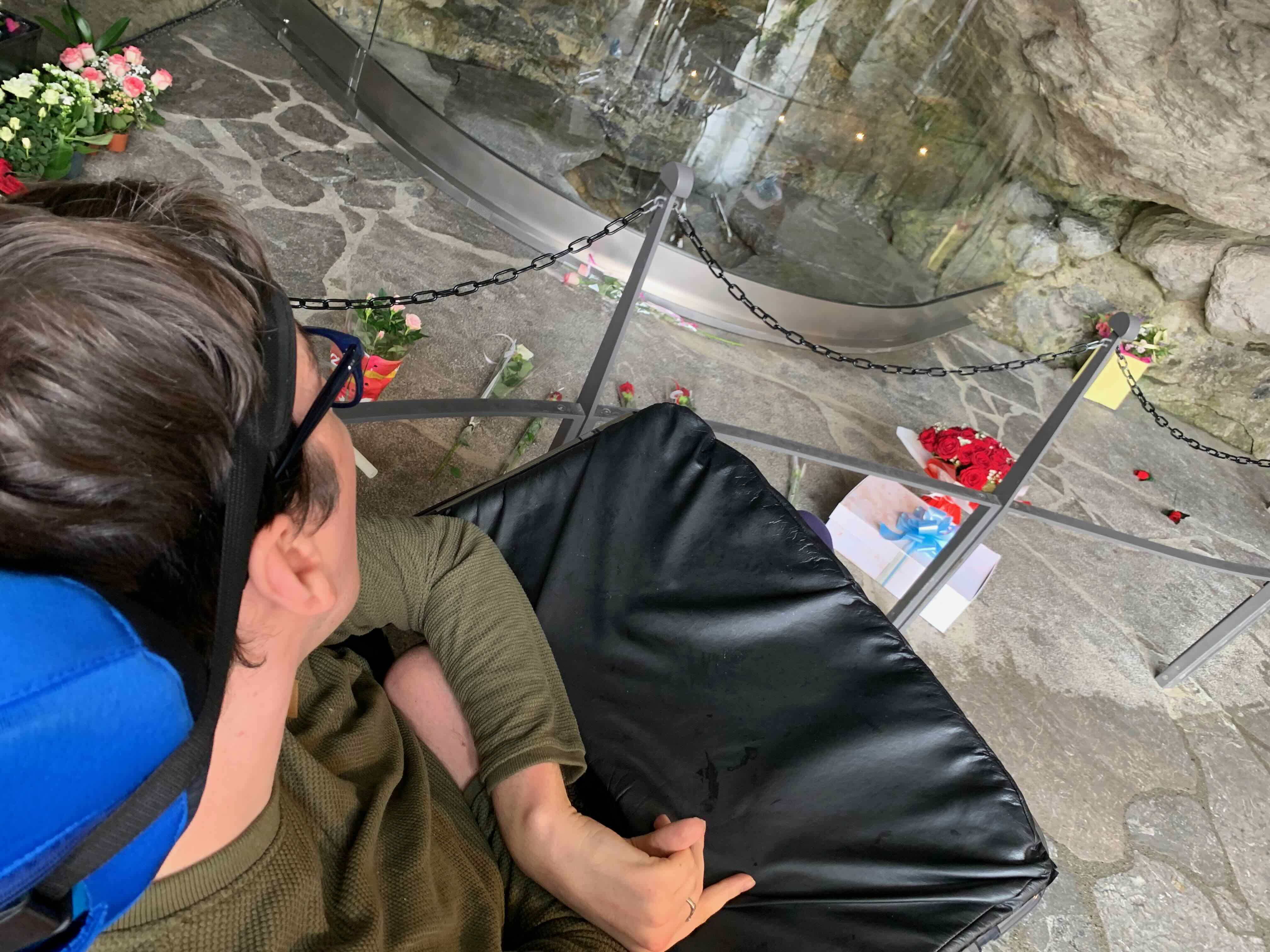
Miracles happen everyday, change your perception of what a miracle is and you’ll see them all around you.
Jon Bon Jovi
They took the crutches out of the Grotto.
Which doesn’t mean that miracles stopped happening, not in Lourdes nor in other places. They continue, in more subtle ways, every day.
You also don’t get a full-body dip in the baths anymore, you just do a ‚water gesture‘, wetting your face with water from the holy well.
Which doesn’t take away from the healing power of that water.
But it takes away a little of the magic.
Because when I went to Lourdes for the first time with my grandmother who had given me the Lourdes pilgrimage as a present for my first holy communion, for me the big Lourdes miracle was that I didn’t need a towel to dry myself after the baths.
When Pádraig went on his first journey to Lourdes, following his accident, the magic did return, though in a slightly different way.
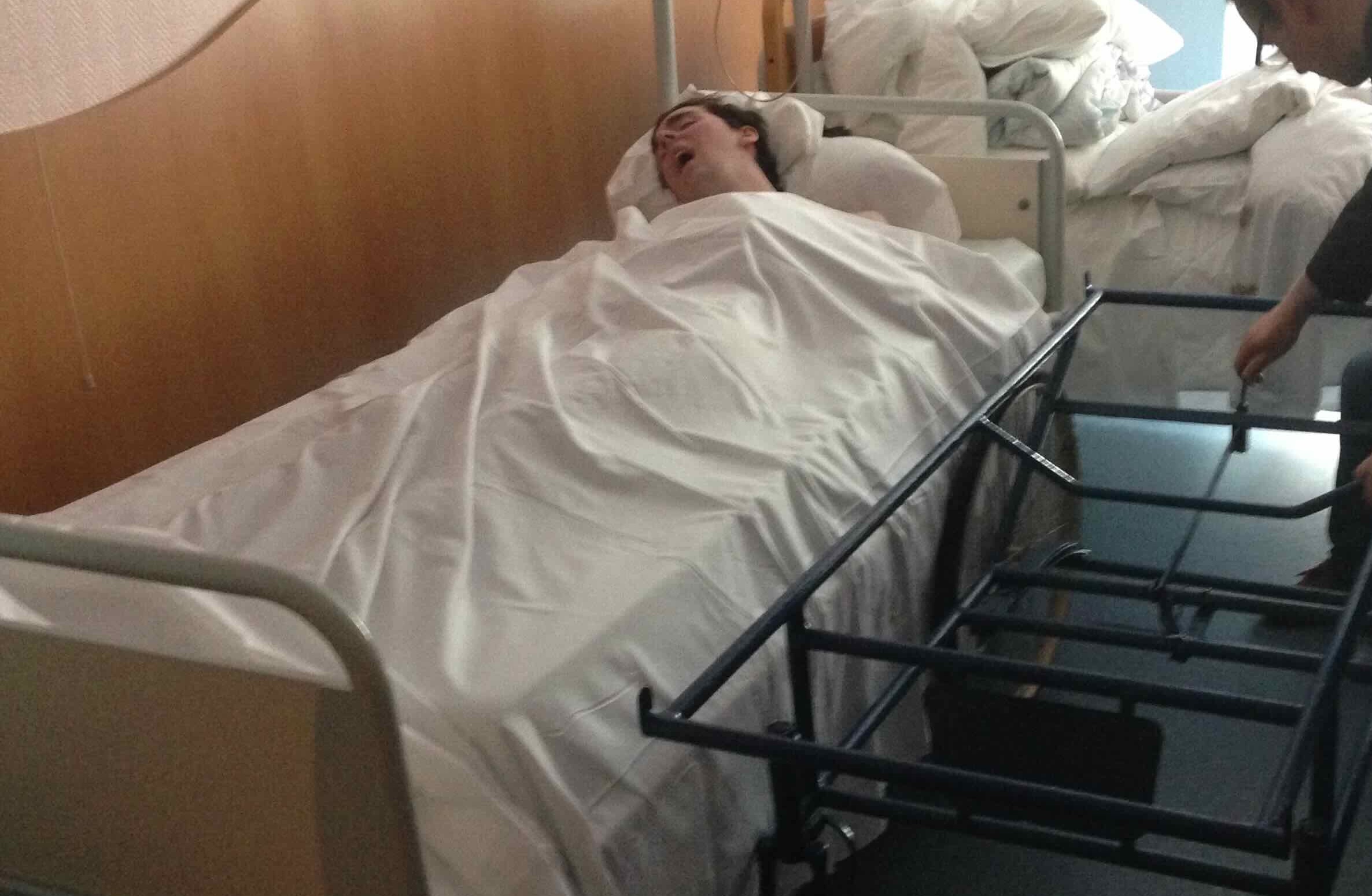
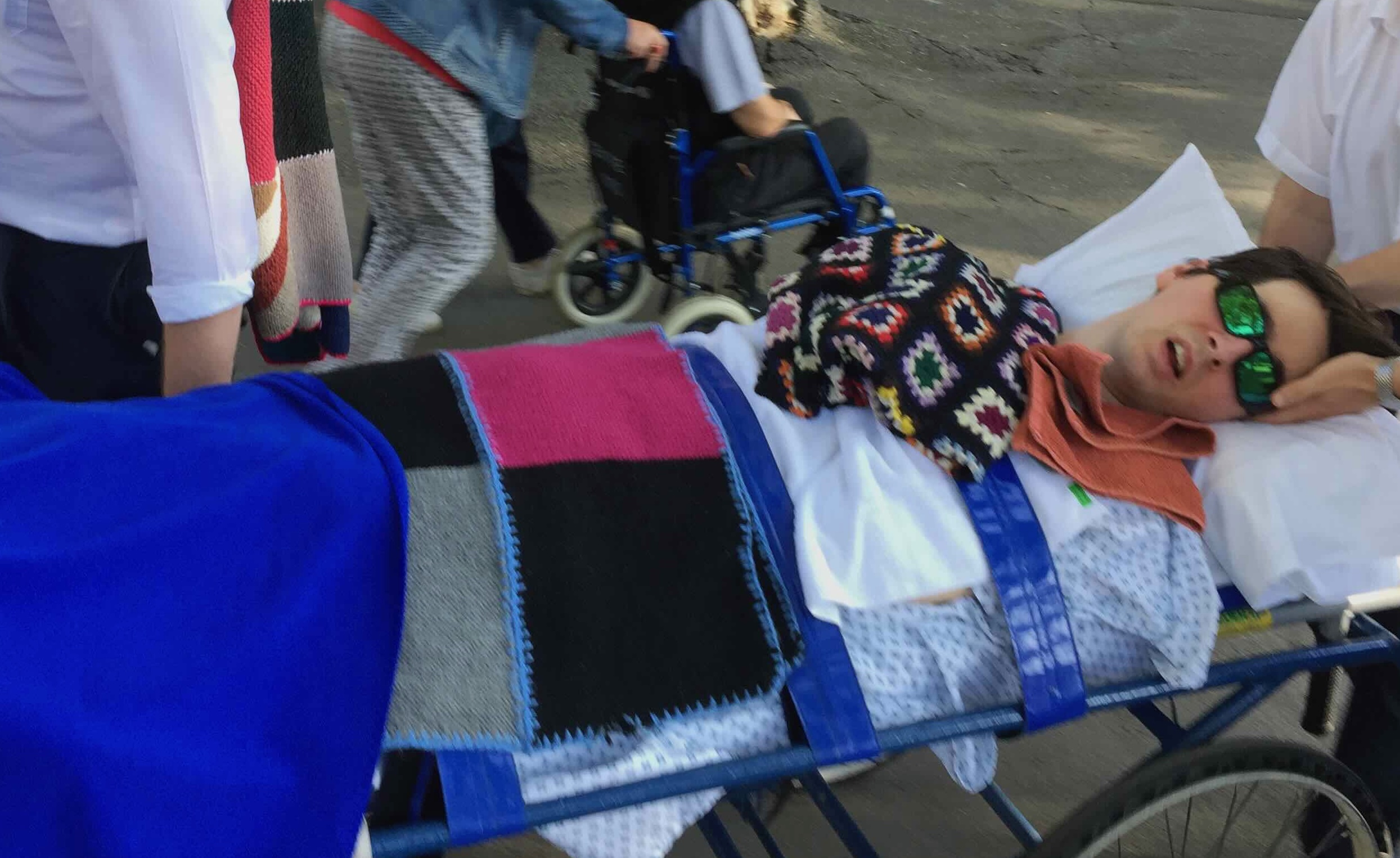
He wasn’t able to go to the baths then, to the water, because he was still to weak. So some men of the order of Malta, lead by Christoph, decided to bring the water to Pádraig, in huge containers.
They brought it to the Accueil‘s large accessible bath and shower room on the second floor where Pádraig, on a waterproof plinth, and all of us who participated in the action, had an incredible, spiritual experience. With an unexpected ending.
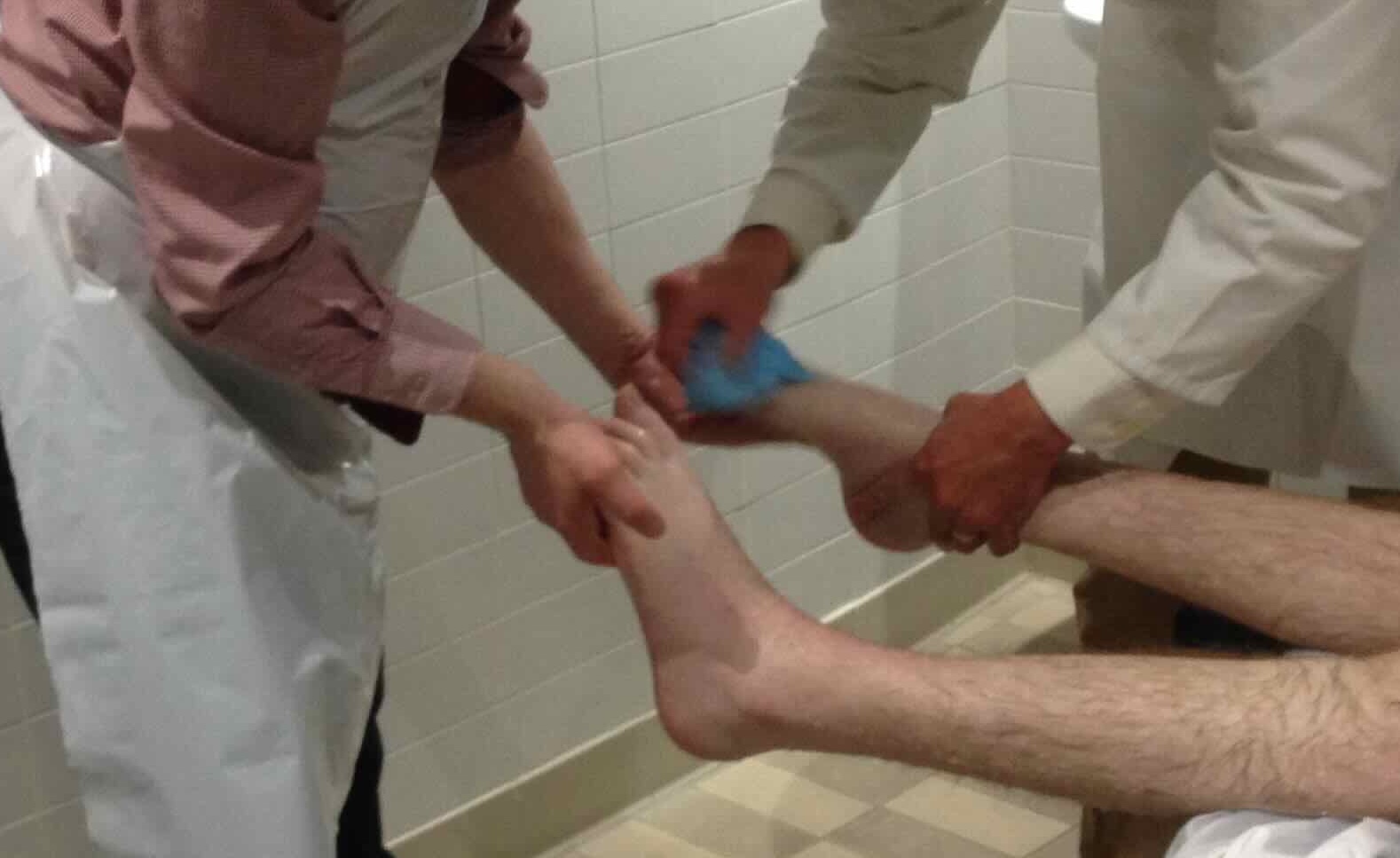
It turned out that the room hadn’t been used for some time and all the drains were blocked.
We only noticed that when we were bringing Pádraig back to his room and, literally, had to walk on water that covered not just the bathroom but the entirety of the Accueil‘s second floor.
I had to think about this memorable day again recently when I heard a radio programme commemorating the 80th anniversary of the death of Clemens August Graf von Galen, the former bishop of Münster, who very publicly and courageously spoke out against the inhumane policies of Germany‘s Nazi Government lead by Hitler.
Including the innocently called, but nonetheless utterly horrific, „Aktion T4“. His sermons in 1941 significantly contributed to the decision by the government to officially stop the programme – though, unofficially, it continued for many more years.
“T4” referred to the address Tiergartenstraße 4 in Berlin, the headquarters of the organisation coordinating the programme.
Between 1939 and 1941, and covertly afterwards, people with disabilities, people with mental illnesses, and others classified as “unworthy of life“, as a costly drain on society, the „Volksgemeinschaft“, were systematically killed. Hundreds of thousands of them.
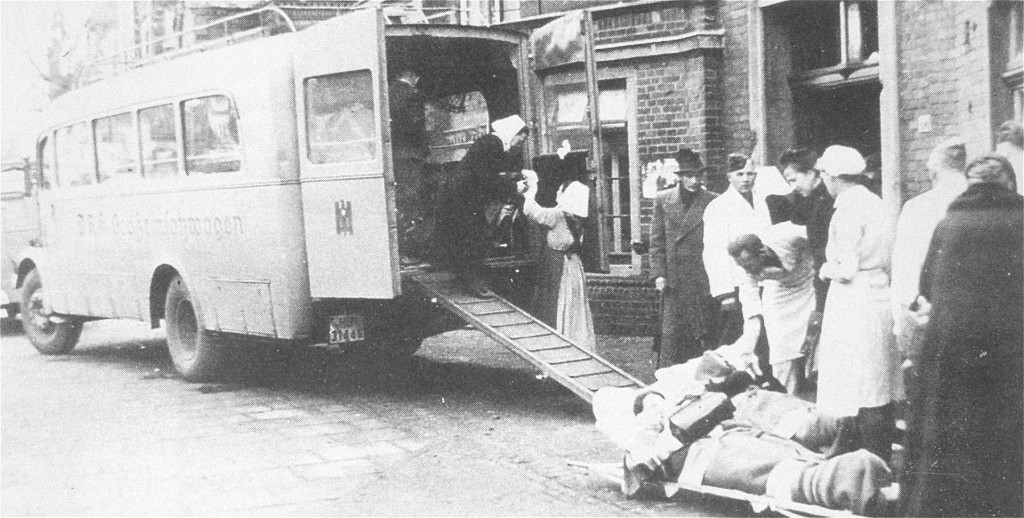
They were driven around the block in the back of vans with the exhaust pipes redirected into the back, killing those in it. A first version of the infamous gas chambers. They were given lethal injections. Or killed through deliberate starvation
Christoph, the man who brought the holy water to Pádraig, when Pádraig couldn’t make it to the water, turned out to be a nephew of Clemens.
He, as did his uncle, recognised, believed, knew, that there is no „unworthy life“ – and both were prepared to stand up for their believe. Instead, they were moving mountains, and huge water containers, to stand up for those who needed their help.
You cannot put a price on human life.
We might have different views on the power or even the existence of miracles.
But today, we are united in our believe that everybody has the right to the support they need to live their lives with dignity and respect – even if there is ‚no return‘ on that ‚investment‘. Today, we recognise that resources are never wasted when used to support people who need that support so desperately. Today, we respect the life of all of our brothers and sisters – no matter what kind of injury they live with, what kind of disability they have, or what medical condition they suffer.
The 1941 sermons of Clemens August Graf von Galen, Bishop of Münster, who died 80 years ago, continue to show us the way.
They still encourage us to speak up and say, “We Would Rather Live.” To say: Do not see care for those with severe Acquired Brain Injury (sABI) as a drain on society, but as an opportunity to show our brothers and sisters what it means to “live our humanity.”

