
Just as a matter of interest to the fantastic #RithPhádraig runners last Monday: your pictures on this blog were viewed 1,082 times! You did really good!
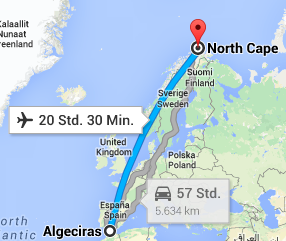 Back from the tyre changing job. From getting the car re-registered. From getting a new ‘green’ plaque with the new registration (and the old one taken out – which was the major hustle). From visiting my sister, brother-in-law, mother. From a long drive back up North. (You know, you can now drive from Algeciras in the very south of Spain to the North Cape without ever taking a ferry. Just. Drive. 56 hours. 5,635 km.)
During all this dealing-with-the-car business, I talked to a man working with a car dealer. He is from Bochum which is where Opel had a manufacturing plant since 1962. There are more than 3,000 people working in this plant. He told me that on 31 December of this year, the plant will close. Not only had his whole family been working there for generations, he said that he could just not imagine going home to Bochum – and nothing left there, no car manufacturing plant.
I studied in Bochum. In the 1970s, the government had decided that even the 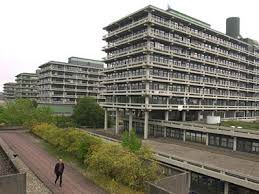 “Ruhrpott” with all its coal mines and steel factories needed a university. It was built on a green field site. The essence of functionality. About 16 huge, around 14 stories high concrete blocks of buildings around an Auditorium Maximum and the ‘mensa’, the student canteen. It became the university with the highest suicide rate. It was so anonymous that the student flats became hide aways for the Baader Meinhof Group’s sympathisers – at least that was what the police suspected who, at intervals, landed their helicopters with heavily armed special forces on the motorways leading to the college to check the cars for suspected terrorists. Student meetings were discussing Marx and Engels, and the mensa was serving ‘clear’ soup with vitamin bits – they didn’t even try to hide the source of the food by giving it a fancier name.
Pádraig today was back on his speech valve, ‘cycling’ for more than half an hour, and breathing most of the day without additional oxygen. He responded again with his feet, signalling ‘yes’ and ‘no’. There is a note in his room now telling staff how he is able to communicate. What a change from even just the beginning of the week! I feel that this is really another chapter. Physically very stable and much stronger than ever before since his accident, it really seems like as if he can now concentrate on how to communicate with his body and his surroundings. It’s fantastic to see and feel this happening. I think that when we look back to this early summer in years to come, we will remember how Pádraig started to connect with us again. The energy boosts he received from all his friends and families supporting him; the enormous good-will, compassion, and love – all of this must have made a tremendous impact.
When I think of it, talk about it, now write about the ‘old’ stories about Bochum and the college there – it’s like my father telling me about the war: too far away to have any connection with the ‘now’. Yet, today I would give a lot to pass more time with him and talk about his youth during the war. He was about Pádraig’s age when Germany started to loose the war, when they were beaten in Stalingrad, when he met my mother, cared for her when she was sick, and the world around them disappeared in smoke and rubble. Think about it: when my father was Pádraig’s age, the house we live here in Hamburg, and with it the blocks of houses around it, was destroyed that year. During the night of the 28th of July 1943, in just 43 minutes, 2,326 tons of bombs were dropped, creating a firestorm (a word that entered the English language for the first time as a result of that night) with hurricane-level winds. 42,000 civilians were killed…
Don’t forget about the next event in support of Caring for Pádraig: the MOUNTAIN FLAG CHALLENGE and
HIKE to DJOUCE to PLANT YOUR FLAG, this coming Saturday, 07th June!
Today’s German Music Tip
Herbert Grönemeyer, Bochum (1984)
What’s hot
Bochum
What’s cold
Opel closing
The German word/phrase/verse of the day
Mit dem Ivan ist nicht gut Kirschen essen.
(Google translated this for me as “By Ivan is not good to eat cherries.” which has nothing got to do at all with what the German sentence means!:)
 Hospi-Tales
Mit dem Ivan ist nicht gut Kirschen essen= He’s not an easy individual to get along/deal with??
Best wishes to Padraig!
Sounds about right, Seán! We passed on your good wishes!
Thanks Reinhard for all those interesting stories. And the connection with Pádraig must be so speciall. I am sure that he will feel much better and improve much more now!!! Besos y abrazos
A step at a time, Ana.
Dear Reinhard,
Thanks, as always, for all the news. I wish Pádraig every success (of course!!!!!) in the progress he is making.
I hadn’t been aware of the exact date of the firestorm in Hamburg, but now I know. It is probably impossible for us who are lucky enough to live in peaceful times properly to imagine the awful impact of such a thing.
I suppose you won’t be looking for a job in the student recruitment office in the university in Bochum … perhaps the institution has perked up a bit since the 70s!
With best wishes,
Louise
Loads of bits of more or less useless information, Louise… I’d say that most of the people living in Hamburg today wouldn’t know about this either, and they could not care less. – Yet, all this happened less than a life time ago. How time flies.
Yes, Louise, Bochum University has perked up a bit. At least it is not as ugly as it used to be with all the bright colours they painted it with. But I’d like to add one fact: it gave us, the children of less well-off people the opportunity to study. It was a time when our government realized that they needed more engineers, scientists, teachers and they decided to pay grants to those whose parents would not have been able to finance their studies otherwise.
Thinking about Baader-Meinhof and all the hysteria that went along with it, I remember a funny story: The band “The Sands Family” from Northern Ireland was hosted by a Heinz and his friends in a student flat in Dortmund while they were on tour. Some cautious neighbours thought they should report these strange people walking up the staircase with their musical instruments. Consequently police had to investigate if the contents of their cases was something dangerous. So, the band whose main wish it was for the Troubles in Northern Ireland to end (and the British Army to leave the country) were considered German terrorists.
Dear Gisela,
Thank you very much for this background. It’s very interesting. I can honestly say that I knew nothing at all about Bochum up to yesterday, apart from the name, and now it’s in my consciousness and my general knowledge has improved.
With best wishes,
Louise
Same thing happened to Clannad, Gisela, when they were due to play in the ‘Bunker’ in Dortmund. And you are right about this opportunity to study. I always saw it as an enormous privilege.