Playback on RTÉ Radio One on Saturday mornings is a programme Pádraig listens to most Saturdays. Yesterday, they played a clip of our good friend Vincent reading one of his poems, which he had called “Beckett on a Boreen”. It’s just under two minutes, totally absurd, brilliant and incredibly funny. Only in Leitrim. Listen to it. It will brighten up your day.
Beckett on a Boreen by Vincent Woods
There were another few reports from the past week that caught our attention.
Like the one in which a journalist reminded a politician that after the last really bad floods in Middleton, Co. Cork, in 2015, they had promised to build flood defences within five years. Last week, the town was, again, totally flooded, the livelihood of many people destroyed by masses of water – three years after the flood defences were supposed to be built. When the politician blamed the complicated and slow planning process, the journalist stopped him and checked whether he had heard that correctly: the Government blaming their own bureaucracy for grinding desperately needed projects to a halt, or, even worse, preventing the projects from starting in the first place.
Even when everybody agrees, including the Government, things don’t happen, not because of a lack of funding, but because of bureaucracy not working.
Sounds familiar?
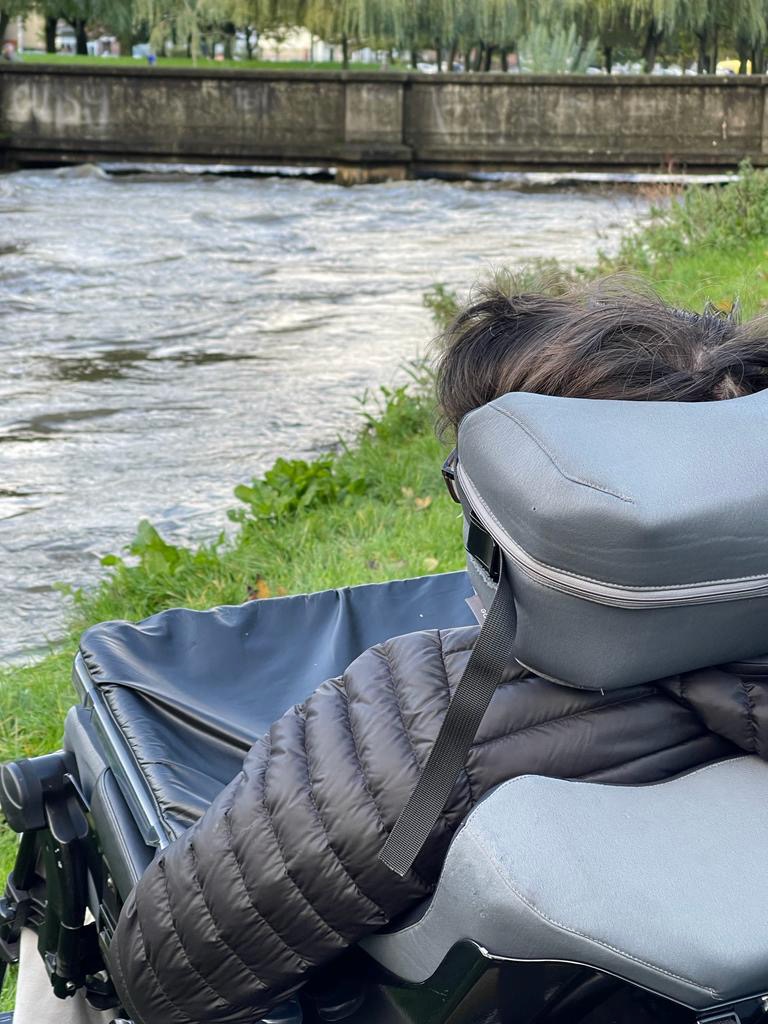
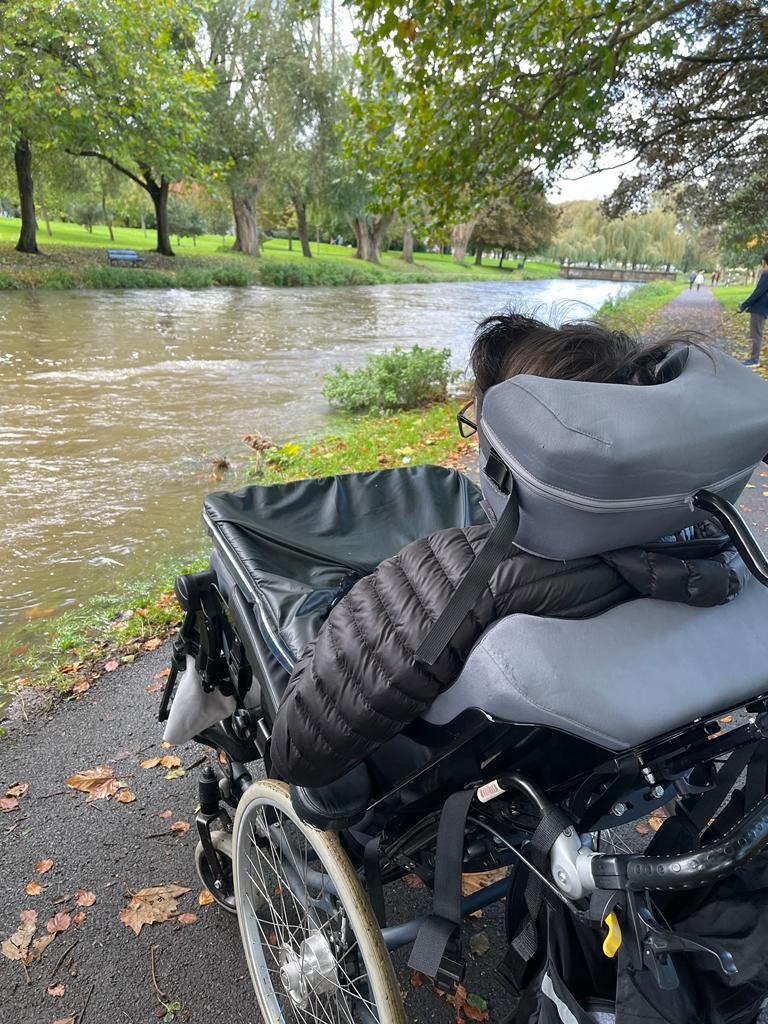
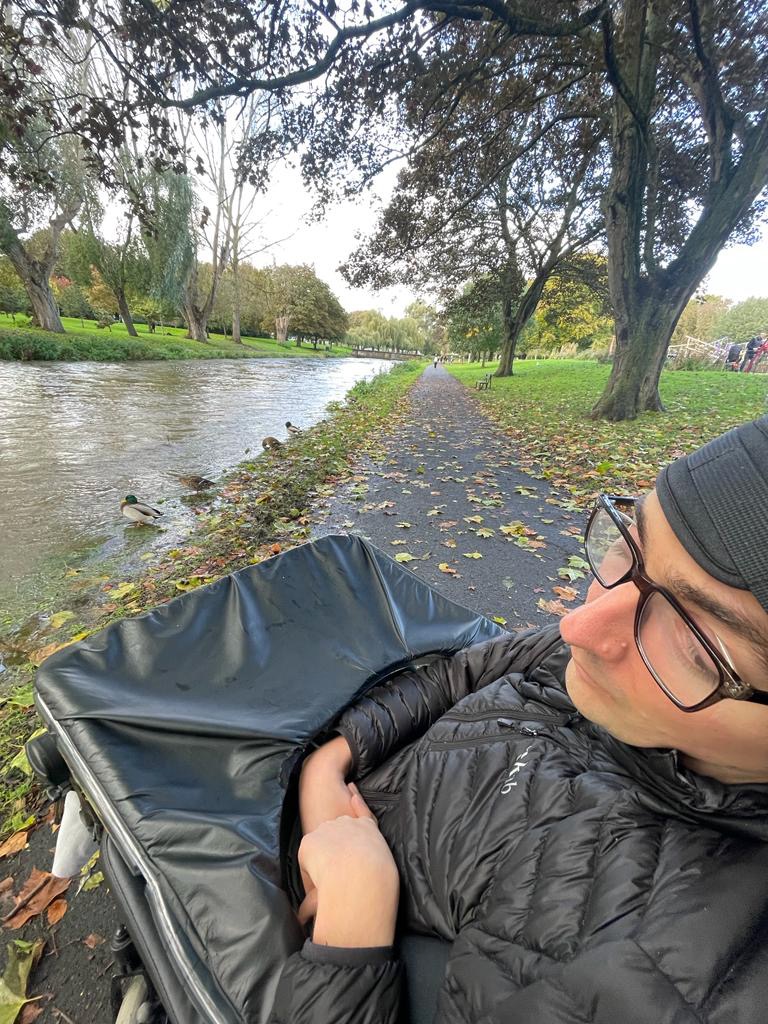
Yesterday, Pádraig went down to Griffith Park to check out the water levels of the Tolka.
High Water Levels at the Tolka River in Drumcondra
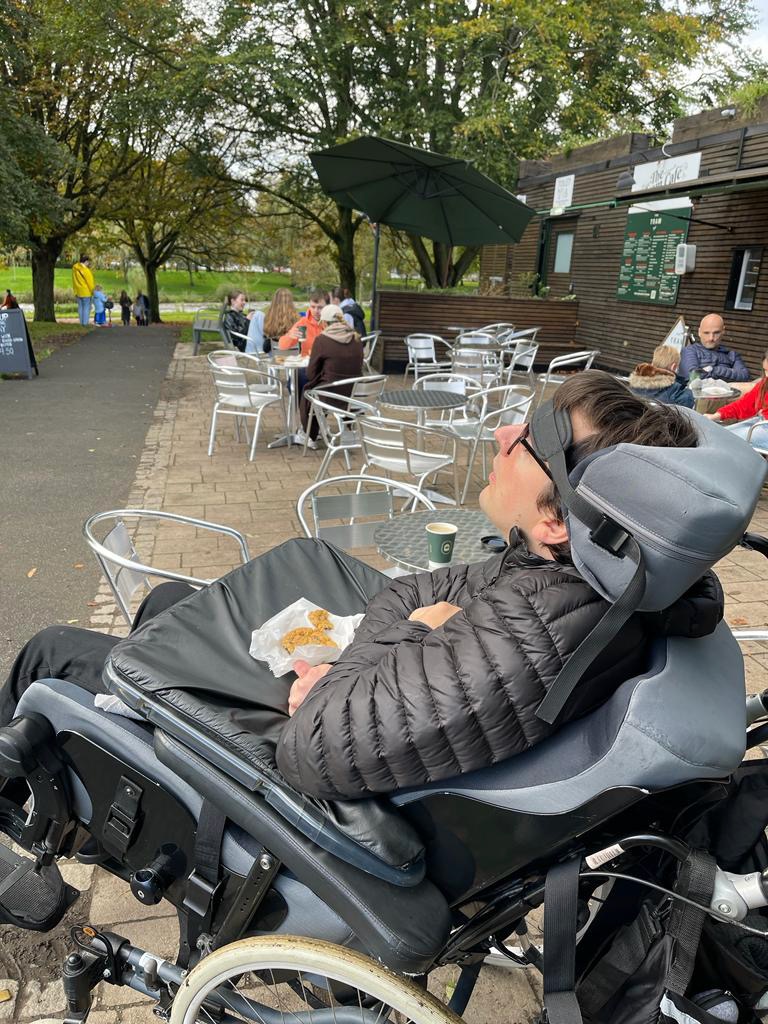
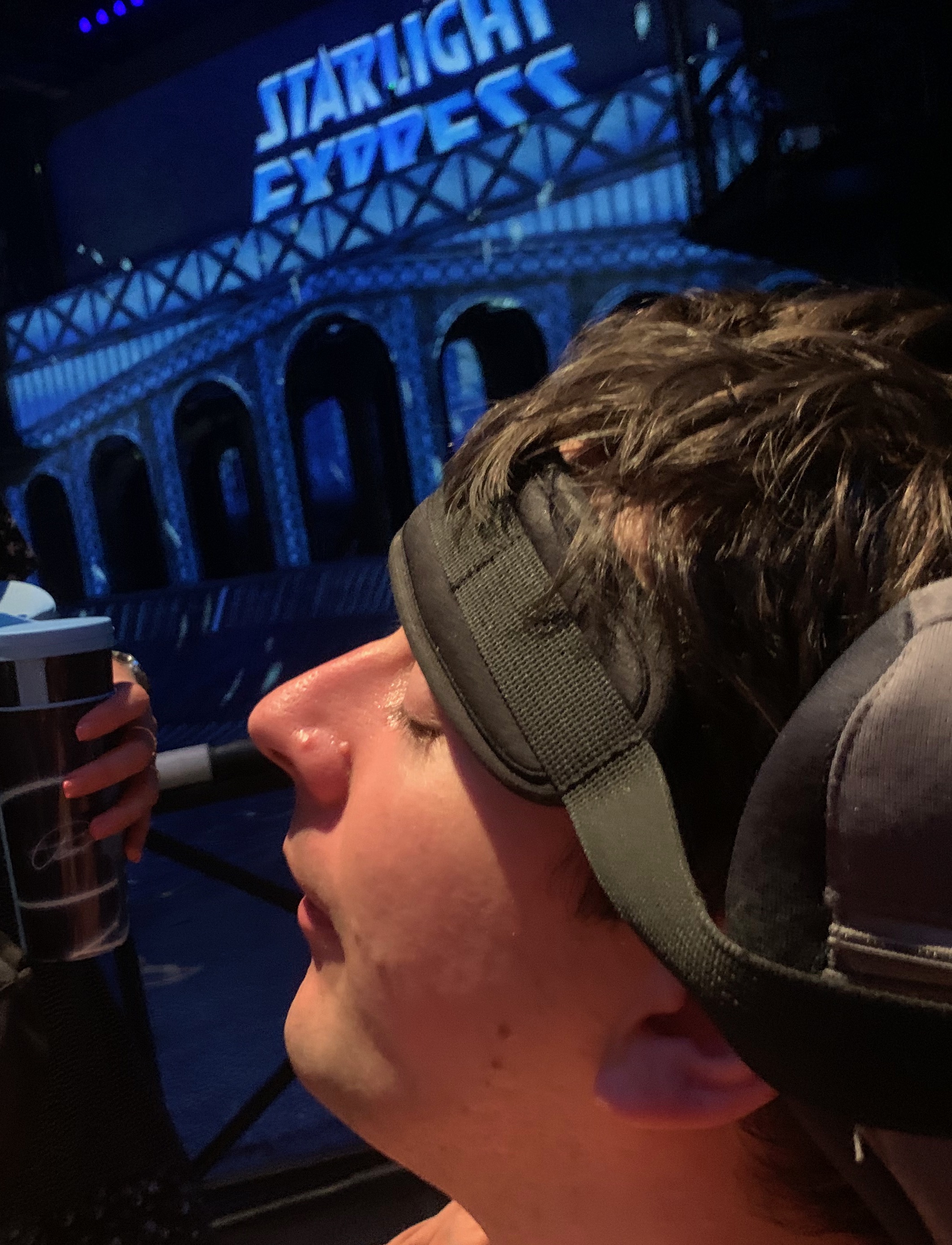
No flooding yet in Dublin, but really high water levels. Pádraig likes his special ptosis glasses that help him to keep his eyes open and take in his surroundings, including a quick snack at the little café in the Park.
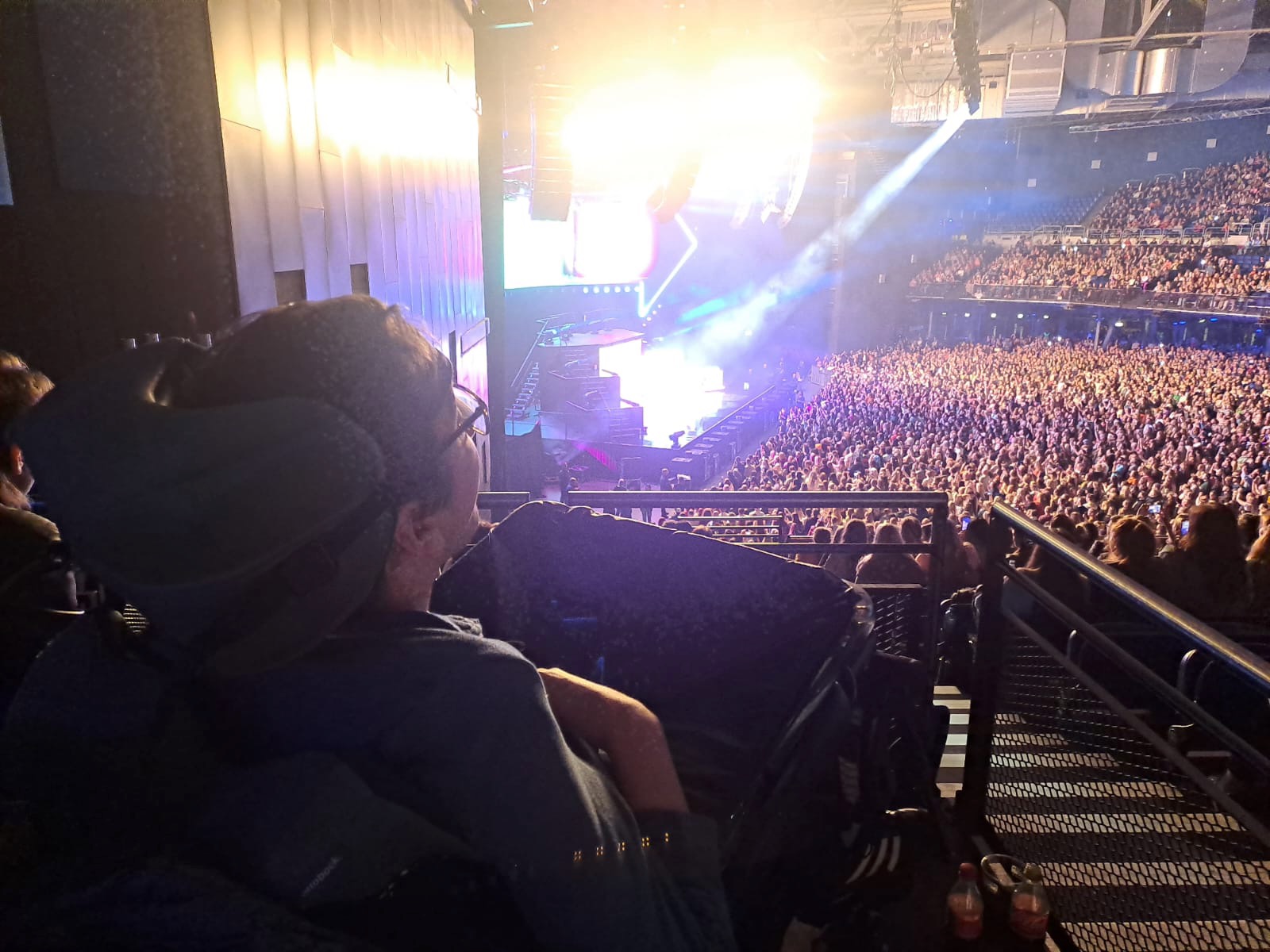
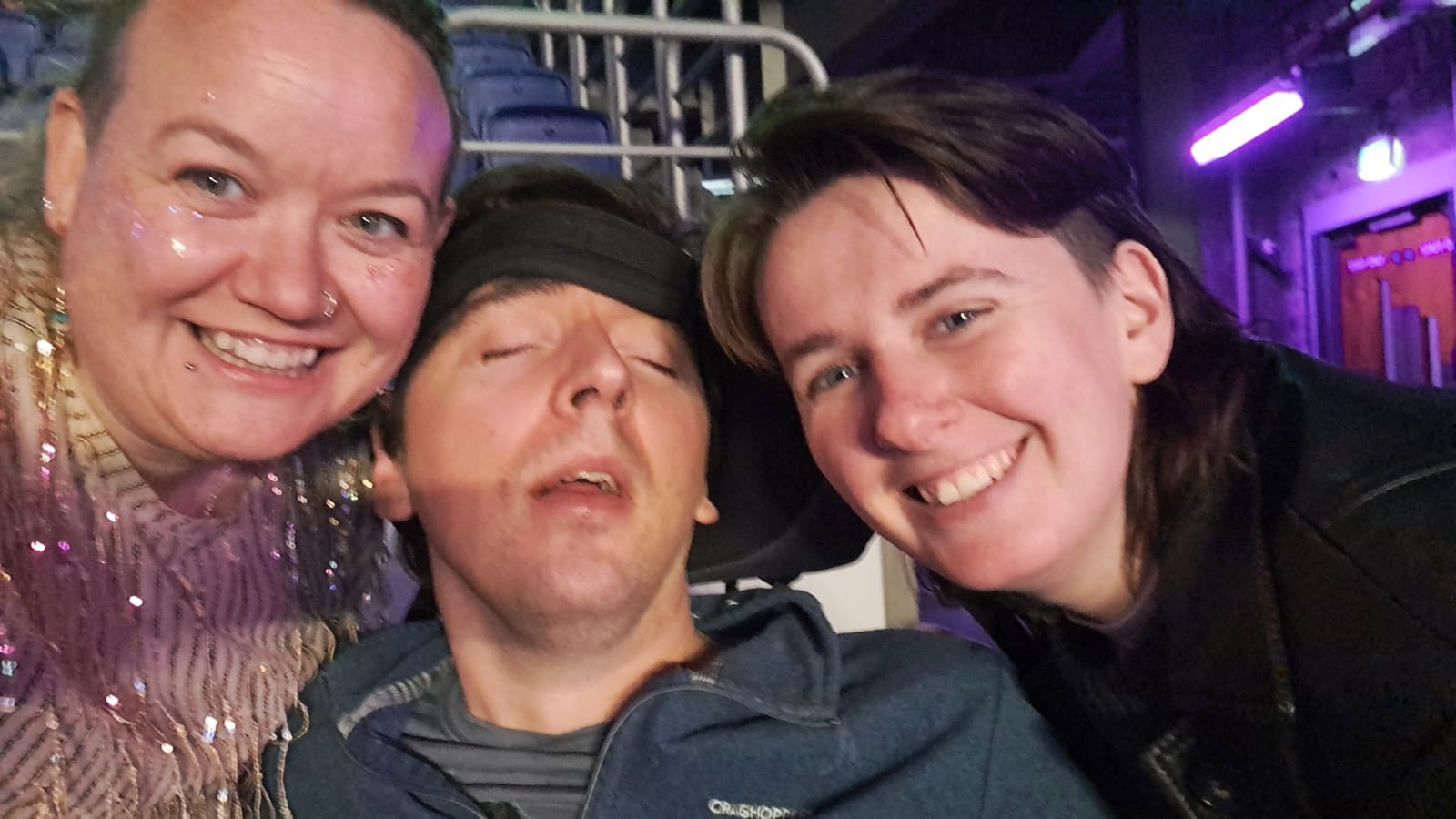
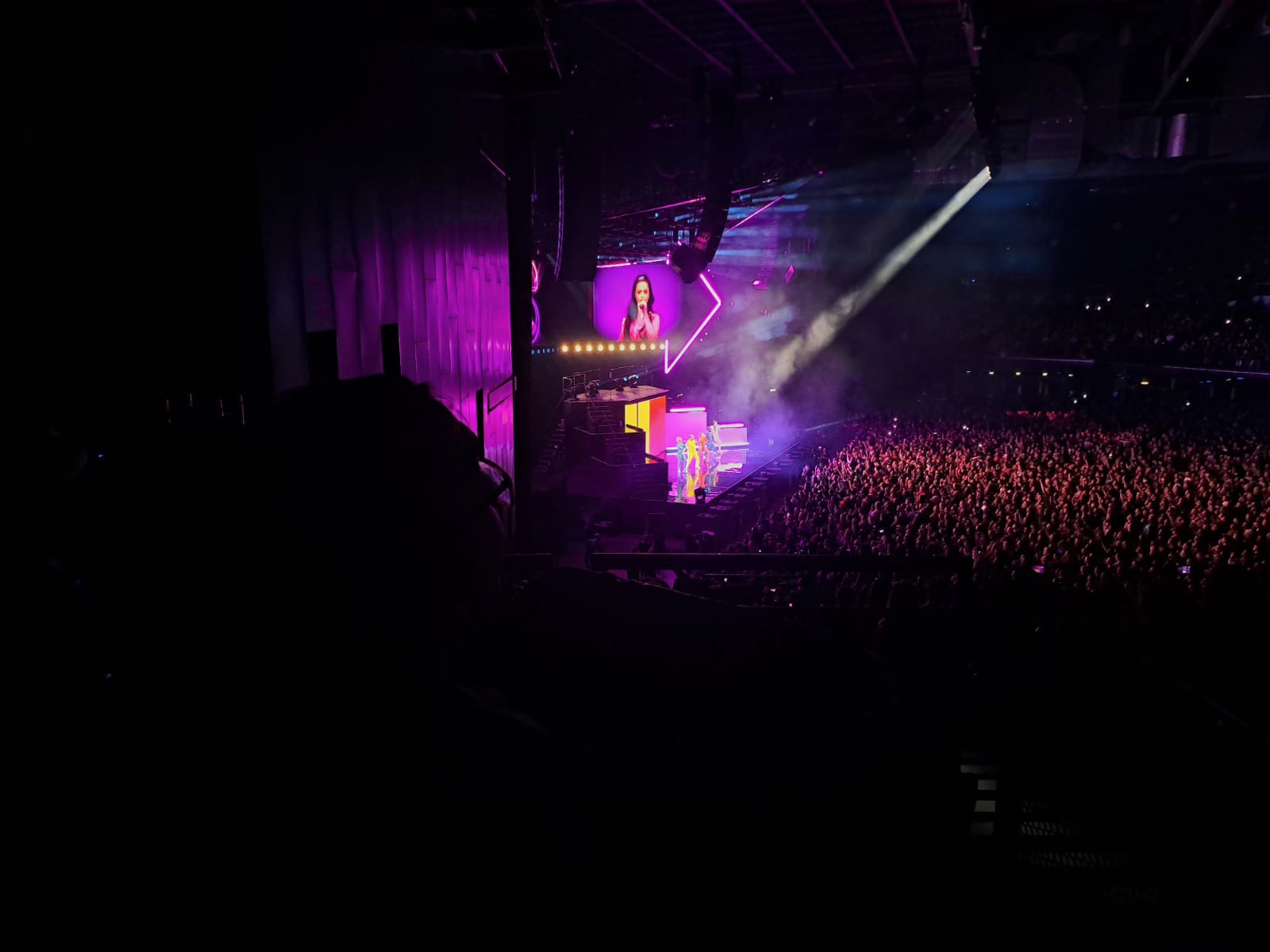
I asked Pádraig whether it was ok with him to blow his cover (and that of his friends who accompanied him). Not everybody would lightly admit to have been to an S Club 7 gig like the one they went to last Monday night. They said it was ok.
You can see how much fun they had.
Life must be about having fun. Even, or especially, when faced with the absurdities of life. I can’t go on. I will go on. Sun, Moon. Moon, Sun. What is it?
Oh Jaysus, lads, sure, how would I know? I’m not from around here.
We’ll have to wait for Godot. With Beckett on a Boreen. In the city. In our everyday lives.
Do not go gentle into that good night but rage, rage against the dying of the light. Dylan Thomas
I think Dylan (Thomas) dedicated the poem from which this line was taken to his father. It’s message, for me, is that we should live life to its fullest, make the very best we can out of it, burn and rave. While knowing that death is inevitable we owe it to life to value and respect it. Giving in and resign is not an option.
Pádraig did 30 squats last week during just one session in the An Saol Foundation Centre with just a little bit of guidance. When I watched him doing it I began to wonder whether I would be able for this. Then again, I’m more than 30 years older…
30 Squads – Try It Yourself and see how you feel after:)
We wanted to go to a small Spanish restaurant. When we eventually tried to book a table, it was full. On the advice of Pádraig’s younger sister, we tried and got a table in Hawksmoore – a new restaurant “everybody” is raving about.
Apparently, the place, located in the historic National Bank building in Dublin’s College Green, was voted Best Steak Restaurant in Europe. It’s run by two Irish Brothers who set up similar restaurants in New York and London.
It was a real nice evening, giving us time to enjoy and savour, and to reflect on, life.
The most challenging question for which I have not found an answer to is how anyone can decide that someone else’s life is not worth living? How anyone can decide to deny the support a fellow human needs to enjoy life, tu burn and rave?
I am all with Dylan Thomas. Rave and rage against the dying of the light. Don’t go gentle into the night. We have to make the most out of the days we’ve got. And we need people to support us when we that becomes necessary.
It is not a lack of love, but a lack of friendship that makes unhappy marriages.
Friedrich Nietzsche
Pádraig was groomsman at his sister Maria’s wedding last week. He, along with our two families and friends, thoroughly enjoyed the ceremonies, get togethers, and the celebrations with our two families and friends. First, and earlier in the week, in our church with the signing of the civil register, followed by a small get together of the two families in the evening. Then, a few days later, in a beautiful country estate the humanist ceremony with around 130 guests, followed by an all night brilliant party.
Not everything worked out exactly as planned. For one, the Child of Prague only delivered on the first day: although he was put out in the garden before the wedding we weren’t exactly blessed with glorious sunshine on the second day..
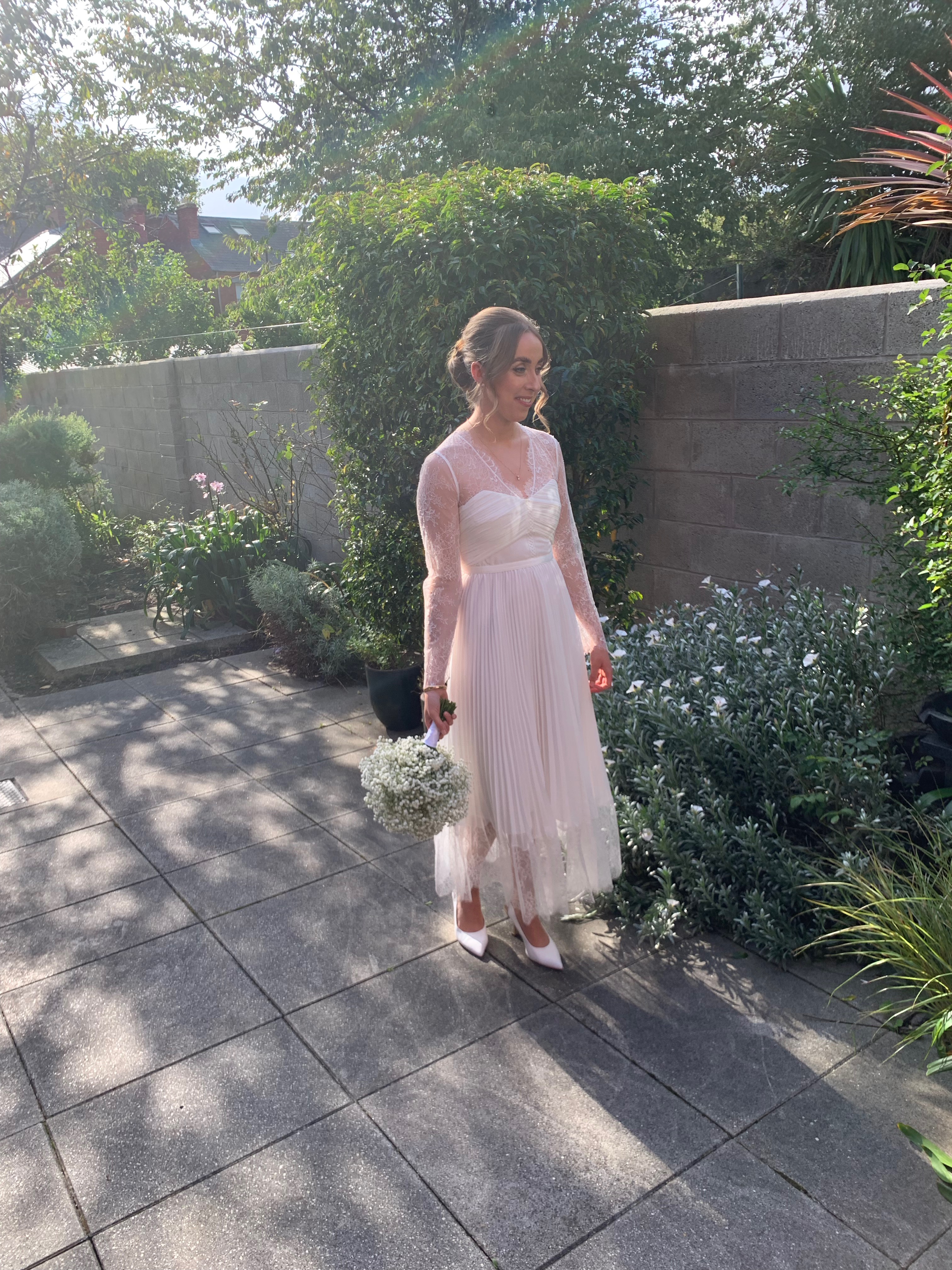
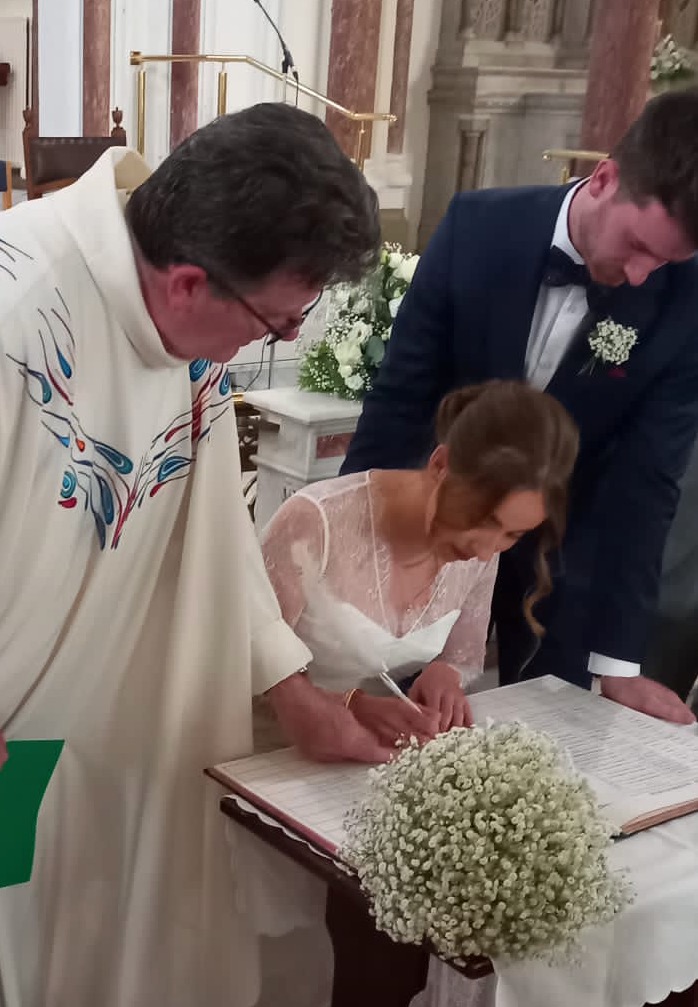
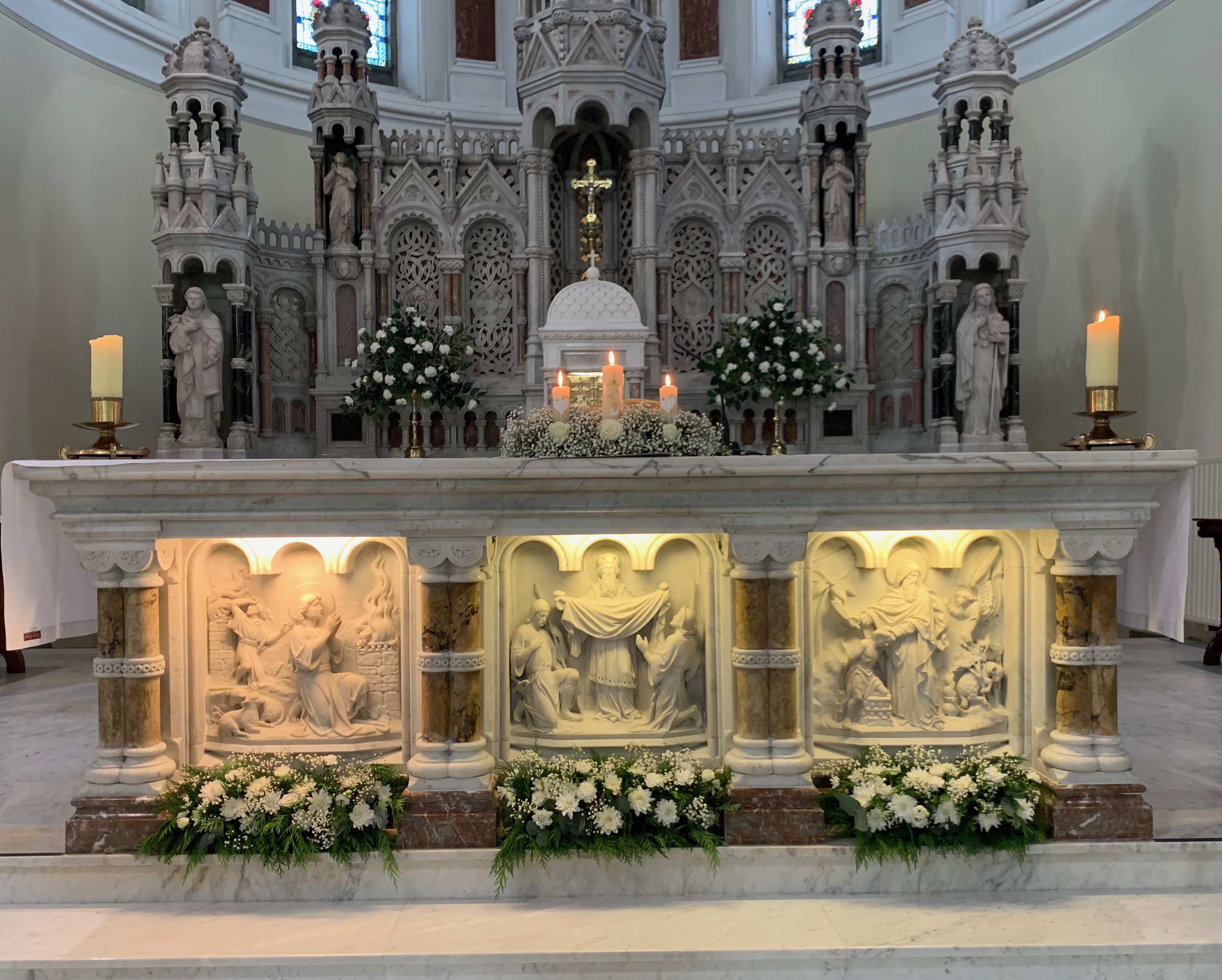
The first pictures of the Bride were taken in our back garden. After that, we went across the road into the church which I had never seen as nicely decorated with stunning flower arrangements. The civil register was signed by the happy couple in the Church, as well as by the official witnesses, including Pádraig. He had practiced his signature and did a brilliant job on the day.
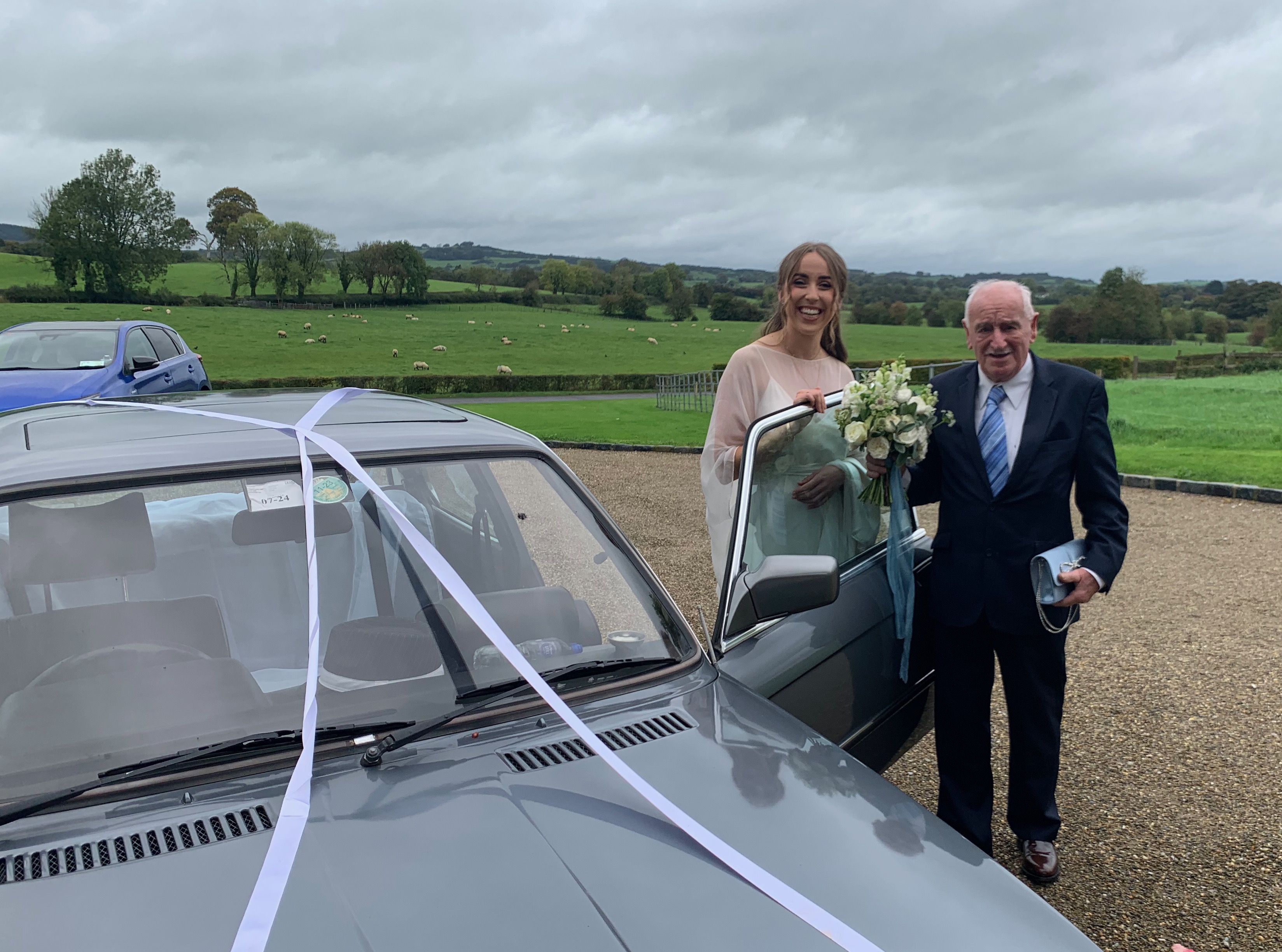
Maria was driven in a 40+ year old BMW by her husband’s grandfather to the humanist ceremony a few days later. The ceremony this time, was almost entirely conducted in Irish.
The couple had decided that they would, rather than offering a ‘favour’ to their guests, making a donation to the An Saol Foundation – a very thoughtful gesture that was very well received by their guests.
We all, including Pádraig, had a fantastic day which later spilled over into a long night with the best company of new and old friends, as well as our two families.
I’ll let the pictures speak for themselves,
I wish Maria and her husband happiness, love and good health for their life together.
With a huge “thank you” to all who made the past week one we will never forget.
Love was all around us. But, above all, friendship.
A belief in hell and the knowledge that every ambition is doomed to frustration at the hands of a skeleton have never prevented the majority of human beings from behaving as though death were no more than an unfounded rumour.
Aldous Huxley
Aldous Huxley was one of those writers, I felt I had to read when in my late teens. Like Charles Bukowski, William Burroughs, Jack Kerouac, or Carlos Castaneda. Today I think I was too young when I first tried. I don’t think I really understood what I was reading.
I don’t have (or take?) the time anymore to read much. But when I come across my ‘old’ favourites today, I see much more humour in their writings than I did back then. And that’s what I like most about them.
Death: no more than an unfounded rumour.
That’s a classic. And it made me smile.
One of my favourite songs is “Everybody knows” by Leonard Cohen. In my mind, its point is that frustrations are based on expectations. Or, in the words of Antonio Banderas, expectation is the mother of all frustration. If you know that the dice is loaded, if you know that the boat is leaking and the captain lied, well – then you won’t be surprised and, thus not frustrated, when you drown, when it’s coming apart.
And yet, last week I struggled. Maybe there was just too much of what everybody knows, happening all at once.
But then, someone sent me a short video of a Tommy Cooper joke about a Mexican, a German, and an Irishman. And I smiled again.
Leon Trotsky once said that life is not an easy matter… You cannot live through it without falling into frustration and cynicism unless you have before you a great idea which raises you above personal misery, above weakness, above all kinds of perfidy and baseness.
In a way, I am lucky because I have this great idea that will carry me through life, despite deep frustration taking hold of me from time to time. And I have family and friends, compadres, who believe in the same idea.
It is this idea that raises us above personal misery, weakness, and all kinds of perfidy and baseness.
Death, after all, might just be an unfounded rumour.
Nobody is accidentally in Alaska. The people who are in Alaska are there because they choose to be, so they’ve sort of got a real frontier ethic. The people are incredibly friendly, interesting, smart.
Marcus Sakey
Could Alaska be a mindset, rather than a place?
A mindset that people don’t find themselves in accidentally, but that they purposefully choose?
People with a frontier ethic who push boundaries and who are incredibly friendly, interesting and smart?
Last week, I felt this frontier ethic a few times.
First, Pádraig experienced a couple of sessions in the Lokomat that were truly outstanding. Sessions he actively participated in, way beyond of what we had expected. Sessions were his supporters allowed him to push those frontiers further out. Sessions that were true game changers.
On day one, they experimented a little.
On day two, a method emerged: he pushed himself up straightening his legs; then he moved his legs, left and right; and only then did he walk on the treadmill of the Lokomat.
It was phenomenal.
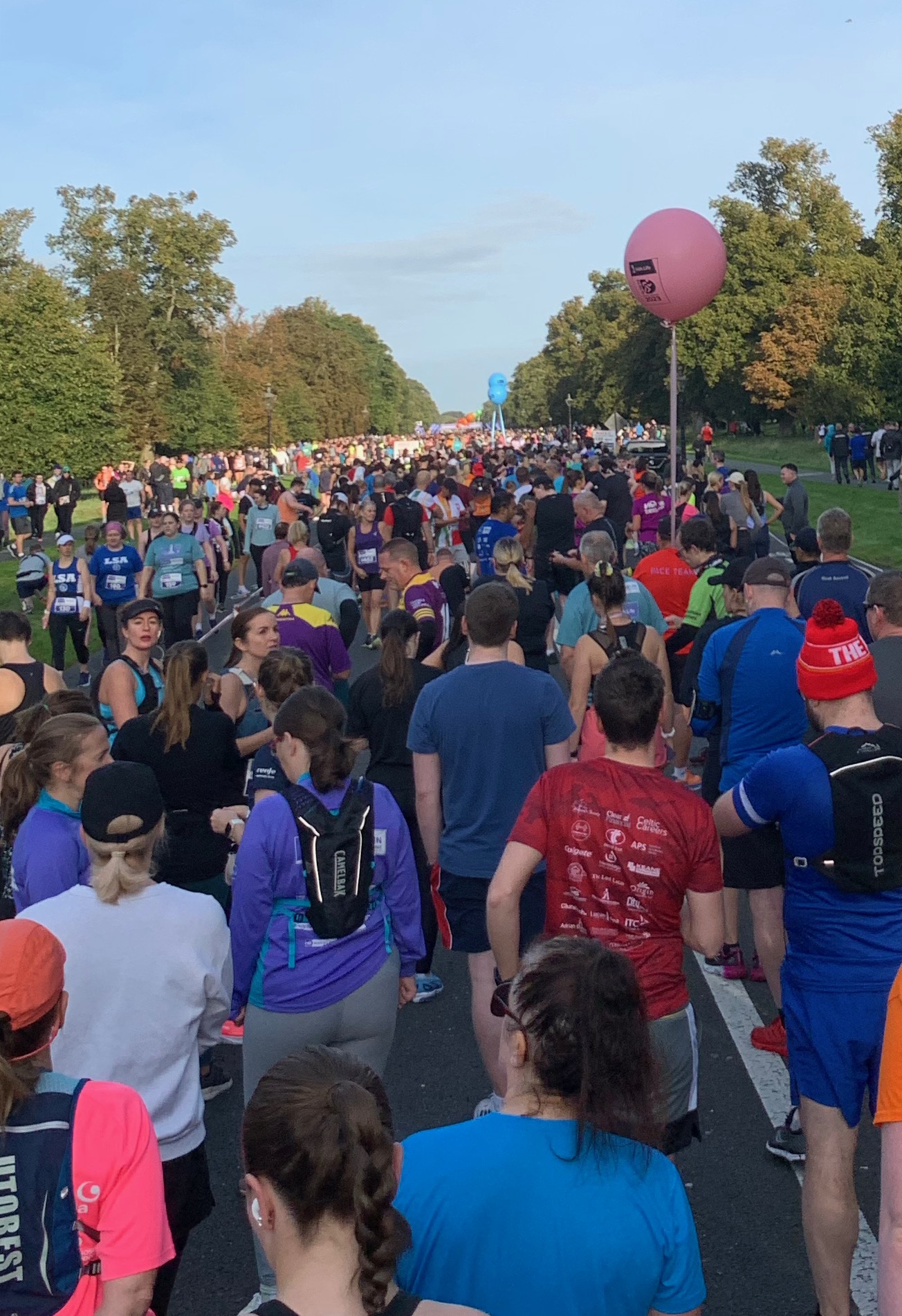
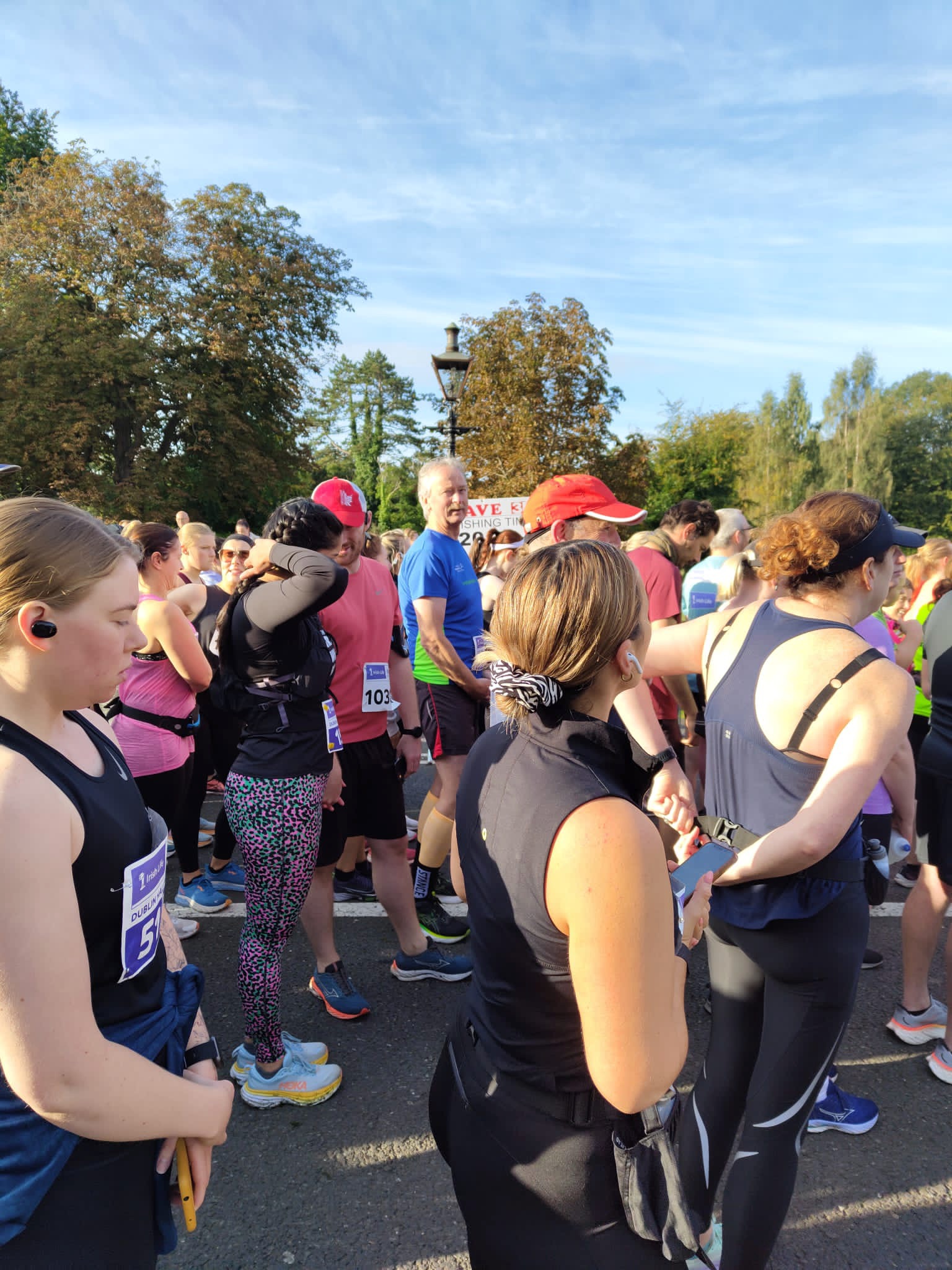
Then, on Saturday, I did a bit of pushing the boundaries myself, attempting the Dublin Half Marathon.
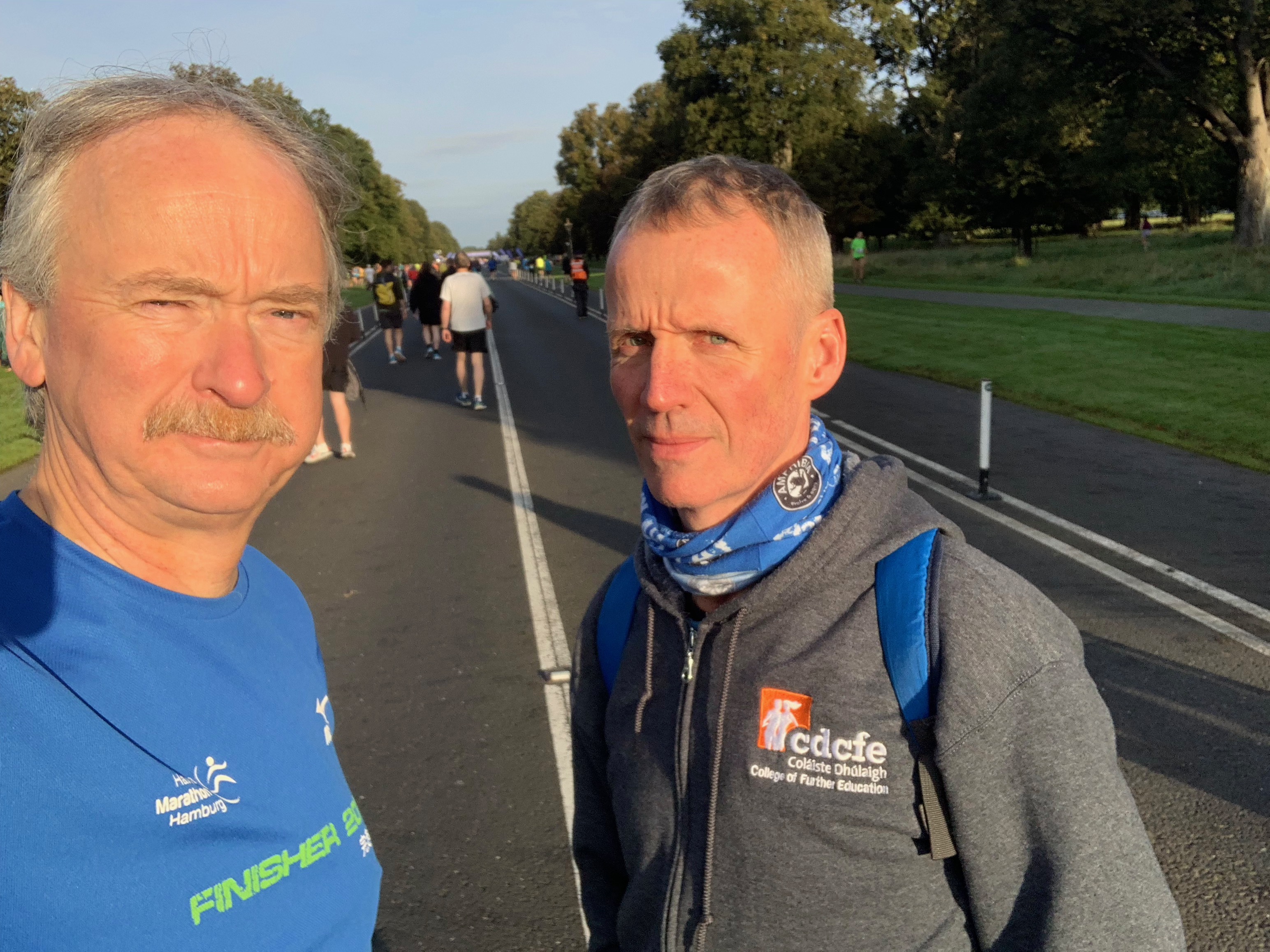
Have a look at the pictures. There is a ‘before’ and there are two ‘after’ ones of myself, plus a view of the thousands of runners ahead of me – and a handful of them behind me: a reflection of how fast (or slow) people intended to run.
You can see: my ambitions were low. I just wanted to get over the finish line. Time did not matter in my case.
My friend who joined me in the park to cheer me on took a video just before the finishing line.
You can hear him shouting:”Come on, Reinhard. A few hundred metres more. Keep going.”
I was shattered after the race.
But I thought that what my friend had said to me was so true. No just in this situation, but in life. In many cases, we just need to do a few hundred metres more and keep going.
Several times during the race I had wondered why I was doing it. Whether I should stop and just go home. I’ve also thought that a few times in my life. Why making the effort? What for? Why keep going?
When I look back at Pádraig’s extraordinary exercise sessions of last week, and at my half-marathon, it was my friend who gave me the answer. We do this because we want to cross that finishing line which is often just around the corner. So we need to keep going.
Being able to do it requires friends and supporters: people like those from Alaska.
People who choose to do what they are doing. People who got a real frontier ethic. People who are incredibly friendly, interesting, and smart.
In your joy, in your happiness, in your achievement, we all benefit. Prince Harry at the opening of the 2023 Invictus Games in Düsseldorf
Having arrived back from Lourdes early in the week, I went to Düsseldorf where the Invictus Games were finishing and the annual RehabCare fair had just started.
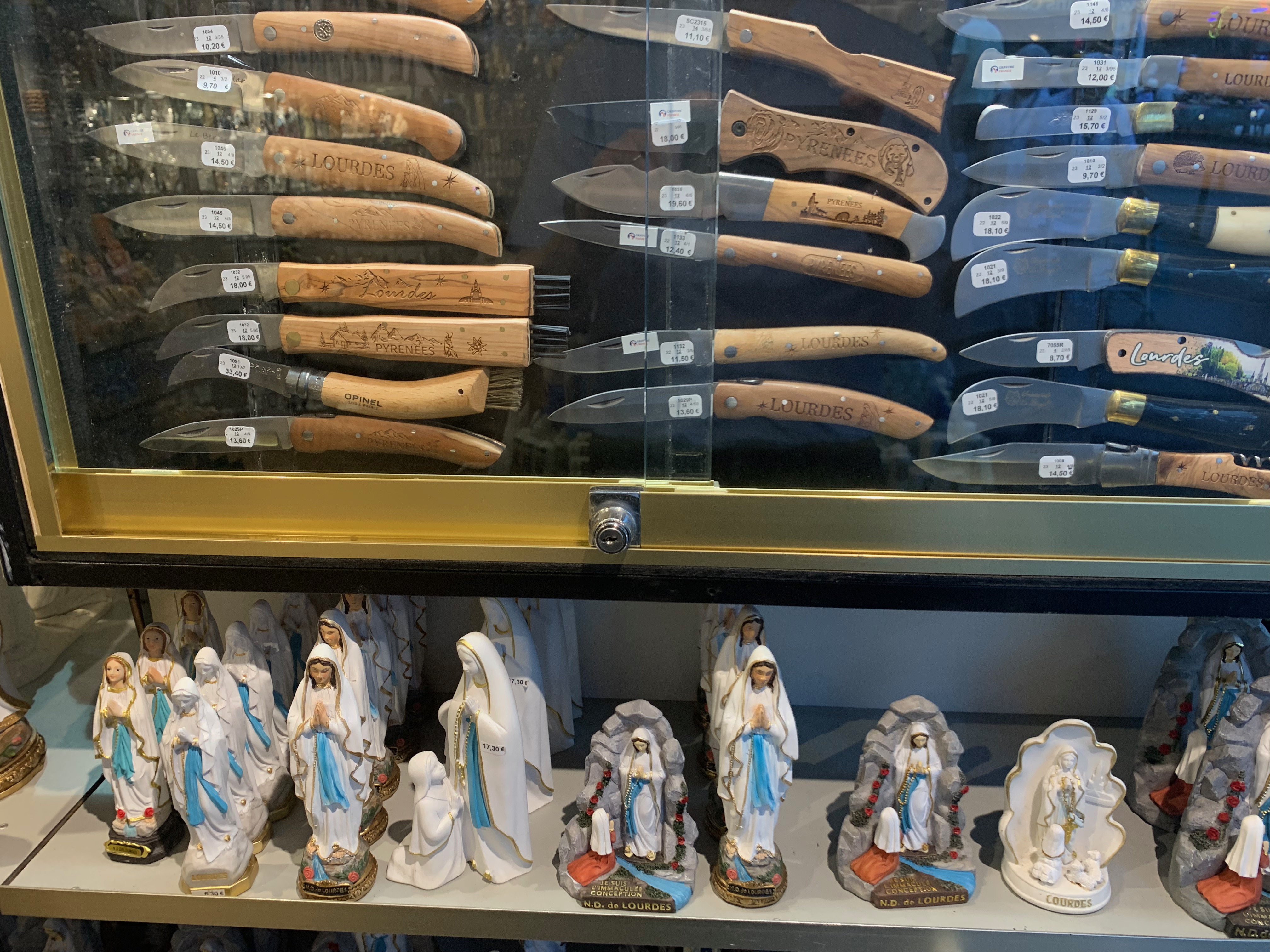
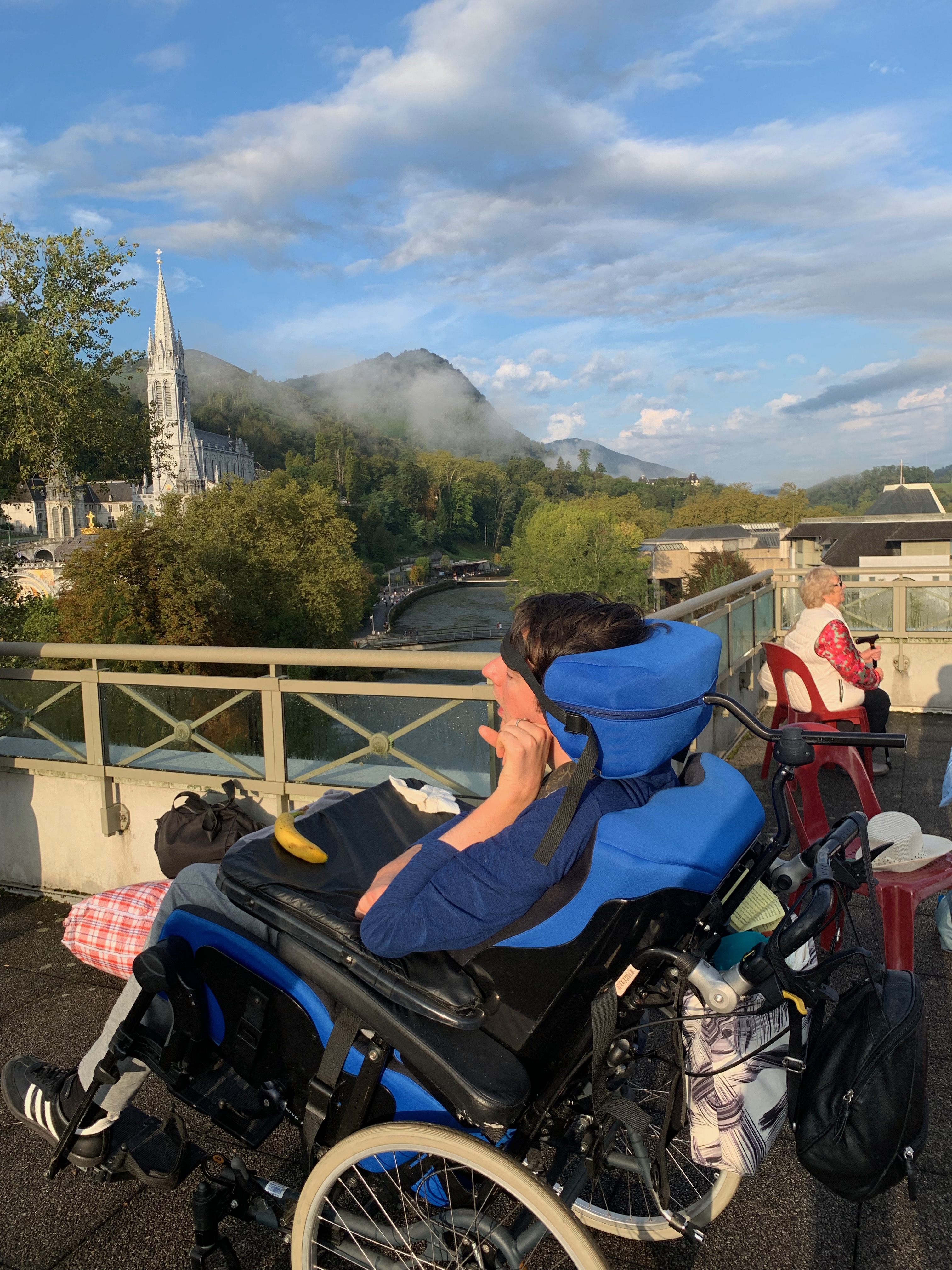
I can’t think of a place in the world that would be comparable to Lourdes. Being there feels like being in another space of time. There are the tacky shops selling statues of Mary right beside quite dangerously looking pocket knifes. There is a very commercial aire around the declared holiness of the place. But there is also a sense of companionship that is hard to match.
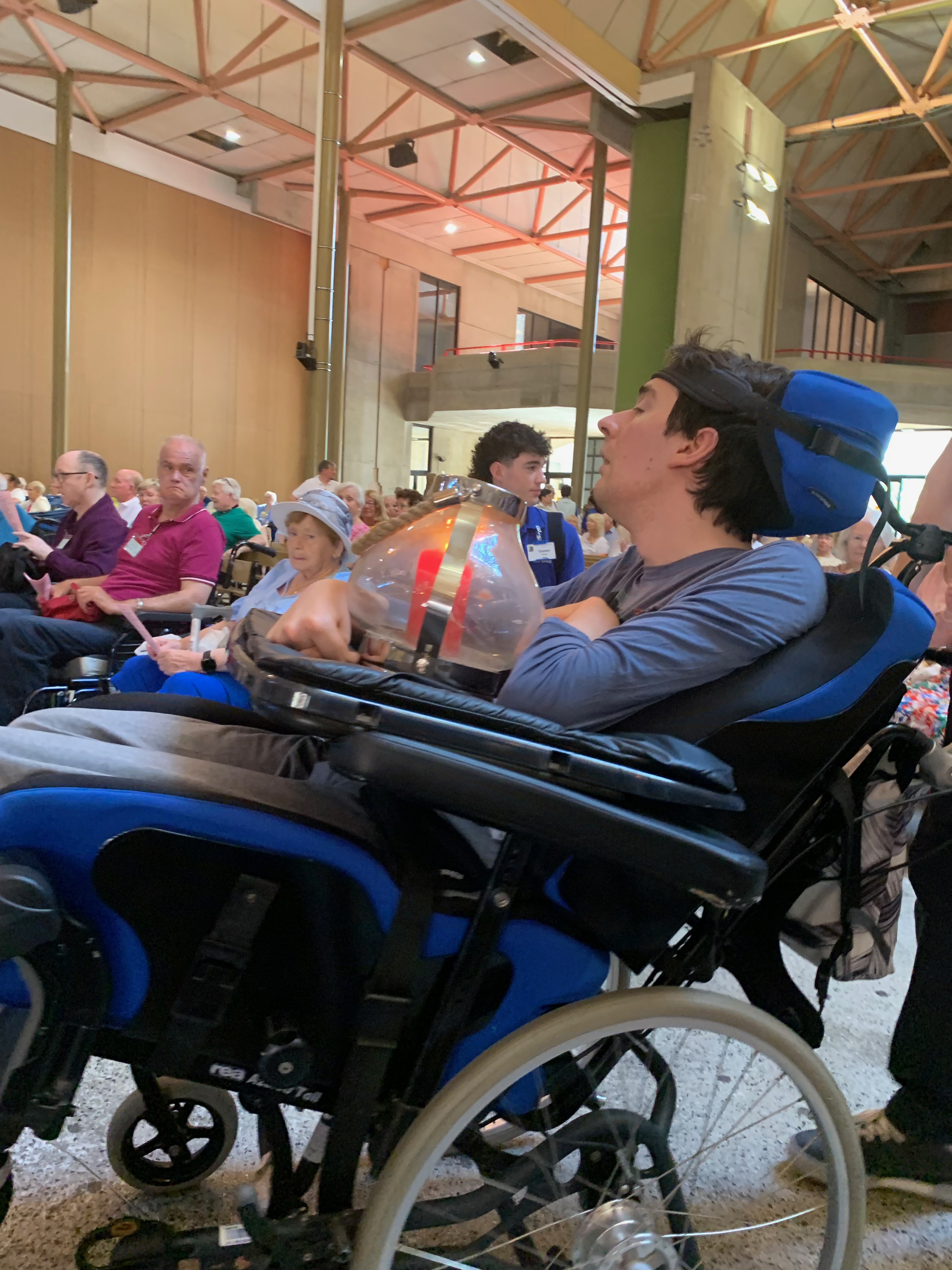
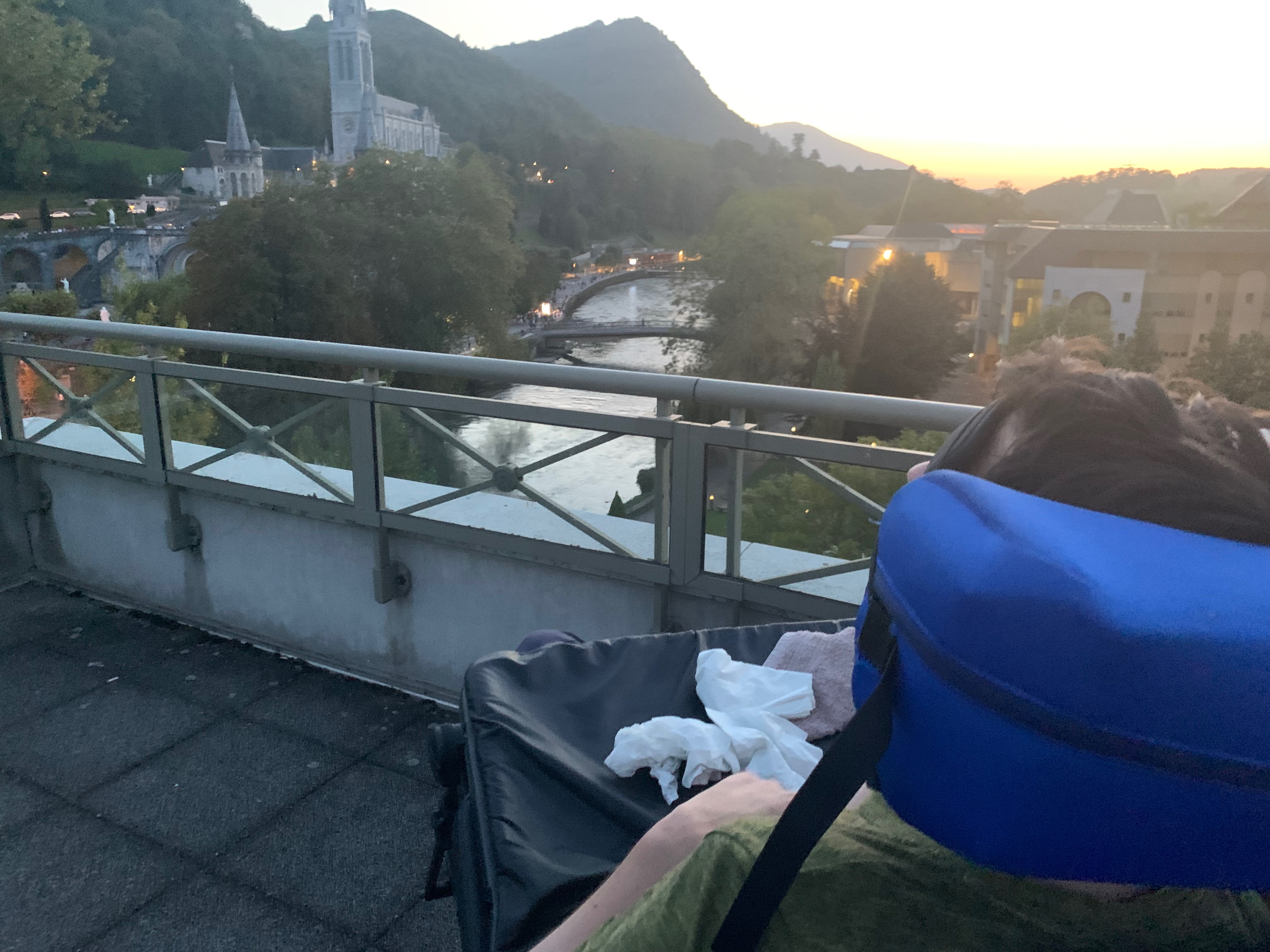
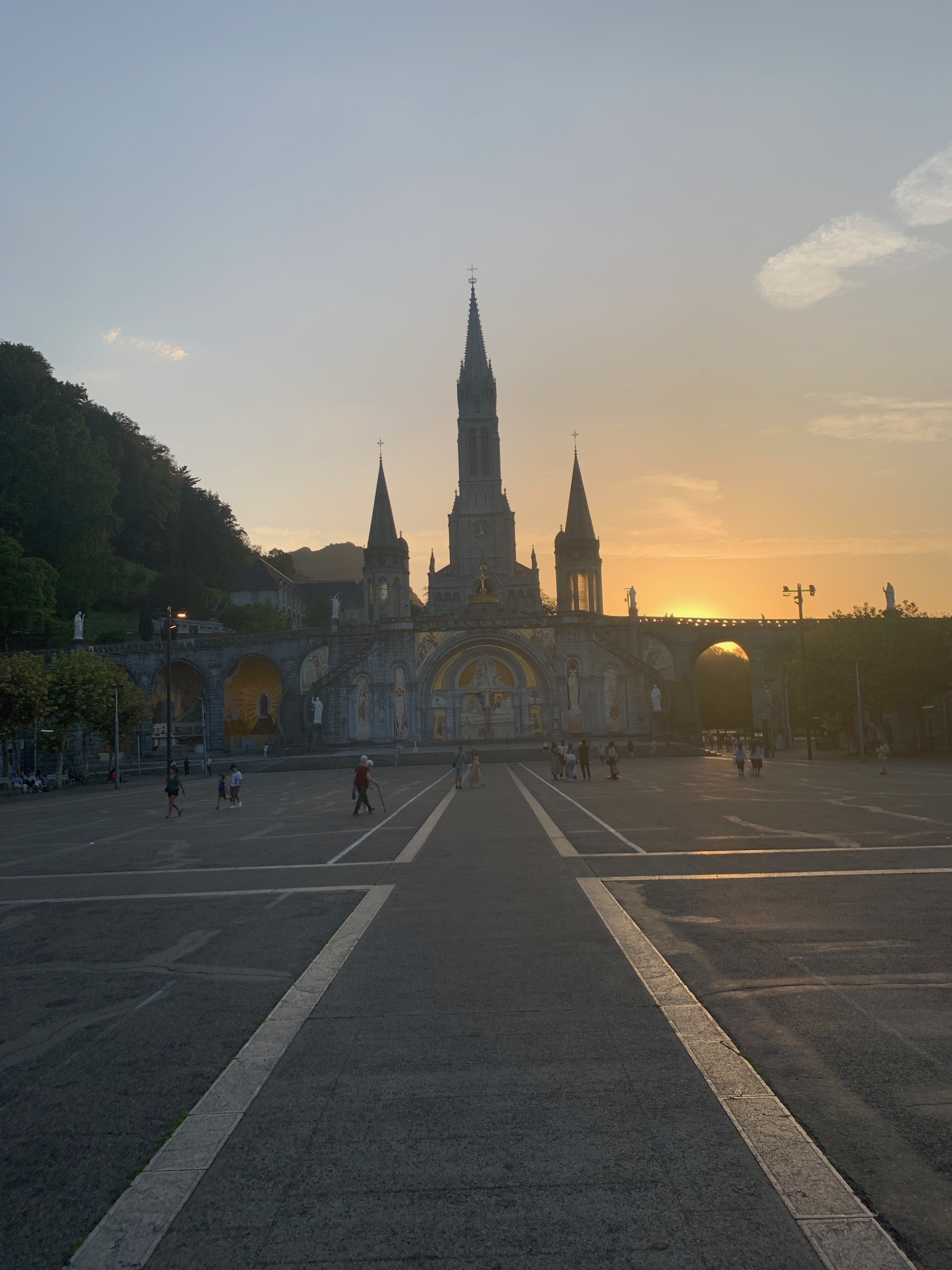
One of the most lasting memories from Lourdes must be the participation in a candle light procession. Hundreds, perhaps thousands, of people walk around the huge square in front of the Basilica while praying the Ave Maria in a dozen or so different languages, singing the famous Ave Maria of Lourdes, and carrying candles protected by little paper cups – which at times, and especially when it becomes too windy, end up in flames. At the end of the procession, Pádraig had a front row seat, being able to see the choir and lectors, and observing the groups from different countries as they were arriving with their flags and banners for the closing ceremony.
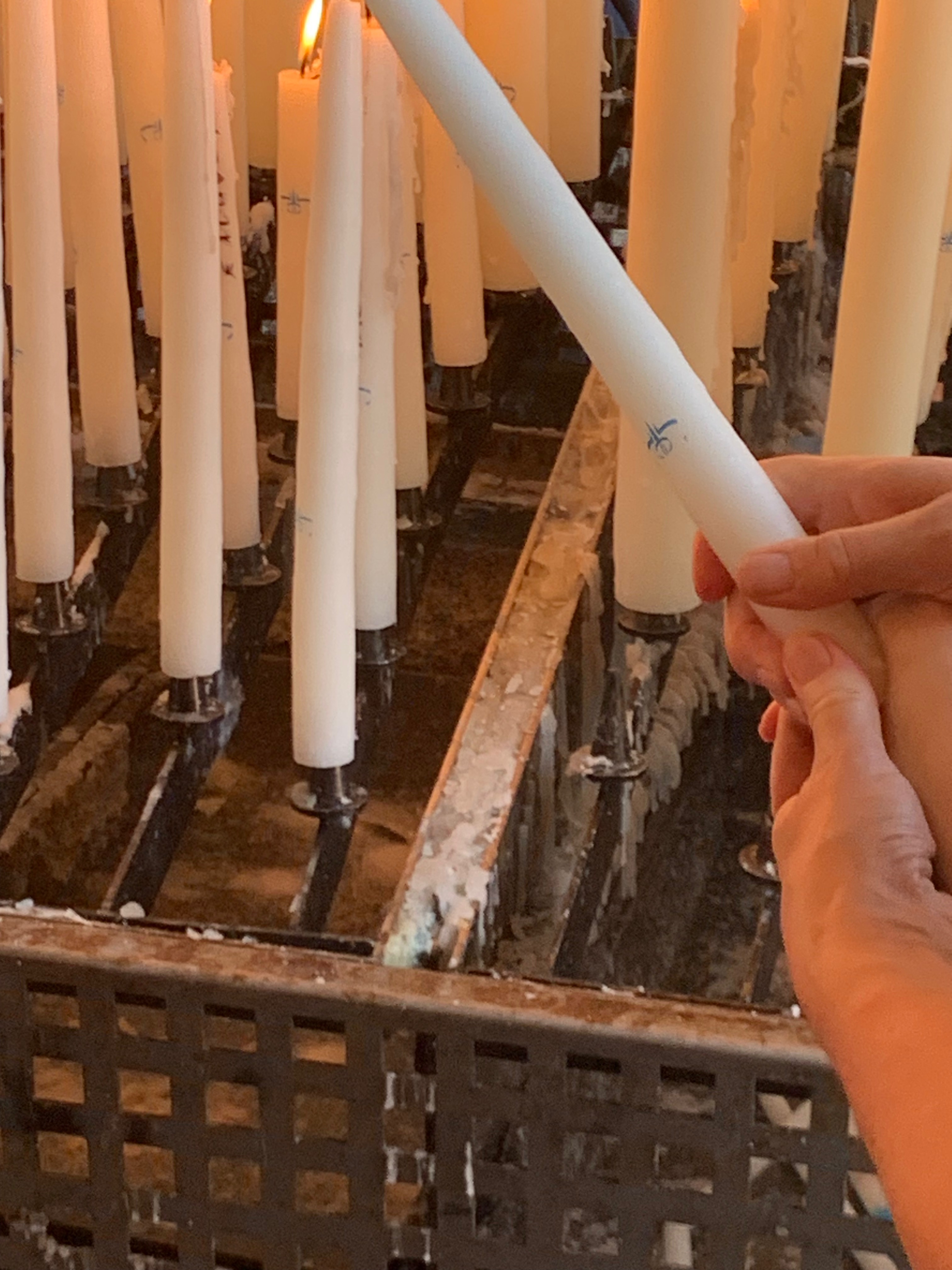
Before going, Pádraig had been asked by a few people to light a candle for them in Lourdes. Another century-old tradition. Hundreds of candles of all sizes are burning day and night in Lourdes. When they’ve burnt out, their remaining wax is collected and recycled. The heat of the candles burning is so intense that some melt and bent before they had a chance to burn up fully.
In a strange way, Lourdes changes me each time I’m there. I wouldn’t want to stay there more than those few days our journey usually lasts. And normally, life back home quickly takes over whatever impressions I had brought back home. Though – I am getting a feeling that some of these impressions are being transformed into something more lasting.
I’ll find out.
Only a day after having returned, I went to RehaCare in Düsseldorf. It’s branded as the world’s largest rehabilitation fair. It was also around the time that the Invictus games Prince Harry had opened earlier were coming to an end.
Right on arrival, I was reminded that Germany is much closer to Ukraine than far away Ireland. A country-wide alarm was trialled which did not just sound from the rooftops but from every mobile phone around. Maybe it was meant to make you feel more secure – in my case it achieved the opposite.
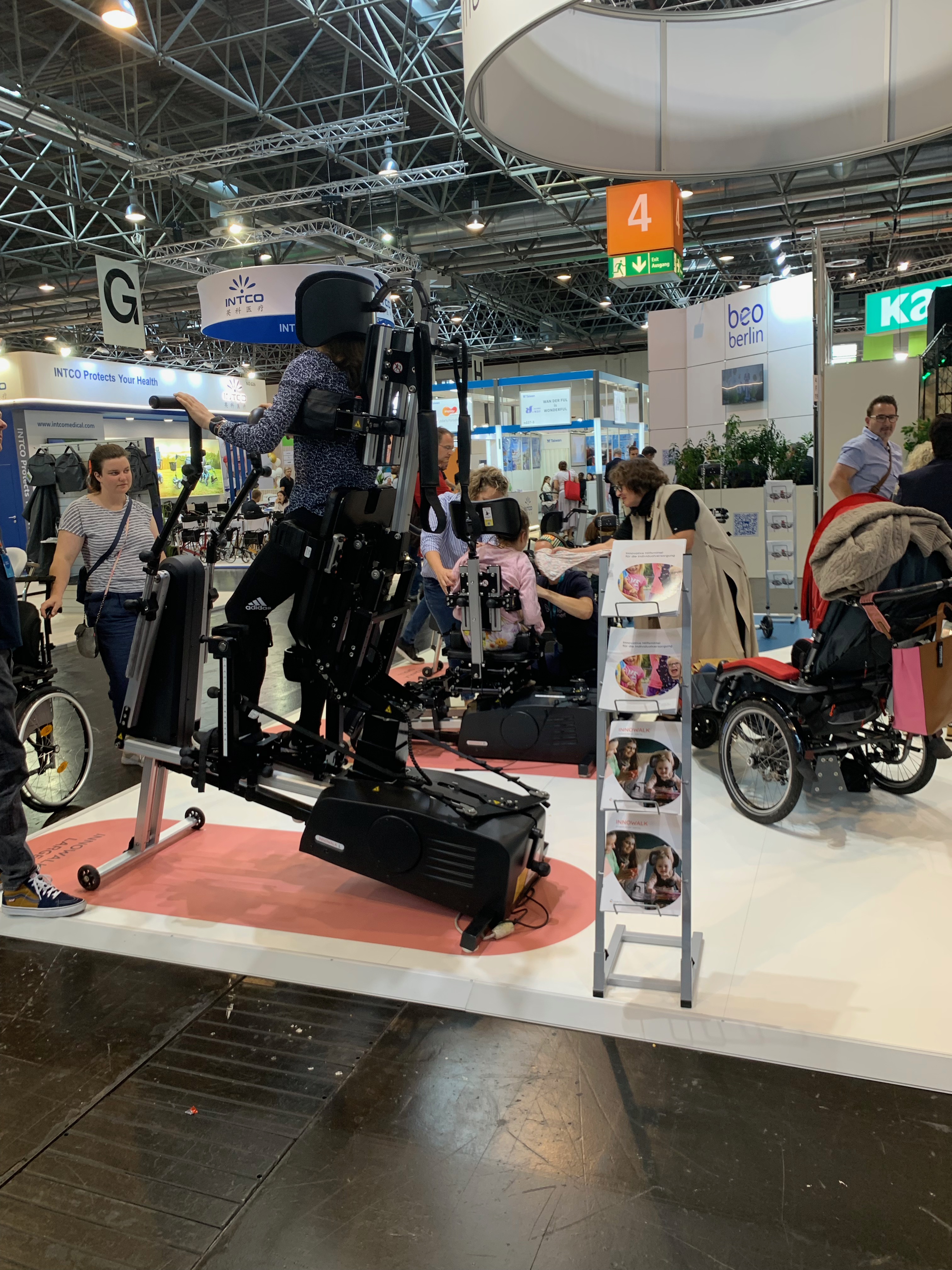
RehaCare made my head spin. There was everything you could possibly imagine for people with disabilities, and more.
Here is a short, less than two-minute, video impression from my two-day visit.
I could easily have spent at least another day there.
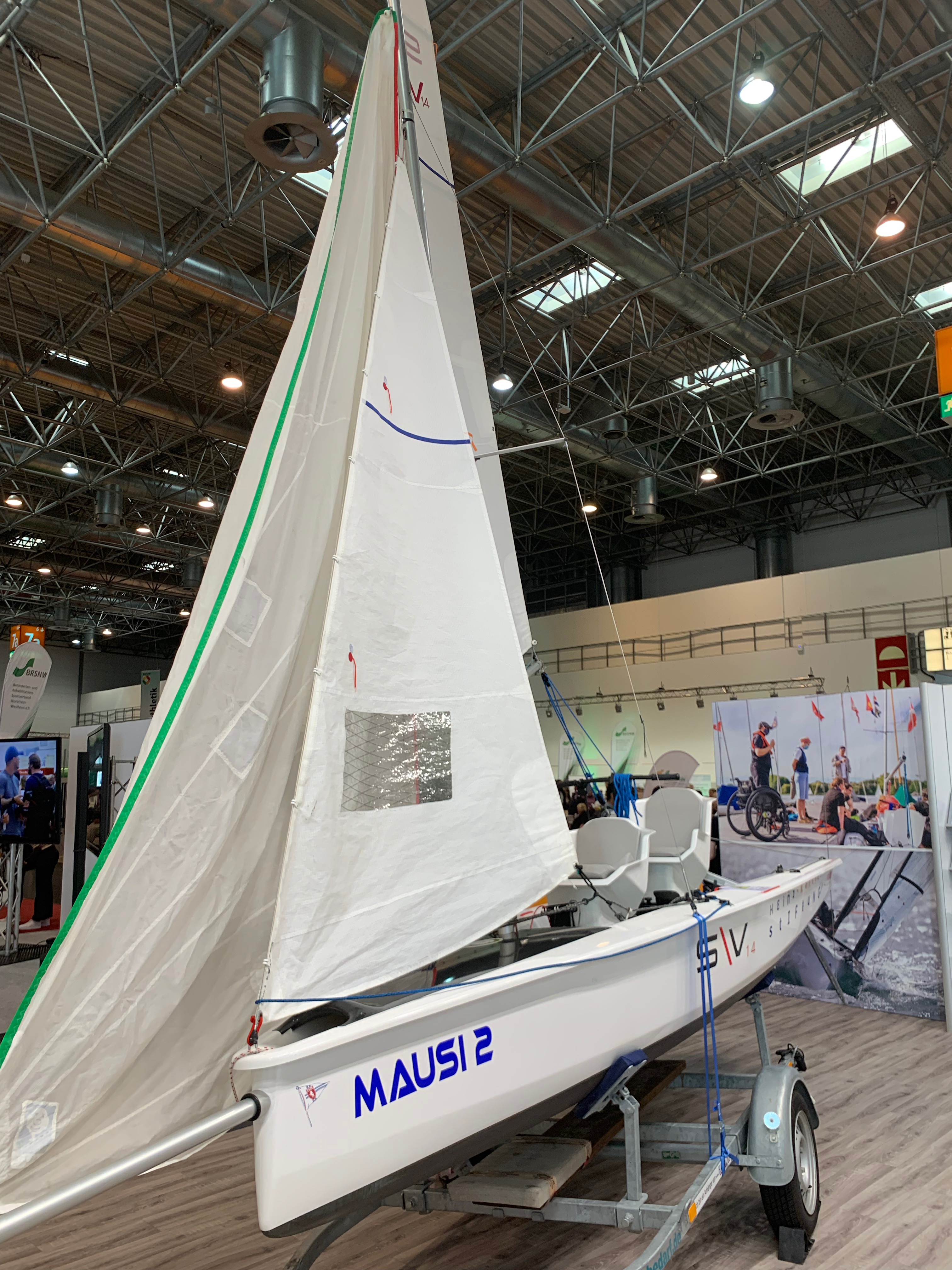
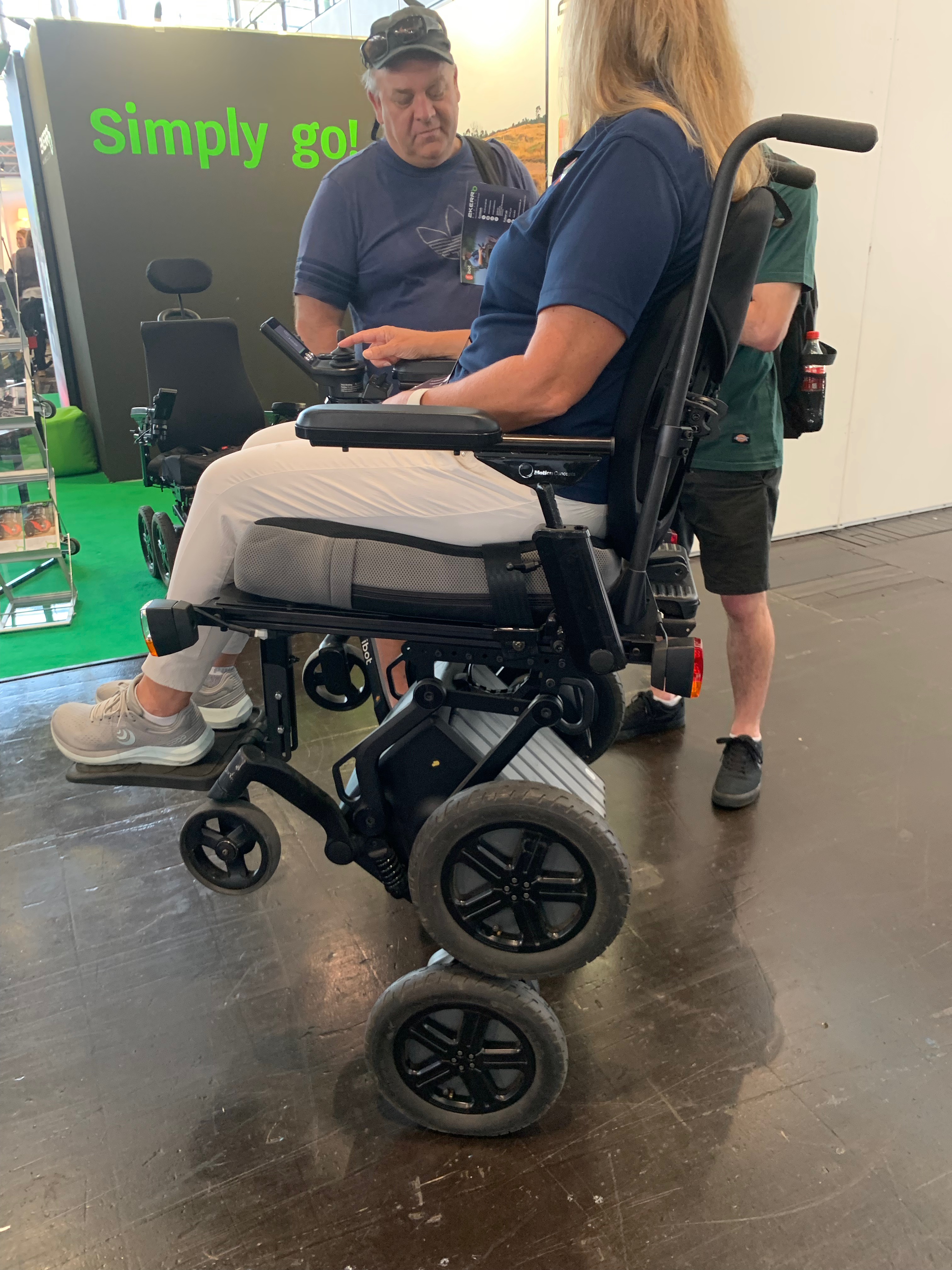
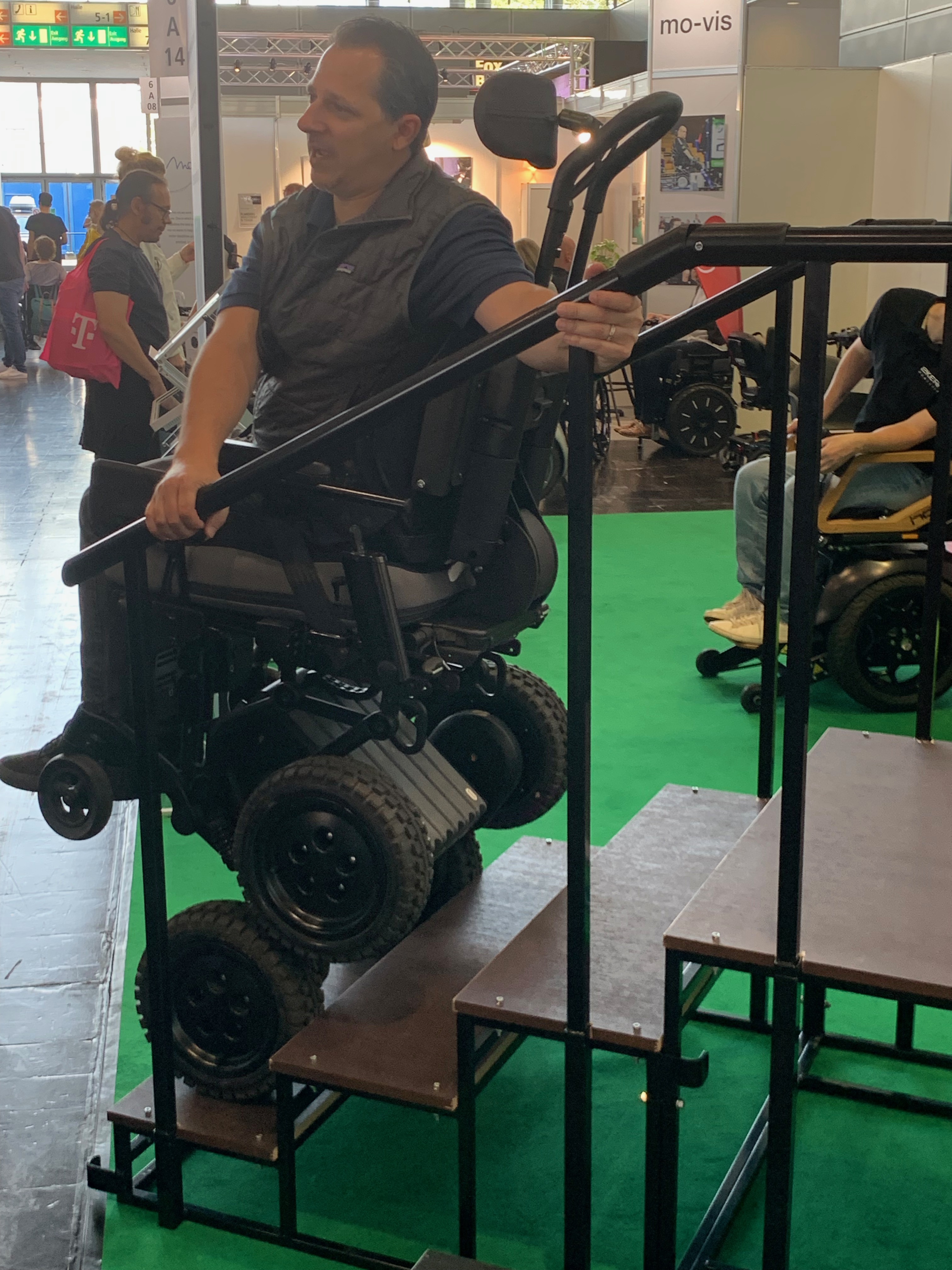
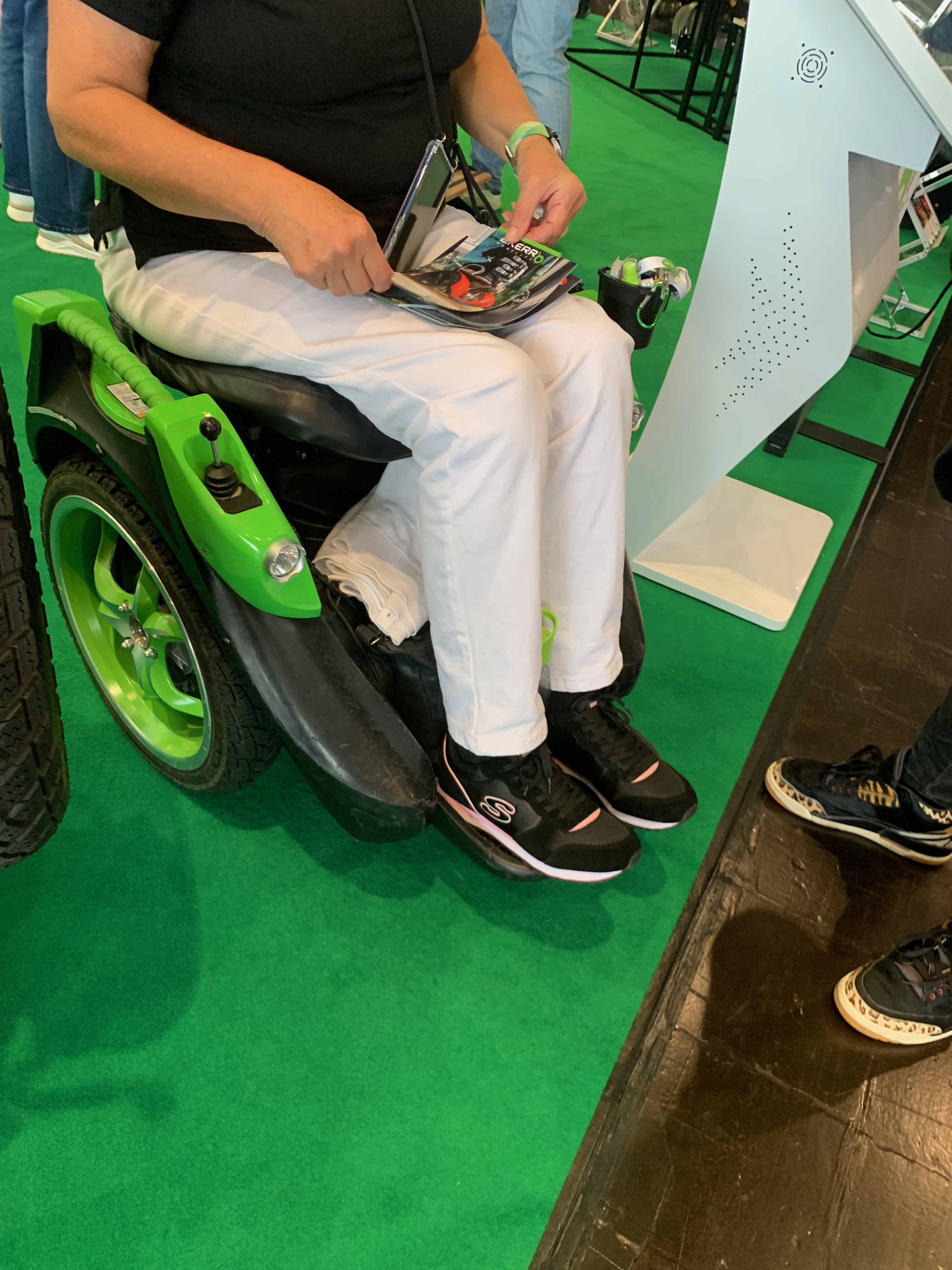
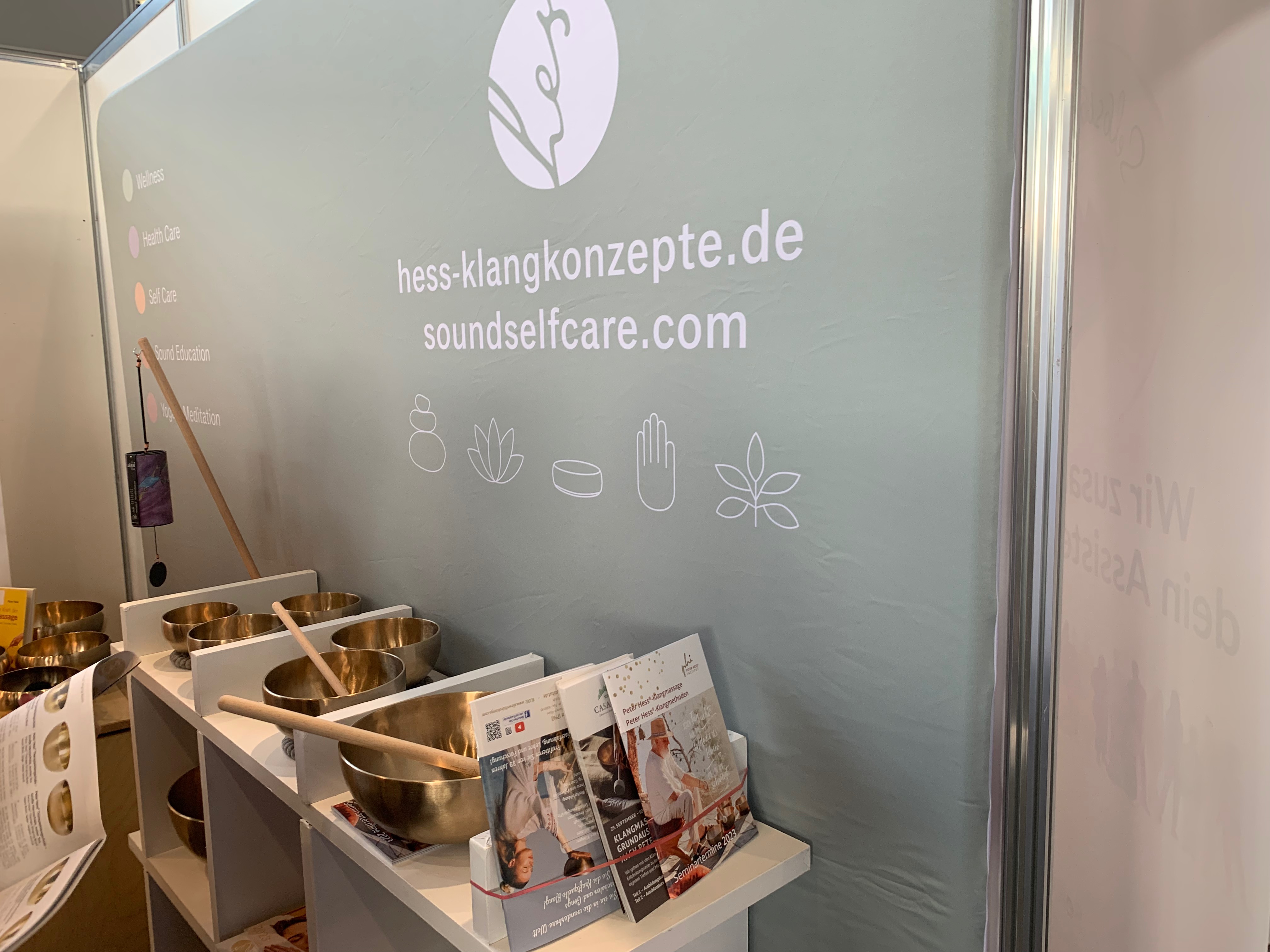
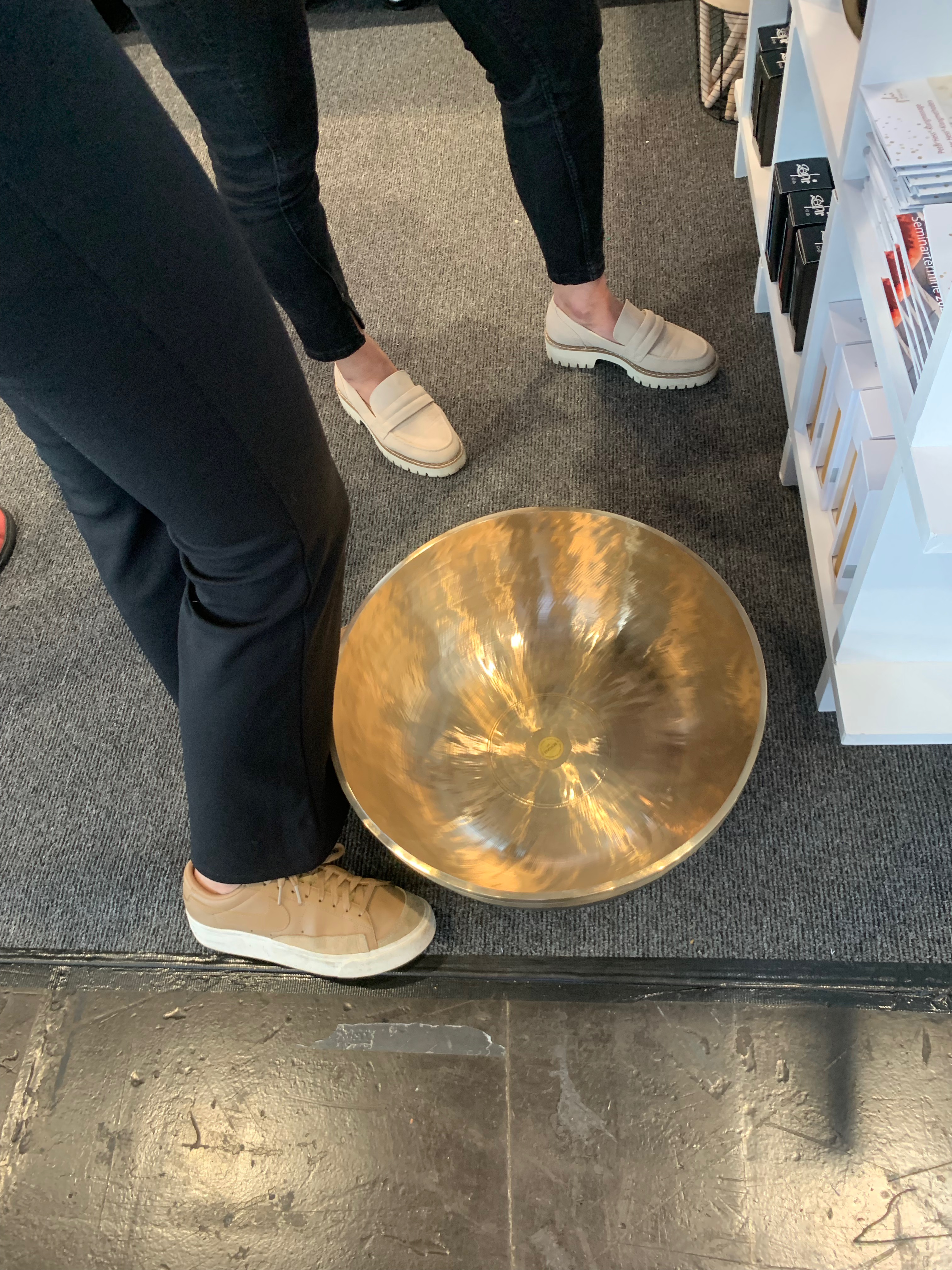
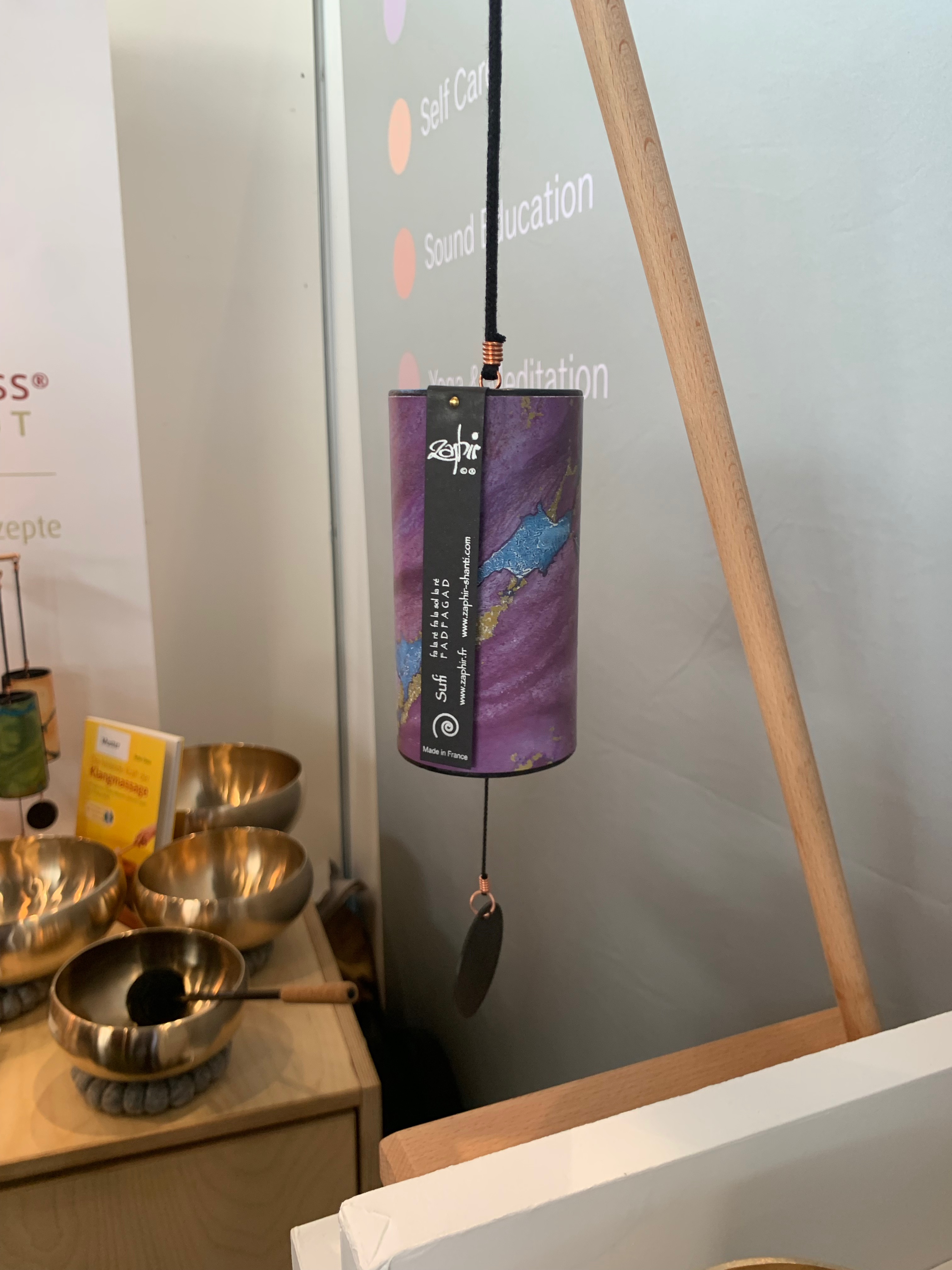
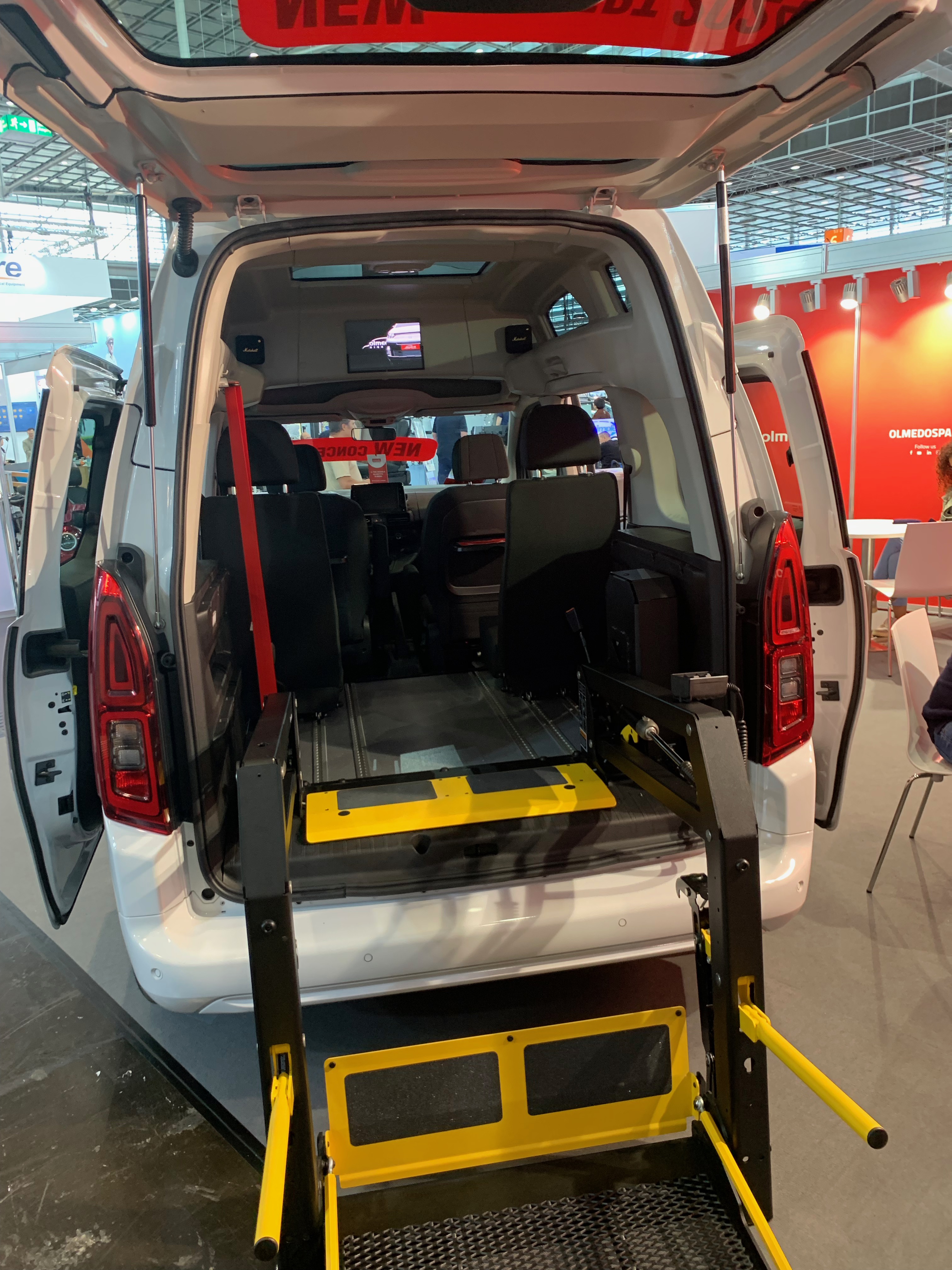
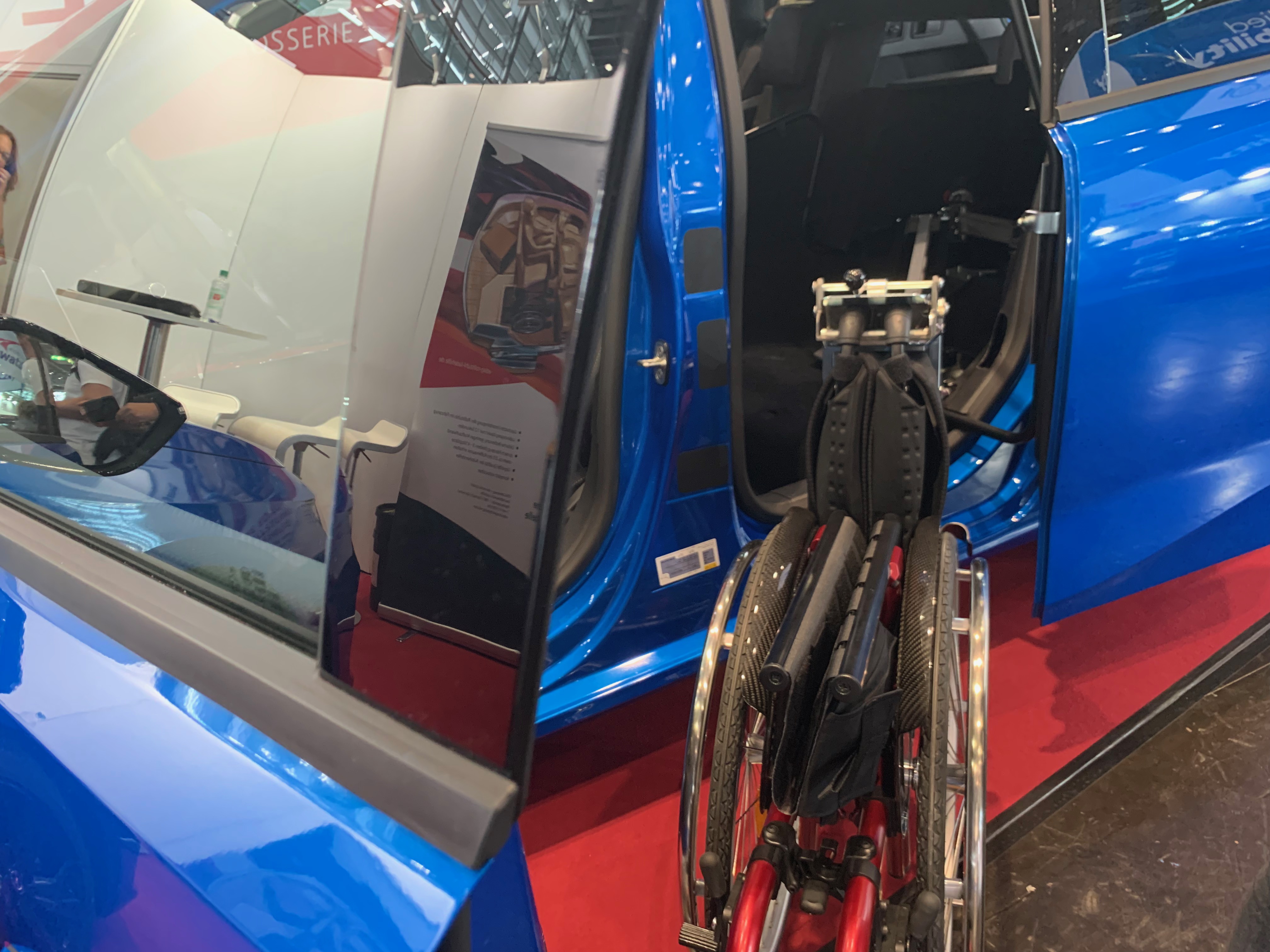
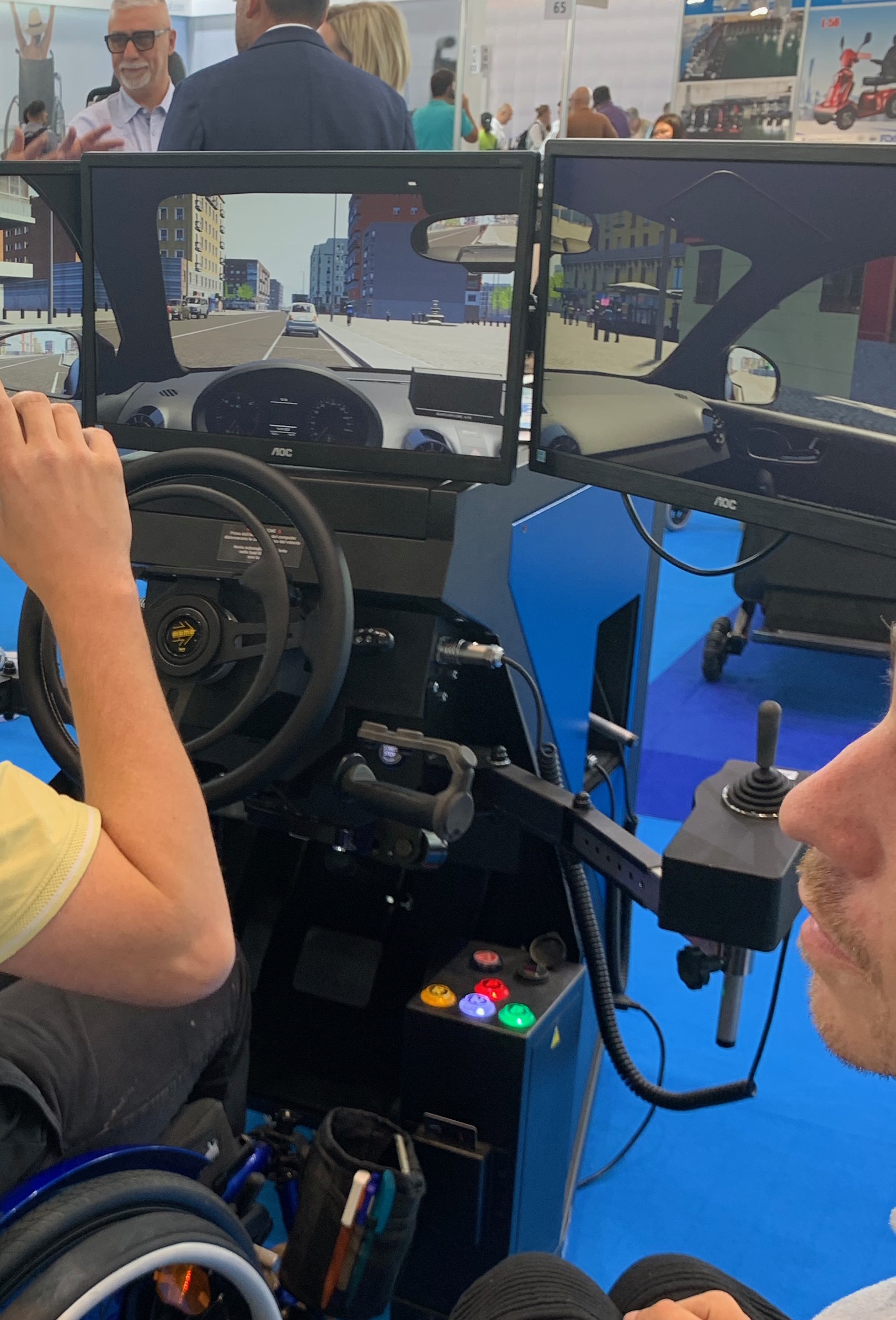
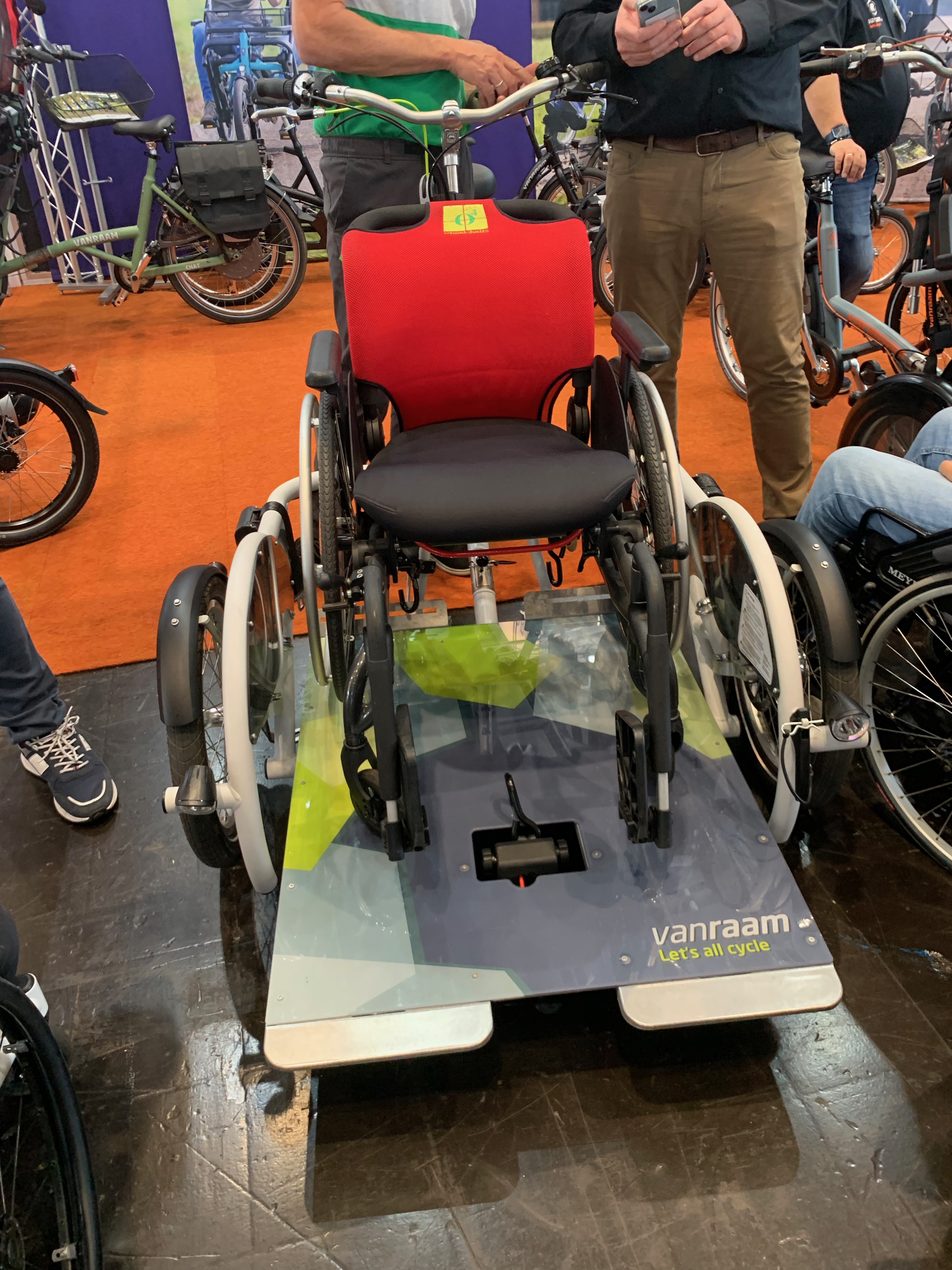
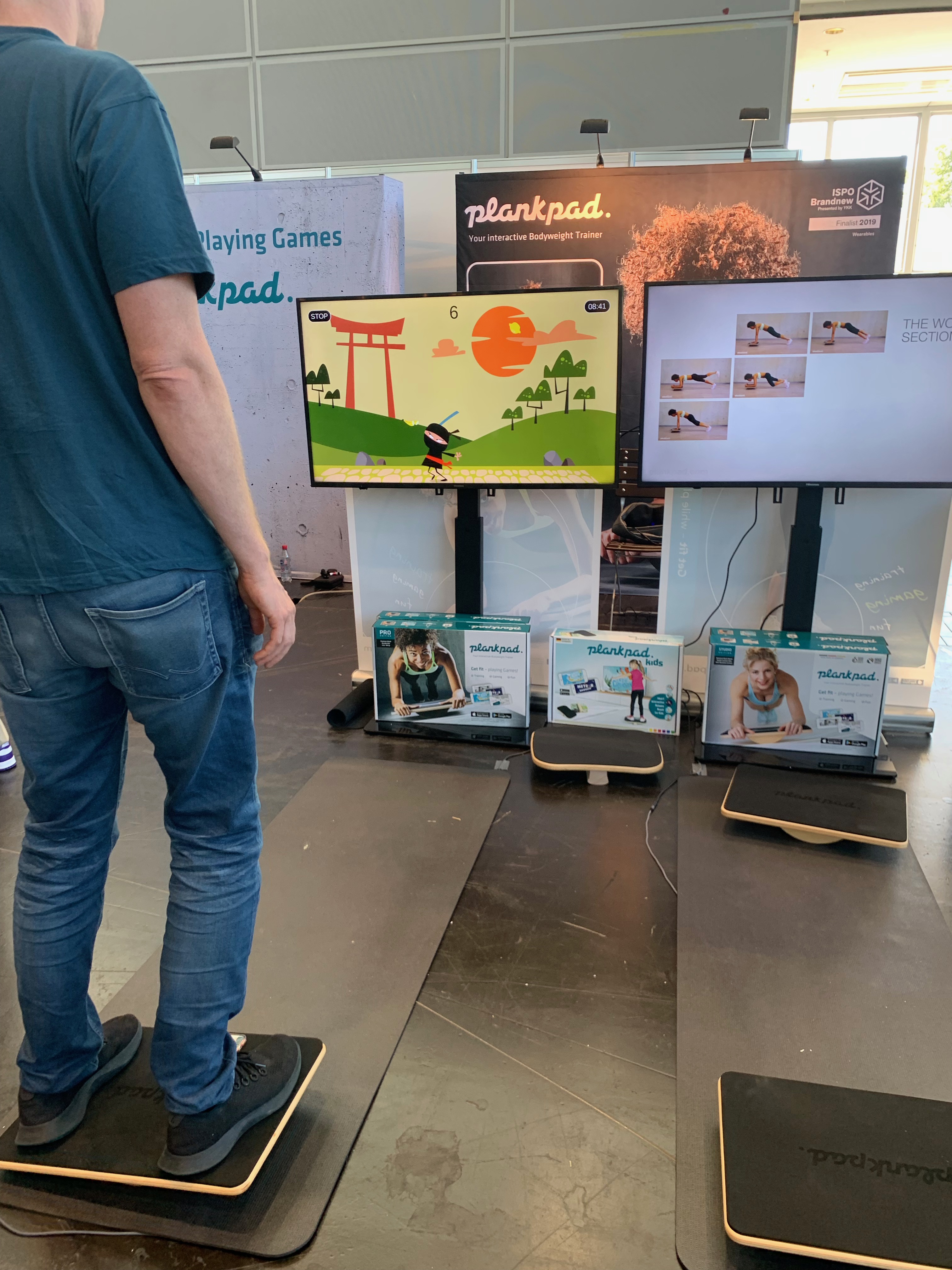
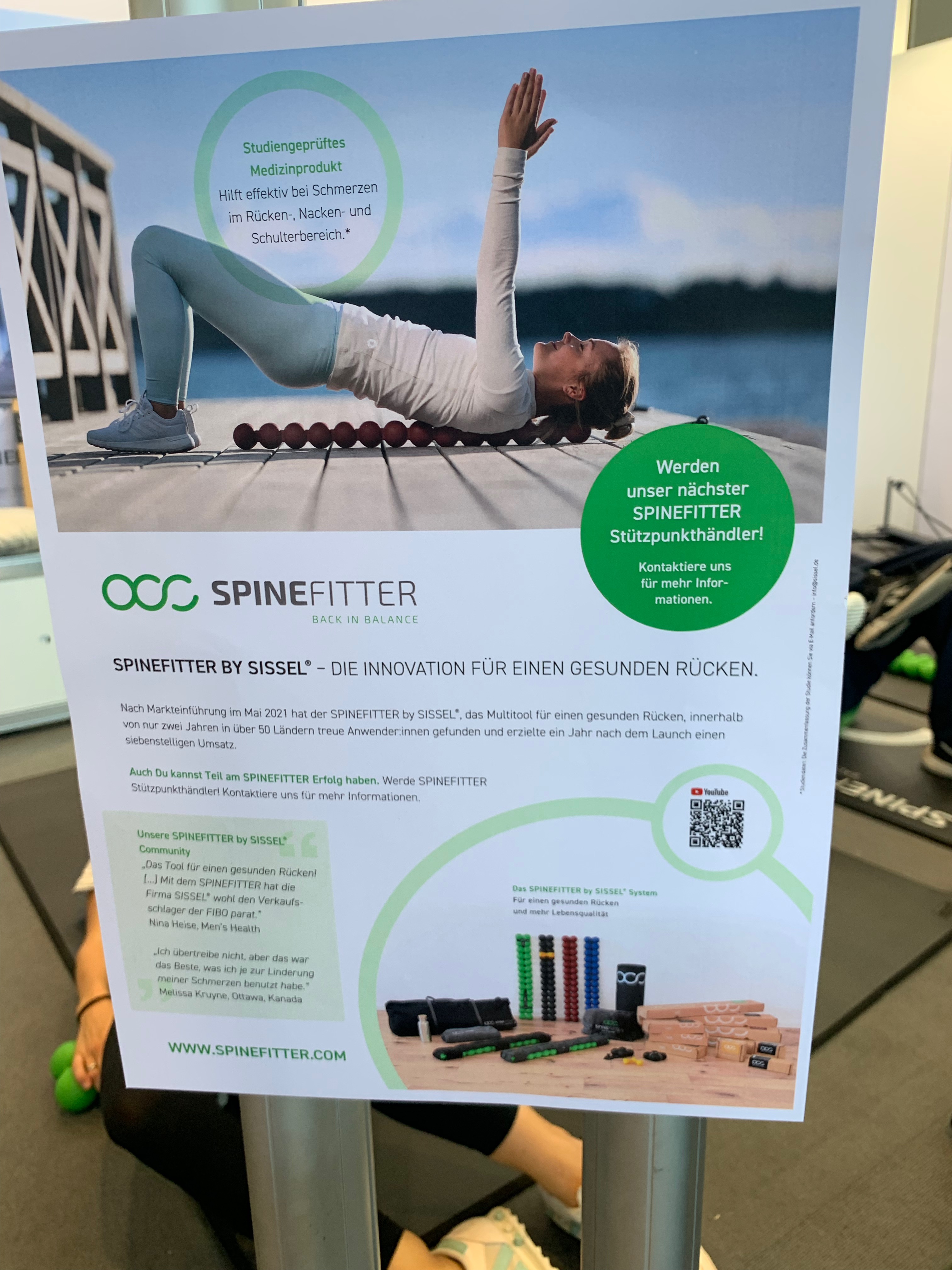
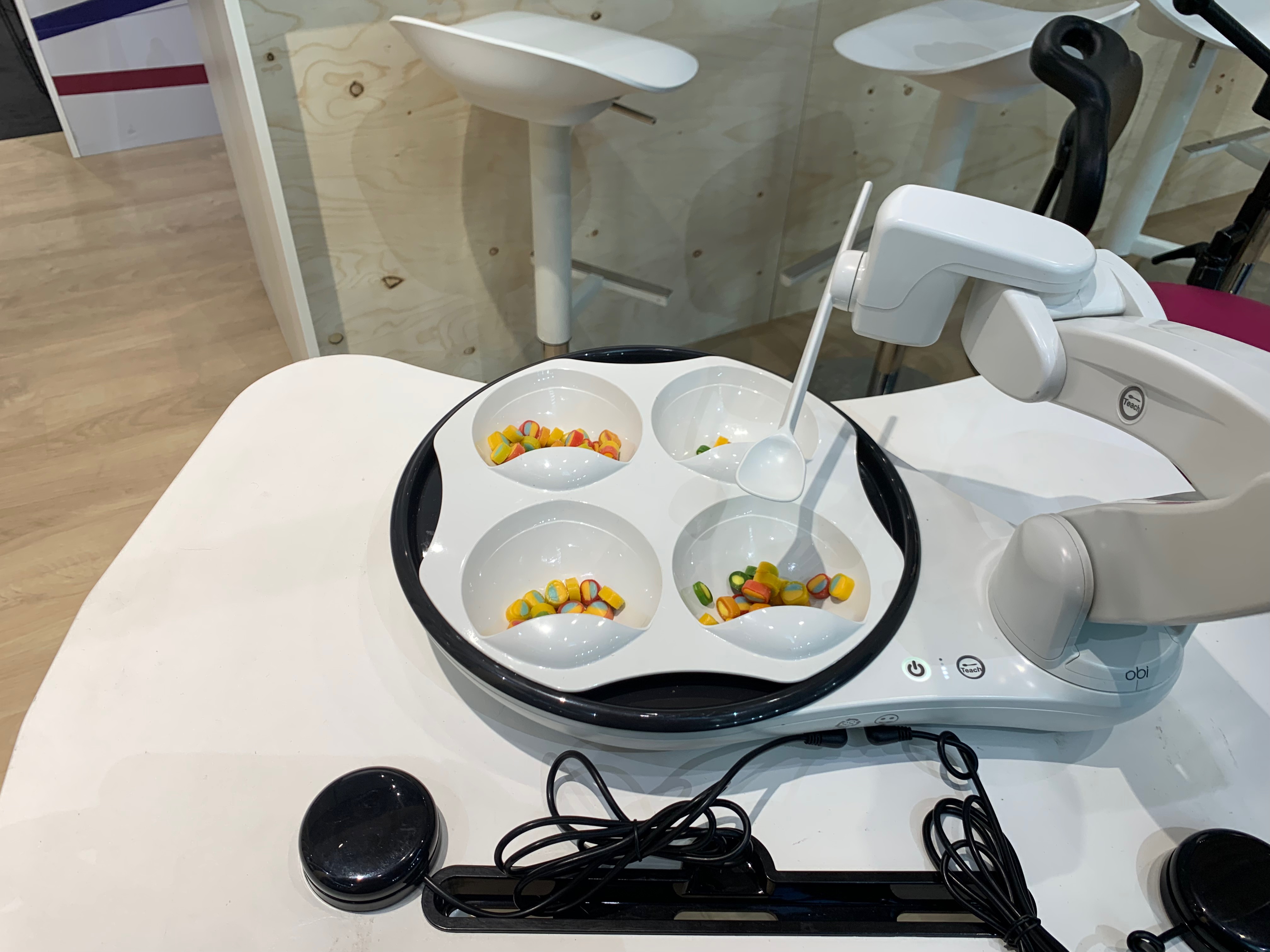
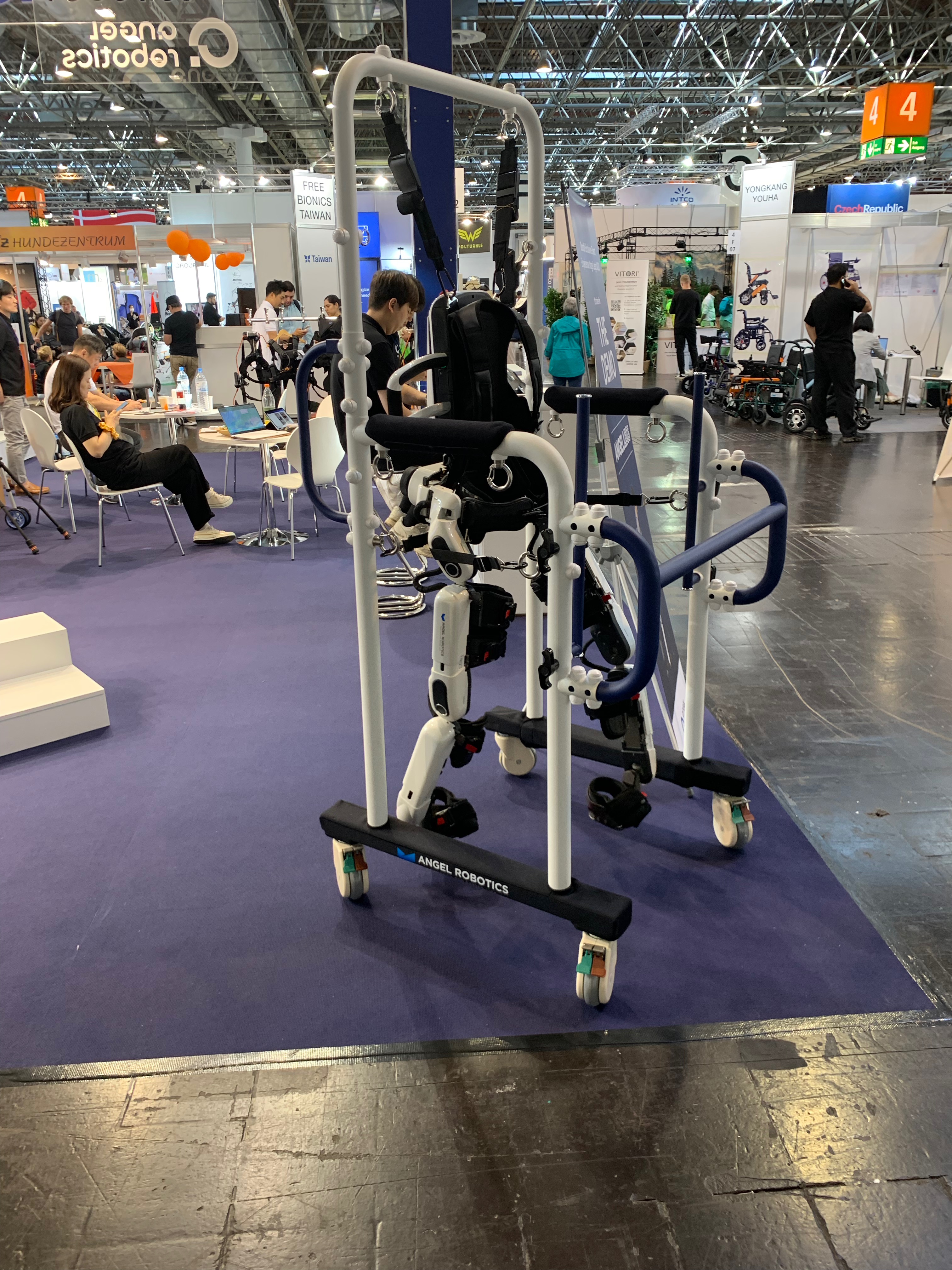
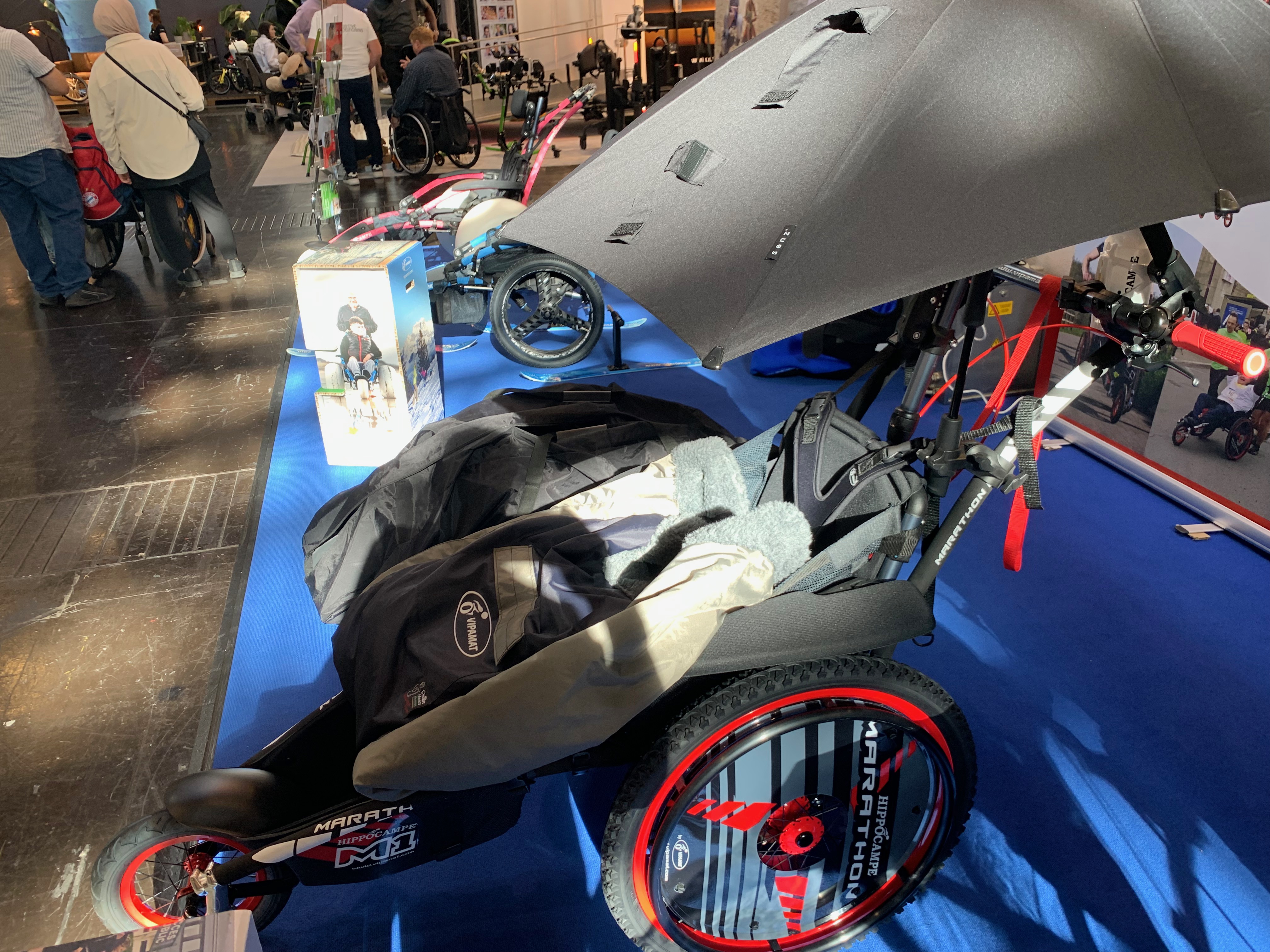
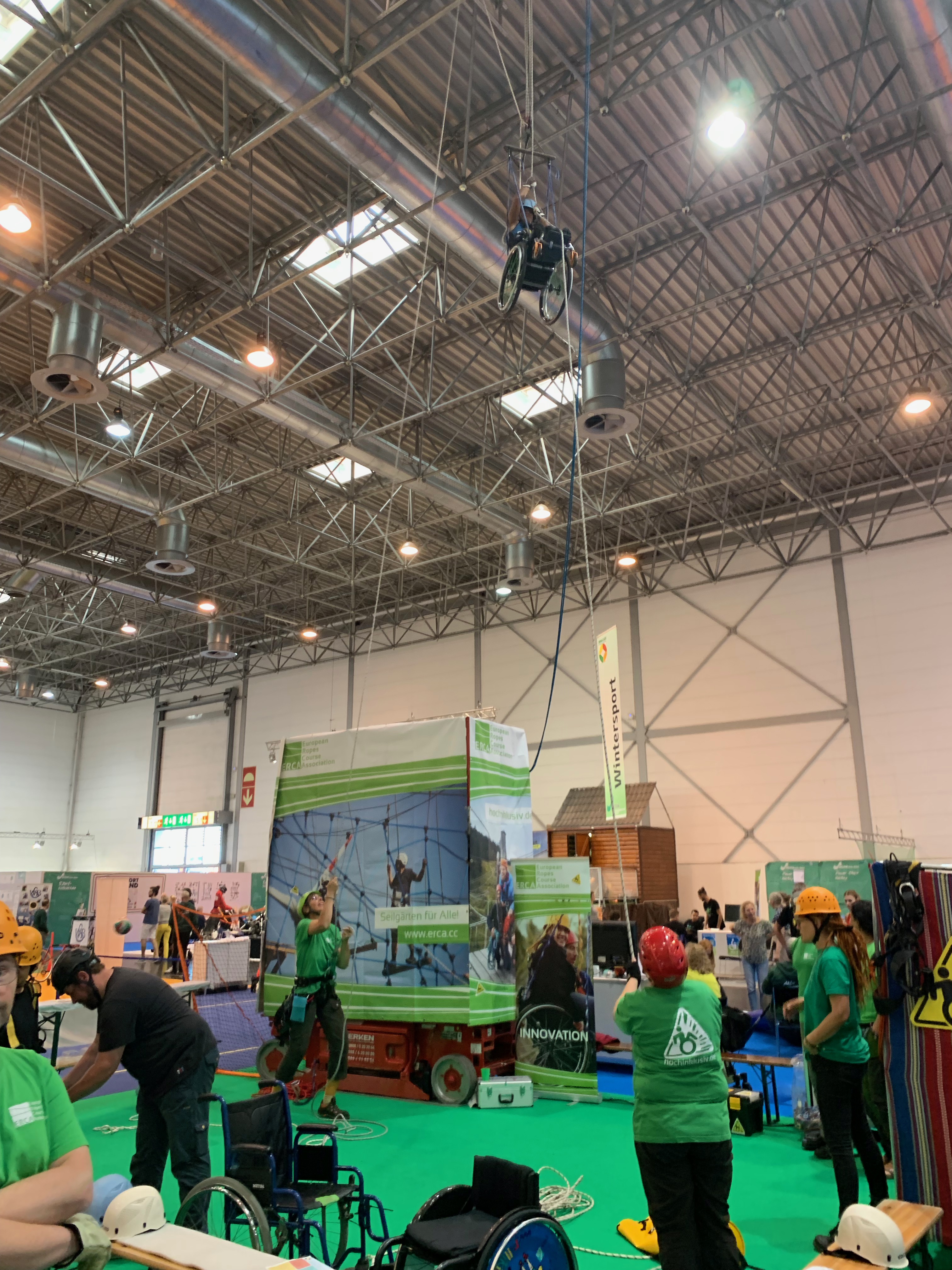
There were sailing boats for assisted sailors, built in China at an affordable price and exhibited by the Münster Sailing Club; a dozen different sports on offer to people with different abilities from soccer, to cycling, to trekking; there were wheelchairs running on just two wheels if you wanted to get up the stairs in that chair; adjustable tables; foot warmers; nepalese ‘singing bowls’ for sound and vibration therapy; wheelchair accessible cars with robotic arms to store your chair away in the boot; a wide range of bicycles that carry wheelchairs; devices that looked as if they had been taken away from torture chambers; as well as brain-computer-interface games and competitions, balance training aids, and robotic arms able to bring food or drinks directly to your mouth. There was a glove, developed by students from the technical university of Aachen, which sensor your fingers’ movements and converts them into electronic signals allowing you to play games by just moving one or a number of your fingers.
What really made RehaCare for me, however, was being able to meet long-standing friends, many of whom have not just supported Pádraig and our family, but also the development of the An Saol Foundation and its Santry-based Centre.
One example of a chance encounter I had almost a year ago was with a small company manufacturing something that looks, at first glance, incredibly simple – but turns out to be quite sophisticated when you look a little closer or, even better, try it out yourself.
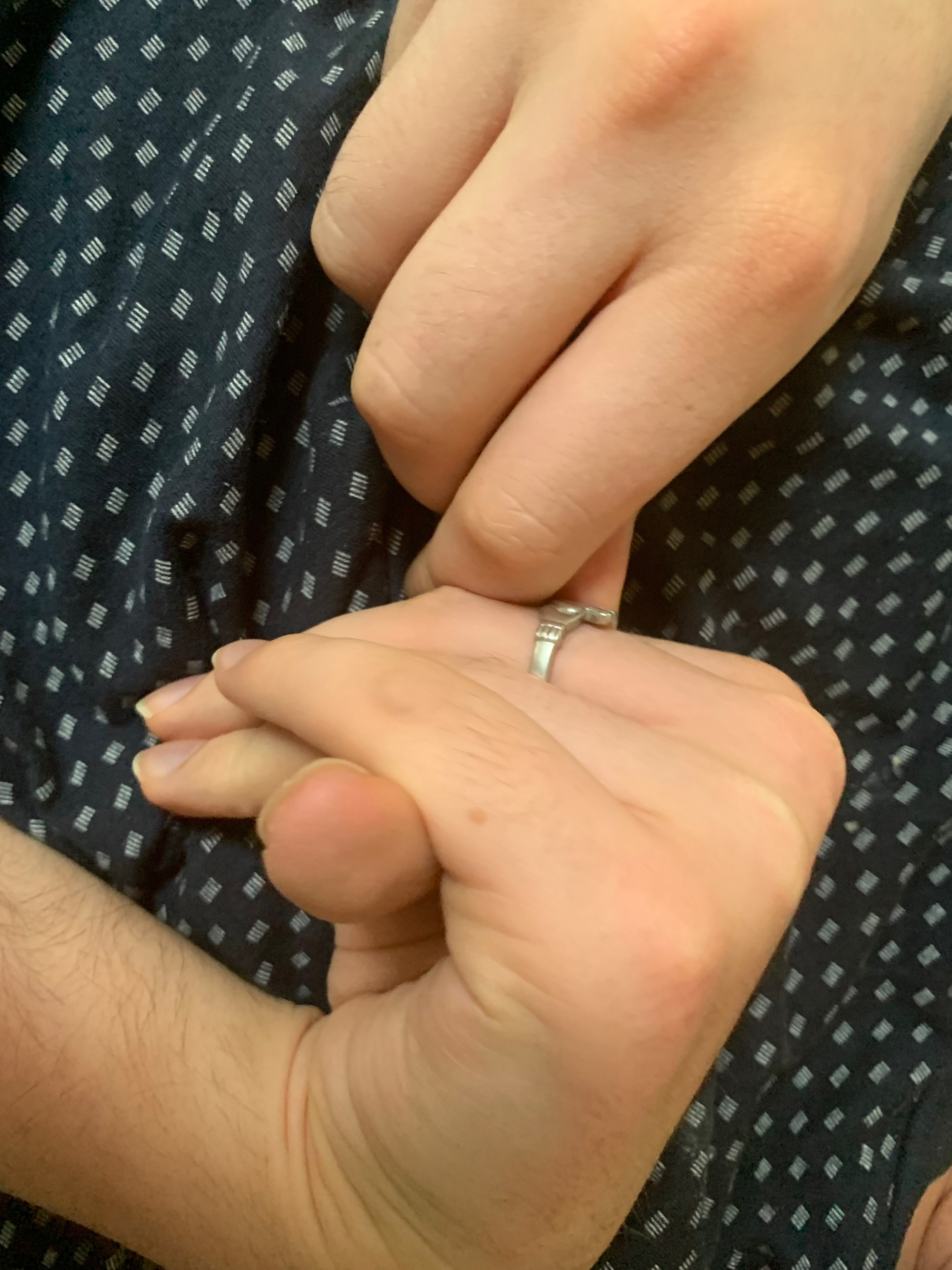
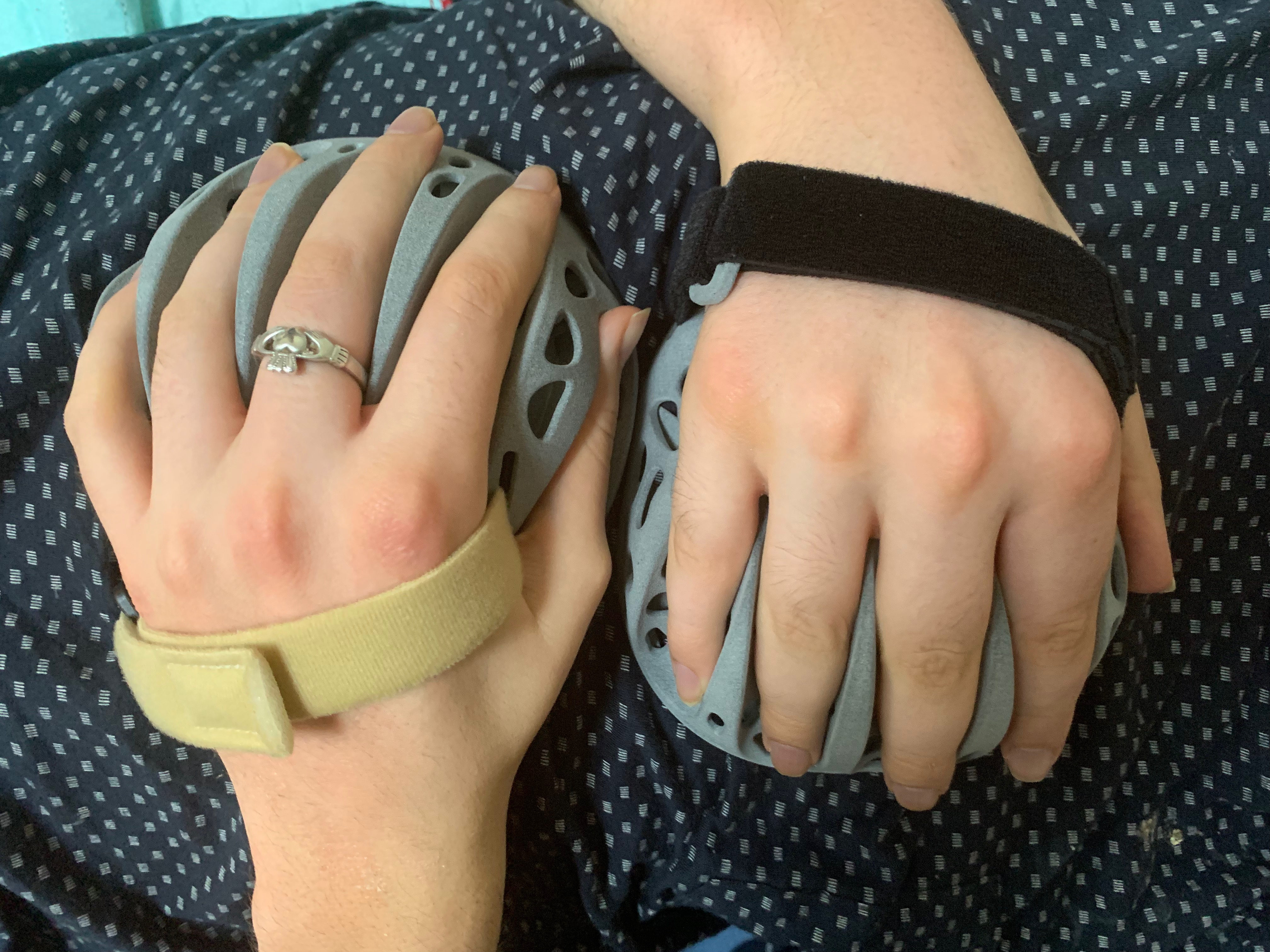
Here is what I mean. Just look at both of Padraig’s hands with and without the “Handscupe“. He can use the Handscupes when he is cycling – though they are much better for relaxation. “Yoga for the hands.”
The Handscupes are manufactured in different sizes to fit different types of hands. They are not just used in a clinical environment but also by professional high performance sports people, e.g. basketball players, for recovery and relaxation.
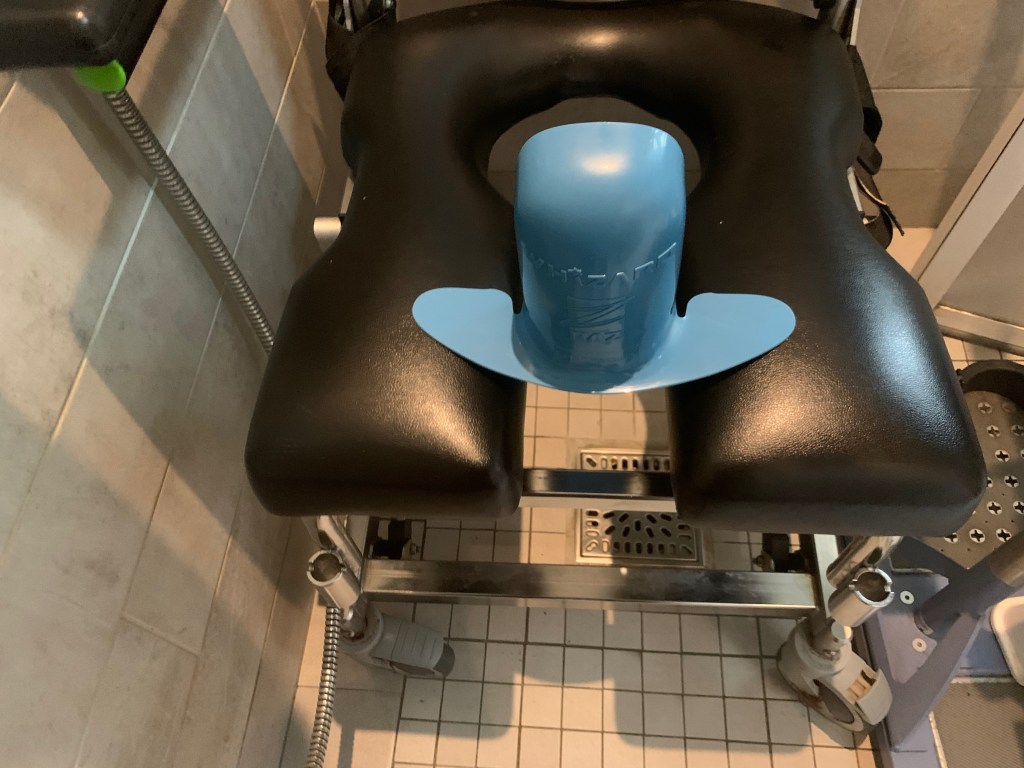
Or checkout the simple blue block I found at the RAZ shower and commode chair stand (Pádraig has one of these chairs for his showers) which can be positioned and removed in a second, and which will prevent Pádraig’s legs slip between the open gap in the middle.
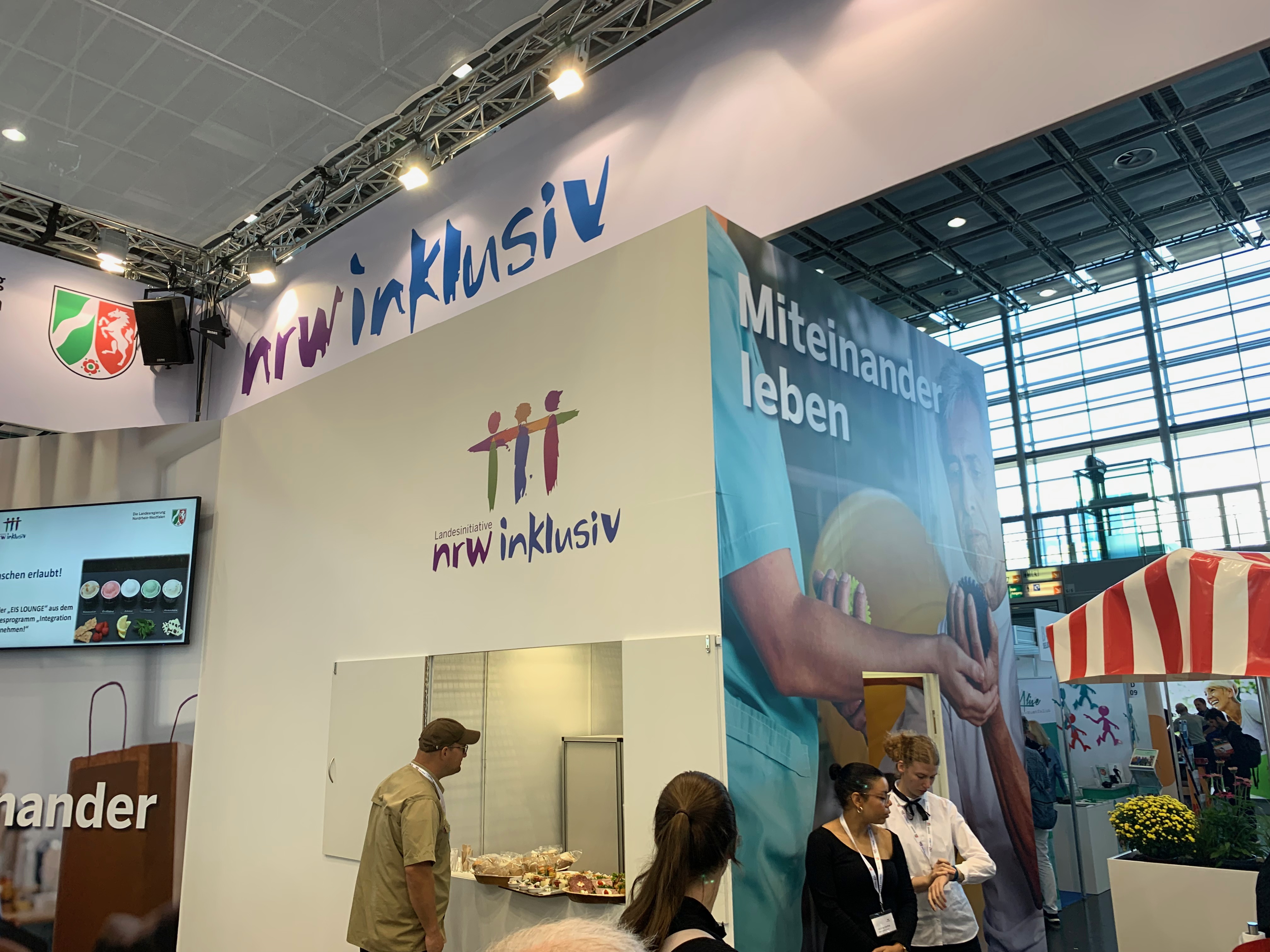
For the first time ever, this yearI spent hours collecting information and talking to organisations who support people to plan and realise assisted living arrangements. Several models have been developed by different organisations across Germany over the past decades.
It was a mind opener to hear people describing mixed living arrangements with people from all sorts of different backgrounds, different ages, and different abilities. All realised by the most appropriate and suitable ownership arrangements: from private ownership to local government-owned, to cooperative driven.
There is no doubt that these models will guide us when we develop our own ideas for assisted living spaces with the An Saol Foundation.
Unconquered. – Because:
We are the masters of our fate: We are the captains of our souls.
We must accept finite disappointment, but never lose infinite hope. But I know, somehow, that only when it is dark enough can you see the stars.
Martin Luther King, Jr.
Back in Lourdes.
This time, we’re back with the fantastic group from the Dublin Dioceses. This time, the Accueil is open.
Many of Pádraig’s old friends are back too.
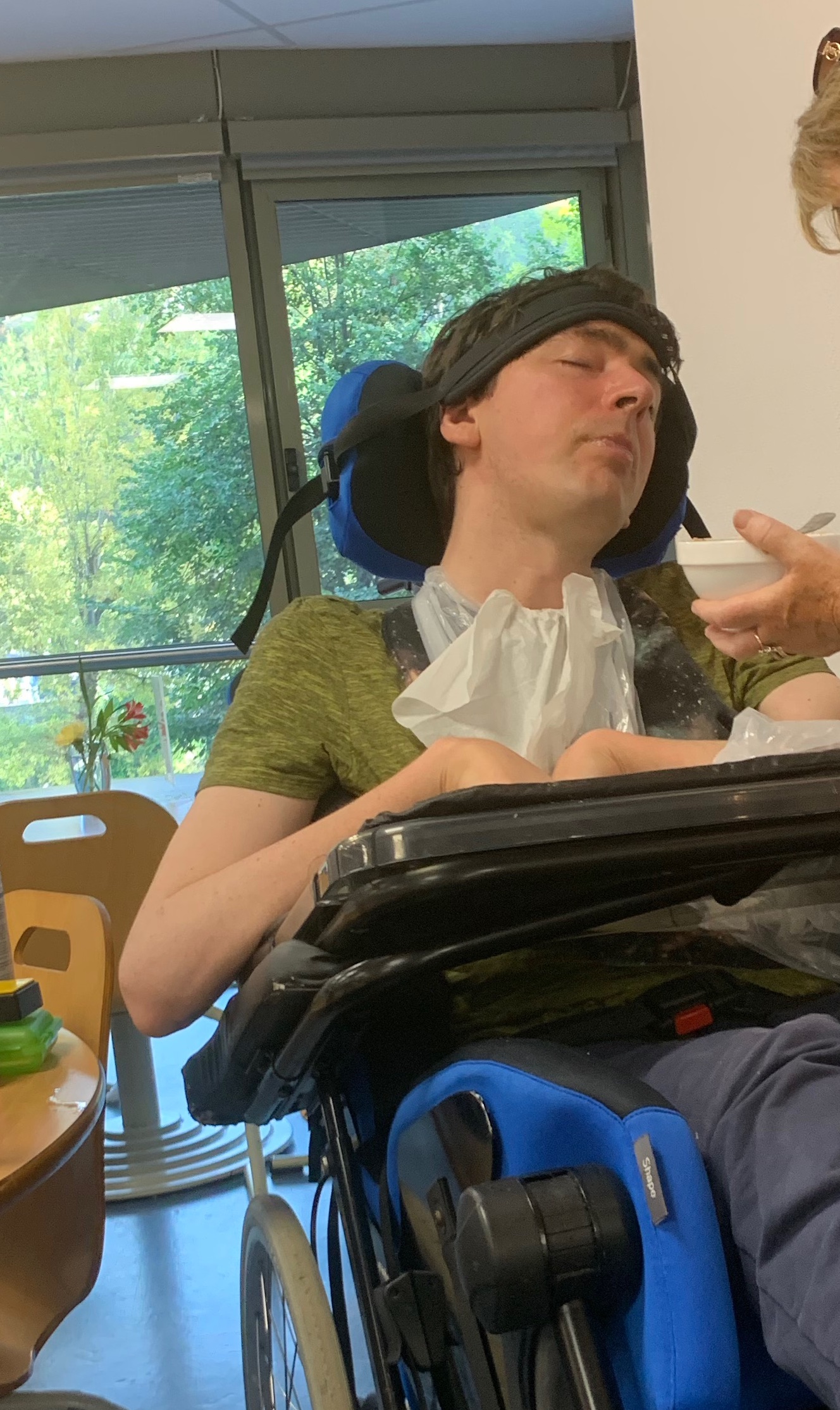
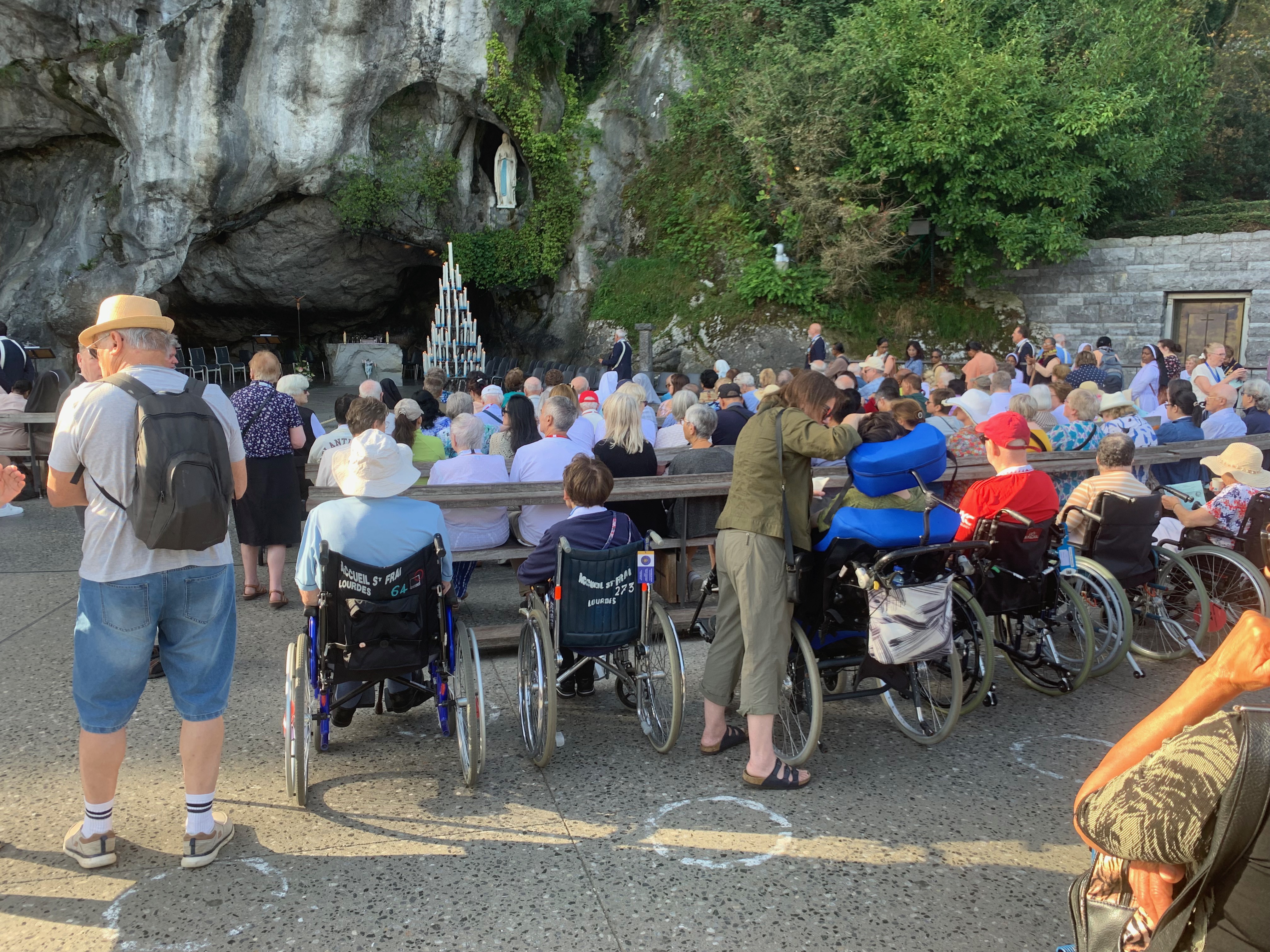
Whatever I think of the town and its pretty tacky shops, the commercialisation of organised religion, there is an atmosphere of calm and spirituality, it’s out of this world, and there is an attitude towards people who need our help that would be very difficult to find anywhere else. There are dozens of helpers who took their holidays and paid for their trip over to give a week to others. Some of them have been coming for decades.
It’s exceptional in so many different ways.
Hope is being mentioned every day. For whatever reason, I always felt ‘hope’ was something passive: you sat down and ‘hoped’ for the best.
Paul’s letter to his friends in Rome made me think again. He wrote, some time ago, that people who do not give up are helped. And that as we are getting this help when we not give up, we should be tolerant with each other and be united in mind and voice. Treat each other in a friendly way. That way, we’d live with joy and peace, and all boundaries of hope are be removed.
So, hope is anything else but passively sitting down and ‘hope’ for the best. It’s about not giving up. It’s about finding not just strength, but joy and peace. Fun.
Last Tuesday, Pádraig and the An Saol Foundation Centre were in the news again, when the Irish language news team interviewed Maria in relation to the recent Ombudsman report “Nowhere to go”.
Pádraig, unlike those mentioned in the recent Ombudsman’s report, Nowhere to Go, luckily had a place to go to.
It seems that not much has changed since we were asked in a Dublin hospital, just a few weeks after Pádraig’s accident ten years ago. which nursing home Pádraig was going to go to.
Our answer was clear. Although, then, we didn’t have much more to go on than our hope.
As it turned out, Paul in his letter was right: We were helped because we did not give up.
We didn’t loose hope.
Maybe because it was dark enough so that we could see the stars.
To be is to be perceived (Esse est percipi). Bishop George Berkeley (1685 – 1753)
Or, “If a tree falls in the forest and no one is there to hear it, it does not make a sound”. Meaning that, basically, unless someone is there to witness something, that something does not exist. That is if you follow the Bishop’s thinking. Your seeing creates the reality. The other way around is also true: reality does not exist unless you create it.
The disasters and wars in the world exist for us, because we see the footage on our TV screens. The horror I am experiencing does not exist for others because they don’t see or experience it.
Now, sometimes, we believe what others tell us. Often because of their “authority”.
I almost believed a specialist doctor, an expert in his field, that Pádraig would have an “intolerable life” but that he could make other people’s life so much better by donating his organs.
Peter, about two thousand years ago, walked on water because he believed in himself. He believed he could do it and walk on water. When the winds became too strong and the waves too high, he began to doubt in himself, he became frightened, lost faith and hope, and he nearly drowned.
Have a look at what Pádraig managed to do over the past week. For me, he walked on water.
The first ‘first’ was pretty cool and has big potential.
Pádraig bent his knees and then pushed himself up a few times while semi-standing on a tilt-table. A brilliant, very functional exercise his therapists came up with recently.
That was wonderful. What he did next was even more spectacular.
We had asked Pádraig if he could do what he had seen someone else doing earlier in the week, someone who is also nonverbal: nodding and shaking his head for Yes and No answers. We had not tried this before because we never thought he could do it, given his relatively low head control. He surprised us. Again. – Despite the headband restricting his movements, he did it – for the first time since his accident. We will have to keep working on it. What a difference this will make for his communication!
Our reality is what we see and experience every day. It is not what some people are trying to tell us. People who seem to be somewhat out of touch with reality. Even though they see themselves as the experts.
Our reality is sometimes so surprising, so unexpected, and so brilliantly cool that walking on water doesn’t seem to be such a big deal anymore.
Once we learn not to be afraid of the wind and the waves, of what other people tell us, once we don’t allow them to make us doubt ourselves, our own believes, convictions, and capabilities, as well as our love of others, then we will be able to show the whole wide world that anything is possible, that giving up is not what we do, and that we can live our lives to the full. Walking on water is our easiest exercise.
Sometimes I come across words I haven’t heard in decades. Like Pillepalle. Or Kladderadatsch, Penne, Papperlapapp, Abzocke, Betüddeln, Koscher, Tratschtante, Nuhastewirklichnochalle eih?
The sign denying responsibility for all totally unimportant (but possibly largely over-rated) stuff made me smile. Wouldn’t it be nice not ever to be bothered by Pillepalle?
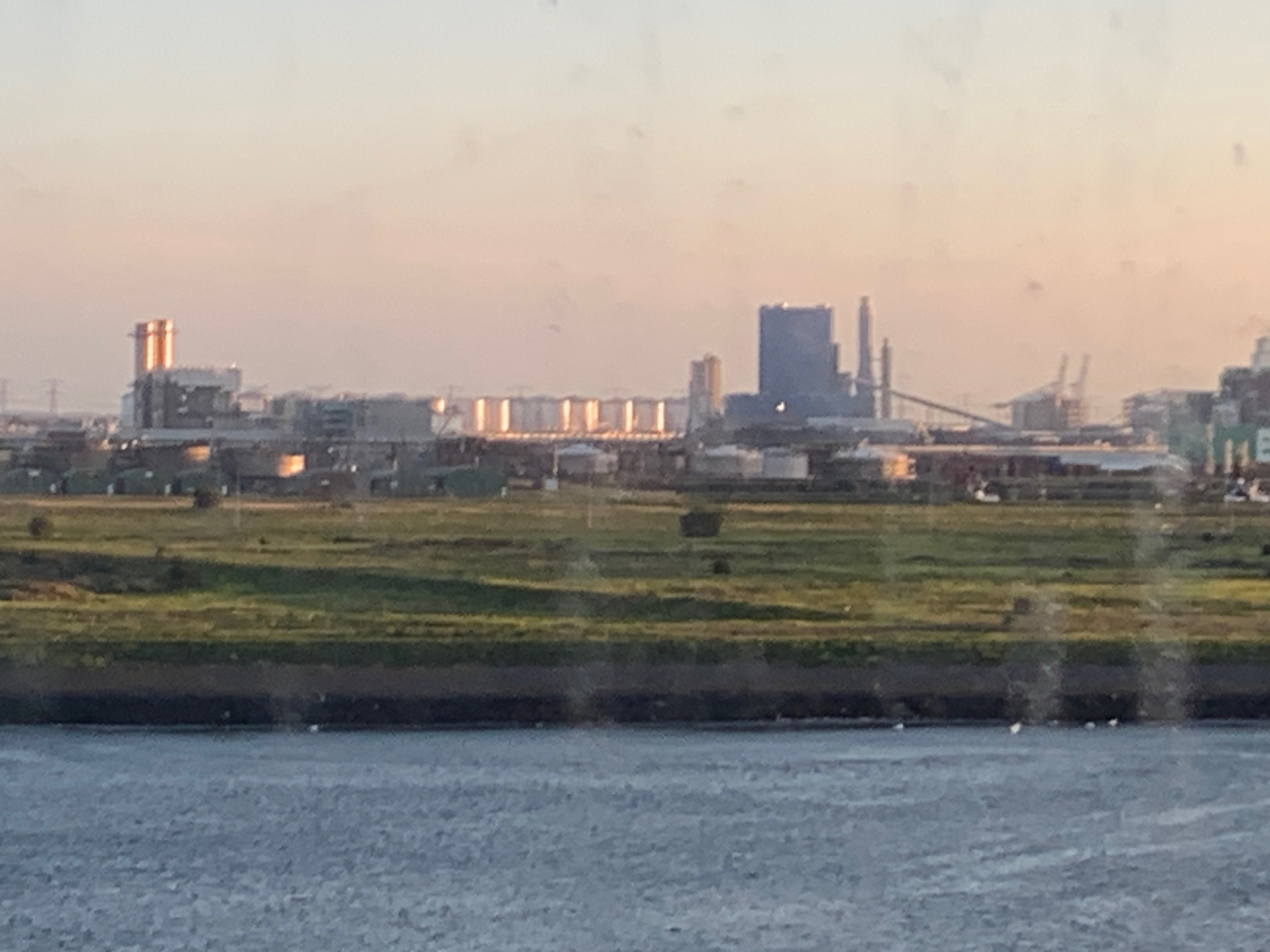
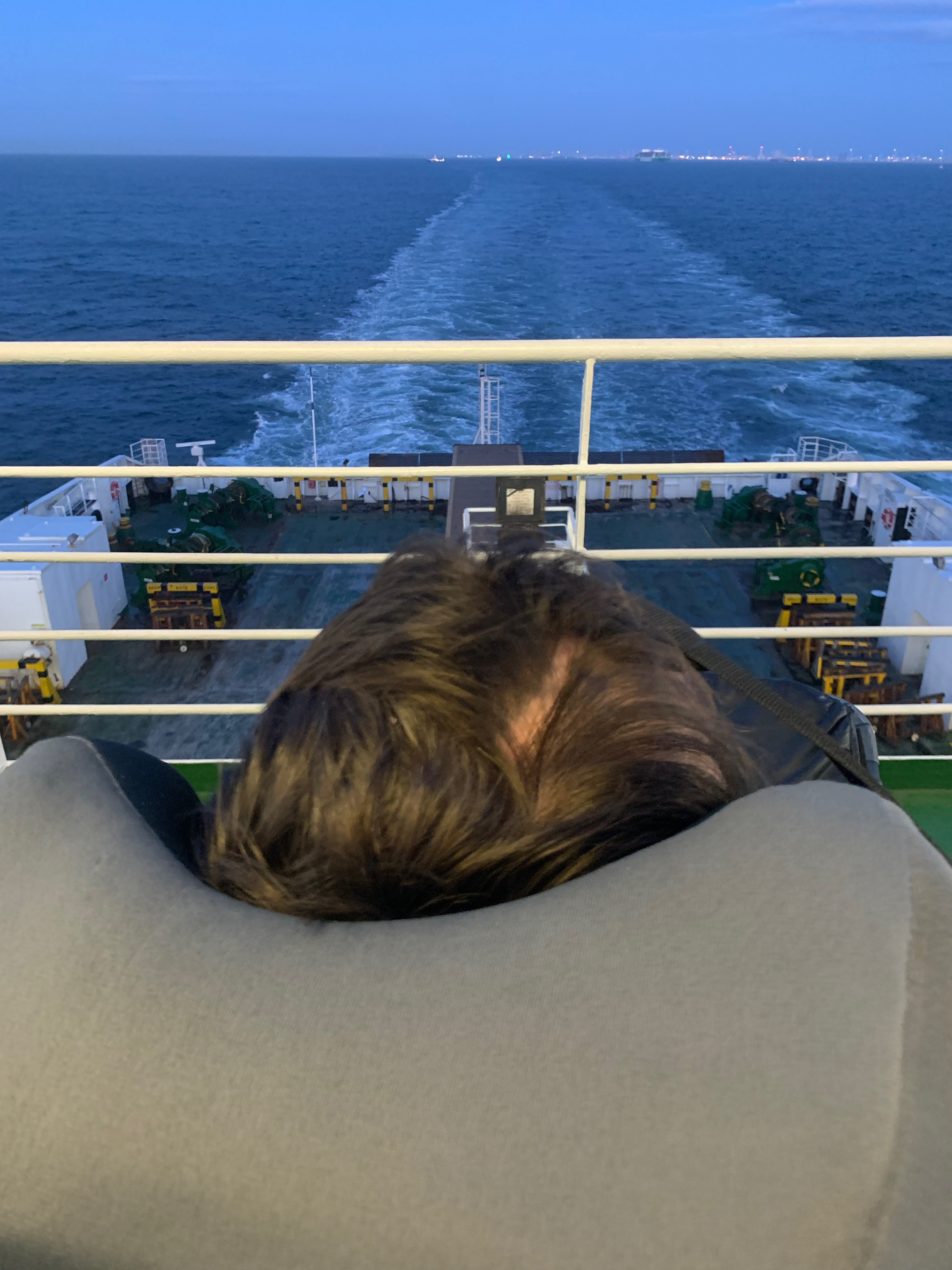
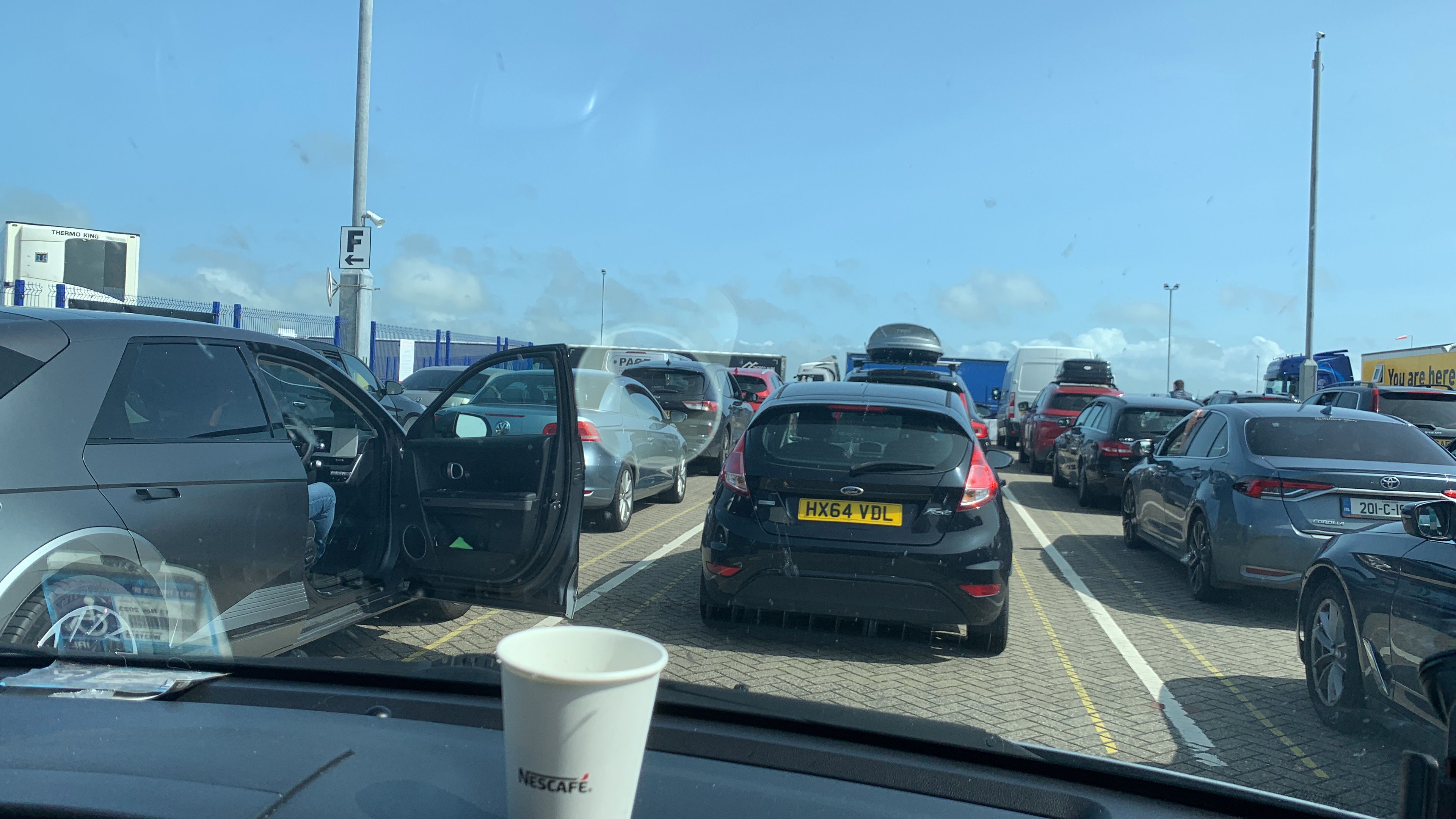
On the ferry from Rotterdam to Hull we thought, for a moment, that we came across the Ever Given who had blocked the Suez Canal not too long ago but realised, when we looked a bit closer, that it was the Ever Green. Still an impressive ship. We had a good time on the ferry, first spending some time on deck looking at the disappearing city and harbour on the horizon, then having a great dinner. Getting off the ferry is now always a bit of a waiting game: if feels like as if they not just checked but double and tripple checked each and every passport. So much for Brexit.
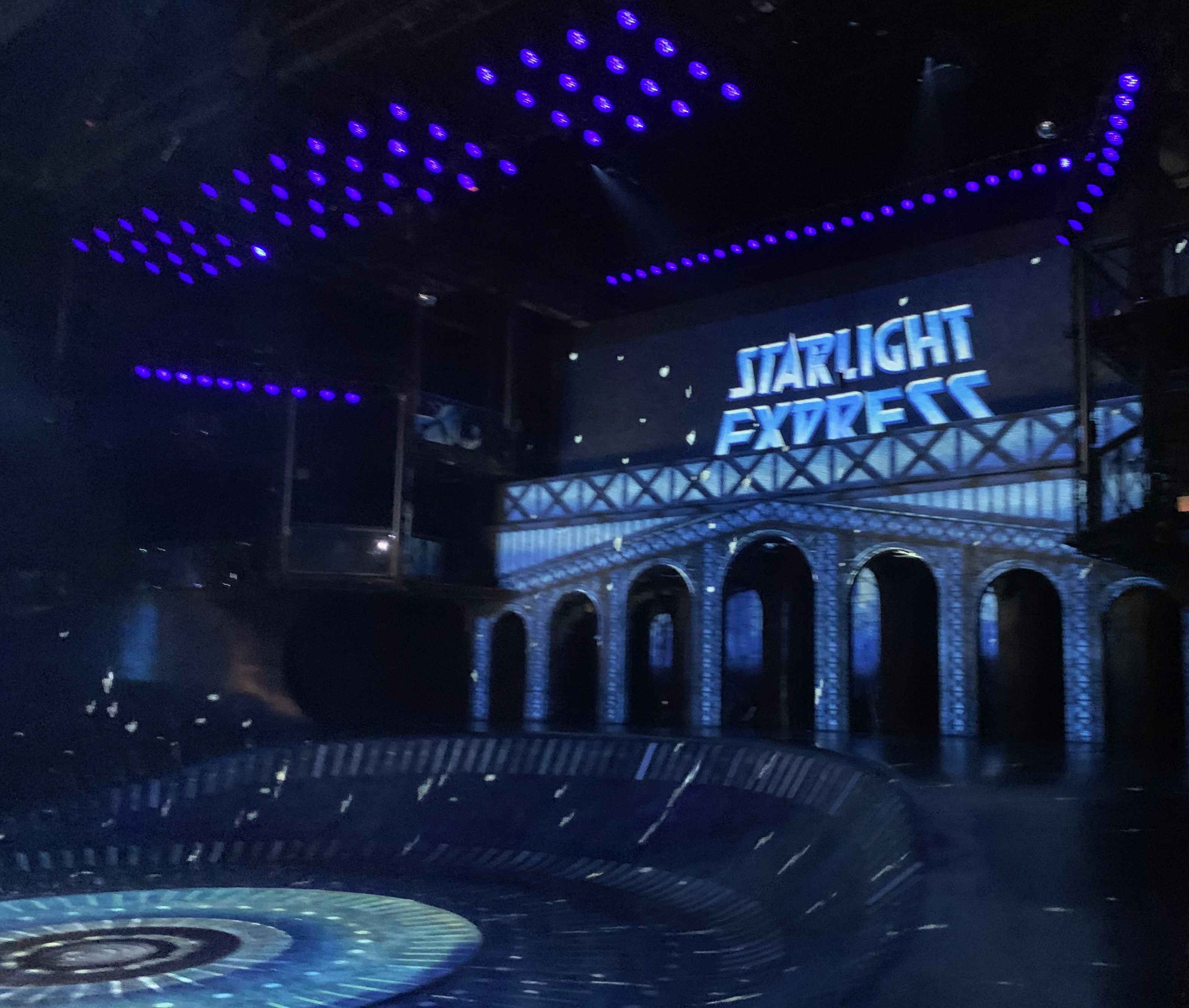
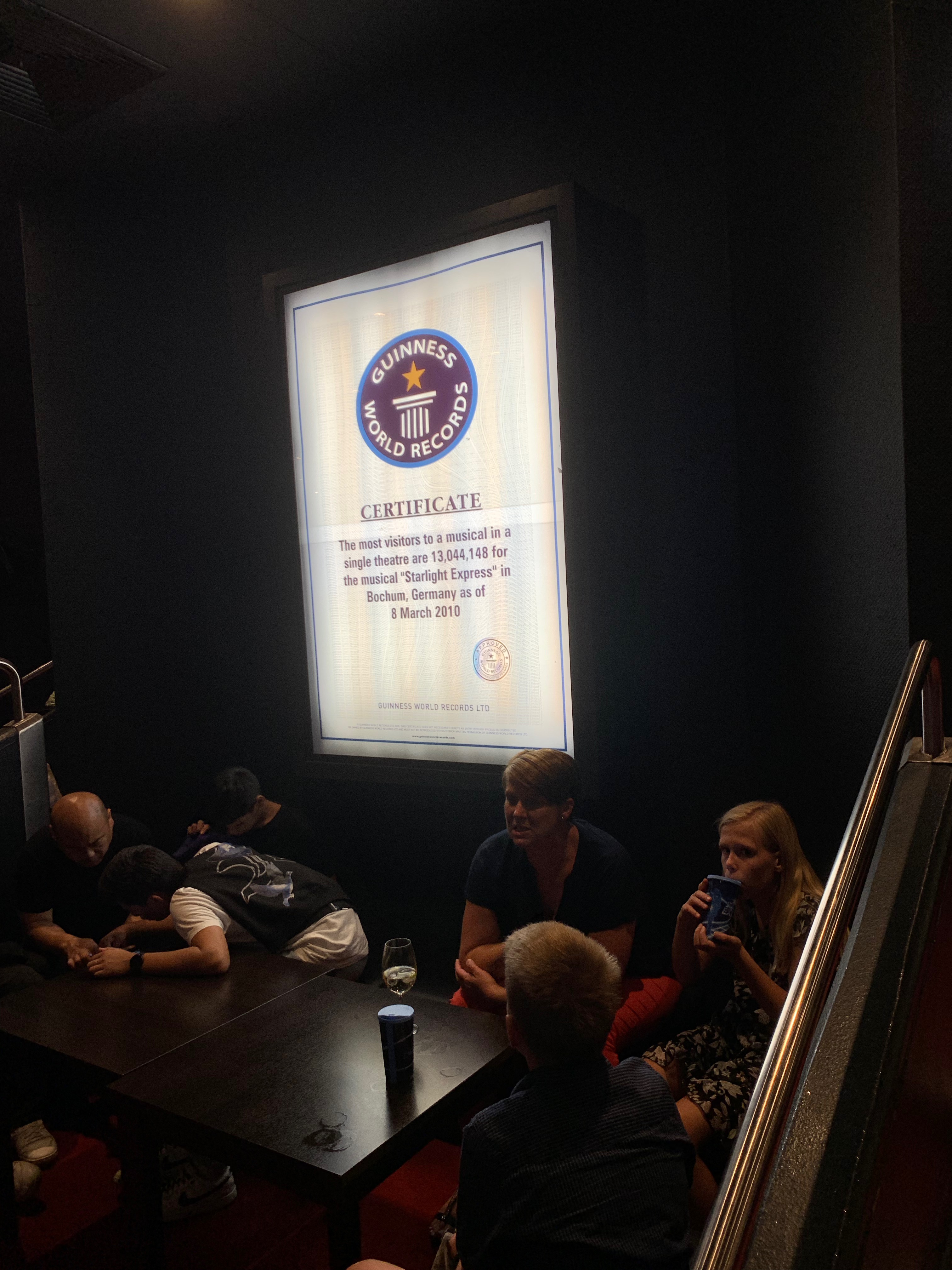
The night before we got the ferry we went to see Starlight Express in Bochum. It’s the most surprising combination: Bochum, one of the Ruhr valley’s most ‘iconic’ cities with a “heartbeat of steel”, made famous by Herbert Grönemeyer’s song of the same name; and the sophisticated, fast moving, fascinating musical by Andrew Lloyd Webber staged in a breathtaking, purpose-built theatre. Since 1988 and seen by more than 18 million visitors.
It was an absolutely fabulous night. We had seats right beside the main stage literally in the middle of the action. The story is a variation of the one where the underdog makes it in the end because they believed in themselves and were loved by their friends. And it was friends who made it possible for us to stop over for the night and make an unbelievable memory together.
When the night is darkest, open up your mind Dream begins, it’s becoming clearer Listen to the distant, listen and you’ll find A midnight train is getting nearer
Starlight Express, Starlight Express Are you real? Yes or no? Starlight Express, please answer me yes I don’t want you to go
That Starlight Express is definitely real, it won’t go away, and it will take us to places we have never been.
We all enjoyed the break. It was really good. The change in environment, the time we were able to spend together, the slightly different perspective on life from a distance.
Last week, then, was all about getting back to reality, to exercise, to work, to routine.
The Starlight Express, though, will stay with us. We will hop on it from time to time. And we will keep dreaming. With energy and hope because we, Pádraig, will always be supported by his families and good friends.
It’s life and dreams occupying us, entertaining us, making us happy and keeping us strong.
Though I saw it all around, never thought I could be affected
Peter Gabriel
Sinead O’Connor’s death the week before last shook me up. I had seen her once in person during a protest march in Dublin, years ago. She had an incredible personality and near magic presence. Last week, I listened back to some of her music, including a duet she sang with Willie Nelson, Don’t give up, by Peter Gabriel. I read up a little on her very full and complex life. Sinead tried so hard to never give up. She had friends though I think she might have been terribly lonely at times. May she rest in peace.
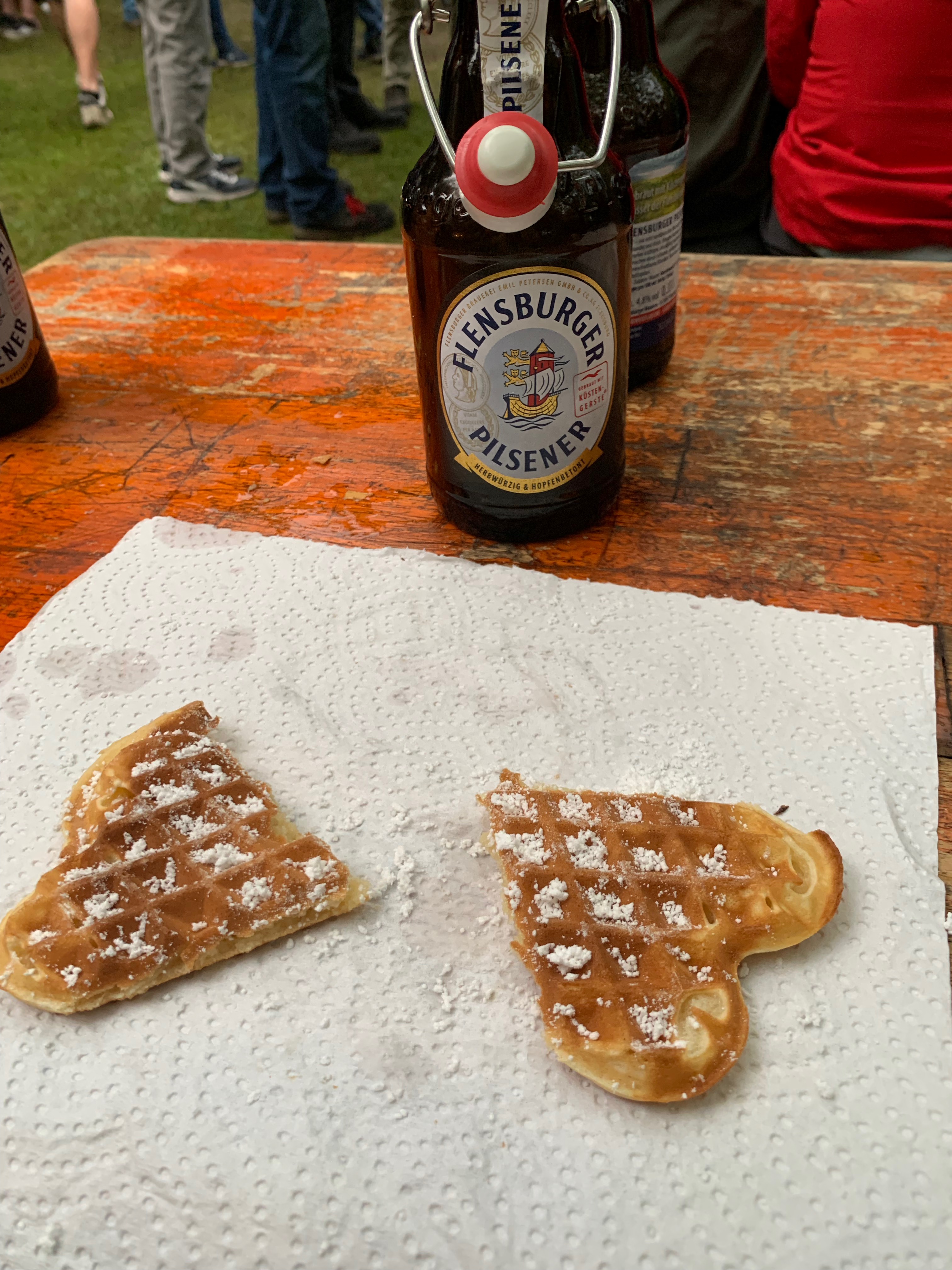
Pádraig went to what was almost like a mini Wacken, the world’s biggest Heavy Metal open air, which takes place over the first week(end) of August every year in a tiny village less than an hour from Tating, usually in fields of mud. Tating’s Dorffest was slightly less heavy metal but equally muddy. The music was brilliant, though not necessarily everybody’s taste, the food and the drinks were of the finest quality, Futjes, Bratwurst and Flensburger, and the company was unique.
Who needs Wacken if you have Tating?
We tried this ourselves a few times, following what we had seen in the specialised shop where we had ordered and fitted Pádraig’s ptosis glasses. It never worked well for us, as we were trying to lift up one eyelid and then the other onto the little spring-loaded arms fitted to the glasses. The optician we visited last week knew what he was doing when he lifted both of Pádraig’s eyelids with one hand and used the other to position them onto the arms fitted to the glasses. Much better.
While Pádraig’s eyesight is good, he has trouble lifting the eyelids as his third nerve got damaged during his accident 10 years ago. Not being able to easily open your eyes and being able to see what’s going on around you is obviously a big barrier to participation. It would mean an awful lot if we managed to make those glasses work.
But not only that. When people see you with your eyes closed they instinctively believe that you are “asleep” – whether you are or you aren’t – and they treat you accordingly. We only found out about these glasses a few months ago and it took weeks to get them ordered, delivered, and fitted.
An Optician fitting Pádraig’s Ptosis Glasses
It is essential that we learn how to use them better and regularly. They make a world of a difference to Pádraig’s life.
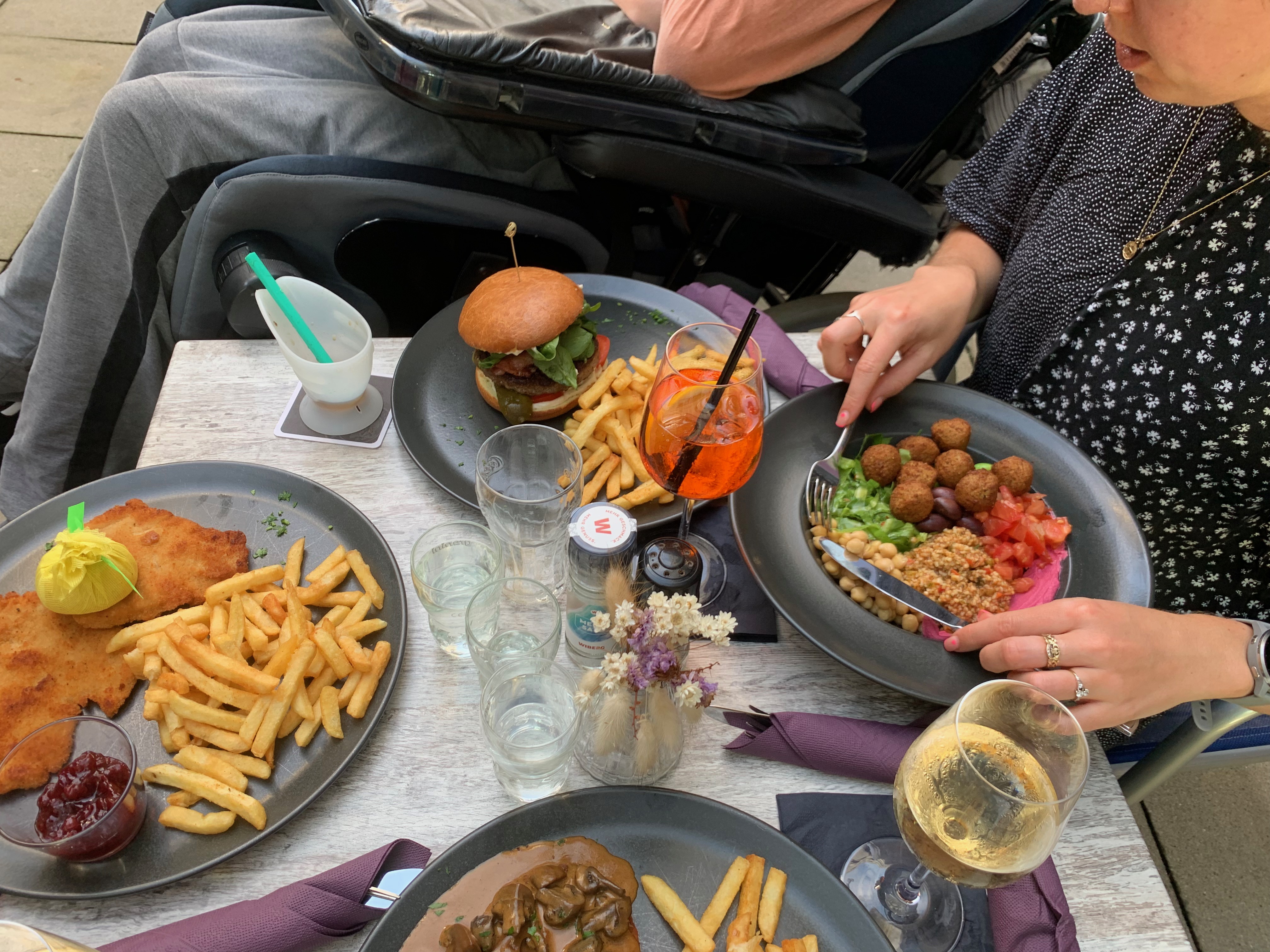
When I think of Germany, I think of the bakery displaying a sign, No Credit Cards, Only Cash; the filling station apologising to their customers that they cannot accept notes of 200 and 500 euro (!); the 12-page 8 point Times Roman document I had to sign when I added an international call option to my mobile phone contract; the 3-euro charge to get onto the beach; the summer beach party at the canal in Gelsenkirchen with 80-year old Schlagerstars and 20-year old fans in the audience; the Autobahn with endless ‘roadworks’ with nobody working; Karl May’s Winnetou and Old Shatterhand, friends, childhood dreams, a perfectly safe and predictable world.
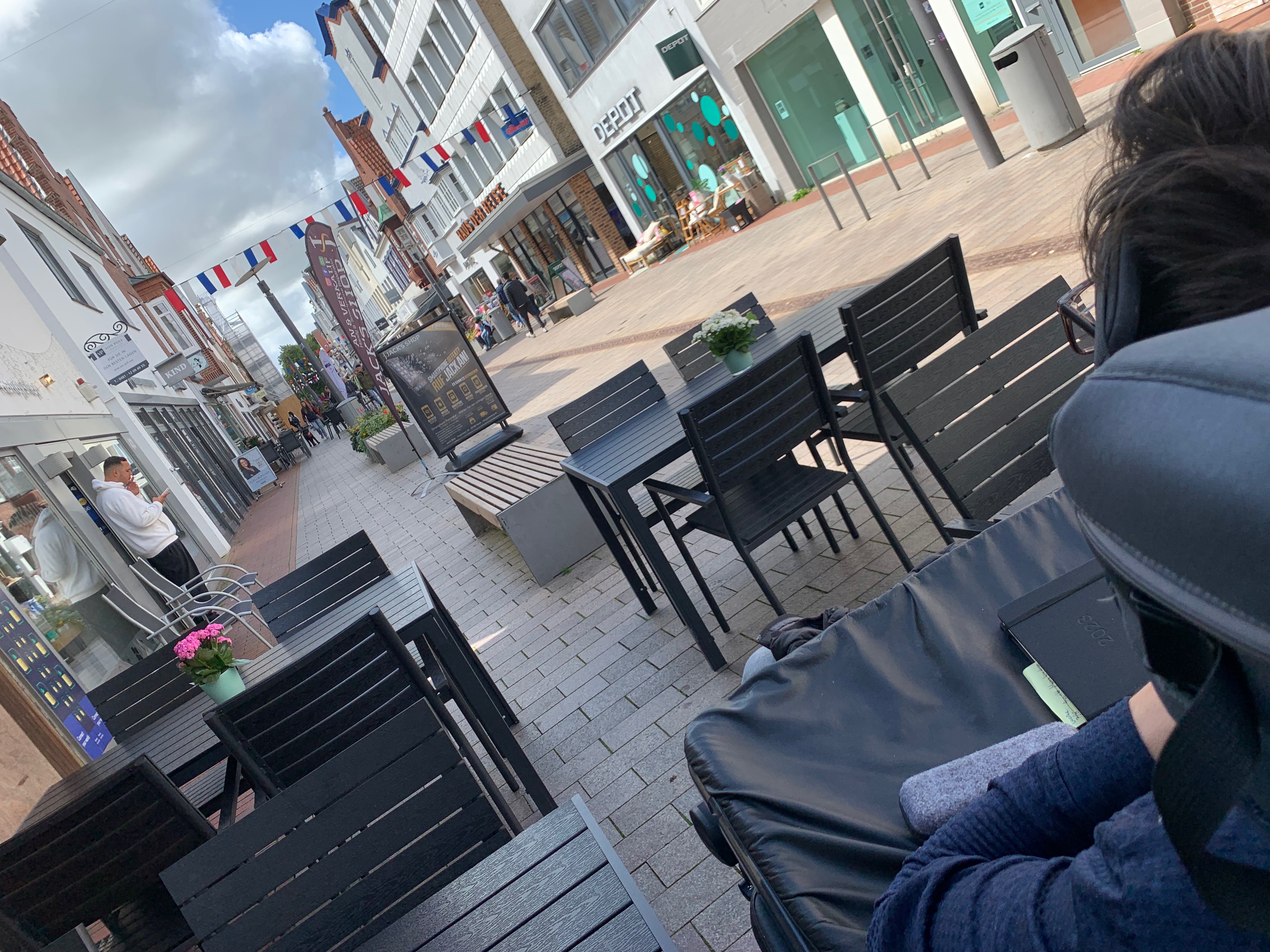
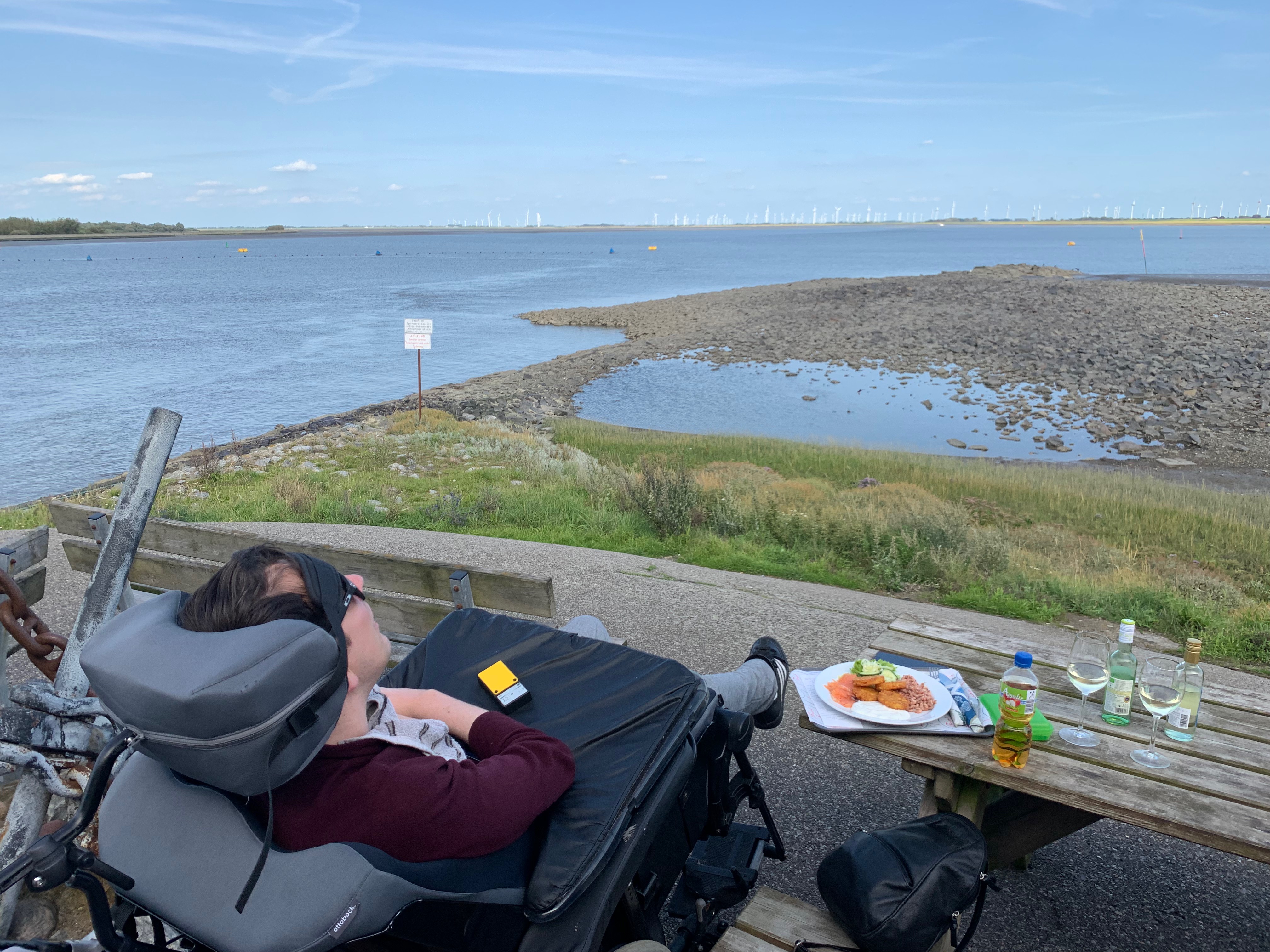
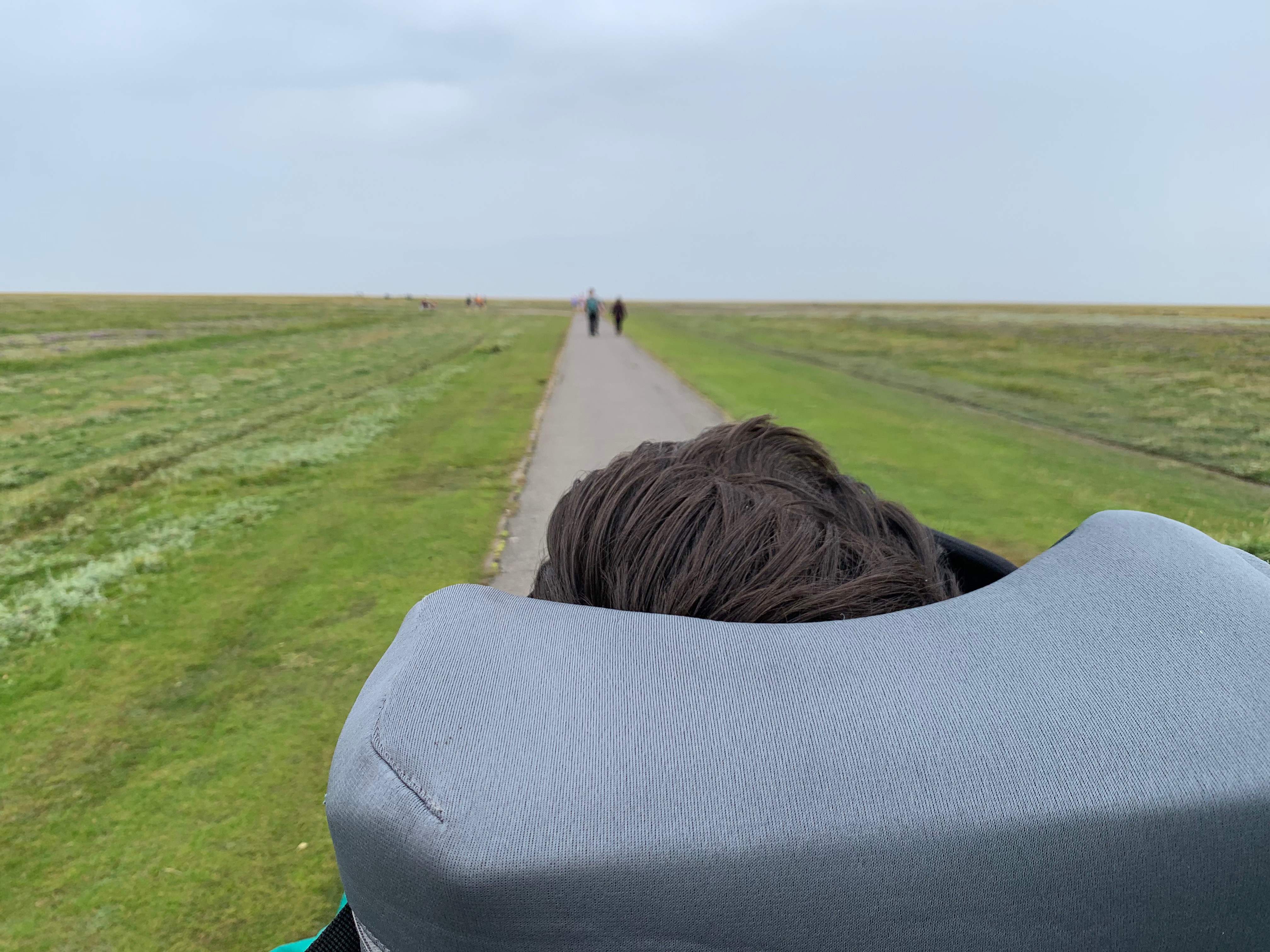
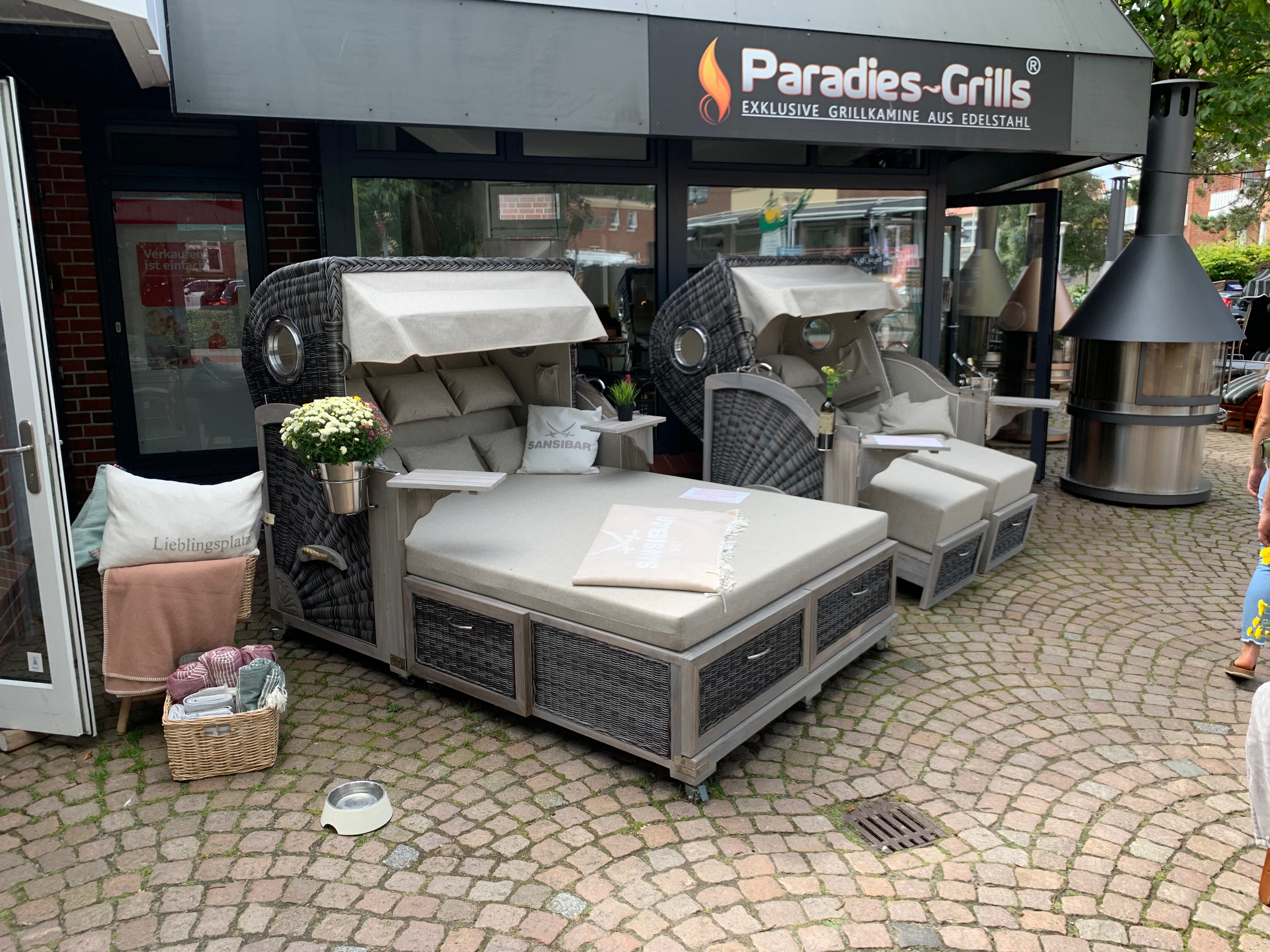
On our walks, we met old and new friends; Irish-type signposts; a “Kältekabine” where you test your jacket to make sure it is cold- and wind-resistant; a kite-surfer traffic jam in the sky; Husum Harbour attracting melancholic tourists longing for the liberty of the seas; fancy rest places in hammocks and a super-sized Strandkorb; ambitious therapists; and beach-going wheelchairs.
Meaning changes in different circumstances. So does the meaning of songs.
Don’t give up ‘Cause you have friends Don’t give up You’re not beaten yet Don’t give up I know you can make it good
No reason to ever give up if you have friends who know you can make it good.

































































 Hospi-Tales