Now is now. Next time is next time. Hirayama in Perfect Days
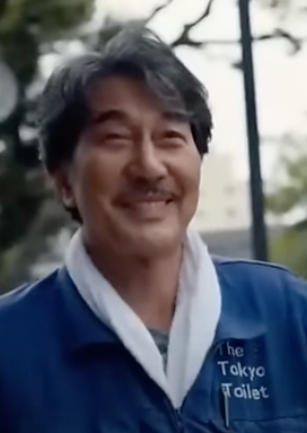
We went to see Wim Wenders‘ new movie Perfect Days. It’s nearly two hours long and very slow moving. There are no fast moving actions, no nerve-racking suspense, no fancy CGI animations, the beautiful music is mostly playing from cassettes originating in the 70s or 80s. Not what you’d expect in a two hour movie these days. And the hero, if there is one, is a man living on his own in a tiny Tokyo apartment who wakes up every morning at the same time at the sound of an old lady brushing the small lane beside his house. No alarm clock. In fact, no clock or watch at all. There are a few interruptions to his daily routine and hints about other aspects of his live, some of which cause him upset and sadness. But he gets over it and continues to live in the moment, in perfect days.
In one challenging situation he meets the terminally ill ex-husband of the lady who runs the restaurant he frequents regularly. But then they play Shadow Tag and experiment with fundamental questions such as whether shadows produced by a single source of light get darker when they overlap.
The more I reflect on the movie, the more sense it makes to me, the more it touches me and the more I like it. It is simple, yet profound.
Like most things we experience are – only that other people make them so complex that they become unaccessible.
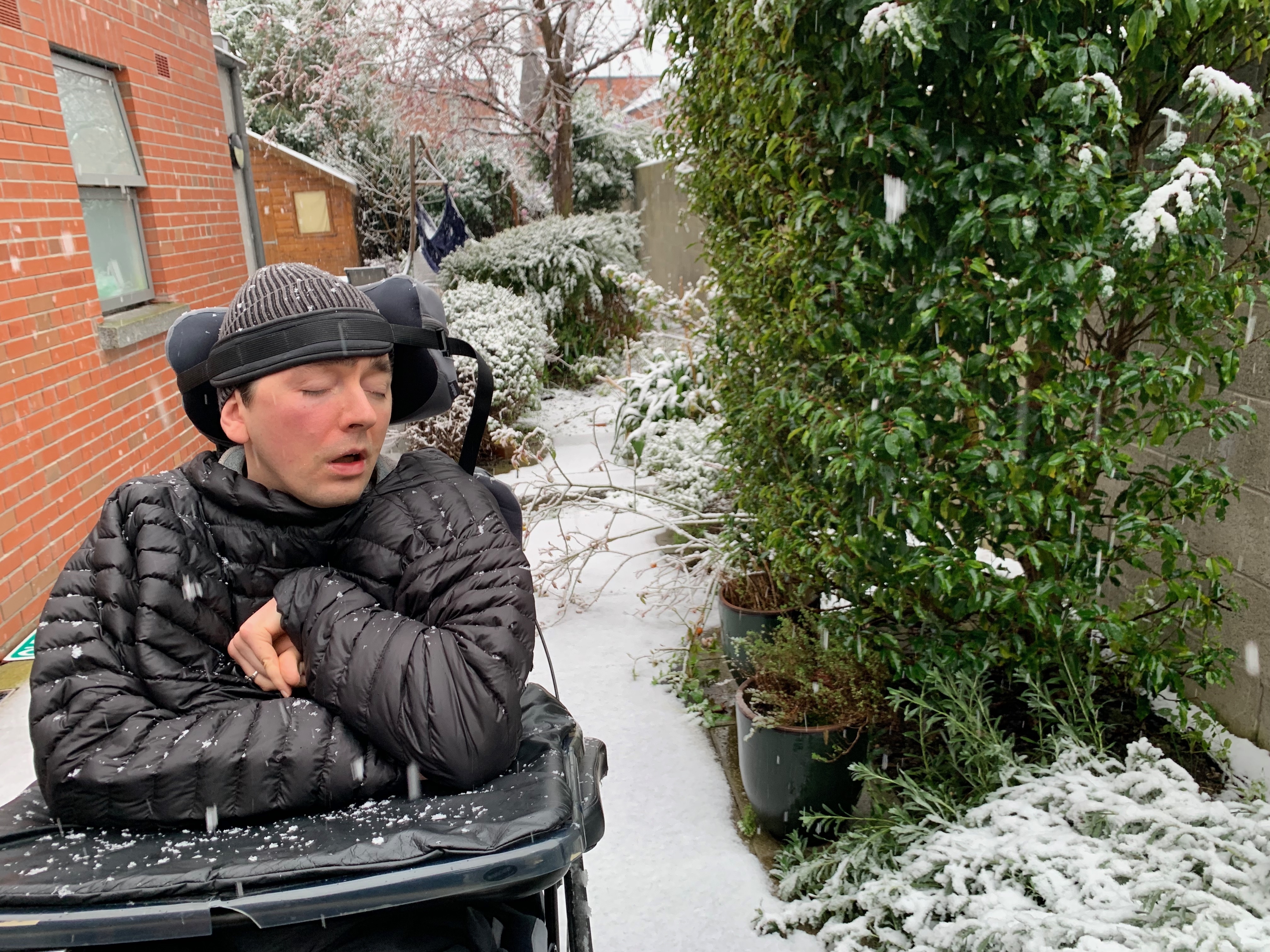
Last Friday, we woke up to heavy snowfall, “heavy” in the Irish context. It was a beautiful morning and a delight to see Dublin covered by a white blanket. Schools closed, people didn’t make it to work, traffic came to a standstill.
The early morning streets were packed with people taking pictures. Some had never seen snow and so happy to finally experience it. The miracle didn’t last, snow changed to rain, and by the evening, everything was back to normal.
On Wednesday afternoon, I spent a few hours with a friend, Mary, who was the wife of the late Tim O’Brien, who died in 2017 of Motor Neuron Disease (MND) and who the Irish Times remembered in November 2017:
Prof Tim O’Brien, who has died at the age of 65, was Ireland’s first professor of orthopaedic surgery. Remarkably, he was also a renowned scholar on the cairns at Newgrange and Loughcrew, on which his pioneering research was published as a cover story in Nature, the world’s leading research journal.
Perhaps the first time I heard about MND was when there was great publicity around filmmaker Simon Fitzmaurice‘s MND. As Tim, Simon died in 2017. The last time I heard about MND was yesterday morning when Brendan O’Connor dedicated much of his radio programme to Charlie Bird, one of Ireland’s best known news reporters who is dying from MND.
I had not heard about Tim’s case until his wife contacted me and told me their story. Part of this was reflected in the Irish Times article.
O’Brien spent the past 20 years as one of the world’s longest survivors of motor neuron disease, living at home using a ventilator to breathe, while continuing to work as an expert on gait analysis at the Central Remedial Clinic and writing academic articles. His interests extended from orthopaedic surgery to archaeology to classical music, including a published work on Shostakovich.
I now know that there are other parts of that story which I and so many people attending the An Saol Foundation Centre immediately recognise – but which have never come up in the high profile stories of Simon and Charlie. Their stories focus on the amazing experiences they had and have living with MND.
Mary’s story and that of many of us is about us having to deal with a system that has been described by those who should know, as dysfunctional, a disgrace, and unfixable, like Fintan O’Toole, Dr Jimmy Sheehan, or Martin Phelan. “Senior people (in the HSE) clearly believe they are a privileged elite. It’s an “us and them” mentality”, according to Liam Doran. Oireachtas Committees and the Ombudsman have repeatedly stated similar views.
Mary’s story was never high profile. A medical doctor herself, she cared for her husband, who was completely dependent on her expert support at their home, on a ventilator, for more than 20 years. My common sense would suggest that someone with that dedication, knowledge, and experience, not easily matched in the country and in the world, should have been given all the support she needed.
But, perhaps not surprisingly, the health system treated her and her husband as it does routinely, and as documented in Primetime Investigates, as Troublemakers. Rather than listening they go on the attack.
Mary’s story, as well as that of many others, including that of our friend Patrick Fitzgerald and his family, is still being repeated today. In the opinion of Paul Cullen, The Irish Times Health Correspondent,
David versus Goliath doesn’t get any more pronounced in Ireland than the battles between vulnerable patients and their families on the one hand and the behemoth that is the Health Service Executive on the other.
Sometimes I wonder, whether there is anybody listening. And if there is, what it is they are doing to stop this cruel and cold attitude.
Nobody will ever be able to claim ignorance.
Martin Luther King Jr., fighting all of his life like David versus Goliath, once said, To ignore evil is to become an accomplice to it. He was assassinated on 04 April 1968 in Memphis, Tennessee.
I have been told several times that help and support for those ‘few’ with a severe Acquired Brain Injury would take away from the healthcare of many thousand children with speech problems, from thousands of people whose conditions and injuries could be cured.
The fact is: one shadow is as dark as two overlapping ones.
Try it.
Now is now. We cannot and should not wait for a ‘next time’.























































 Hospi-Tales