If you remember it you weren’t there. Charles Fleischer
I told someone last week that one of my regrets was that I hadn’t been born 10 years earlier because then I could have attended Woodstock. “Woodstock???” – was the reply. For a moment, I felt like a relict, out of time.
But last Tuesday, Woodstock came to Garding. In the summer of ’24.
I pulled into Nazareth, was feeling ’bout half past dead I just need some place where I can lay my head Hey, mister, can you tell me, where a man might find a bed? He just grinned and shook my hand, “No” was all he said
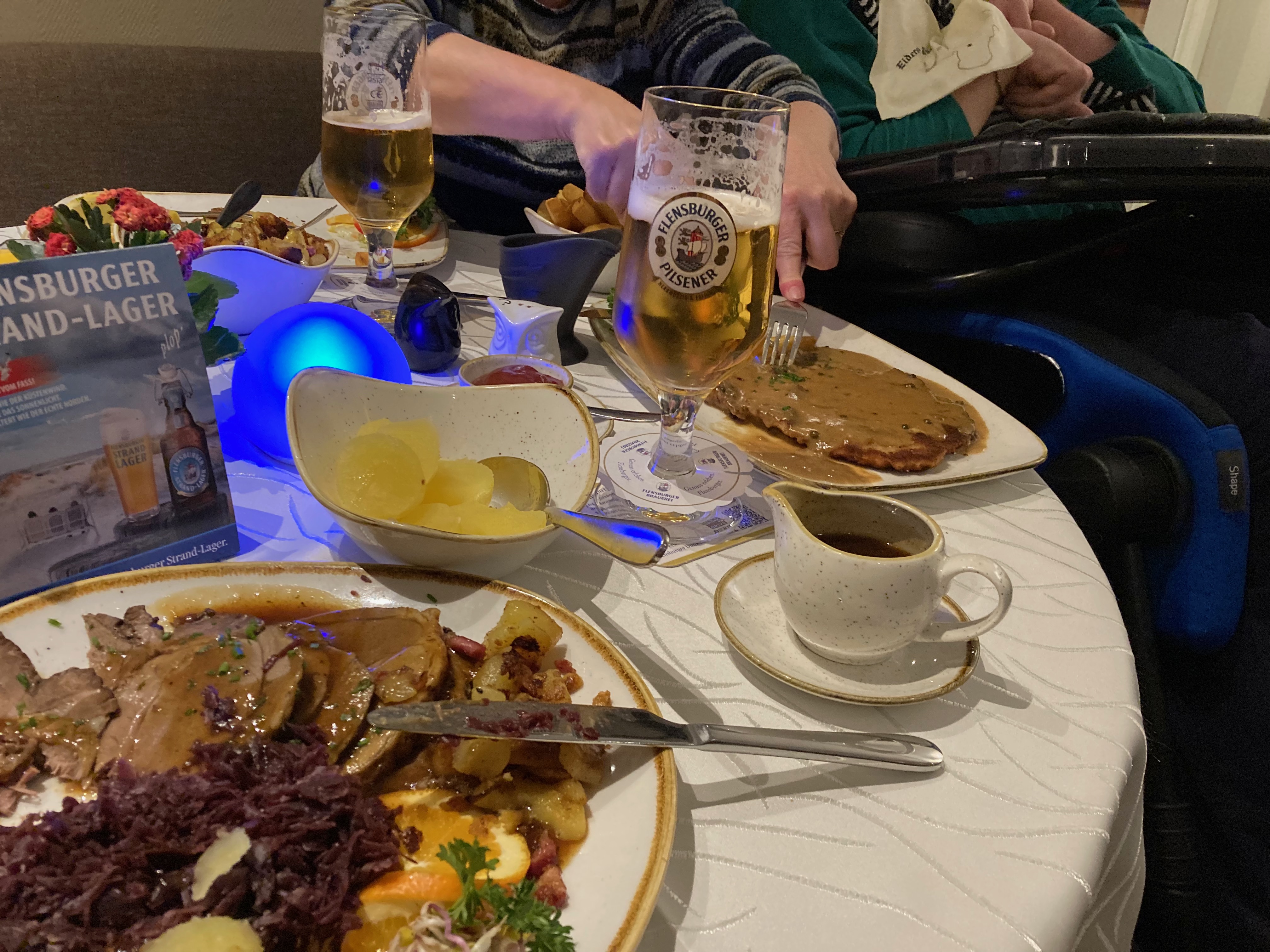
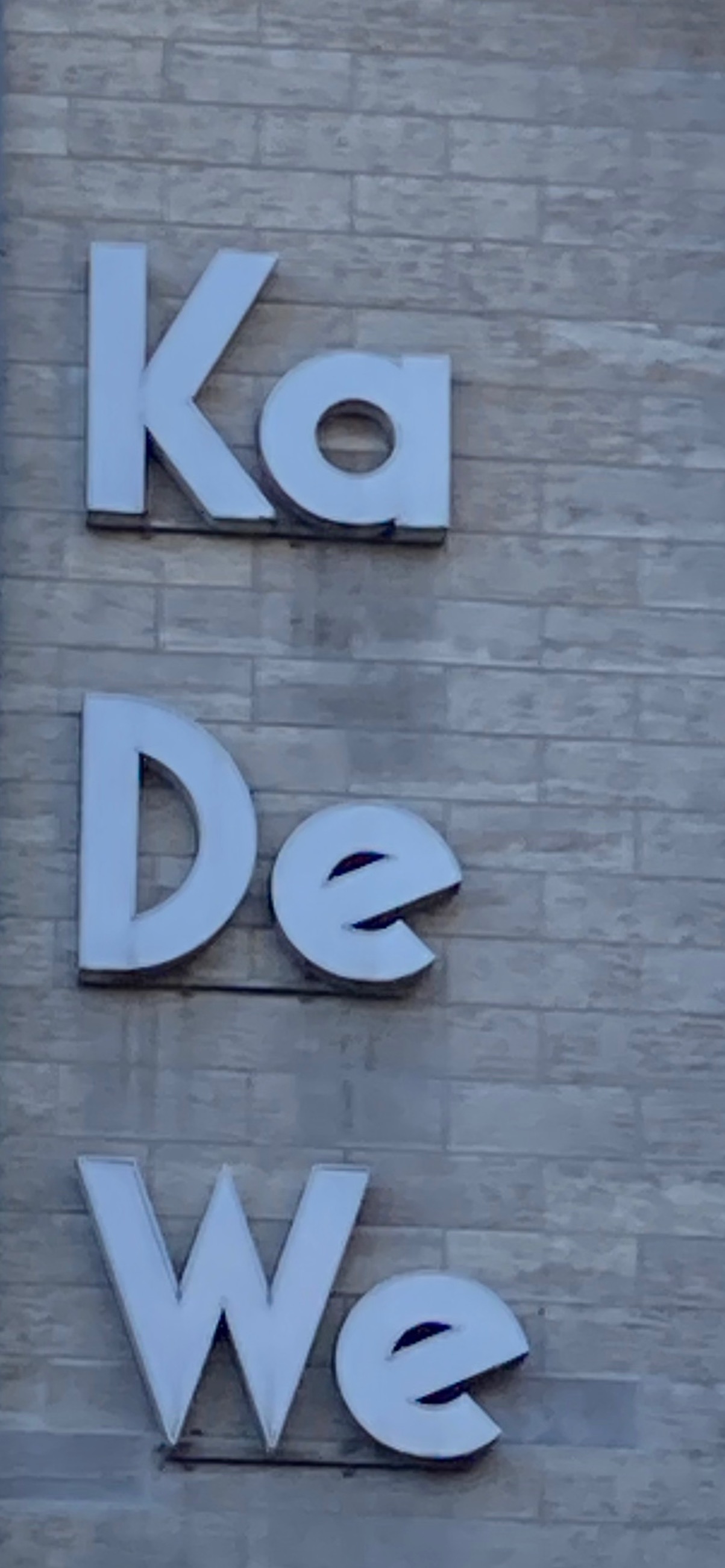
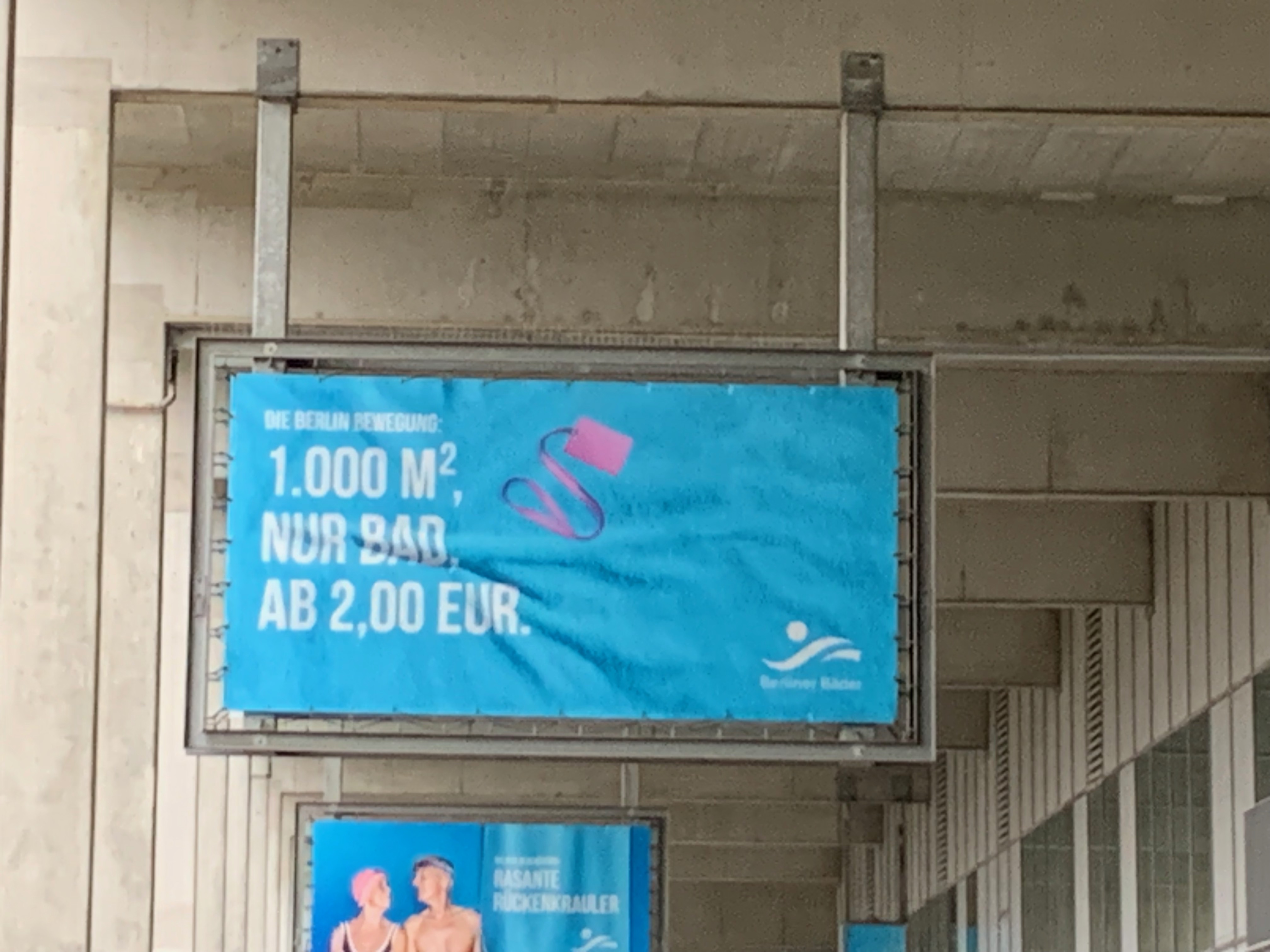
It was our last week on the road. One with millions of sheep. One with endless beaches and horizons. One with many family and friends visiting. One with poles indicating the highest tides ever measured. One with really narrow passageways, only for pedestrians, “Nur für Fußgänger”. One with uncountable footprints in the sand. One with tremendous help from an OT working like the best of physios. Where the water was warmer than the air. The food was “Labskaus” although it looked like “Steak Tartare“; or “Futjes“, both of which you only get north of Hamburg. Road signs looked like “I’m Bad” but meant “In the Spa” – one weirder than the other. And the local “Feuerwehr”, the voluntary firefighters, were as present on the muddy fields of the Tating village festival, as they were a few weeks earlier on the equally muddy fields in Wacken, the world’s biggest open air heavy metal festival, just over half an hour from here.
We were here. We were living the most amazing, challenging, exciting, weird and wonderful life in the Summer of ’24.
We won’t ever forget it.
It will carry us through any dark days of whatever kind of winter that might lie ahead of us.
Take a load off Fanny, take a load for free
Take a load off Fanny, and you put the load right on me
“You have to believe in yourself when no one else does — that makes you a winner right there.” Venus Williams
We were sitting at the fountain in the gardens of the Schön-Klinik last week. Venus wasn’t there, but we were with Pádraig and one of his best friends. About 10 years ago, it took serious persuasive efforts to get the doctors give Pádraig permission to leave his room, leave the hospital, and get some fresh air, hear some different sounds and noises, feel the air on his skin, feel alive. – They told us they “didn’t want any dead bodies in their yard”, keine Toten auf dem Hof. The audacity, gall, nerve, and temerity.
Being at this fountain after months of having practically being locked into his room was one of those moments when we realised how much Pádraig believed in himself. That he was a winner. No one in the hospital had any great hopes for him. That he could get a job promoting new legislation in Ireland and inspire the establishment of a Centre for Life and Living with a severe Acquired Brain Injury. A Centre the world had not seen before.
We went for walks. Revisited some unique German ‘icons’ like the Litfaß-Säule with announcements of concerts and exhibitions. Saw a very unusual ‘camper’ with the tent on its roof.
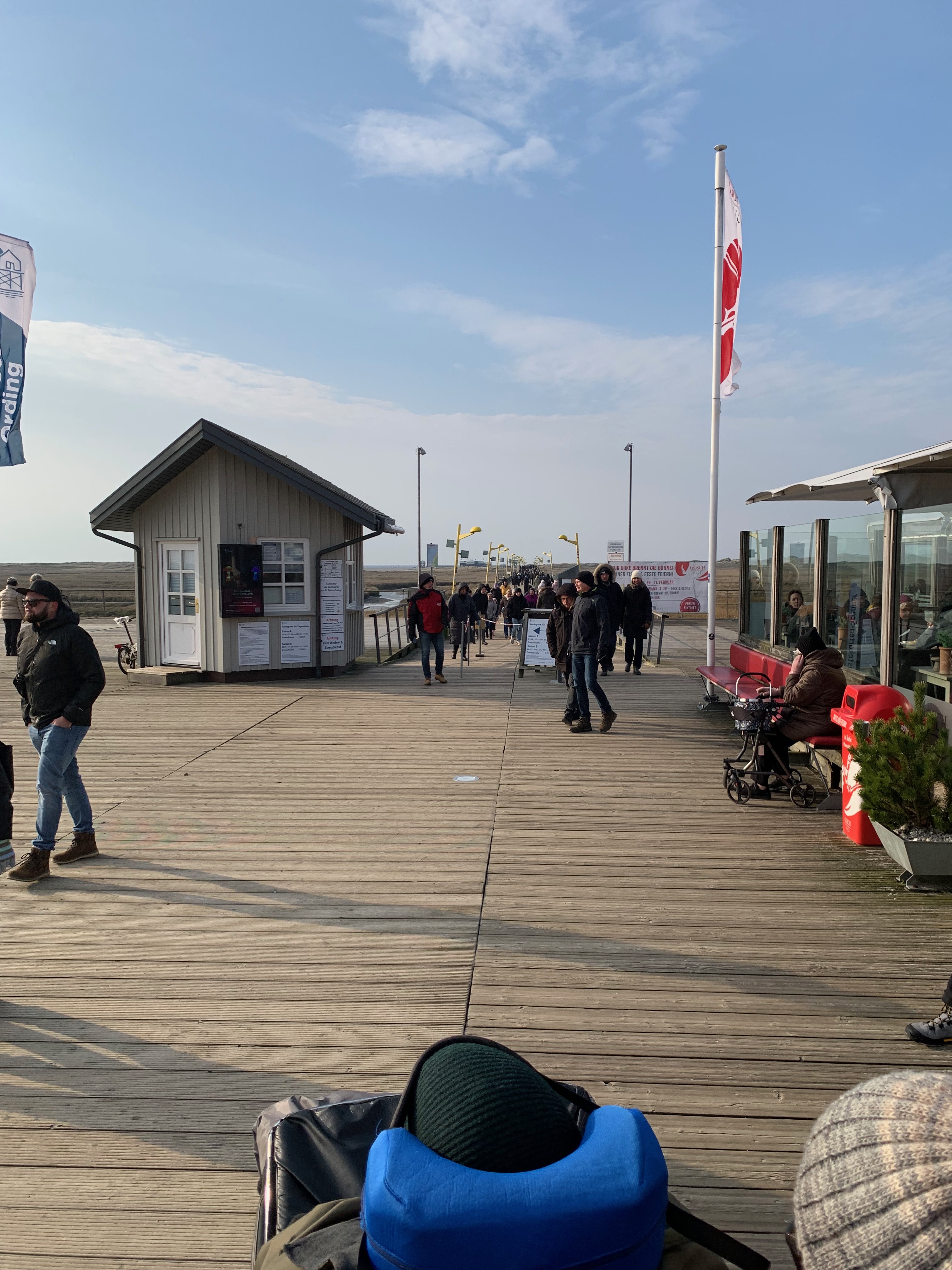
We had dinner and drinks at Gosch in St. Peter-Ording on the edge of the Wattenmeer where the sky meets the sea and the horizons are never-ending.
The highlight of the week, however, must have been a visit to Tonndorfer Hauptstraße in Hamburg, Pádraig’s and our first joint apartment, up on top of the white tower, with a huge terrace and round walls, and a view over the city of Hamburg that would be hard to match.
We went back to the supermarket where Pádraig went shopping for the first time after having been discharged from hospital.. We remembered what a great deal that was and I remembered how uncomfortable I felt at the time – and not just because I wasn’t great at pushing his big wheelchair down through narrow aisles.
Haus 2 of the Schön-Klinik had not changed much, apart from looking a bit older and the white paint not being as white as it was when we arrived there 11 years ago.
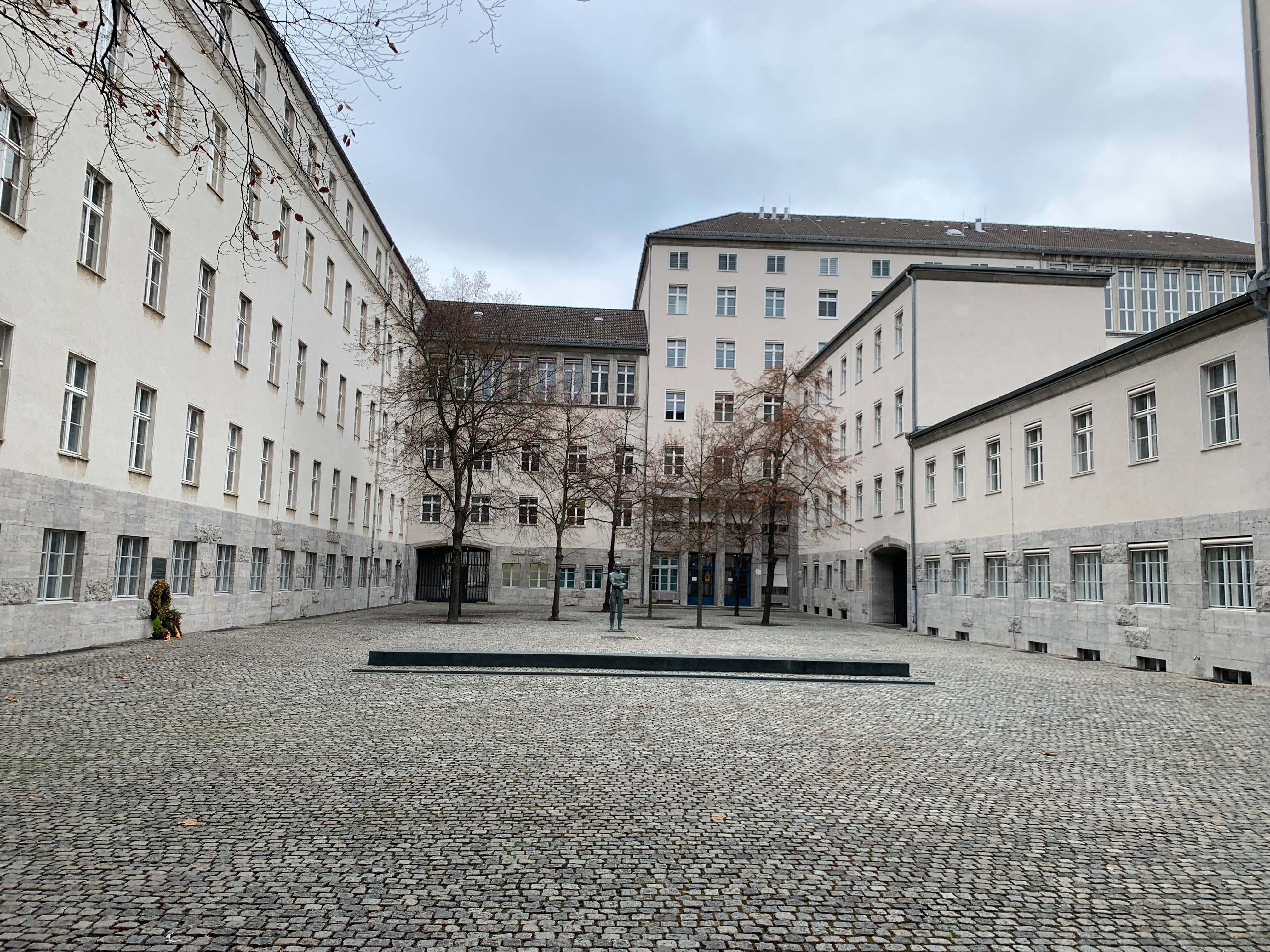
Even the small exhibition telling the story of the Schön-Klinik during the first half of the last century was still there. People who did not fit into society, including ‘difficult’ and ‘nervous’ women, were being looked after and treated there. During the horrific time of the nazi regime, they were seen as an unnecessary burden on society. Untreatable and not more than a drain on tax payers’ money.
I couldn’t help but hearing echoes in my mind of remarks being made again and again over the past decade. We still need significant change. Pádraig’s work most definitely is not finished.
One of Pádraig’s sister and her partner had a spare ticket to yesterday’s rowing finals at the Olympic Games in Paris. That’s why I saw the unbelievable Oliver Zeitler win his first Gold Medal in single sculls. The atmosphere was electric.
I only spend one night in Paris. Enough to see the Olympic Flame, Notre-Dame being re-build, the spectators’ installations on the Seine, and enough to have one of my favourite dishes: steak tartare. Where else but in Paris would you get raw meet topped with a raw egg in a restaurant? I topped that up with half a dozen escargot – another French speciality.
It’s hard even to remember all the things that happened during the past week.
Long lost memories came back. Tonndorf. The Schön-Klinik. Panic stations we thought would last forever.
They didn’t.
Life is tough. I am reminded of that every day. There is pain inside that badly hurts and will never go away. Sometimes it gets to the surface and paralyses. Sometimes it resides and blends into to my every day life.
But life is also beautiful in the company of family and friends.
Pádraig could most likely have made it to the Olympics as a swimmer. Although he decided not to pursue that goal, in my mind he is a true Olympian.
What Pádraig is teaching me is that believe in yourself is most important, especially when no one else does — and that this makes you a winner right there.
They say that what is right is wrong and what is wrong is right; that black is white and white is black; bitter is sweet and sweet is bitter. Isaiah 5:20
Isaiah, in the 8th century BC, described 21st century politics. How did he do this?
He was a prophet, after all, but being able to predict what the world will look like more than 2,500 years later is a big deal. Even for a prophet. Unless, of course, some things never change. Like: turning the truth around, creating an alternative world, to suit you.
Needless to say, like most prophets, Isaiah died young and violently. He ended up, being sawn into half, most likely with a wooden saw, on the orders of his King.
Over the past 11 years, we have been told that death is life, that withdrawal of service is providing it, and that perverting justice was administrating it. I should not have been surprised last week to see what amounted to one of the world’s largest stages, to be handed over to a man who shouted out insults and lies in an uncontrolled rage.
The Prime Minister of Israel addressed the Congress in Washington. If you missed it, you can watch it on Youtube and read CNN’s Fact Check.
He quotes the Bible to back up his arguments. If you’re not into that kind of thing, you can skip the next paragraph which basically says that the Lord’s anger about his people who pervert justice will smash them.
Woe to those who are wise and shrewd in their own eyes!22 Woe to those who are “heroes” when it comes to drinking and boast about the liquor they can hold.23 They take bribes to pervert justice, letting the wicked go free and putting innocent men in jail.24 Therefore God will deal with them and burn them. They will disappear like straw on fire. Their roots will rot and their flowers wither, for they have thrown away the laws of God and despised the word of the Holy One of Israel.25 That is why the anger of the Lord is hot against his people; that is why he has reached out his hand to smash them. The hills will tremble, and the rotting bodies of his people will be thrown as refuse in the streets. But even so, his anger is not ended; his hand is heavy on them still.
If I was the Prime Minister, I’d watch my back.
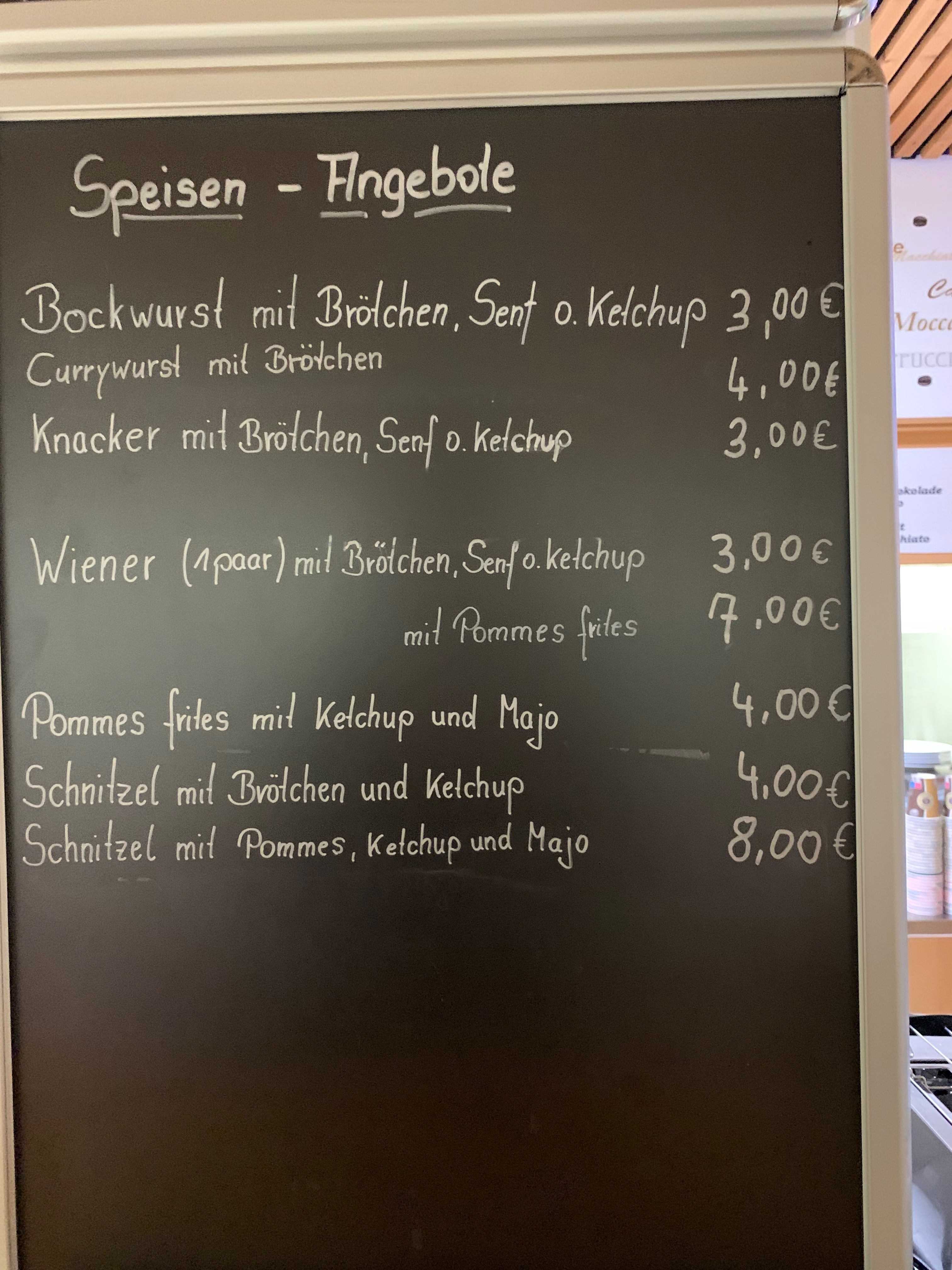
We continue on our Road, to the Lighthouse, the Sea, and excellent food. Empty beaches. A couple pulling their dog to the sea in a little trolley. The old Shipyard. The hobby photographer with the biggest telephoto lens money can buy. Tönning, Garding, the Arche Noah, Westerhever. Currywurst, Krabben, Speigeleier, Bratkartoffeln, Aal, Labskaus.
We continued with our exercise programme.
Without rush, timetable, or stress.
Trying out new ways of keeping fit and in shape.
New ways of communication.
Watching the “reunion of the peacemakers” on CNN.
In my mind, what is right is right and what is wrong is wrong; colours are what they are; and what is bitter remains bitter.
Roll out those lazy, hazy, crazy days of summer. Nat King Cole
I find summer hard to deal with. Heat reminds me of the few weeks we spent in Cape Cod eleven years ago. Cycling and cyclists make me feel uneasy. The innocence of babies and kids playing on the beach only makes me think that soon they will be learning about how hard life can be. Happy Days and Sunshine don’t rhyme anymore.
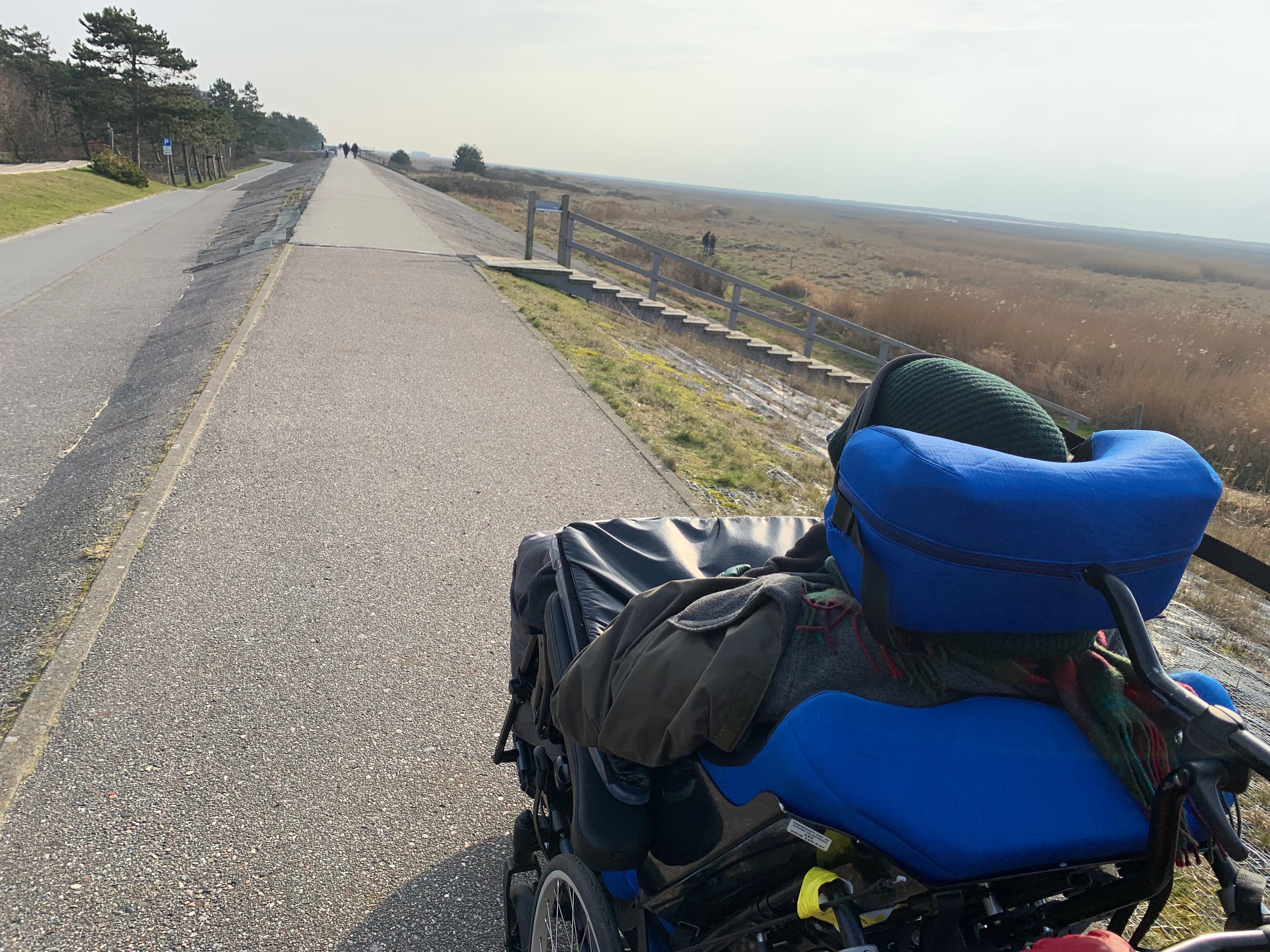
Yet, there are moments when we are on a walk in one of the small towns, sitting in the garden, or admire the vastness of the Wattenmeer, Germany’s most Northern National Park, that life feels ok, manageable, without fears or threats.
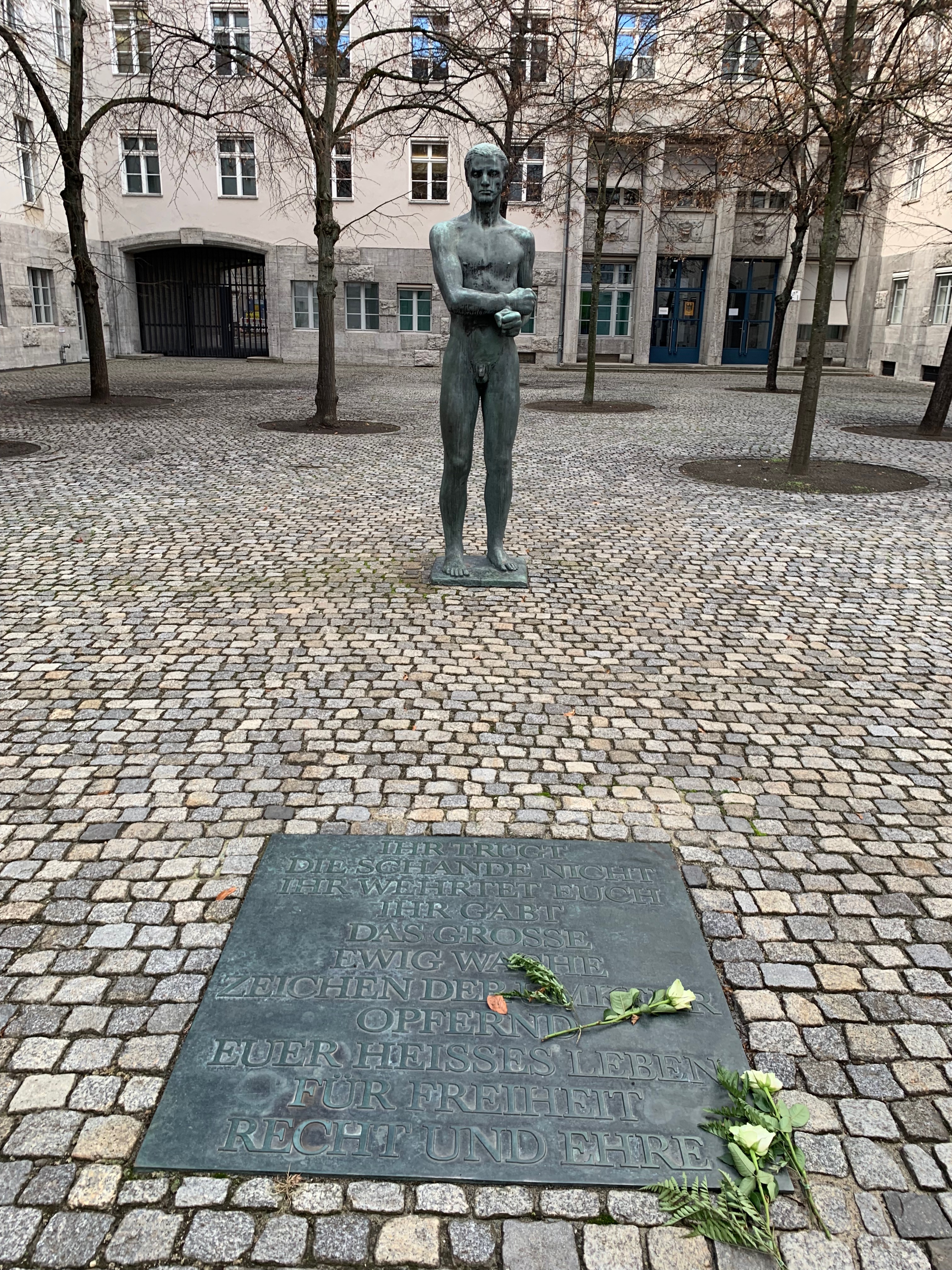
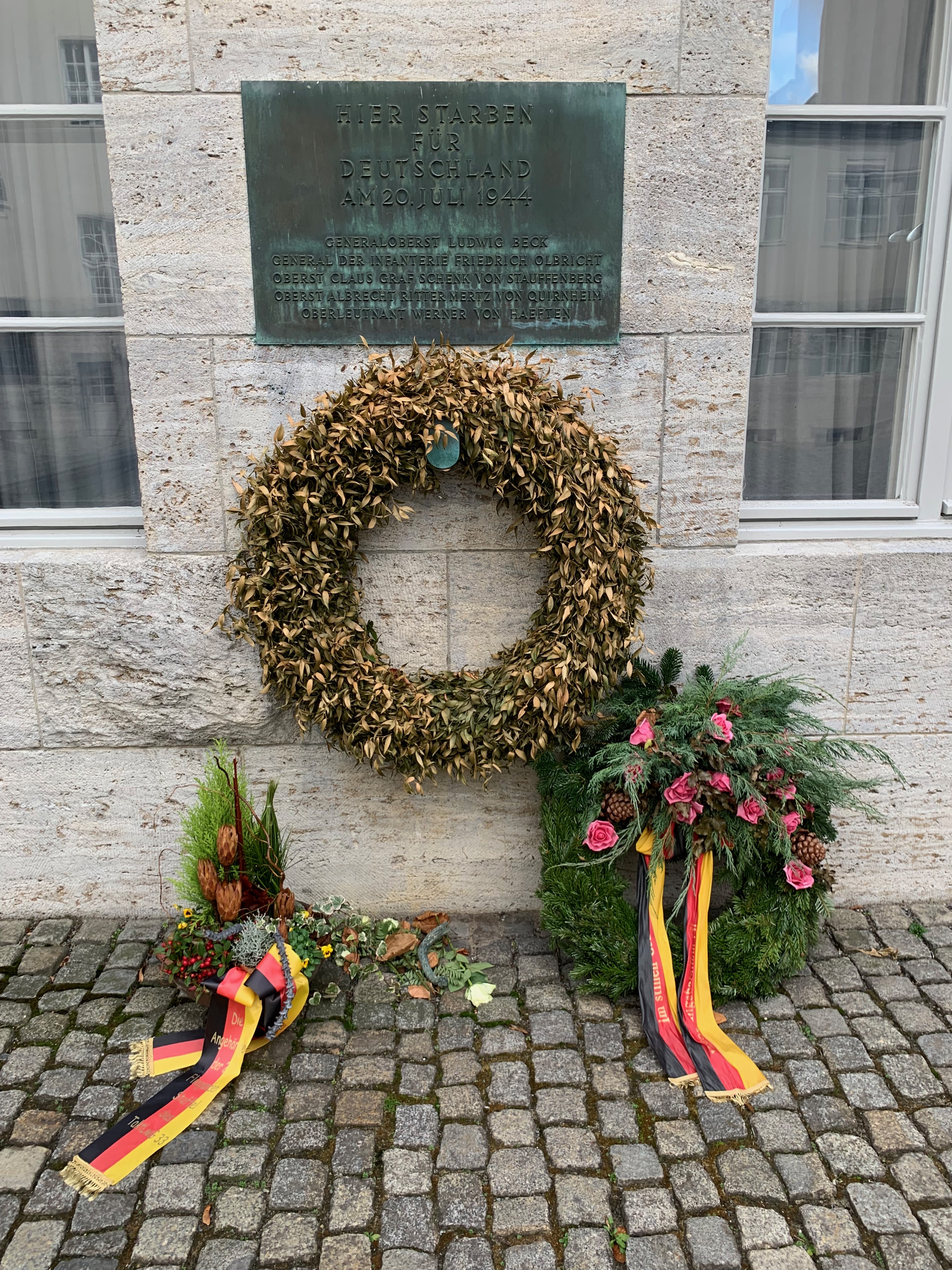
The local park brings beauty to life but also, of course, memories. I realised that I’ve been spending a lot of time here on Germany’s Northwestern coast for the past 50 years. And there are still parts I don’t remembers to have seen before, like that monument asking us to honour those who died and went missing between 1914/1918 and 1939/1945. It feels strange to see such a monument, especially on yesterday’s 80th anniversary of the failed attempt by German soldiers to kill Hitler – Germany’s most famous act of resistance to the Nazis.
In between walks, Pádraig has time to exercise.
It’s when I have a bit of distance, time away from the normal busi-ness of every-day life, that I wonder why we are here? What it is that makes our life meaningful? Because, when I look at those around us on holidays, it seems that their purpose in life is to drive big expensive cars, eat humongous meals in expensive restaurants, wear the latest designer clothes, walk their designer dogs, and to travel in great style as much as humanly possible.
I struggle with that.
Last week, I found this interesting answer to the most important questions of them all on Reddit.
Existence precedes essence. You exist before having any concept of who you are. You become who you are by making decisions, choices, and actions. Because we have no given purpose, we have to give one to ourselves. You decide what you value and what your passions are, that becomes the purpose of your life. The meaning of life is to be alive. The purpose of life is whatever you make of it. Because it is yours, and only you can make your decisions.
I find it interesting because it works for all of us.
There are people who said to me that it doesn’t make sense to live an intolerable life with a severe brain injury. That our family would break up and be destroyed if Pádraig lived with us. That any “resources” he needed could be better spent on those who would recover.
Pádraig’s meaning of life is to be alive. The purpose of his life is to show that he is alive, as happy as any of us, if not more. He made that decision when he decided to live and not to die, on several occasions over the past 11 years.
We don’t have a relaxing, lazy, hazy holiday in the sun. But there is an element of healthy craziness. Every day is hard work. But every day brings fulfilment and happiness.
We’ll be looking back at this summer and feel lucky that we were alive and kicking. Because we are the masters of our fate, the captains of our soul. When the going gets tough, the tough get going. With feeling, heart, and purpose. And fun.
“Besides the noble art of getting things done, there is the noble art of leaving things undone. The wisdom of life consists in the elimination of non-essentials.” Lin Yutang, The Importance of Living
Two ferries, two nights, and a thousand miles got us to Tating.
I have the feeling that I left behind millions of things undone.
I took with me, of course, a big bag of stuff, like papers and letters and stuff like that. On the way, we stopped beside the motorway so I could join the weekly Teams call we have with the Teach An Saol planning team.
Some say that it was Saint Bernard who said, a long time ago, that the road to hell is paved with good intentions.
Could it be then that the elimination of non-essentials, the noble art of leaving things undone, this wisdom of life, might keep you out of hell?
The only way to make sense out of change is to plunge into it, move with it, and join the dance. Alan Watts
After a long break, Pádraig had another session with the UCD PhD student using switches to play music. This time, they were trying off-the-shelve switches – although the Handscupe with the appropriate attachments was there too.
Most times, switches are used in a binary way. You press and release them to switch something on or off, perhaps to start or finish a process or an action.
Last Thursday, they were using an analog switch which had several effects. Some were obvious. Some really surprised me. All presented Pádraig with different challenges.
And for Pádraig, challenges are fun. The more, and the more interesting and diverse, the better. Pádraig also likes music. All this made for a great morning session.
I tried to capture some of the action.
Setting off a violin and then a cello, varying the speed by applying more or less pressure to the switch. This wasn’t easy: Pádraig had to hold the switch in the right way that would allow him to press harder and softer. He managed really well and the sound effects were brilliant.
The next challenge was less obvious: pressing the switch, more or less, varied the pitch of a sound. The challenge was to match that pitch with another playing in the background. This was so much more than ‘just’ an exercise in dexterity. It was an auditory and great mental challenge. I am not an expert but could come up with a long list of senses, processes, and decision-making that this exercise addressed.
Yesterday morning, I went for a walk in the park. The privilege to be able to go out and enjoy such beauty. The path ahead made me think of where we’re heading.
The river showed me how calm waters can turn into turbulences if the stream hits a few obstacles it has to navigate. The river as a metaphor for life? Is that too philosophical?
Should I plunge into it, move with it, and join the movement?
You can’t go back and change the beginning. But you can start where you are and change the ending. C.S. Lewis (and others)
When Mark Couto, a local plumber, left his house on 103 Lake Shore Dr, Brewster, MA 02631, USA, the morning of 27 June 2013, he drove towards Brewster, passed the local Brewster Police Station and turned right onto Route 6A, also known as Old King’s Highway, one of America’s most iconic byways which comprises the largest contiguous historic district in the United States.
Route 6 A in Brewster, Cape Cod, MA – the scene of Pádraig’s accident on 27 June 2013
According to the police report, “the 23-year-old was riding his bike near the Bramble Inn at 10 a.m. on June 27, 2013, when he turned in front of a van driven by Mark Couto, 52, of Brewster. Both driver and cyclist were headed east on Route 6A when Schaler turned left in front of the vehicle without warning as Couto was trying to pass him. The report stated that Schaler was not wearing a helmet.”
Seriously?
They blame the victim not just for the accident. They also blame him for the seriousness of his injuries. No bicycle helmet protects your head when you are hit at 80 km/h.
Watch the video above taken at the site of the accident and make up your own mind. Even without knowing the details, the police report, published within hours after the accident when no (thorough) investigation could have taken place, seems to be misleading at best. While Pádraig’s phone and bicycle were taken into ‘custody’, Mr Couto was not tested for substances, his phone not looked at, and the car driven by him was taken to his garage the same day. The Chief of Police told me that they had decided not to, wait!, prosecute Pádraig. No other prosecution took place.
The District Attorney of Massachusetts later considered a criminal investigation against the Brewster Police Department but a lengthy investigation concluded that there was not enough evidence for this.
Following a visit to the site of the accident, the assessment of an independent accident investigator we had to pay for, and sworn statements made by the driver and others involved taken by a lawyer we also had to pay for, I strongly believe that Mr Couto attempted to overtake Pádraig when another car turned right onto Route 6A coming out of a lane ahead of him. When suddenly confronted with an oncoming car at a relatively short distance, Mr Couto did not watch Pádraig anymore but concentrated on avoiding the oncoming car. He failed to keep the lawful distance and clipped the handle bar of Pádraig’s bicycle.
His head hit the C-Bar and the windscreen of Mr Couto’s truck, and then the road. He was revived by a passing nurse, transferred to Cape Cod Hospital where doctors recommended to end his life that would be ‘intolerable’, donating his organs which – according to the doctors – would dramatically increase the quality of life of at least three or four other people. Subsequently, Pádraig spent the best part of two year in hospitals in three different countries.
Instead of donating his organs, Pádraig inspired and attends the An Saol Foundation – Life and Living with a severe Acquired Brain Injury (sABI). The work of the Foundation has improved dramatically the quality of life of many people living with a severe Acquired Brain Injury.
Life could be easier. Happier. But so could the lives of many.
Pádraig cannot do many things. But he enjoys life. He is proud of the work he has been doing as a champion with the Decision Support Services and, especially, the An Saol Foundation which would not exist without him and which he continues to inspire.
Last week, on the anniversary of that fateful day eleven years ago, we went to Dunmore East and had a wonderful time on the cliffs overlooking the harbour.
He was the one and only wheelchair user on the edge, pushing the boundaries. As he has been doing all of his life.
We never met Mr Couto despite our best efforts. Mr Couto never met Pádraig. We offered our help to the local police Chief and the Town of Brewster by sharing with them Pádraig’s story, educating drivers, telling them of the need to keep their speed down and their distance to pedestrians and cyclists on the narrow roads on the Cape.
We wanted to share with them the inspiration Pádraig has been to many families in dire straits.
There is nothing we can do about the accident.
We cannot change the beginning.
But Pádraig has certainly started to change the ending.
He will need everybody to contribute to this change. The people of Brewster, as well as the people of Germany and Ireland. You and I.
“What kept me sane was knowing that things would change, and it was a question of keeping myself together until they did.“ Nina Simone
One letter can make a huge difference in the meaning of a word or when trying to find a particular person. Consider Sink/Sick, Line/Lime, Bake/Cake, Word/Worm, Bear/Gear – sometimes not just the meaning, but also the pronunciation changes dramatically, like in the last example.
I was looking up the German singer Nena and, perhaps because she is not so famous, instead I was directed to Nina (Simone). It turned out not to be as useless as I had thought at first. I made a connection I wouldn’t have made otherwise. Nina says that she knew that “things would change”. Nena “only dreamt” about what she was looking for.
Both kept at it. Neither of them gave up.
Pádraig’s last concert in his current ‘series’ was with the Coronas. He had ‘Acceess”. A Wristband. You got to have a wristband.
And they sang Heroes or Ghosts, Taibhsí nó Laoich. The song of Pádraig’s generation.
And it’s beginning to happen, It’s beginning to move I’ve seen a reaction, Now we’ve so much to prove
This coming week, on Thursday, it will be eleven years that I was in Sanya, Hainan, in the South China Sea, when I got a phone call in the middle of the night, booked a flight to Boston, drove to Hyannis, and broke down when I walked into Pádraig’s room. Because what, in utter desperation, I had tried to put down to an error became reality. It was not “nur geträumt”.
We’ve come a long way from Boston to here.
It was a question of keeping ourselves together, which kept us sane, until things changed.
Not to what they used to be. Clocks cannot be turned back.
But it’s beginning to happen. We still have so much to prove. Forever Young.
If you are depressed you are living in the past. If you are anxious you are living in the future. If you are at peace you are living in the present. Lao Tzu, alive around 600 BC in China.
We booked the tickets months ago and never realised that the three concerts were all taking place within a week.
The fabulous Lankum a week ago on Saturday in Kilmainham. Wednesday it was The Killers in The Point, also known as the 3Arena. Last night it was The Coronas in the tent in Fairview. This is not bad. Not bad at all.
For Pádraig, it was the Lankum gig that was one, if not the best night out since his accident. The stage was on fire, the weather was great, the music was magic, and tons of his friends were there to join him having a brilliant time – totally unplanned and as it should be, moving together, sharing the experience of a wonderful open air concert on a summer’s night. He kept smiling the whole evening and, probably, the whole night.
Pure happiness.
Yesterday was the annual An Saol BBQ. If I am not mistaken, it was the third one – and it never ever rained. Each year, we are wondering what to do should the heavens open. And each year, it turned out to be a good, dry early afternoon.
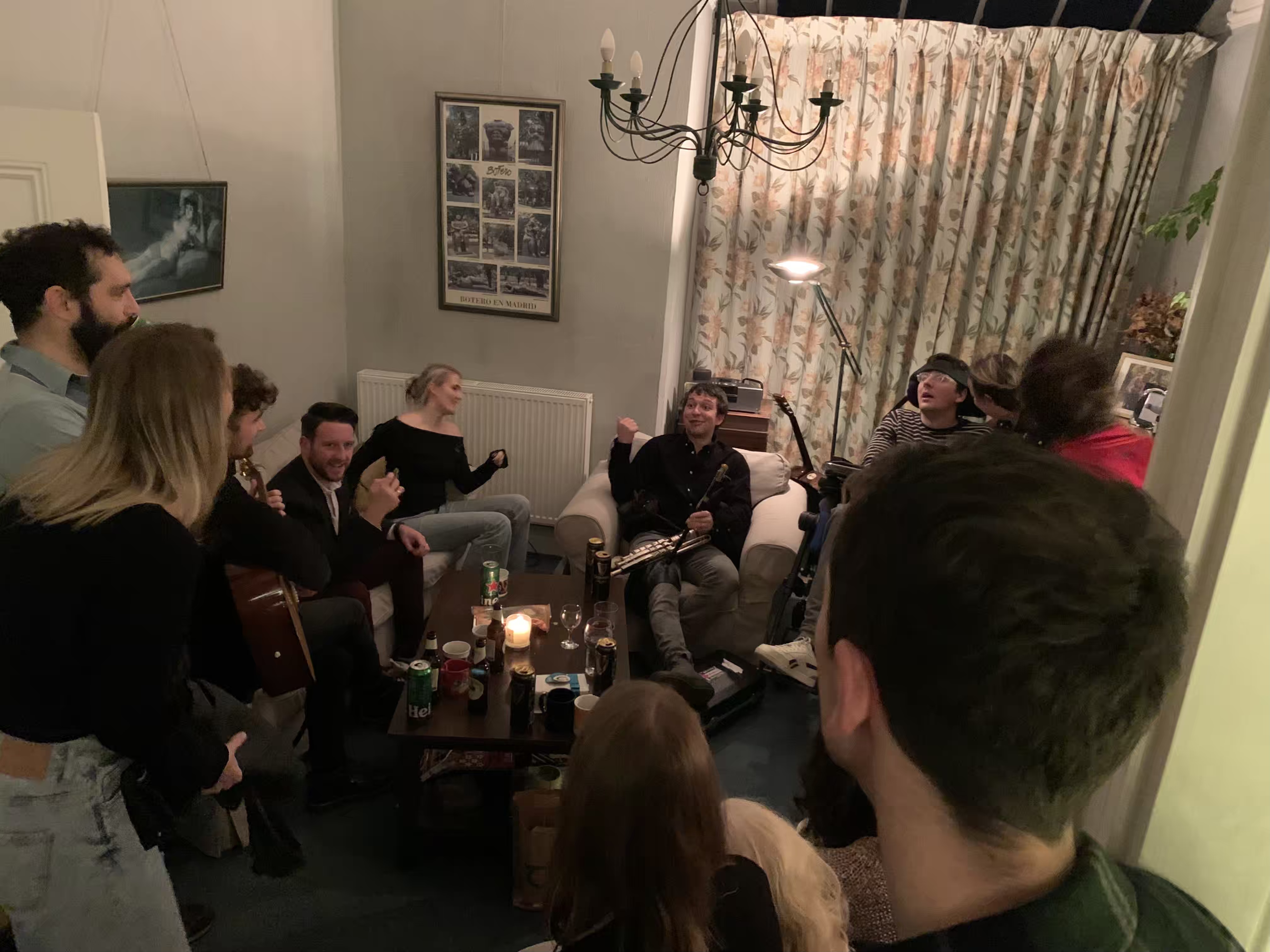
There were about 60 clients, staff, family, and friends enjoying the food, drinks, live singing by the great Maeve & Stephen, and each other’s company.
We could all be depressed about what happened to our family members. We could all be anxious about what might happen to them, or to us, in the future.
This is the present. This is where we are. We’d rather live. In the presence. We’d rather laugh and eat. Listen to music. Join in to a song. Be at peace. Be happy.
And those who were seen dancing were thought to be insane by those who could not hear the music.
Friedrich Nietzsche
Time, devourer of all things, the Roman poet Ovid wrote in his Metamorphoses in the 8th century, his epic poem in which he retells more than 250 mythological tales from the world’s creation to Julius Caesar’s deification. Their central theme is change and transformation, as well as the power of imagination and storytelling.
The idea that time makes things disappear has been described by many Western poets, writers, and philosophers.
This weekend, I am at a seminar for family carers of people with traumatic brain injuries, organised by the Hannelore Kohl Stiftung, a foundation set up in memory of the wife of the late Helmut Kohl, the German Chancellor of the re-unificagtion. Two nights in a hotel with a full seminar programme and time to explore the town, Bad Bevensen.
It’s a Spa town with a “Kurgarten” with all sorts of attractions, including a Strudelwirbelspirale producing a little ‘tornado’ in a water cylinder, and walls of mirrors making it hard to place persons and objects in space.
There are, of course, also the Thermal and Spa Baths with several inside and outside pools of warm saltwater. And, of course, the baths are fully accessible with incredibly spacious private shower and changing rooms for wheelchair users, special bath wheelchairs, and lifters to get into the pools.
Last week, we also went back, for the first time in years, to the newly renovated Enable Ireland Swimming Pool in Sandycove, which was as accessible and well equipped as the Bad Bevensen Spa.
Enable Ireland who had been closed for the past few years, like the accessible CRC pool in Clontarf. Just that they had taken the opportunity to upgrade their changing rooms to a level that is truly unique in the country, whereas the CRC hasn’t changed much for decades. For example, rather than being able to use a handheld shower after swimming, you have to move the wheelchair around the shower trying to meet the water coming from a shower head fixed on the wall. It would be comical if it wasn’t so real.
Last week, Pádraig went to vote in the local and European elections. He has done that every time elections came up since his accident and he is so proud of being able to make his voice heard.
He also went to see Lankum in Kilmainham for the first time.
Pádraig hears the music and is dancing with us. More and more people will being hearing the music and rather thinking strange things about us, they will realise what they have been missing.
Time devours everything but even when we are all gone, the world will have changed for the better. That change will remain. Always.