

The ultimate question for a responsible man to ask is not how he is to extricate himself heroically from the affair, but how the coming generation is to live.
Dietrich Bonhoeffer
Life is about making compromises. Relationships, politics, work, care — none of these function well if we stick rigidly to absolutes all the time.
No Compromise on Core Values
Bonhoeffer was a theologian and philosopher who resisted the Nazis. He was hanged on 9 April 1945 during the collapse of the Nazi regime. He had known all along that his life was in danger because he took a stand.
His view was that decisions, especially hard ones, should be made with long-term ethical consequences in mind, not just short-term self-preservation. Instead of following the more Machiavellian or utilitarian ethics which are about short-term wins – even if they are morally, ethically, and in the long-term, questionable. He shifted the focus away from personal survival, heroic posturing, or immediate success. Instead, he calls for decisions that are morally responsible in a long-term, intergenerational sense.
His view was very close to that of Immanuel Kant who in his 1785 Metaphysics emphasised duty and moral principle rather than convenience or outcome, a view that formed the foundations of his categorial imperative.
Act only according to that maxim whereby you can at the same time will that it should become a universal law.
While life is about making compromises, there can be no compromise on what is right and what is wrong.
We cannot allow the coming generation of people with a severe acquired brain injury to be ignored and to be put away in inadequate care facilities, far away in a business park or out in the ‘sticks’ somewhere on a green field site. Out of sight – out of mind.
There will be no compromise on our core values.
Lighting the fire
I had never thought that there was an alternative to the classic BBQ if you wanted to bring together friends for a meal on a warm summer’s day in the garden. Then, on Saturday afternoon, one of Pádraig’s friends brought along a snazzy fabulous out of this world ooni wood fired pizza oven for Pádraig’s summer garden party with his friends..

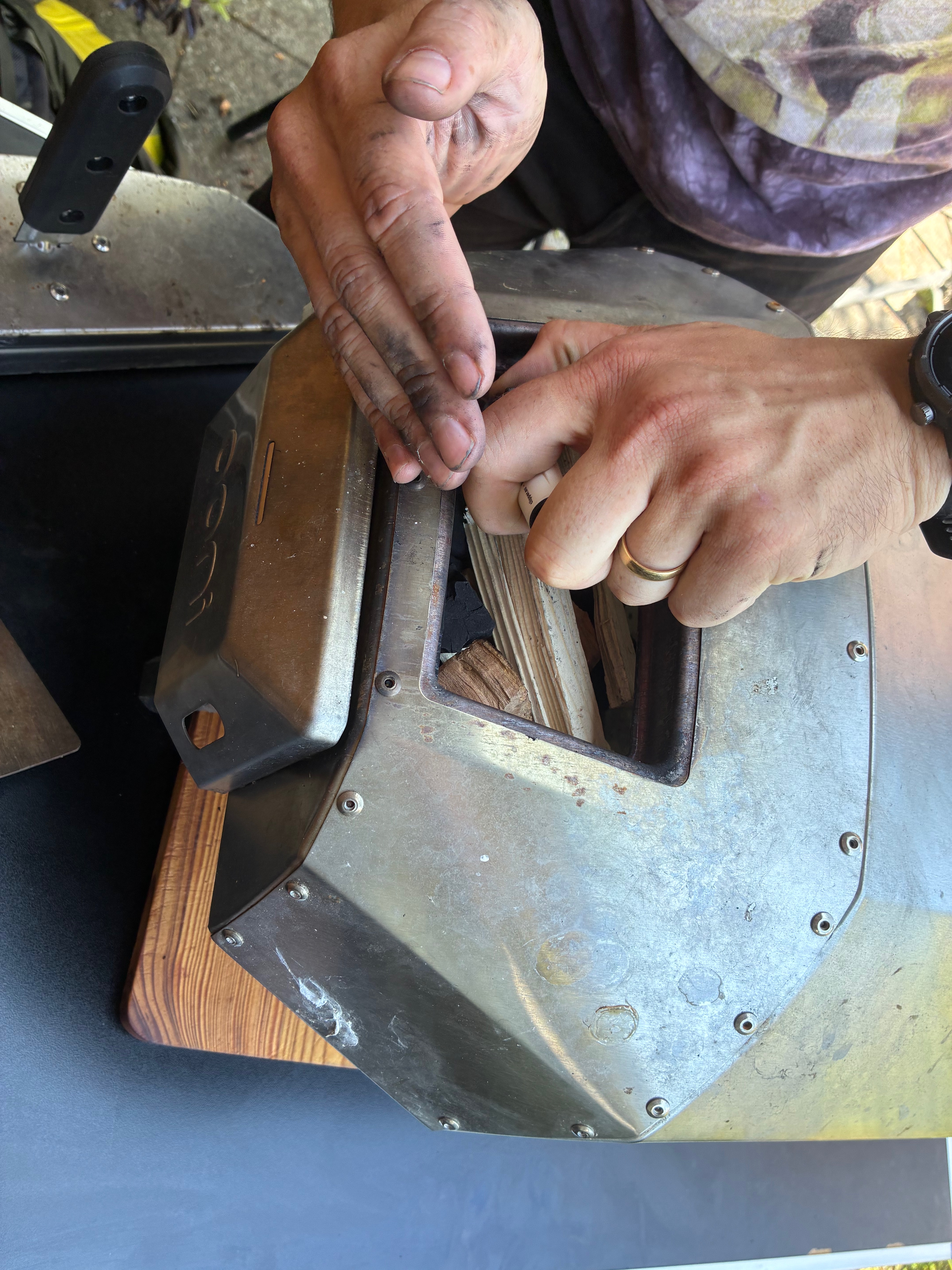


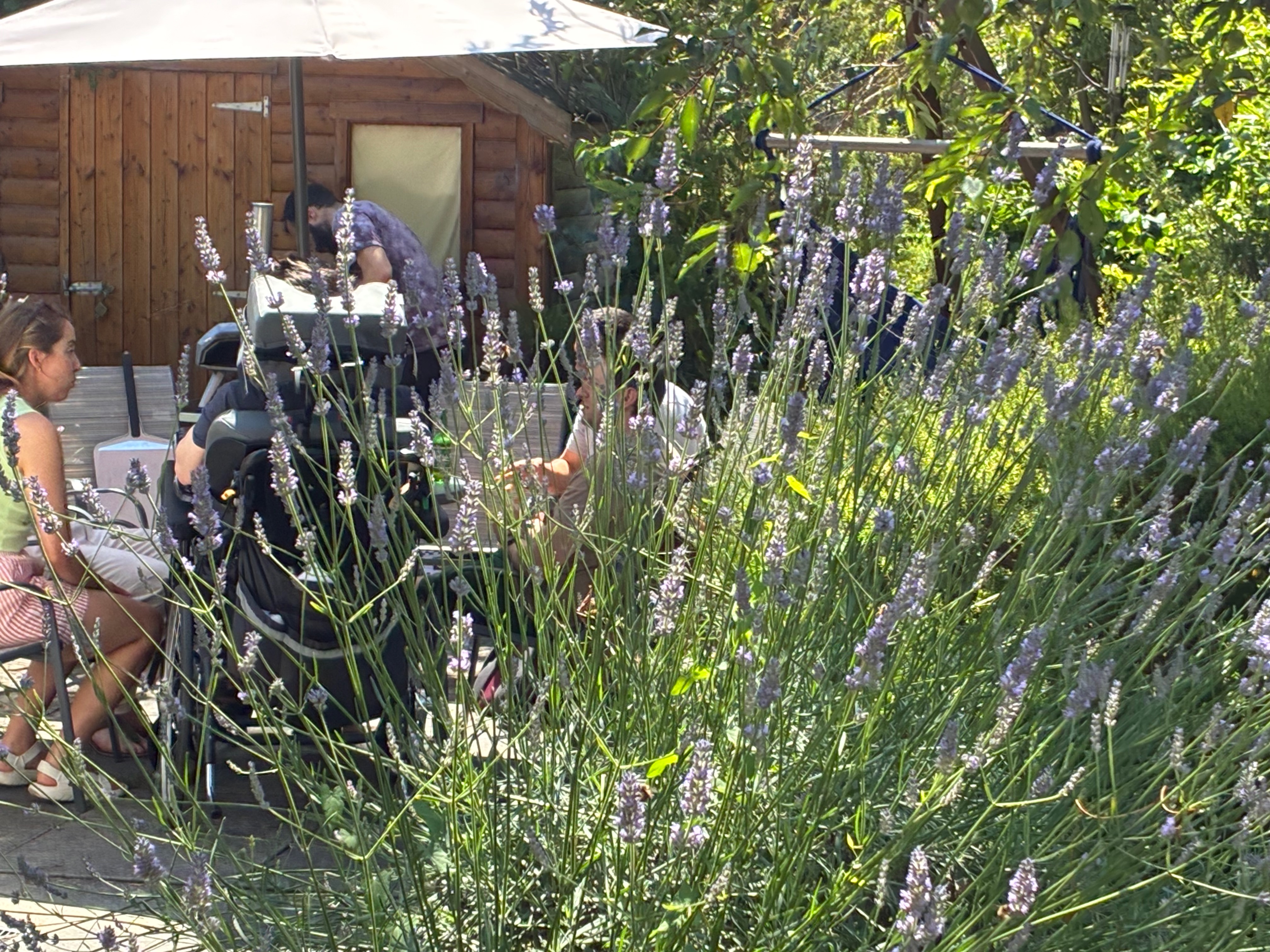

Life couldn’t get much better.
A perfect example for the disability paradox:
- Nondisabled people assume disabled people have a low quality of life, which contradicts what people with disabilities experience.
- Affective forecasting errors are common; people regularly overestimate how intensely happy or sad events will make them feel.
- Learning from people with disabilities about adaptation can reduce ableism and remind us of our resilience.
Albrecht and his colleagues wrote about it in Social Science and Medicine. Their scientific paper confirmed that 54.3% of the respondents with moderate to serious disabilities reported having an excellent or good quality of life.
The BBC made a full report about this phenomenon.
A Hitchhikers’s Guide to the Universe
Here are two quotes from Adam’s fabulously revealing and outrageous Hitchkiker’s Guide to the Universe.
A common mistake that people make when trying to design something completely foolproof is to underestimate the ingenuity of complete fools.
There is a theory which states that if ever anyone discovers exactly what the Universe is for and why it is here, it will instantly disappear and be replaced by something even more bizarre and inexplicable. There is another theory which states that this has already happened.
Even when something is so evidently clear, we do underestimate sometimes the ingenuity of complete fools. We will never understand the Universe and its intentions because the moment we get a glance of that understanding it immediately becomes even more bizarre and inexplicable.
Decision Time
We have reached a juncture at which we have to decide whether we will do the right thing.
Or whether we will give in to the ingenuity of fools, and the bizarre and inexplicable Universe.
We have no more time to loose.
 Hospi-Tales
So true. I just wish I had more faith that we will do the right thing.