
It is my belief that in our mad world where there is so much pain, rivalry, hatred, violence, inequality, and oppression, it is people who are weak, rejected, marginalized, counted as useless, who can become a source of life and of salvation for us as individuals as well as for our world.
Jean Vanier
Someone the other day said to me that he thought we were living in a mad world. In a world, where the mad are the sane.
Tears For Fears sang in their 1982 hit Mad World:
All around me are familiar faces
Worn-out places, worn-out faces
Bright and early for their daily races
Going nowhere, going nowhere
And their tears are filling up their glasses
No expression, no expression
Hide my head, I want to drown my sorrow
No tomorrow, no tomorrow
I remember the early 1980s, the Cold War, the threat of nuclear annihilation, fear and uncertainty.
The recent past has confirmed that you just have to stay around long enough not just for your clothes to become fashionable again, but also for patterns in politics to repeat. Madness never dies out. When will they ever learn?
But there is a way to live, not just to survive, even under crazy circumstances. Even in a mad world.
The answer is not to be optimistic and think: it’ll all turn out well.
The answer is hope.
Where there is fear and despair, there is hope. The German, Korean born, philosopher Byung-Chul Han wrote in The Spirit of Hope:
Hope is definitely not the same thing as optimism. It is not the conviction that something will turn out well, but the certainty that something makes sense, regardless of how it turns out.
Ernst Bloch, another German philosopher, prior to Han wrote in The Principle of Hope:
The most tragic form of loss isn’t the loss of security; it’s the loss of the capacity to imagine that things could be different.
Last week, Pádraig’s fantastic practitioners challenged Pádraig to try out a couple of new things, some inspired by our good friend, the legendary Kay Coombes.
The first was to get out of the wheelchair and to sit on a normal chair.
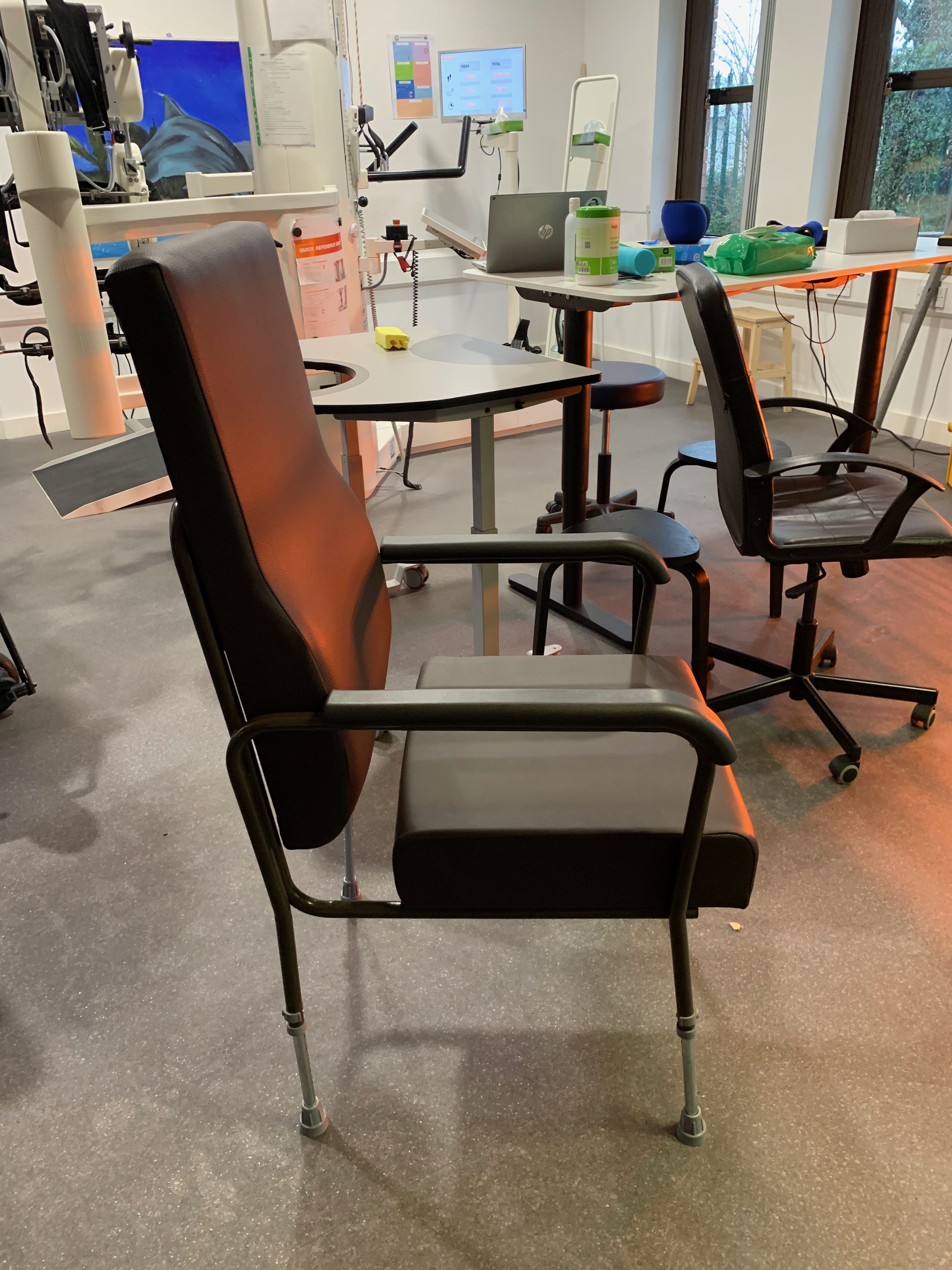
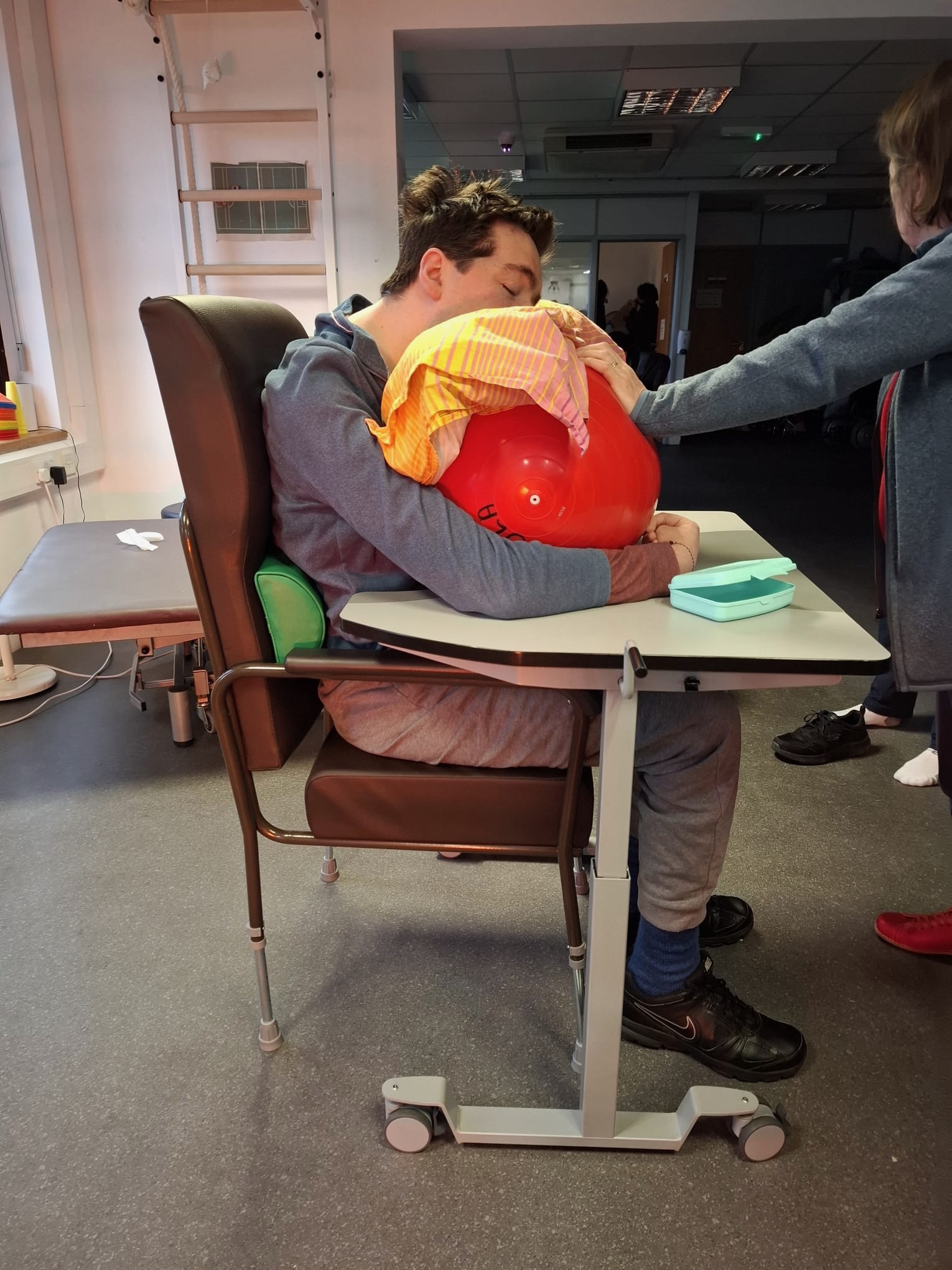
We only noticed when we looked at the pictures that the back of the chair was upside down – because it is Pádraig’s lower, not his upper back, that needs support. Next time, he will sit on the chair with the back of it supporting his spine even better.
Next was straightening his back to sit up straight, followed by lifting up his head and turning it around while standing. It wasn’t the first time that he turned his head around by himself, but it was the first time I saw him lifting up his head so high as he was turning it.
What Pádraig is doing and what he stands for makes sense. Regardless of how it’ll turn out. He has the capacity to imagine that things could be different.
It is hope, above all, which gives him the strength to live and continually to try new things, even in conditions that seem as hopeless.
Would it be too much to say, like Jean Vanier, that it is people who are weak, rejected, marginalised, counted as useless, who can become a source of life and of salvation for us as individuals as well as for our world?
 Hospi-Tales