
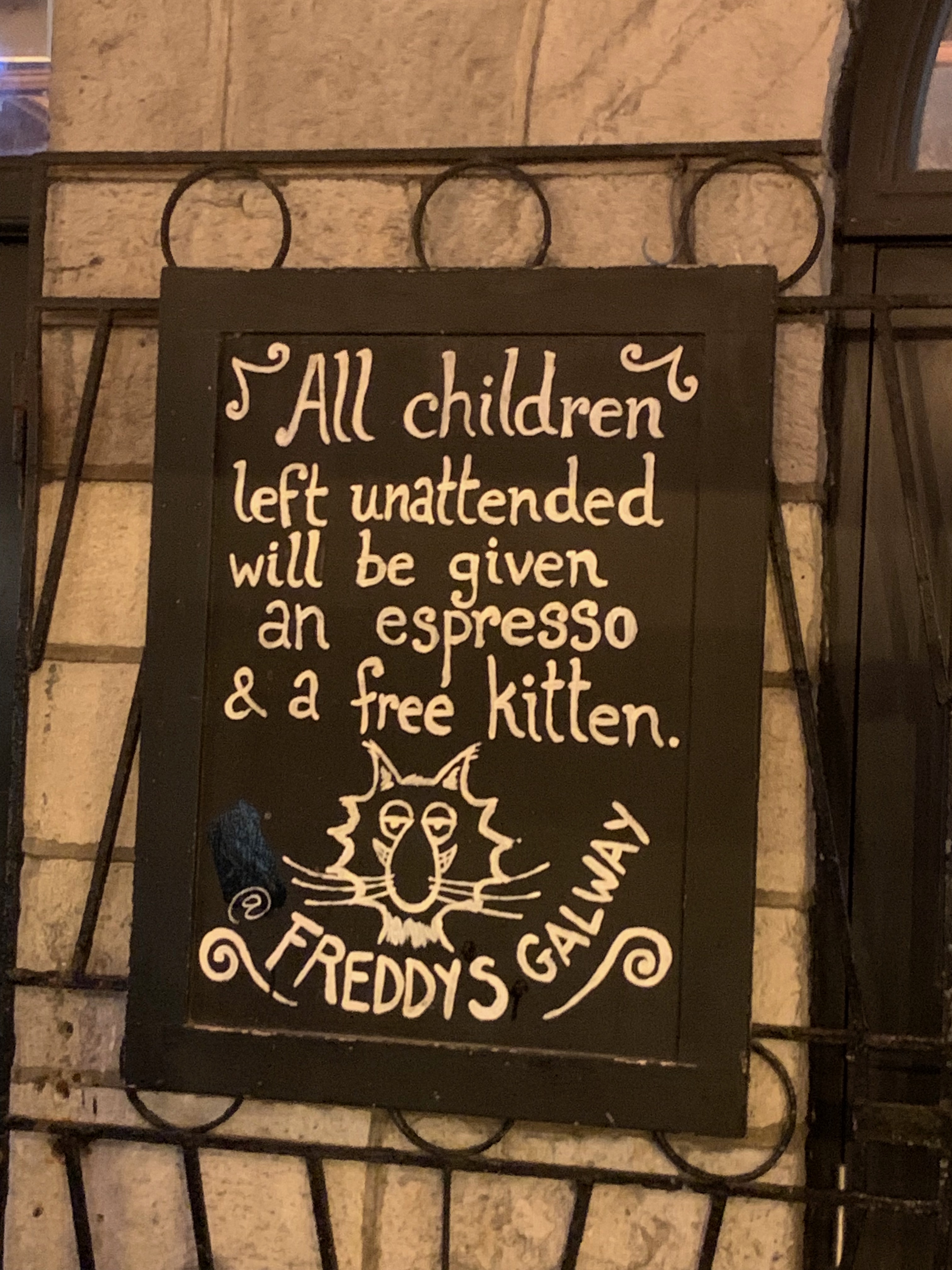
All children left unattended will be given an espresso and a free kitten.
Sign in Freddy’s, Galway
I’ve asked these questions before, I am sure.
- Why does everything become a risk, once you are in a wheelchair – when everybody takes their live into their own hands when they get up in the morning?
- Why has it been universally recognised for millennia that I need exercise to stay healthy – until I need help to exercise?
- Why is mental health an issue for people who can go on radio shows – but, apparently, not once you have, literally, no voice?
- Why are we still talking about people when we should talk with them – especially when they don’t comply with our means of communication?
- Why does the health system withdraw support from those with a severe Acquired Brain Injury – when that would be deemed unethical and unthinkable in the context of other injuries or health conditions (think cancer, pulmonary, or coronary)
You can yourself add to them, I am sure. Unless you are a pre-conditioned health professional who knows the answer. In that case, you probably wouldn’t want to share it with us, because you don’t want to cause any more hurt.
The only obvious answer I can come up with, and I can give it here because I am at the centre of this situation, is that people in wheelchairs who cannot move and have no voice also are not deemed to have a future. Worse: very often they don’t even have a presence. (Nor have their families.)
It doesn’t have to be like that. In fact, we cannot allow it to remain like that.
Pádraig’s story is for everybody telling us that looking after those with a severe Acquired Brain Injury is too expensive; that there are thousands of children in dire need of care and we wouldn’t want to take resources away from thousands just to serve a few with a sABI (as if that was the alternative); that all our family members need is nutrition, hydration, and medication (when some would see this kind of sensory depravation amounting to a form of torture); that they are well looked after in a nursing home (when not even our elderly parents should be there and as we have all seen, if it was necessary to prove it, during COVID); that all they need is to be kept comfortable (language that is used in the context of palliative care); that any further interventions are really a waste of limited resources (seriously); that they might be better off dead. All original quotes.

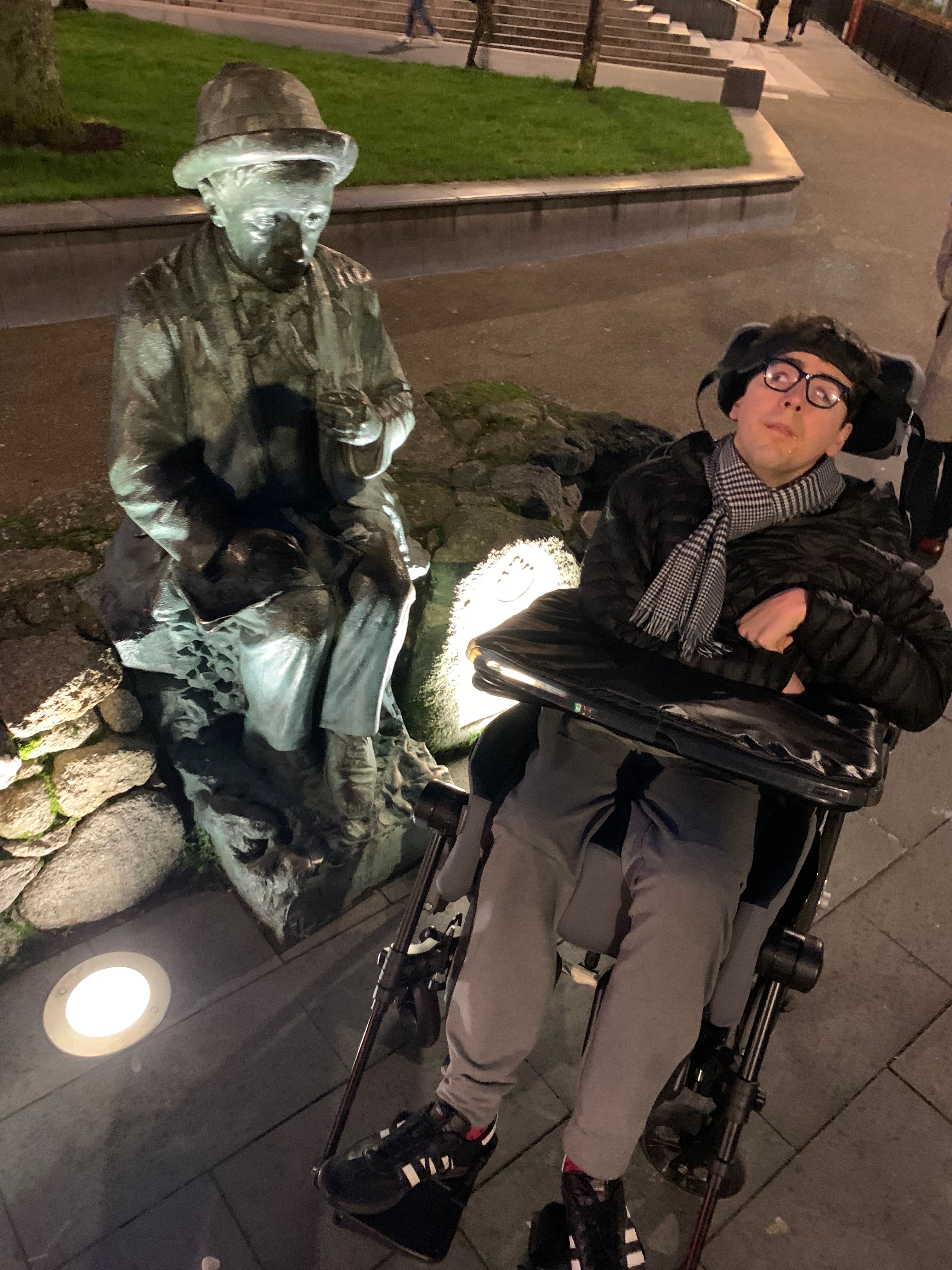


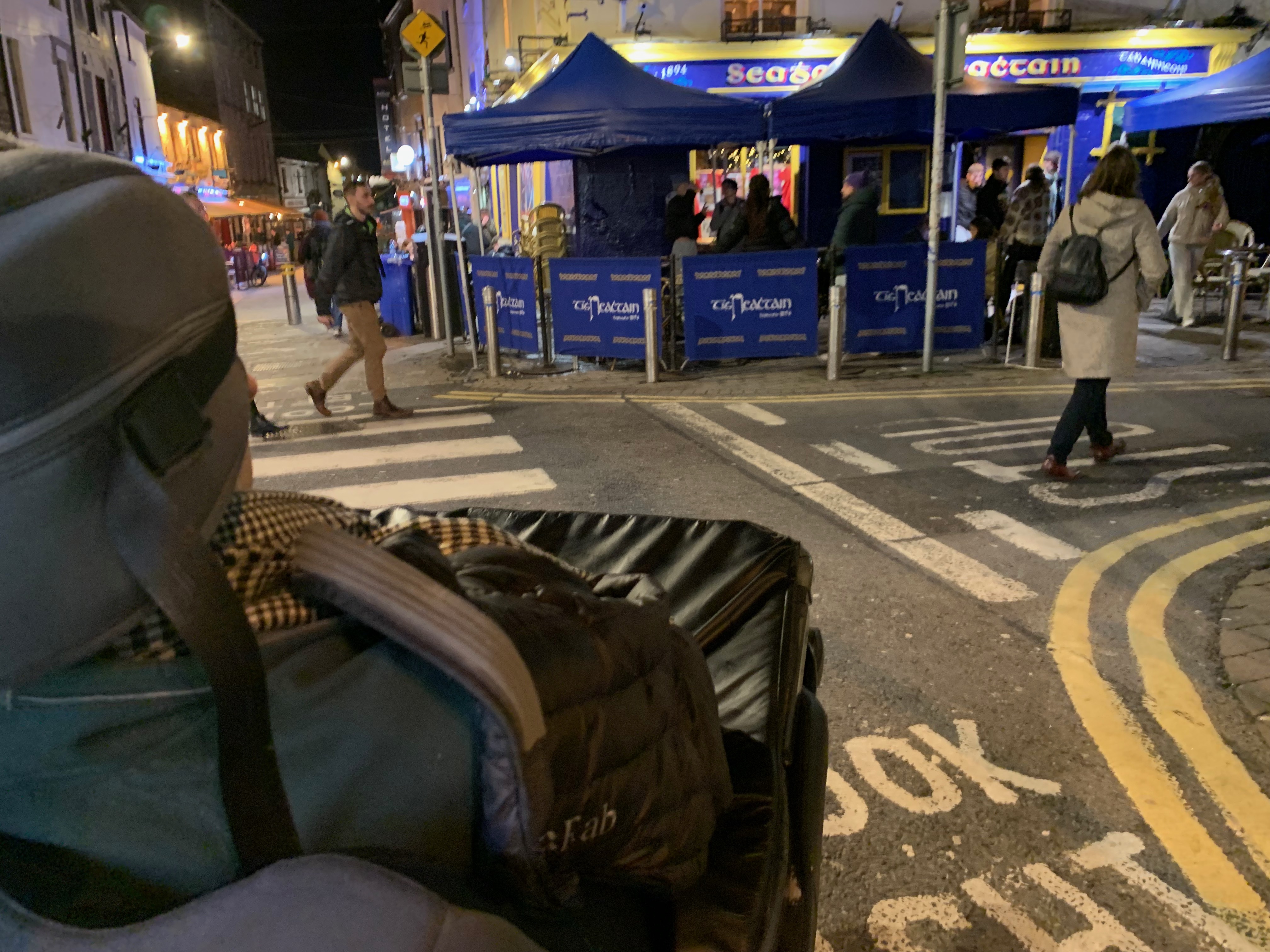


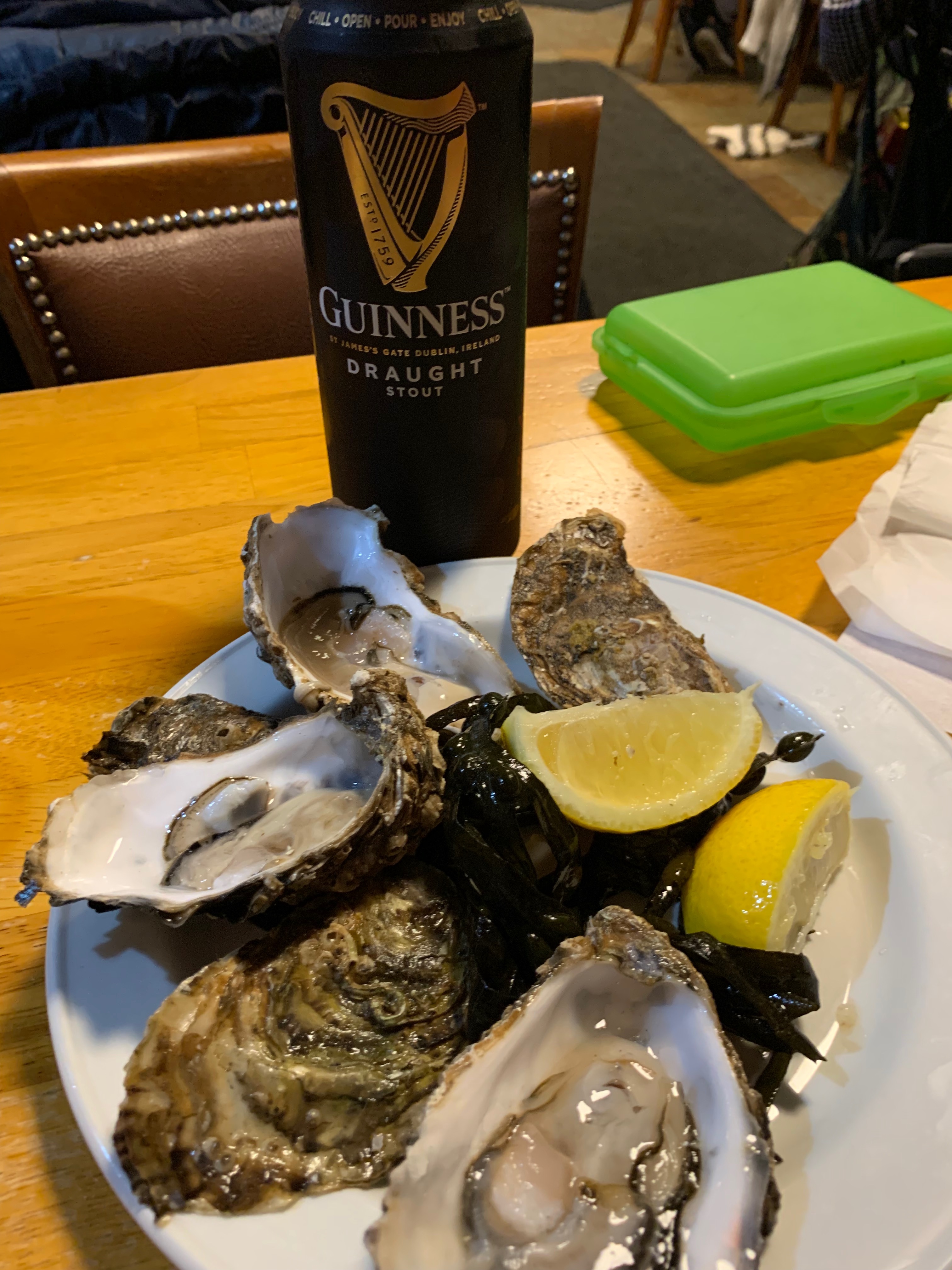

Pádraig went for a job interview last Tuesday. He and some of his friends had proposed a project, they had passed the first round of evaluations, and now had to turn up in person to make their case. We’ll find out whether they were successful hopefully soon enough. It would be class.
The visit to the City of the Tribes gave us the opportunity to walk through Eyres Square, visit Pádraic O’Conaire, walk by our old haunt Tigh Neachtain’s, and have some wonderful seafood in McDonagh’s. There are few tourists in Galway in February and the place looked like as if it hadn’t changed in decades.
There were sounds, sights, textures, and tastes; there was wind and a bit of rain on our skins and the smell of the sea in the air. The streets, pubs, and restaurants were busy with people meeting up, chatting away, or just going for a stroll.
Nobody was left unattended. We were really happy. No need for espressos, the gift of a kitten or anything else unwarranted.
You can find beauty in the world through unexpected encounters, appreciating the little things in everyday life, perhaps a bit like Hirayama in Wim Wender’s Perfect Days.
 Hospi-Tales
It seems the US has some issues to fix as well: https://www.npr.org/2024/02/22/1232463580/teen-hospital-lawsuit-disability-rights
You have to let that sink in: who is suing whom for what? — I have seen a patient being removed against their will from the National Rehabilitation Hospital here by the police – no lawsuit necessary, just a phone call. Do those people sleep at night?