

There was a reason these boys were still alive, though. Something made them stronger than the other kids, the ones who had died in the early days, who had simply lain down and given up, unable to cope with the terrible things that were happening in the world. These boys were survivors. The will to live was stronger than any other feelings.”
Charlie Higson, The Enemy
Standing tall is one of Pádraig’s favourites. He says, it makes him feel alive.
For the past few weeks, those working with him have used a full gym-type exercise rack with some special attachments to help him standing up.
Being a head above everybody else is what he was used to. Standing in the rack, pulling himself up, standing tall once more, must be a phenomenal experience for him. Those helping to do this are truly exceptional. I cannot think of another place in the country where they would even think doing anything close to this.
Pádraig also had another session using the Handscupe+. More about that in a minute.


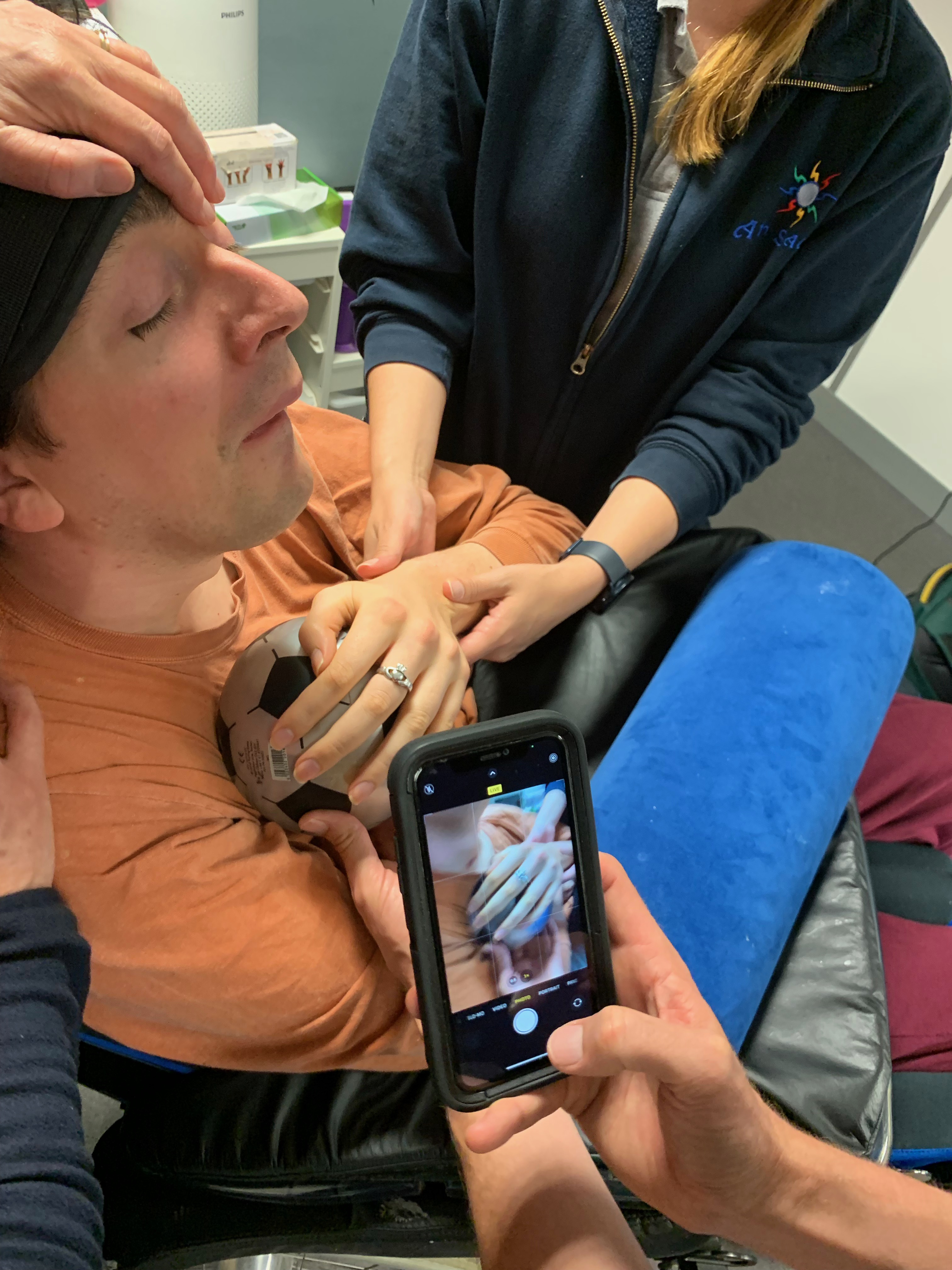
Last week, Pádraig had another visit from the UCD researcher who has been experimenting with the design of a device that would allow Pádraig to do “stuff” using the fingers of his left hand which he can control pretty well. This week it was about associating the movement of a particular finger with a spoken phrase such as ‘yes’, ‘no’, ‘maybe’, and ‘ask me a different question’.
It was not all about using the spoken word for communication. With Pádraig being a ‘trad fan’, the researcher thought that he would have fun playing the Uillean Pipes.
He did – and is looking forward to playing one day a few tunes with other trad fans.
Research has shown that you can think yourself to death. It’s a phenomenon called psychogenic death and has been observed specifically in persons affected by a deep trauma.
Dr John Leach, a senior research fellow at the University of Portsmouth and an expert on the topic, says that “severe trauma might trigger some people’s anterior cingulate circuit to malfunction. He believes that “motivation is essential for coping with life and if that fails, apathy is almost inevitable.”
All this means that if you really lost the will to live, you’ll die. It also means that if Pádraig had ever lost that will, he most certainly would not be with us anymore. The will to live requires love, meaning, and purpose.
There is no shortage of either of these in Pádraig’s life.
Researchers have also found that “death does not have to be inevitable even if you fall victim to “give-up-itis”. Different interventions like physical activity that can give the person some sense of regaining choice and control can break the terrible cycle by releasing dopamine.“
The Romans knew that anima sana in corpore sano. ASICS named their brand after this truth.
And the WHO has long been telling people about the crucial benefits of physical exercise.
It’s about getting physical while keeping the mind healthy. Then there won’t be any reason for “give-up-itis”.
Pádraig’s life is full of love, it is meaningful and full of purpose.
Because of that, his will to live is stronger than any other feelings. It enables him to cope with all the terrible things that happened to him and all the terrible things that are happening in the world around him.
On top of that: he inspires me and those around him.
 Hospi-Tales